Original author: Stacy Muur, crypto researcher
Original translation by: CryptoLeo (@LeoAndCrypto) 
Last week, I translated a research post from Solus Group titled “Over 80% of new coins peak at TGE, the root cause and remedy of Web3's false prosperity,” which analyzed the situation of 113 tokens after their TGE in 2025. The vast majority of these tokens peaked at TGE, with prices starting to decline the day after their launch, despite having high financing, community support, and exchange listings.
Today's article is from crypto researcher Stacy Muur, who has compiled a list of several tokens that saw significant price increases relative to their TGE in 2025 and analyzed the advantages/conditions these projects possess. In contrast, the previous article derived a statistical result from data, while this article focuses more on the projects themselves. In summary: in the current context of excessive homogenization and expansion in the crypto market, project tokens need to meet multiple conditions to survive/thrive in the market. Odaily Planet Daily has translated it as follows:
If you have been keen on trading tokens from the 2025 TGE, the results so far are clear: tokens are hot in the first week after launch, then gradually lose momentum, ultimately defaulting to the notion that “the issue price is the peak.” Most newly launched tokens perform poorly, even plummeting, as the market consistently views token economics and liquidity as fundamentals.
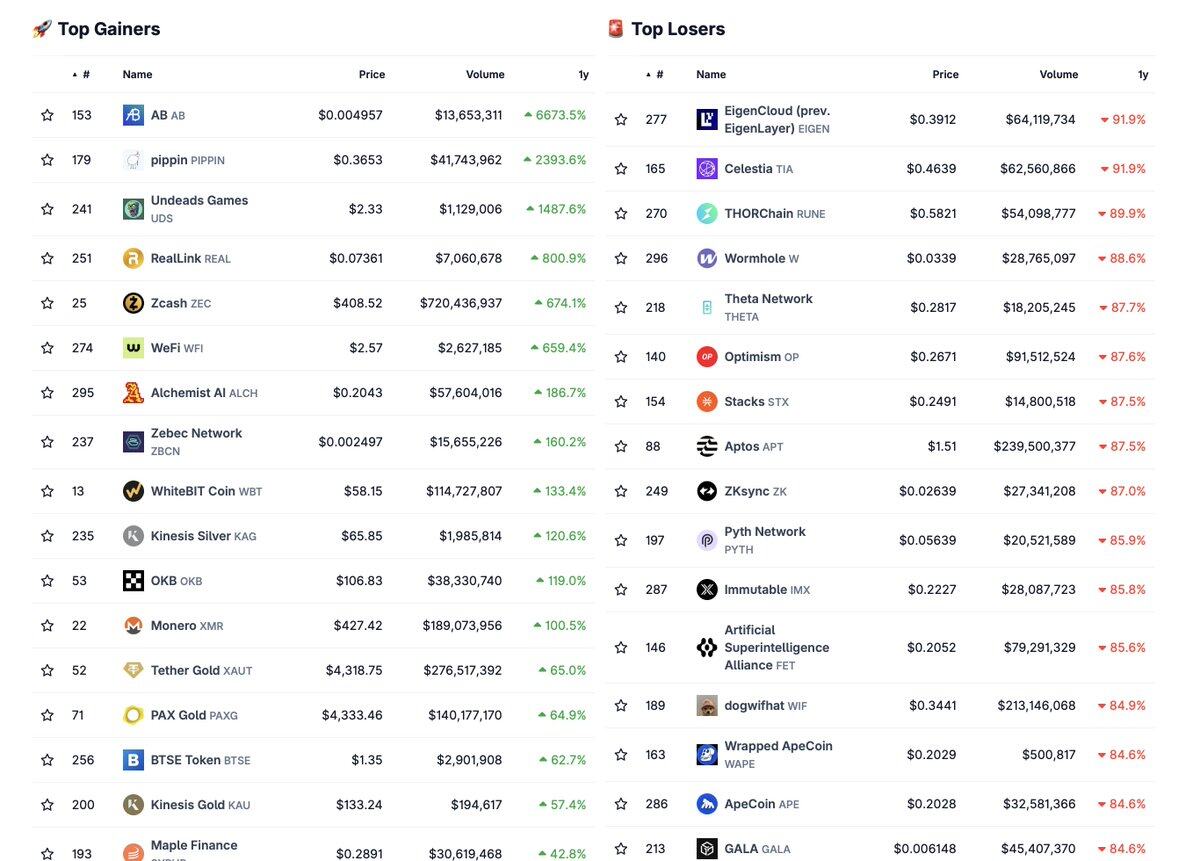
Nevertheless, there are still a few tokens in 2025 that maintained price increases relative to their TGE. This increase is not a “rebound after a price crash,” nor is it about “buying at market lows,” but rather indicates the presence of genuine buying support.
Here are the tokens I identified with real price increases post-TGE in 2025: ASTER, FOLKS, AVICI, and SENTIS (along with some “barely passing” tokens like IRYS/FHE/CORN). They may not look entirely the same, but they share certain characteristics.
Best Performing Tokens Post-TGE in 2025
Aster is a typical example; ASTER achieved everything needed for the project on its first day: major exchange listings, deep liquidity, and a widely accepted “Perp DEX” narrative. The story circulated throughout the year was essentially: “Binance-supported Perp DEX with privacy.”
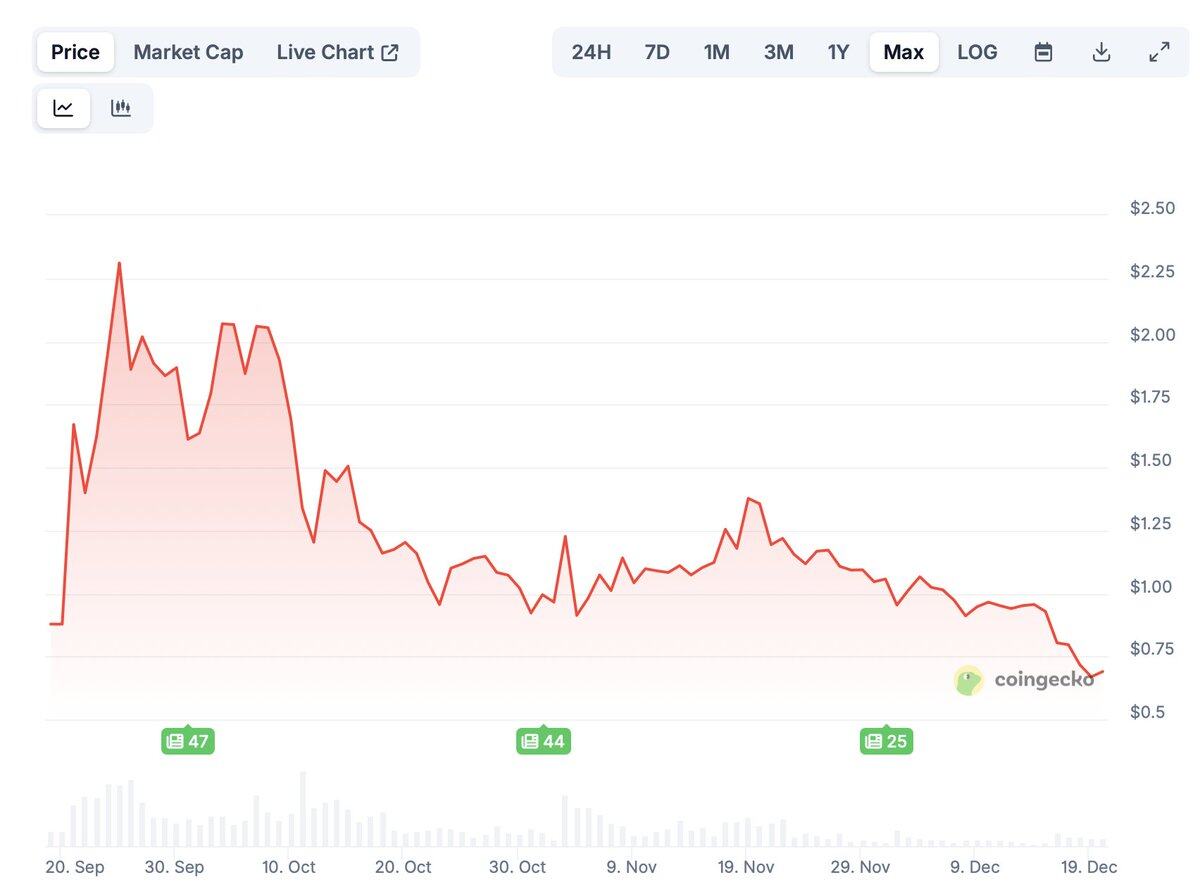
The price trend of ASTER is quite controversial (you could call it ZK-related, CZ shadow games, or simply better execution strategies). Nevertheless, it remains one of the few projects that did not experience “immediate sell-offs” at TGE.
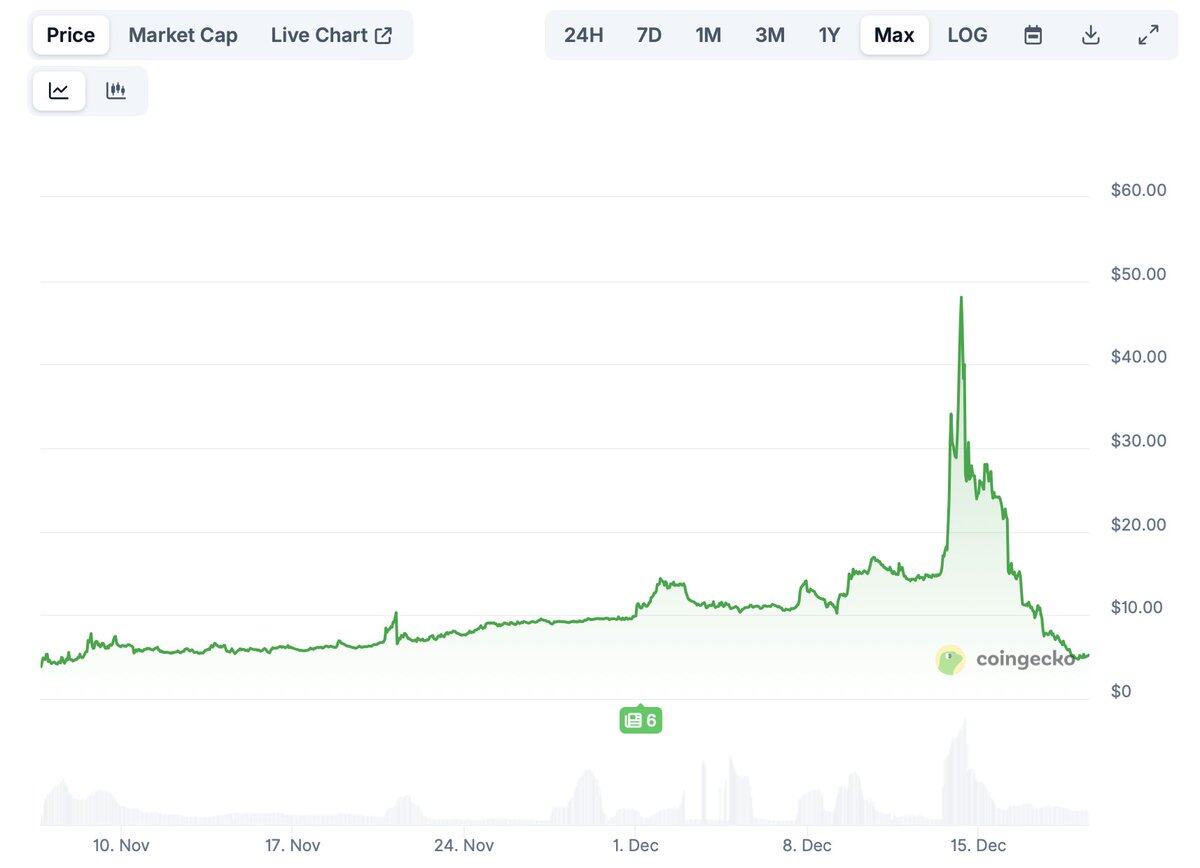
FOLKS stands out: it is a lending token that was seen as Alpha in a year when “the market is so bad.” The formula: “Binance and Kraken showed support from day one, cross-chain pools are continuously growing, and there are no significant unlocks.” The last point is crucial. It performed well until the token unlock on December 15.
AVICI is different from the previous two. AVICI makes the list not because it has the most cutting-edge technology, but because it provides the clearest narrative for the crypto community: “fair launch, truly useful product.” It does not emphasize token economics but rather usage: “a decent neobank app, Visa card, real spending.” In a market filled with endogenous “utility,” AVICI is refreshing, breaking away from traditional thinking while being practical. AVICI could be one of the best TGE tokens of the year.
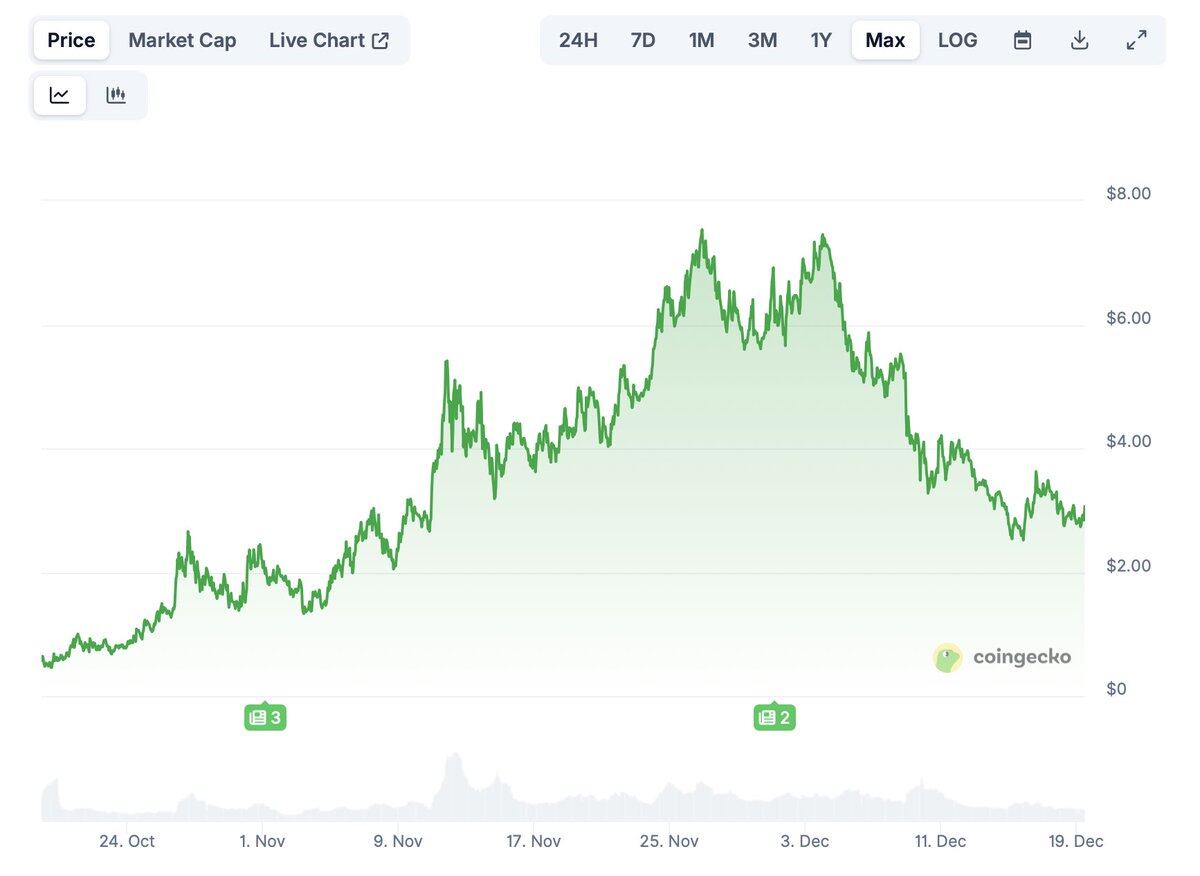
When tokens rise for some reason, their prices tend to be more stable
Currently, the strongest performing token post-TGE is SENTIS. Its support points are simple and clear: AI Agent narrative + continuous incentive distribution + exchange listing. In the crypto community, the dominant framework remains consistent: “AI Agent is the next layer of DeFi automation,” providing traders with a simple mental model as an anchor.
Mechanically, SENTIS does not rely on a one-time launch spike. The token's continuous distribution mechanism (tasks/retro drops/participation rewards) maintains user engagement stability, which often translates into sustained spot demand, as participants prepare for future distributions and ecosystem milestones. This dynamic can even support prices before more meaningful on-chain adoption occurs.
“Barely Passing” Tokens
IRYS and FHE belong to the “AI infrastructure and privacy trading” sector: both benefit from the AI boom, maintaining above their initial ranges, and both have sufficient liquidity to avoid price crashes. If these projects can translate their narratives into on-chain usage, they can survive; merely relying on narrative support is not enough.
Then there’s CORN, which is relatively stable compared to similar products, but CORN resembles a “structured product.” In 2025, this is not a bad thing. When the market “punishes” excessive development, survival becomes crucial.
Characteristics of Well-Performing Tokens in 2025
After stripping away narratives and atmospheres, some clear structural patterns emerge:
1. Token distribution is more important than hype
The strongest performing projects avoided significant internal liquidity at TGE. AVICI (0% team holdings), SENTIS (activity-based emissions).
Experience: Who holds the tokens at project launch is more important than who privately invested.
2. Reasonable launch valuation beats perfect timing for token issuance
Many well-performing tokens did not launch during market hype peaks but rather at reasonable valuations, allowing the market to reassess their valuations upward.
AVICI launched with a functional product at an FDV of about $3.5 million, with potential returns asymmetrical to the FDV.
Experience: Tokens that rise “through effort” perform better than those that start with high valuations.
3. Project usage (or credible recent usage) is reflected in price
Aster's Perp trading volume, Folks' lending scale, Avici's credit card spending—these are not just promises in white papers but observable signals.
Sentis started early but also linked token emissions to on-chain activity, creating a feedback loop between usage and price.
Experience: The market currently lacks patience; utility > vision.
4. Unlock structure > unlock size
The linearity and transparency of token unlocks are important, leading to the dilution effects being absorbed by the market. For example, SENTIS gradually releases tokens through participation mechanisms.
Elsewhere, it is not the dilution itself that destroys user confidence, but rather risky cliff-style unlocks.
Experience: Predictable token unlocks are bearable; unexpected unlocks are not.
5. Exchange listings are necessary but not sufficient
Almost every token has good exchange access, but this alone does not determine outcomes. Listings amplify results: they help strong tokens accelerate upward while weak tokens are sold off faster. Without the backdrop of a Binance listing, AVICI's token performance is not that bad.
Experience: Exchange liquidity is an accelerator, not a foundation.
Key Takeaways
Overall, the situation of TGE tokens in 2025 marks a shift.
The market no longer rewards “potential” but rather begins to reward “structure”:
- Healthy circulation
- Fair token distribution
- Reliable adoption levels
- Controlled unlocking mechanisms
The “rising tokens” of 2025 are not perfect projects; they are simply built to survive after launch. If 2024 focused on narratives, then 2025 is about token design under pressure. This is also the experience that most projects have yet to learn during their TGE.
免责声明:本文章仅代表作者个人观点,不代表本平台的立场和观点。本文章仅供信息分享,不构成对任何人的任何投资建议。用户与作者之间的任何争议,与本平台无关。如网页中刊载的文章或图片涉及侵权,请提供相关的权利证明和身份证明发送邮件到support@aicoin.com,本平台相关工作人员将会进行核查。


