Written by: Noir
Translated by: Deep Tide TechFlow
Most Web3 content creators believe they are not good at storytelling because they feel they lack creativity.
But my friend, that is usually not the real root of the problem.
In fact, the real issue is:
——Your content lacks contrast.
Hey, either the content:
Sounds the same,
Feels bland,
Or is completely unchanging.
And when everything is unchanging, there is no story to tell.
What is Contrast?
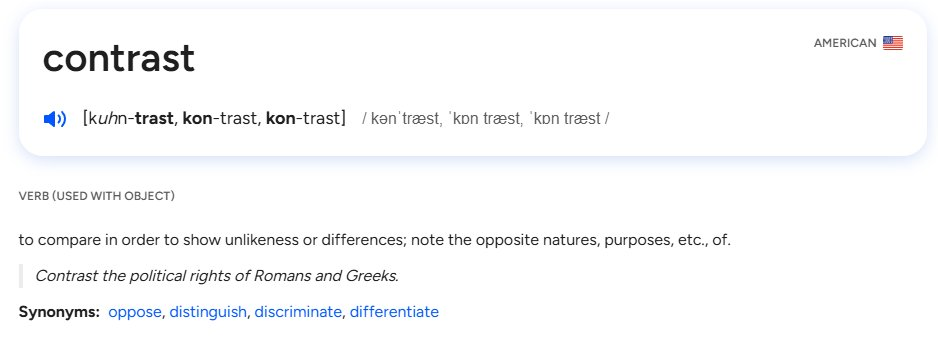
Contrast actually refers to something being different from previous content.
Yes, it’s that simple.
It doesn’t require: fancy language, unexpected plot twists, or background music.
Essentially, contrast is a transformation, such as:
From "before" to "after"
From "expectation" to "reality"
From "belief" to "realization"
Without this transformation, your content is just information.
Yes, it may be useful, but if you want people to remember it? Well… not likely.
Why Does a Lack of Contrast Render Content Ineffective?
The Web3 world is filled with:
Features, data, promises, roadmaps…
But the way most content is presented is too straightforward:
"This is what it does."
"This is its benefits."
"This is why you should care."
However, the brain is not interested in this linear information.
It gets activated when something unexpected happens.
Why Does Content Lose Appeal Without Contrast?
The Web3 world is saturated with:
Features, data, promises, roadmaps…
But the way most content is presented is too straightforward:
"This is its function."
"This is why it's good."
"This is why you need to care."
However, the brain does not get activated by this linear information.
It only wakes up when something unexpected occurs.
A Simple Example of "Contrast"
(You must have seen this countless times)
Expression Without Contrast:
Solana's transaction speed is fast and costs low.
Your brain responds: Okay… so what?
Expression With Contrast:
I clicked send, switched pages, and then realized the transaction was already completed.
The same idea, but it delivers a completely different impact.
The second expression creates a "moment." Got it?
Why Does "Contrast" Make People Uncomfortable?
(And why this is important)
Contrast often requires you to admit:
You were wrong, you were confused, you underestimated certain things.
That’s why most people avoid it.
But this discomfort is precisely what makes content feel authentic.
People don’t like things that are flawless.
They are more likely to connect with resonance and vulnerability.
When someone thinks, "Wait… I’ve felt that way too."
Congratulations, you’ve succeeded.
How to Add "Contrast" to Your Content?
Before publishing, ask yourself one question:
"What has changed here?"
If you can’t answer that, try adding the following:
A past mistaken assumption
A moment of hesitation
An unexpected outcome
A "small decision" you almost didn’t make
You really don’t need any dramatic plot.
You just need a little resonant change.
The Quirky Summary
Don’t get me wrong, creativity does play an important role in storytelling.
But not everyone is born creative; this article is specifically for those who truly want to learn the art of storytelling.
Its core lies in: sincerely showcasing the "transformation."
In the complex and noisy world of Web3,
"Contrast" is the way to stand out without having to shout :)
Remember to follow me, or else you’ll…
免责声明:本文章仅代表作者个人观点,不代表本平台的立场和观点。本文章仅供信息分享,不构成对任何人的任何投资建议。用户与作者之间的任何争议,与本平台无关。如网页中刊载的文章或图片涉及侵权,请提供相关的权利证明和身份证明发送邮件到support@aicoin.com,本平台相关工作人员将会进行核查。


