A seasoned crypto investor murmured to himself at 3 AM while monitoring the market: "In the past, governing a country relied on Twitter; now, issuing coins can build a nation. This world is less real than the altcoins in my wallet."
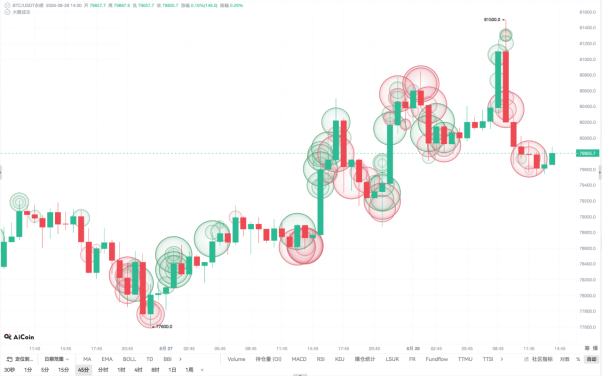
Bitcoin staged a dramatic reversal in 2025, first breaking through the historic high of $126,000, then retreating to around $90,000, as if riding a roller coaster without a seatbelt. Meanwhile, on the other side of the globe, a Chinese project called "Taiji Chain," themed around Taoist cultivation, attracted over a million users to participate in "alchemy mining" after launching on Binance.
Policymakers around the world seem to be playing different roles in this grand crypto drama, with some transforming into "rule-makers" while others insist on acting as "gatekeepers," creating a red-yellow-green spectrum of global crypto regulation.
01 Policy Trends: Great Power Struggles and New Players Entering
The global crypto regulatory landscape in 2025 showed dramatic divergence. "Red light countries" like China and Algeria maintained strict restrictions, while "green light countries" like the UAE actively encouraged crypto innovation, attempting to build a global crypto hub.
The policy shift in the United States was the most dramatic. In January, the U.S. signed an executive order formally establishing a national policy to support the development of digital assets, clearly stating the intention to "protect Americans from the threats of central bank digital currencies." This shift was humorously dubbed by industry insiders as "from expulsion to reconciliation."
In July, the U.S. House of Representatives passed three major cryptocurrency bills, including the "Genius Act," providing a legal framework for crypto activities that had long been operating in a gray area. Insiders revealed that when these bills faced procedural voting obstacles, key figures personally met with opposing lawmakers to push the legislative process forward.
Meanwhile, the EU's "Crypto Asset Market Regulation" came into full effect, establishing unified standards for crypto asset service providers. This complex set of rules was humorously referred to as the "European Crypto Code," attempting to protect investors while not stifling innovation, a balancing act that is truly remarkable.
02 Market Performance: "Roller Coaster" Trends and Sect Differentiation
The crypto market in 2025 can be described as "fire and ice." Bitcoin, as the "big boss," once held a market cap share of up to 65% of the entire crypto market, before retreating to around 50%. Bitcoin fell from its October high of $126,000, giving back all its gains for the year, ultimately ending the year down 9%.
The market differentiation was more severe than expected. While Bitcoin weakened, some cryptocurrencies surged: Tron rose by 9%, Bitcoin Cash by 16%, and Aster astonishingly achieved a 1000% annual growth. This differentiation transformed crypto investment from the past's "group warmth" into a technical skill requiring precise coin selection.
Interestingly, Chinese cultivation-themed tokens emerged, forming a unique "Eastern Fantasy" crypto sector. These projects often combine traditional culture with blockchain technology, with white papers filled with elements of fantasy, roadmaps referred to as "Ascension Routes," and community members calling each other "Dao Friends." A typical example is the "Taiji Chain" project launched on Binance, where users can participate in ecological construction through fun mechanisms like "alchemy mining" and "skill staking," attracting significant attention from Chinese-speaking users.
03 Stablecoins: The "Good Kids" of the Crypto World Gain Recognition
Stablecoins officially entered the mainstream in 2025. Their annual trading volume surpassed $40 trillion, with a total market cap exceeding $300 billion.
Stablecoins have become a hot topic on the streets, attracting not only the attention of traditional financial institutions but also giving rise to new regulatory frameworks. Dollar-pegged stablecoins, such as USDT and USDC, play an increasingly important role in global payments and cross-border transfers.
04 New Trends: Prediction Markets and the "Mouth Economy"
Prediction markets completed their transformation from niche speculative tools to compliant information hubs in 2025. The two major platforms, Polymarket and Kalshi, both completed funding rounds with valuations in the tens of billions, attracting bets from traditional and crypto giants like the Chicago Options Exchange, Google, and Coinbase.
A new platform called Opinion rapidly emerged, forming a three-way competition with the two giants, upgrading prediction markets from simple "betting on outcomes" to "collectors of collective wisdom." These platforms not only provide predictions on political events and financial markets but also begin to cover broader fields such as technological trends and cultural phenomena.
At the same time, the "mouth economy" became the annual buzzword. In this new paradigm, attention itself became a tradable asset. Information finance platforms like Kaito and Cookie.fun allow users to convert the information and opinions they post about Web3 projects on social platforms into actual earnings. In the attention-scarce crypto industry, even "keyboard warriors" can earn rewards through quality analysis. A seasoned user joked, "It used to be 'knowledge payment'; now it's 'monetizing hot air.'"
05 Chinese Cultivation Tokens: A New Experiment in Cultural On-Chain and Institutional Entry
One of the most striking phenomena in the crypto world in 2025 was the rise of Chinese cultivation-themed tokens. These projects combine traditional Chinese fantasy culture with blockchain technology, creating a brand new user experience.
Taking "Taiji Chain" as an example, the project refers to its consensus mechanism as "skill cultivation," calls the interest earned from holding tokens "absorbing spiritual energy," and names community governance "sect conferences." This cultural packaging not only attracts Chinese-speaking users but also piques the interest of the international community. After launching on Binance, the user count quickly surpassed one million, becoming a phenomenon of the year.
Similar projects include "Kunlun Coin" and "Shushan Token," which together form a unique "Eastern Fantasy" crypto ecosystem. The white papers of these projects often reference classics like the "Tao Te Ching" and "I Ching," with technical roadmaps designed as "breakthrough diagrams for cultivation realms," and smart contracts referred to as "magic artifact refining," wrapping serious blockchain technology in a layer of cultural attire.
Meanwhile, "crypto treasury companies" have become a new paradigm for institutional entry. These publicly listed companies are making significant purchases of crypto assets, incorporating cryptocurrencies into the balance sheets of traditional enterprises. Although the stock prices of these companies have experienced roller coaster-like adjustments with market fluctuations, they provide traditional investors with a new avenue to access crypto assets.
Cultural on-chain has become a new trend in the crypto field. These projects not only seek innovation in technology but also open up new tracks in cultural narratives. A project founder stated, "We are not just doing technology; we are building a cultural universe on the blockchain." This approach of combining traditional culture with modern technology brings new possibilities to the crypto world.
In Conclusion
The crypto world in 2025 continues to oscillate between absurdity and seriousness. When an investor simultaneously engages in serious cross-border stablecoin transfers and "alchemy mining" of cultivation-themed tokens, this scene perfectly illustrates the diversity and inclusiveness of the crypto field.
From the divergence of regulatory policies to the diversity of market performance, from the mainstreaming of stablecoins to the on-chain revival of cultivation culture, this industry is undergoing profound and complex changes. The rise of Chinese cultivation tokens is particularly noteworthy; they are not only an investment target but also a combination of cultural expression and technological innovation.
The emergence of Chinese tokens tells us that imagination and cultural heritage can still find their place and create surprising new forms.
免责声明:本文章仅代表作者个人观点,不代表本平台的立场和观点。本文章仅供信息分享,不构成对任何人的任何投资建议。用户与作者之间的任何争议,与本平台无关。如网页中刊载的文章或图片涉及侵权,请提供相关的权利证明和身份证明发送邮件到support@aicoin.com,本平台相关工作人员将会进行核查。