In the panic of the market crash on December 1, a group of crypto whales calmly executed a series of precise operations. By December 8, one of them had realized a floating profit of $23.47 million on ETH.
While retail investors were panicking in response to the severe fluctuations in the crypto market at the beginning of December, a group of large holders known as "whales" was quietly positioning themselves.
On-chain data shows that during the period from December 1 to 10, several well-known whales achieved significant profits through precise operations, and their operational patterns revealed a calm strategy that transcended market sentiment.

1. Market Plunge: A Watershed Moment for Whale Operations
● On December 1, 2025, the cryptocurrency market experienced a severe adjustment. The prices of Bitcoin and Ethereum plummeted, spreading panic throughout the market, with over 210,000 liquidations occurring in a single day.
● As ordinary investors rushed to sell, a group of special investors began their reverse operations. This day became a watershed moment for observing the behavioral patterns of crypto whales.
● Near the lowest price point, on-chain data indicated that multiple large transactions were quietly taking place. These transactions were substantial, ranging from tens of thousands of ETH to hundreds of millions of USDT, clearly not the actions of ordinary investors.
● Extreme market emotions often accompany significant turning points. The market crash on December 1 was not only a test but also an opportunity filter.
2. The Reverse Operations of the 1011 Insider Whale
● Among the many whales, the operations of the "1011 Insider Whale" were particularly noteworthy. According to on-chain analysts, this whale withdrew 77,385 ETH from exchanges on December 1, when market panic peaked, to build a position.
The timing of this operation was exceptionally precise, occurring just as prices hit a local low. By December 8, this investment had realized a floating profit of $23.47 million, with a considerable return.
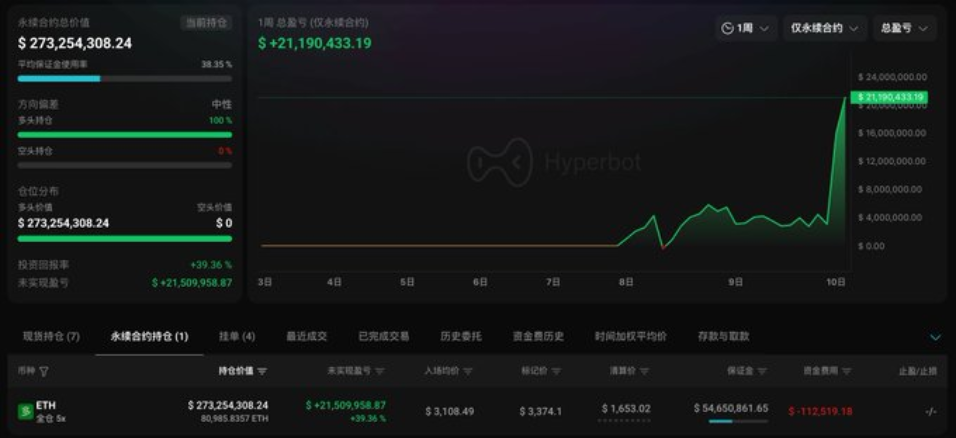
● The same whale's contract position also performed excellently. He held a long contract for 70,001 ETH, with an opening price of $3,068.64. By December 9, this contract position had realized a floating profit of $10.21 million.
This whale's operational characteristic lies in a dual strategy of spot and contract positioning. By building a position in the spot market for long-term gains while leveraging contracts to amplify opportunities from short-term volatility.
● More critically, his reverse thinking model stands out. When the market sold off due to panic, he chose to buy boldly, a decision that defies market sentiment and requires strong psychological resilience and market insight.
3. Capital Operations of the BTC OG Insider Whale
● Another investor known as the "BTC OG Insider Whale" demonstrated a different strategy. This whale also took action on December 1 during the market crash, but his method was more complex.
He borrowed over 220 million USDT by mortgaging ETH and then deposited these funds into exchanges. This behavior indicates that he was preparing ammunition for larger operations, possibly planning to build a significant position at the market bottom.
● Subsequently, on December 7, this whale began to act, using $70 million to open long positions in ETH. This operation showed his firm expectation of a market rebound and his determination to leverage for amplified returns.
Unlike simple buy-and-hold strategies, these whales excel at enhancing capital efficiency through borrowing and leverage. They are not satisfied with mere spot gains but seek to amplify market opportunities through financial tools. This strategy, while riskier, can also yield more substantial returns. The key lies in precise market timing and strict risk control.
4. The Art of Profit-Taking by the $3,027 Bottom Buyer
Not all whales pursue long-term holding; some investors excel at swing trading. "The whale who bought ETH at $3,027" is one such example.
● This investor sold 2,136 ETH at an average price of $3,066.4 during the market rebound on December 8, realizing a profit of $83,000. Notably, he did not liquidate all his positions but still held a significant amount of ETH.
● This strategy of "partial profit-taking" reflects a good risk management awareness. By locking in some profits, he reduced his holding risk while retaining the opportunity to continue participating in the market's upward movement.
● This operational model differs from the fantasy of "buying at the lowest point and selling at the highest point." It accepts imperfect trades and focuses on actual returns rather than theoretical maximums. For whales, liquidity management is crucial. Partial profit-taking not only locks in profits but also frees up capital, preparing for the next opportunity.
5. Collective Positioning Before the FOMC Meeting
In addition to reacting to price fluctuations, whales also closely monitor macro events. The collective actions of a group of whales before the Federal Reserve's FOMC meeting on December 9-10 were particularly noteworthy.
● On-chain data shows that several whales increased their holdings of tokens such as ASTER, PIPPIN, and LINK before the meeting. This collective behavior is not coincidental but based on a shared judgment of the event's impact. The core of this event-driven strategy is to predict the short-term effects of macro events on the market. In the eyes of these whales, the Federal Reserve's monetary policy decisions could serve as a catalyst for market shifts.
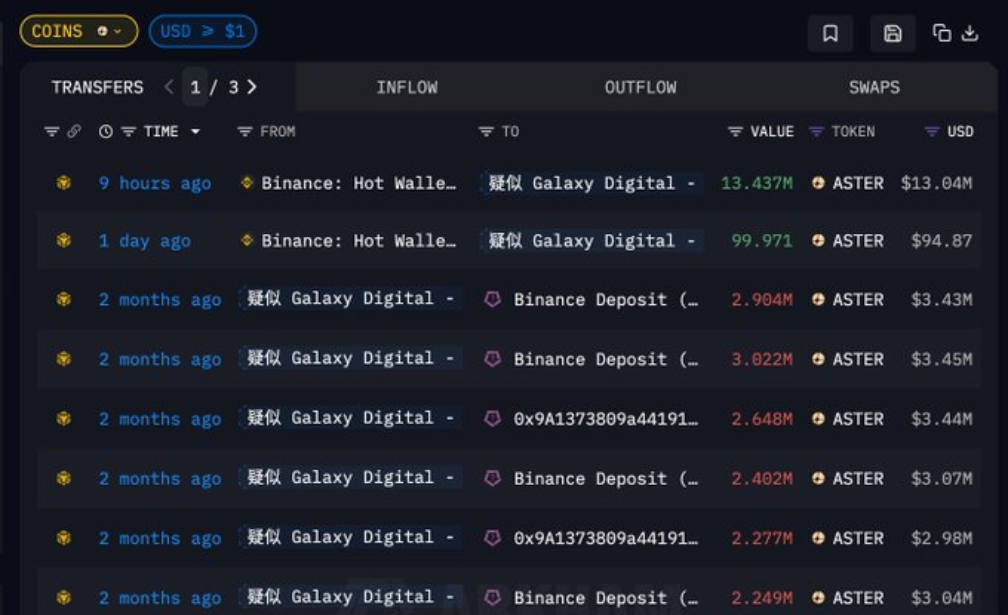
● Unlike simple technical analysis or fundamental research, event-driven strategies require a profound understanding of macro conditions, policy trends, and market sentiment. The success of such operations depends not only on the judgment of the event itself but also on predicting how the market will react to the event. This is a more complex and multi-layered investment strategy.
6. Common Characteristics of Whale Operations
Through the analysis of multiple profitable whales, common characteristics in their operations can be identified.
● First is the ability of reverse thinking and precise timing, which allows them to remain calm and see opportunities during market panic.
● Second is the use of tools without over-leveraging. These profitable whales generally use leverage tools, but the leverage ratios are relatively restrained, usually controlled between 3-5 times, avoiding excessive exposure to market volatility.
● Third is a flexible strategy combination. They are not limited to a single method but flexibly switch between various means such as spot accumulation, leveraged contracts, and borrowing financing based on market conditions.
● Finally, there is rigorous trading discipline. Whether it’s timely partial profit-taking or placing limit orders in batches, it demonstrates strict planning and discipline rather than emotional trading.
These characteristics collectively form the foundation for whales to achieve excess returns in the crypto market and are the key distinctions between them and ordinary investors.
On-chain data shows that these large investors, known as "crypto whales," achieved returns far exceeding the market average during extreme market fluctuations through a combination of various strategies. They follow a calm and systematic investment approach, seeing opportunities rather than risks when the market is filled with panic.
These whales' addresses remain active on the blockchain, and their next large-scale operations may be quietly brewing in some corner of the market.
Join our community to discuss and grow stronger together!
Official Telegram community: https://t.me/aicoincn
AiCoin Chinese Twitter: https://x.com/AiCoinzh
OKX benefits group: https://aicoin.com/link/chat?cid=l61eM4owQ
Binance benefits group: https://aicoin.com/link/chat?cid=ynr7d1P6Z
免责声明:本文章仅代表作者个人观点,不代表本平台的立场和观点。本文章仅供信息分享,不构成对任何人的任何投资建议。用户与作者之间的任何争议,与本平台无关。如网页中刊载的文章或图片涉及侵权,请提供相关的权利证明和身份证明发送邮件到support@aicoin.com,本平台相关工作人员将会进行核查。