On the other side of the Earth, Didi has long ceased to be just a ride-hailing company that earns commissions; it has become a digital banking giant. The financial services that were once considered an accessory to ride-hailing now boast over 25 million users in Latin America.
Focusing on China, Didi's face is clear and solidified. Despite having over a hundred million monthly active users, it remains an awkward outsider in the more lucrative financial landscape, facing the impenetrable walls built by WeChat Pay and Alipay, confined to its small territory of transportation.
However, on the bustling streets of Mexico City and in the congested traffic of São Paulo, thousands of people who have never stepped into a bank hold their first Mastercard, prominently displaying Didi's logo.
Here, it is not just a driver taking people home; it is the true master of the underlying flow of funds, a "money bag" that countless ordinary people in Latin America rely on for survival.
Looking back at Didi's rise in Latin America, it is not just a geographical expansion but rather a "reverse evolution" forced by the environment.
In China, where the roads have already been built by others, Didi only needs to be a driver; but in Latin America, facing a wasteland, it was forced to learn how to build roads and bridges. This infrastructure-building capability was once the forte of Chinese internet companies in their early years but has been gradually forgotten due to the overly perfected domestic infrastructure.
Ambition Stifled by "Perfection"
Didi's failure on the Chinese financial battlefield is not due to any mistakes it made, but because it was born in an overly mature era where the market's infrastructure has been built to perfection. Perfection can sometimes be a curse.
In the grand narrative of Chinese internet business history, 2016 was a watershed year. That year, with WeChat Pay and Alipay's aggressive expansion, the mobile payment war in China was effectively declared over. The two oligopolies together captured over 90% of the market share, turning mobile payment into a national-level infrastructure as accessible as water, electricity, and gas.
For consumers, this meant ultimate convenience; but for latecomers like Didi, it was an invisible high wall.
In the following years, although Didi went through great efforts to gather eight financial licenses, including payment, online microloans, and consumer finance, in an attempt to build its own closed loop, the two oligopolies had already become the underlying operating system of the business world, relegating other payment tools to mere functional plugins dependent on this system.
A deeper paradox lies in the fact that traffic is never inherently equivalent to "retention."
Despite Didi's massive customer flow, the ride-hailing scenario has a fatal genetic flaw—short stays and no deposits. In the extreme payment environment constructed by the two oligopolies, funds are drawn from users' bank cards, enter drivers' accounts, and are then quickly withdrawn.
In this process, Didi is merely an efficient pipeline, not a reservoir of funds. Compared to the capital accumulation generated by Alibaba's e-commerce transactions and the fund circulation from Tencent's social red envelopes, Didi's traffic is "use it and lose it."
This sense of suffocation ultimately peaked amid dramatic changes in the regulatory environment.
The delisting incident in the summer of 2021, along with the subsequent hefty fine of 8 billion, served as heavy pauses that completely ended Didi's financial ambitions in China. Under such high-pressure circumstances, Didi not only missed the window for expansion but also lost the strategic maneuvering space. It could only be forced to shrink and live cautiously.
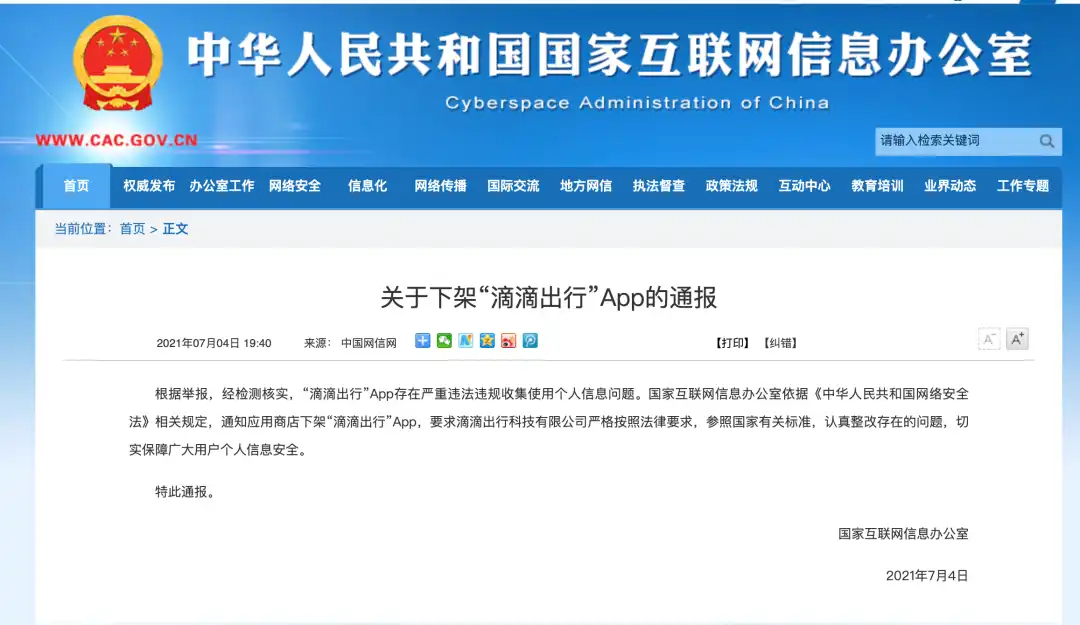
Official notice of Didi's delisting
At this point, Didi's financial story in China seems to have reached its end.
It is trapped in a "perfect" walled city. The roads are too smooth, requiring no repairs; the bridges are too stable, needing no construction.
This seems to be an unsolvable deadlock. But across the Pacific, a completely opposite business script is unfolding. The desolation there has not become an obstacle; instead, it has become Didi's greatest dividend.
Rebuilding Trust on the Cash Continent
When Didi's advance team first set foot on Latin American soil, they did not see a blue ocean waiting to be developed, but a massive social fracture.
According to World Bank statistics, about half of adults in Latin America do not have bank accounts. In Mexico, with a population of 130 million, this means over 66 million ordinary people are blocked from the high walls of the modern financial system.
This is a suffocating "financial vacuum." In this vacuum, cash is the only faith.
In Mexico, nearly 90% of retail transactions are still completed in cash. For Chinese internet companies accustomed to a cashless society, this "cash worship" is a nightmare. In China, funds flow in the cloud—clean and efficient; but in Latin America, because the vast majority of passengers do not have bank cards, they can only pull out crumpled, sometimes sweat-stained bills to pay for rides.
This directly leads to a collapse in efficiency. Drivers receive a pocketful of change, but Didi's platform cannot take a cut from it, resulting in many drivers being banned for unpaid fees, nearly paralyzing the system.
But more terrifying than the inefficiency is the uncontrollable safety.
On the complex streets of Latin America, drivers carrying large amounts of cash have become mobile "ATMs." Robberies are ever-present; every stop to collect payment could be a gamble for life and death.
Here, we must introduce a crucial point of reference: Uber.
As the pioneer of ride-hailing, Uber entered Latin America earlier than Didi. However, in the face of the same cash dilemma, Uber's choice reflects a fundamental strategic divergence between Eastern and Western internet giants.
Uber represents the typical "Silicon Valley fastidiousness" and specialization. In the mature U.S. market, finance belongs to Wall Street, and Uber only connects. This mindset led them to arrogantly insist on only doing what they were good at, even when faced with the desolation of Latin America.
The cost was painful. In 2016, Uber faced a literally "bloody lesson" in Brazil. After being forced to accept cash payments, the number of robberies targeting drivers skyrocketed tenfold in just one month. According to Reuters, at least six drivers lost their lives as a result.
Faced with this surge in death risk, Silicon Valley's typical response is to retreat and wait for the environment to mature slowly.
In contrast, Didi embodies the super app mentality of China and Asia: all-encompassing support.
Companies that grew up in the brutal commercial trench warfare of China understand one principle: if society lacks roads, you must build them; if society lacks credit, you must create it.
Thus, Didi chose a heavier, more grounded, but also more effective path—it decided to transform the environment.
Didi turned its attention to the ubiquitous red and yellow signs of OXXO convenience stores on the streets of Mexico.

National convenience store of Mexico
This retail giant, with 24,000 stores, handles nearly half of Mexico's cash transactions and serves as the de facto "national cash register." Didi keenly captured this connection and made a highly pragmatic decision: to turn convenience stores into its own human ATMs.
A silent financial experiment began.
When a driver finishes a day's work with pockets full of cash, he no longer needs to worry about bringing the money home. Instead, he can park in front of an OXXO store, show the barcode in the DiDi App to the clerk, and hand over the cash. With the crisp sound of the scanner, the physical cash instantly transforms into digital balance in the DiDi Pay account.
This sound carries profound significance.
This is not just a recharge; it is ferrying offline cash to online. By leveraging the ubiquitous convenience store network, Didi established a low-cost fund circulation system independent of traditional banks.
Once the funds enter DiDi Pay, Didi is no longer just a transportation platform; it has become the "shadow bank" for drivers.
Subsequently, Didi quickly built application scenarios on top of this account. In Brazil, Didi's 99Pay deeply integrated with the local instant payment system PIX, allowing tens of millions of lower-income individuals to experience financial dignity with instant transactions for the first time.
This approach constructed a bloody moat: safety.
In China, mobile payment is about "speed"; but in the complex security environment of Latin America, mobile payment is about "survival."
Every attempt to reduce cash usage means reducing the risk of drivers being robbed at gunpoint. When a driver discovers that using DiDi Pay can free him from fear, his loyalty to the platform will surpass all commercial subsidies.
At this point, Didi has finally built its first highway in Latin America. It is not addressing a luxury demand but rather the continent's most pressing desire—to make money flow and transactions safe.
When Footsteps Become Credit
Once the roads are built, Didi suddenly realizes that it is standing on an untapped gold mine. This gold mine is called data.
However, the data here does not refer to traditional financial flows. In Mexico or Brazil, the vast majority of drivers and passengers are blank slates in the records of traditional financial institutions. Banks cannot see them, do not know their repayment capabilities, and naturally do not dare to lend them money.
Banks cannot see them, but Didi can.
Through the app, Didi possesses an almost omniscient "God's perspective." It knows exactly when a driver starts their shift, how many kilometers they drive, and whether they are diligent; it also knows where a passenger lives, where they work, and how frequently they spend.
These seemingly trivial travel footprints are re-encoded by Didi's risk control model into a new category of credit—"behavioral credit."
This is an assessment that is warmer than bank statements. A driver who leaves for work at six every morning, rain or shine, even if they have no bank savings for various reasons, is still considered a highly creditworthy customer in Didi's algorithmic logic. Diligence is priced as credit for the first time here.
Based on this endogenous credit creation, Didi logically launched the lending product "DiDi Préstamos." For millions of Latin American users, this may be their first experience with formal financial credit. Data shows that among Didi's credit users, about 70% had never borrowed a penny before.
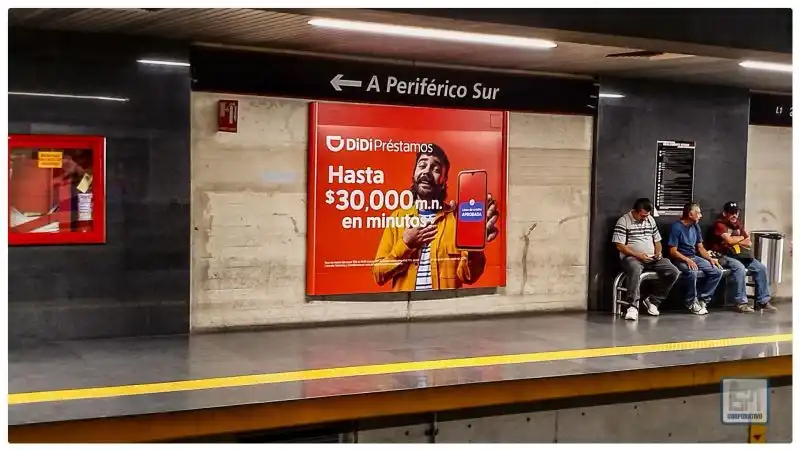
Local advertisement for DiDi Préstamos
This is not only a breakthrough in business but also a meaningful sociological experiment.
In Latin America, the vast "gray economy" population has long remained invisible due to a lack of credit records. Didi inadvertently accomplished a "digital confirmation of rights" that the government had failed to achieve for decades. A street vendor selling tacos or a used car driver, by joining Didi's ecosystem, finally gained a recordable economic identity, stepping out of the underground and into the sunlight for the first time.
This ability to "formalize the informal economy" is the deepest soil in which Didi has rooted itself in Latin America.
The moat created by this evolution is astonishing; it has even sparked a "gene" war in Latin America.
The digital financial battlefield in Latin America is already a fierce competition, with digital banking giants like Nubank and e-commerce behemoths like Mercado Libre. However, Didi possesses a dimensional advantage that they do not have: extremely high-frequency life scenarios.
Nubank's DNA is banking, which is low-frequency; Mercado Libre's DNA is e-commerce, which is medium-frequency. Didi's DNA is transportation, which is high-frequency.
You might shop online only once a month or visit a bank a few times a year, but you go out every day. In terms of developing payment habits, "transportation" is the highest-dimensional battlefield. Didi successfully broke through the low-frequency financial service barriers with its high-frequency transportation and food delivery scenarios (DiDi Food).
Having traffic is not enough; there must also be "retention."
To completely intercept the rapidly circulating funds on the platform, Didi unleashed its ultimate weapon: launching an interest rate war by leveraging the high-interest environment in Latin America.
It introduced a savings product, "DiDi Cuenta," with an annualized yield of up to 15%. This figure sounds almost insane in China, where it might even be suspected of being a Ponzi scheme. However, in Mexico, where the benchmark interest rate has long remained in double digits, this is merely a routine battle among major digital banks vying for deposits.
Didi is simply adapting to local customs, but in doing so, it completed the most critical turning point—it finally shed the awkward role of a "transient money god" and truly became a reservoir for wealth accumulation.
Industrial Synergy
Once the credit system and fund pool are established, Didi's ambitions are no longer limited to finance itself.
It began to play a more strategically significant role: a "Trojan horse" for Chinese industries going overseas. It aims to use finance as a key to unlock the door to heavy asset consumption in Latin America.
The first wave of this tide is the export of consumer goods.
In 2025, Alibaba's AliExpress partnered with Didi in Mexico to launch a "buy now, pay later" service. The results were immediate; during promotional weeks, AliExpress's order volume surged by 300%, with some Chinese merchants seeing sales increase by as much as 18 times.
For young Mexicans without credit cards, the credit payment provided by Didi became the bridge connecting them to "Made in China."
But this is just the prelude. A more profound layout is occurring in the overseas map of China's high-end manufacturing, especially in new energy vehicles.
Today, Latin America has become a new battleground for Chinese car companies like BYD, Chery, and Great Wall. However, the biggest obstacle they face is not product capability but the lack of financial tools. Local drivers want to buy electric vehicles to save on fuel costs, but traditional banks in Latin America, due to ineffective risk control models, not only have extremely slow approval processes but often outright reject loans.
At this moment, Didi became the crucial connector.
Didi holds millions of drivers in need of vehicle upgrades in one hand and precise risk control data and credit funds in the other, connecting them with Chinese car manufacturers eager to open up the market. It not only issues credit cards to drivers but also directly plays the role of an automotive financial service provider.
Through Didi's financial solutions, drivers can purchase Chinese-made electric vehicles in installments, using the cash flow from their rides to repay loans.
This represents a high level of industrial synergy. Didi is becoming the infrastructure for the landing of China's high-end manufacturing in Latin America. It is not only paving the way for finance but also for energy transformation.
At this point, a complete closed loop finally surfaces.
In Latin America, Didi has transformed itself into a super interface that connects online and offline, linking Chinese manufacturing with Latin American consumption.
The "super app" dream that Didi could not realize in China due to a mature environment has miraculously become a reality on the barren land on the other side of the Earth, in the most primitive yet solid way.
The Instinct of a Builder
With 1.162 billion orders in a single quarter, a 35% revenue growth rate, and nearly 30 billion in transaction volume, Didi has set a new milestone for Chinese internet companies going overseas with this substantial financial report.
This achievement not only signifies commercial success but also represents a correction to the logic of "exporting the Chinese model."
In the past, we often believed that with the technological and efficiency gap, we could directly transplant China's mature internet model to emerging markets. However, Didi's practice in Latin America proves that simple replication is a dead end. You cannot just bring advanced machines; you must also redo the dirty and laborious work that was done when those machines were built.
The most critical thing Didi did right in Latin America was to completely let go of the arrogance of a tech company. It bent down, returned to ten years ago, and repeated the QR code promotion and cash ground promotion that Alipay and WeChat Pay once did in a foreign land.
In the past, we often thought that the advantage of the Chinese model lay in algorithms and efficiency. But Didi's story illustrates that the most formidable ability of Chinese enterprises is the instinct to "create something from nothing" in a resource-scarce environment.
In China, this instinct has been sealed due to the over-perfection of infrastructure. Didi was trapped in the cracks between WeChat and Alipay, forced to be an efficient dispatcher. But in Latin America, when it was thrown into a wasteland, this repressed gene experienced an astonishing explosion. It did not see itself as a lofty tech company but lived as the most basic "infrastructure foreman."
This also foreshadows a certain fate and opportunity for Chinese enterprises going overseas. Attempting to directly transplant the "perfect model" from home is unfeasible; we can only earn respect by exporting the "ability to solve pain points." In those emerging markets that are as noisy, chaotic, and full of desire as China was ten years ago, lies the biggest Easter egg for the second half of Chinese internet development.
免责声明:本文章仅代表作者个人观点,不代表本平台的立场和观点。本文章仅供信息分享,不构成对任何人的任何投资建议。用户与作者之间的任何争议,与本平台无关。如网页中刊载的文章或图片涉及侵权,请提供相关的权利证明和身份证明发送邮件到support@aicoin.com,本平台相关工作人员将会进行核查。


