On December 5, 2025, a landmark event occurred in the cryptocurrency market: in the over-the-counter (OTC) trading area of major exchanges like Binance, the price of the stablecoin USDT, which is pegged to the US dollar, fell below the psychological threshold of 7.0 against the Chinese yuan, with quotes dropping as low as 6.99 yuan.
In stark contrast, during the same period, the People's Bank of China announced that the central parity rate of the yuan against the dollar remained stable at around 7.07 yuan, making the OTC price of USDT unusually lower than the official exchange rate, creating a "price inversion."
This phenomenon of approximately 1% negative premium reveals that under strong regulatory signals, the deep structure and liquidity of the market are undergoing significant changes.
1. Direct Catalyst: Regulatory Meeting Sets Tone, Cracking Down on Illegal Currency Exchange
The direct and decisive factor behind this price fluctuation came from clear and stringent signals released by regulatory authorities at the end of November.
● Meeting Tone: On November 28, the People's Bank of China and several departments jointly held a coordination meeting to combat speculation in virtual currency trading. Multiple blockchain media and community analyses pointed out that this meeting specifically targeted illegal cross-border currency exchange activities using stablecoins.
● Market Reaction: This signal was interpreted by the market as a precise warning against gray capital channels. OTC market liquidity core participants, known as "U merchants," generally adopted strategies to pause or reduce their currency collection business due to concerns about the risk of bank account freezes.
● Supply and Demand Reversal: The collective "withdrawal" of traders instantly reversed the market landscape. A large number of USDT sell orders seeking to cash out surged, while buying liquidity sharply shrank, putting pressure on prices and quickly breaking through the critical 7.0 yuan level.
2. Macroeconomic Background: Weakening Dollar and Market Capital Rotation
In addition to direct regulatory pressure, broader macroeconomic expectations and changes in market sentiment formed the external environment for the price decline.
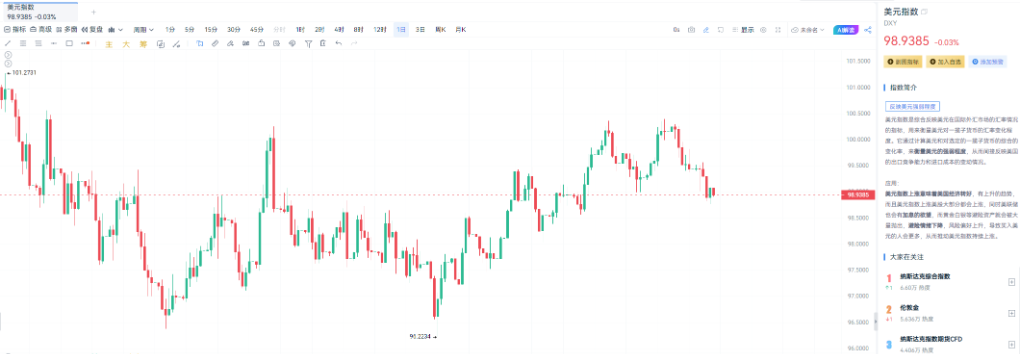
● Weak Dollar Expectations: The market's expectations for the Federal Reserve to soon begin a rate-cutting cycle have been strengthening, putting pressure on the dollar index. The yuan has upward pressure against the dollar, which naturally pulls down the USDT pegged to the dollar in terms of exchange rate.
● Internal Rotation of the Crypto Market: Some analysts pointed out that the expectation of loose dollar liquidity has prompted some funds to view crypto assets as a new allocation choice, leading to recent price increases in mainstream cryptocurrencies like ETH. This behavior of funds flowing from stablecoins to risk assets, termed "脱U入市" (脱U means exiting USDT, 入市 means entering the market), indirectly increased the selling pressure on USDT.
3. Industry Interpretation: Precise Pressure on Specific Violations
This incident has sparked widespread discussion within the industry, with a consensus that it represents a precise stress test by regulators on violations within the stablecoin ecosystem, rather than a blanket denial of the technology.
● Clear Targets: The industry generally believes that the regulatory focus is not on blockchain technology or the compliant financial applications of stablecoins, but rather on severely cracking down on their use in illegal cross-border currency exchange, money laundering, and other activities that disrupt financial order.
● Clear Signals: Legal and market analysts interpret the spirit of this meeting as a reinforcement of existing regulatory policies, with clearer signals aimed at severing the connection between stablecoins and illegal financial activities, guiding market expectations.
4. Market Impact: Liquidity Freeze and Risk Pricing Reconstruction
Regulatory pressure has quickly transmitted to the microstructure of the market, having an immediate impact on participant behavior and market pricing logic.
● Short-term Liquidity Freeze: The liquidity of the OTC market is highly dependent on intermediaries, and their cautious attitude has directly led to a deterioration in market trading depth, widening the bid-ask spread and increasing the difficulty of short-term cashing out.
● "Risk Premium" Becomes Apparent: The essence of this inversion is the market's repricing of the compliance risks (frozen accounts) and liquidity risks inherent in operations through this channel. The negative premium essentially represents the "risk discount" that traders pay to exchange for fiat currency.
● Revealing a Binary Structure: The price inversion intuitively exposes the temporary divergence between the strictly regulated official foreign exchange market and the OTC market determined by gray supply and demand, caused by regulatory intervention.
5. Future Outlook: Compliance Watershed and New Market Normal
Looking ahead, the stablecoin and related trading markets will seek a new balance under the pull of compliance constraints and real demand.
● Normalization of Short-term Volatility: As long as the regulatory pressure against illegal currency exchange remains high, the liquidity and prices in the OTC market will struggle to return to their previous "stable" state, with frequent fluctuations becoming the new normal.
● Divergence in Development Paths: The market will accelerate towards differentiation. On one hand, the space for using stablecoins for gray cross-border exchanges will be greatly compressed; on the other hand, blockchain financial applications serving real needs such as compliant cross-border trade settlement and supply chain finance will explore development under clearer rules.
● Long-term Value Anchor Shift: The core that determines the long-term value of stablecoins like USDT will no longer be arbitrage price differences, but rather their network effects, security, and ultimately the degree of compliance acceptance as potential financial infrastructure.

The early December drop of USDT against the yuan below 7 and the occurrence of "inversion" is a short-term market phenomenon triggered by domestic regulatory precision strikes against illegal currency exchange, compounded by international expectations of a weakening dollar.
It serves as a stress test, thoroughly exposing the vulnerability of gray capital channels that operate outside of regulation. In the future, the pulse of related markets will be more closely tied to the tightening and loosening of compliance policies, with any short-term price differences first reflecting "risk pricing" rather than "opportunity windows."
Join our community to discuss and grow stronger together!
Official Telegram community: https://t.me/aicoincn
AiCoin Chinese Twitter: https://x.com/AiCoinzh
OKX Benefits Group: https://aicoin.com/link/chat?cid=l61eM4owQ
Binance Benefits Group: https://aicoin.com/link/chat?cid=ynr7d1P6Z
免责声明:本文章仅代表作者个人观点,不代表本平台的立场和观点。本文章仅供信息分享,不构成对任何人的任何投资建议。用户与作者之间的任何争议,与本平台无关。如网页中刊载的文章或图片涉及侵权,请提供相关的权利证明和身份证明发送邮件到support@aicoin.com,本平台相关工作人员将会进行核查。