Family, the recent market in the cryptocurrency world is more thrilling than a roller coaster ride! After a sharp drop, there was a quick rebound, with significant ups and downs within three days. Some people made a fortune, while others were caught off guard — who is really behind this wave of fluctuations?
Today, I will clarify the core reasons and provide key data along with subsequent operational strategies.
First, let’s highlight the key points: the recent "sharp drop + quick rebound" roller coaster market is driven by two main factors — expectations of interest rate hikes in Japan and statements from the People's Bank of China, combined with the Federal Reserve's interest rate cut game. The collision of these multiple forces has created this extreme volatility.
Additionally, there are several key events that must be closely monitored: the Federal Reserve's interest rate decision on December 11 (with a 89.3% probability of a 25 basis point cut), U.S. non-farm payroll data on December 16, U.S. CPI data on December 18, and the Bank of Japan's interest rate decision on December 19 (with an 85% probability of a 25 basis point hike). Even Christmas on the 25th is worth paying attention to, as there often tends to be a small surge in activity around this time. These macro events will directly impact cryptocurrency price trends.
Now, let’s look at the market situation: BTC's important support level is at 90,900 points (chip support), while the more critical level below is 89,950 points — this is the liquidation concentration zone + EMA52 support. Below this is a chip vacuum area, and if it breaks down, it could easily trigger an accelerated market.
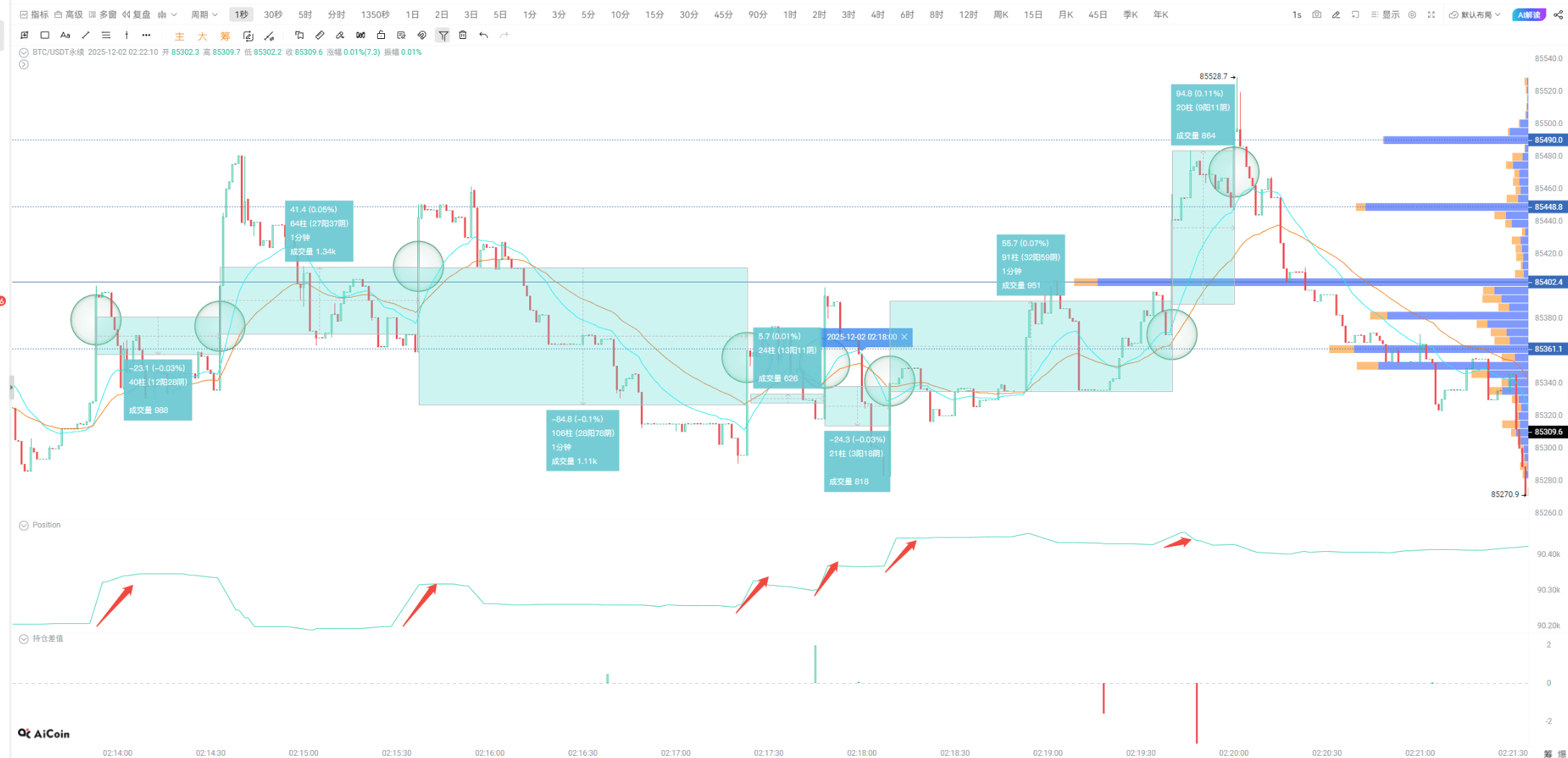
Short-term pressure is at 94,000~94,500 points (daily chip peak). When related news broke, the trading volume surged to $1 billion within just 30 minutes, indicating extreme market sentiment fluctuations.
It’s worth mentioning that large investors who went long at the low point yesterday made a killing! Within the 7 minutes from 02:13 to 02:20, the same large investor first built a position in BTC and then switched to ETH.
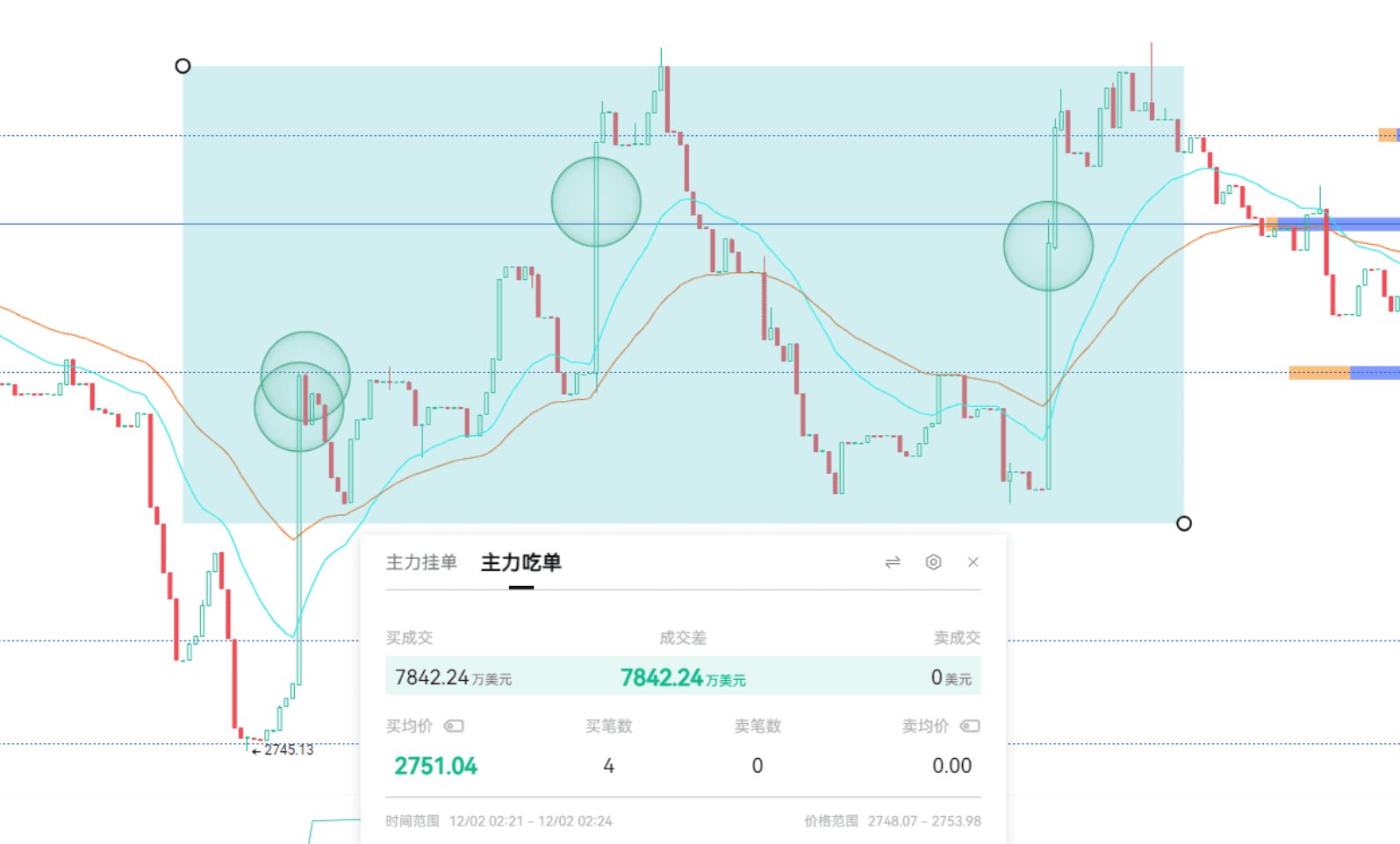
This precise bottom-fishing operation is a classic example of "smart money." The strength of this rebound is also supported by positive news: Vanguard Group (the world's second-largest asset manager) allowing investors to trade IBIT, along with friendly signals from Merrill Lynch and Bank of America, plus CZ calling for an ATH and Trump advocating for interest rate cuts, all contributed to a direct reversal in market sentiment.
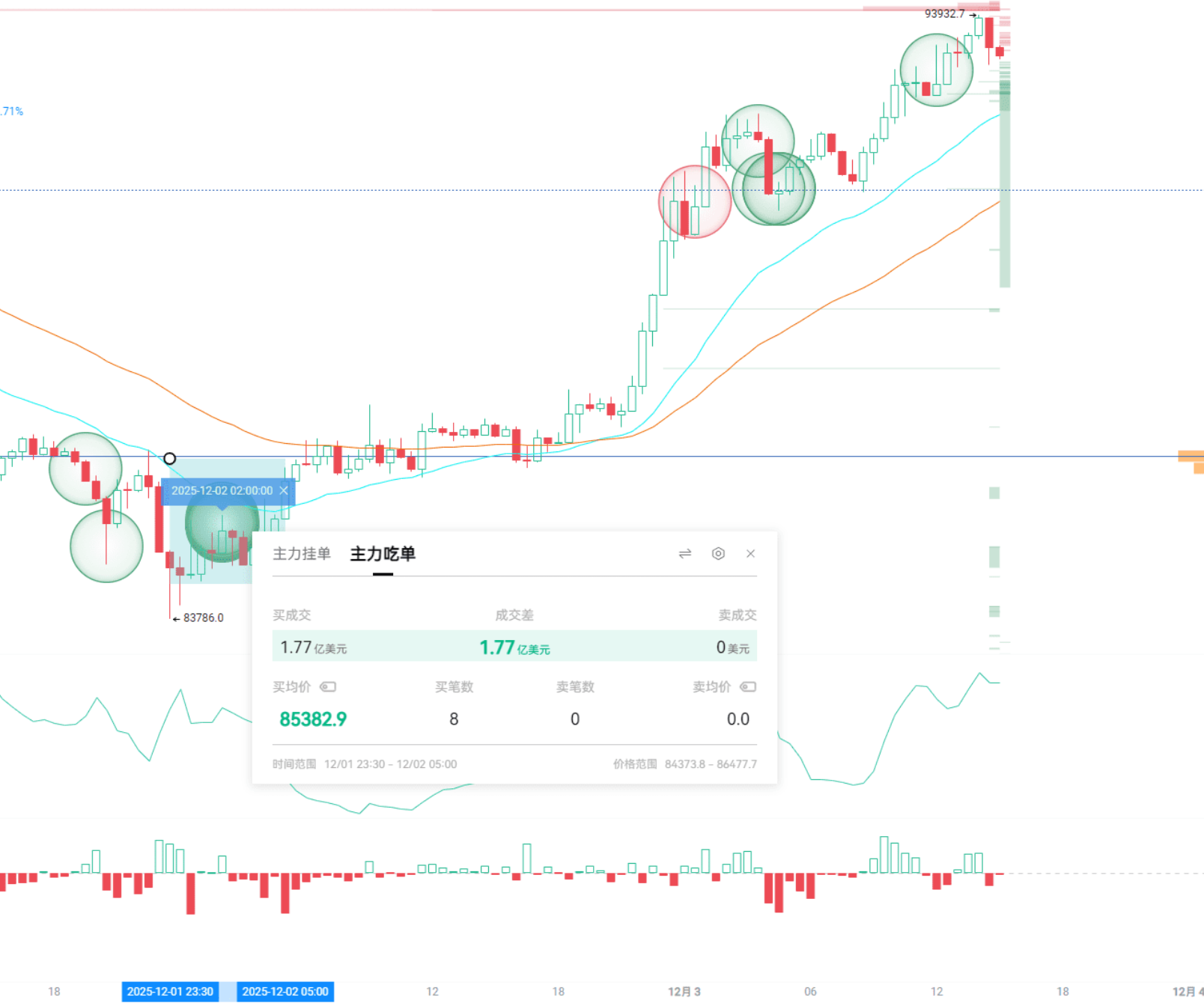
However, regarding Monday's sharp drop, the main reason was still the expectations of interest rate hikes in Japan, compounded by the People's Bank of China's statement over the weekend. With these two punches, the cryptocurrency prices plummeted right after the Asian market opened on Monday. Some may wonder why Japan's interest rate hike can affect the cryptocurrency market — this relates to the yen arbitrage market. For the past twenty years, Japan has been the global "cheap money" faucet, implementing negative interest rates and loose monetary policies, allowing borrowing yen at almost zero cost.
As a result, a large amount of international capital, banks, and hedge funds borrow yen at low interest rates, convert it to dollars, and invest in assets like stocks, bonds, and Bitcoin to profit from the price differences. However, once Japan raises interest rates, the cost of borrowing yen skyrockets, tightening the faucet. The profits of these large institutions will significantly shrink, forcing them to sell off U.S. stocks, U.S. bonds, Bitcoin, and other assets to convert back to yen to repay debts, which can trigger systemic liquidity withdrawal, leading to severe capital retreat and acute sell-offs.
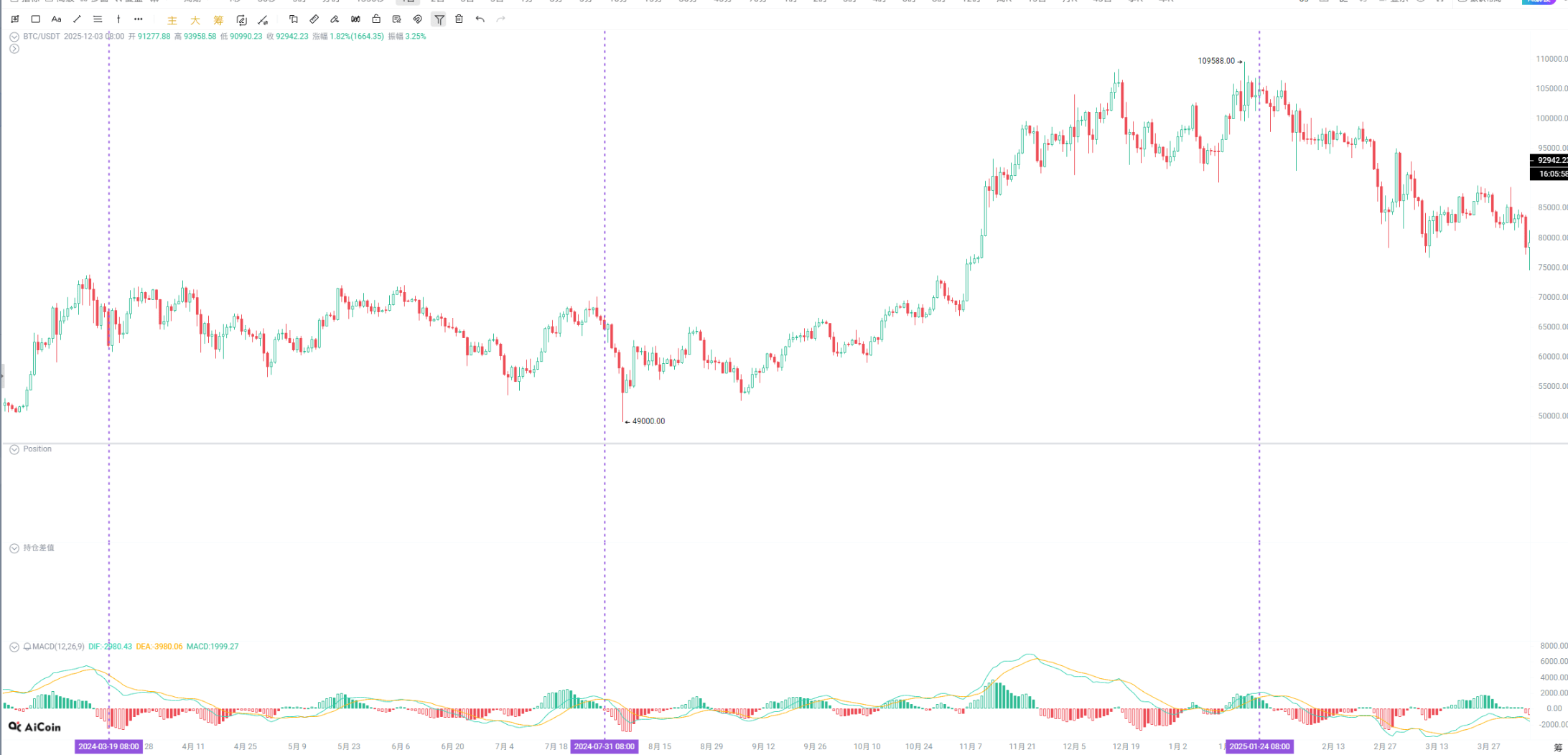
The impacts of Japan's previous three interest rate hikes are still fresh in memory: in March last year, the interest rate hike caused BTC to fluctuate by 9.7% on the same day; the rate hike at the end of July directly led to a decline in global financial markets, with Japanese stocks even experiencing a circuit breaker, and the cryptocurrency market naturally did not escape. The current situation is more complex, as the Federal Reserve is expected to implement loose monetary policy (interest rate cuts), while Japan is tightening (interest rate hikes). The market's game is at its peak. It’s important to note that Japan's interest rate hike or cut actions are rare and not as frequent as the Federal Reserve's, so each action has a particularly strong impact.
The recent cryptocurrency market is mainly dominated by expectations of interest rate hikes in Japan and the Federal Reserve's interest rate cut game. Although the volatility is high, there are also many opportunities. Moving forward, pay close attention to the Bank of Japan's interest rate decision on December 19, as it could very well become the catalyst for the next wave of market activity. When operating, be sure to control your positions, avoid chasing highs and cutting lows, and closely monitor key support and resistance levels. Following the rhythm of smart money is the most reliable approach.
Join our community to discuss and grow stronger together!
Official Telegram community: https://t.me/aicoincn
AiCoin Chinese Twitter: https://x.com/AiCoinzh
OKX benefits group: https://aicoin.com/link/chat?cid=l61eM4owQ
Binance benefits group: https://aicoin.com/link/chat?cid=ynr7d1P6Z
This article only represents the author's personal views and does not represent the platform's stance or views. This article is for information sharing only and does not constitute any investment advice to anyone.
免责声明:本文章仅代表作者个人观点,不代表本平台的立场和观点。本文章仅供信息分享,不构成对任何人的任何投资建议。用户与作者之间的任何争议,与本平台无关。如网页中刊载的文章或图片涉及侵权,请提供相关的权利证明和身份证明发送邮件到support@aicoin.com,本平台相关工作人员将会进行核查。


