Original Title: What To Expect For Interest Rates In 2026
Original Author: Simon Moore, Forbes
Translated by: Peggy, BlockBeats
Editor’s Note: As the market bets on a "new Federal Reserve Chair + a new round of interest rate cuts" in 2026, the path of U.S. interest rates has once again become the main variable in global asset pricing.
CME futures indicate that the federal funds rate may drop to around 3% in 2026, down from the current range of 3.75%–4%, with the main reductions likely concentrated in the first half of the year. However, with inflation not yet fully returning to target and signs of weakening employment, the policy outlook remains full of uncertainty. Although the Trump administration is expected to appoint a new chair who leans towards easing, the operational mechanism of the FOMC dictates that the policy tone will still be dominated by economic data.
This article outlines the key interest rate meeting schedule for 2026, the expected range for rate cuts, and the policy game, providing readers with a clear framework for understanding the direction of U.S. interest rates.
The following is the original text:
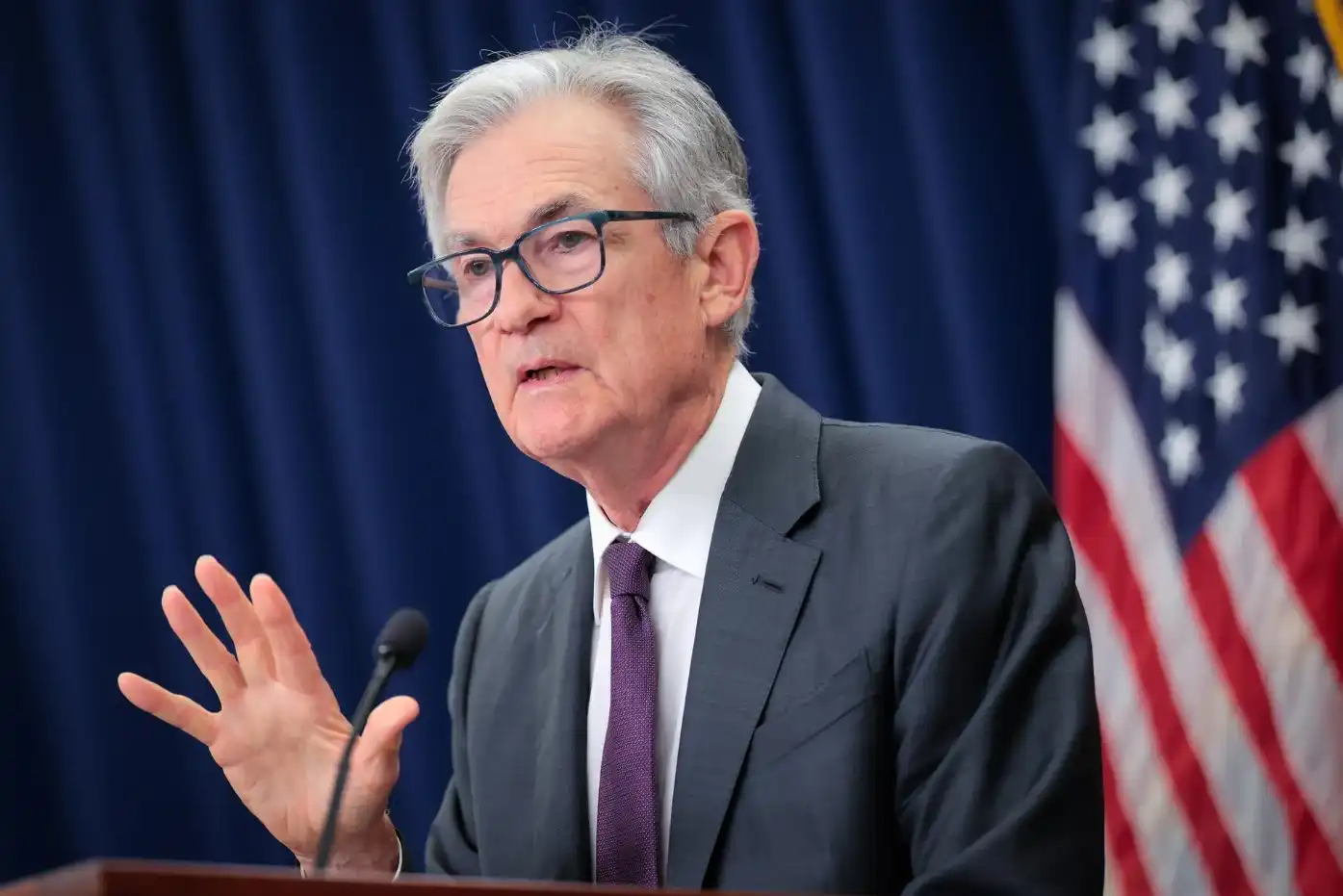
After the regular Federal Open Market Committee (FOMC) meeting held in Washington, D.C., Federal Reserve Chair Jerome Powell answered reporters' questions at a press conference. Despite President Donald Trump's pressure for rate cuts, the U.S. central bank kept the federal funds rate unchanged in the range of 4.25%—4.5%.
According to the CME FedWatch tool's pricing of interest rate futures, the market generally expects a short-term rate-cutting cycle in 2026 under the backdrop of a "new Federal Reserve Chair," with the FOMC's eight meetings throughout the year likely focusing on the path of rate cuts.
Before that, the FOMC will hold its last meeting of the year on December 10, 2025, where the market sees a slight possibility of a rate cut, but the probability of keeping rates unchanged cannot be ignored.
2026 Interest Rate Path
According to current pricing, by December 2026, the federal funds rate is expected to drop to around 3%, below the current range of 3.75%–4%.
However, the interest rate outlook remains highly uncertain: in more extreme market estimates, rates could drop as low as 2% or remain at the 4% level.
If the FOMC ultimately initiates rate cuts, the market believes that the main reductions may be concentrated in the first half of 2026. In contrast, Federal Reserve officials themselves are more cautious in their predictions for the 2026 interest rate level, with most forecasts still suggesting rates will remain above 3%. However, these predictions were made in September and will be updated again in December.
2026 FOMC Meeting Schedule
Although the Federal Reserve can adjust rates at any time in economic emergencies, normal years typically follow a set schedule of eight meetings.
The interest rate meetings in 2026 will be held on the following dates: January 28, March 18, April 28, June 17, July 29, September 16, October 28, and December 9.
Starting in March, the FOMC will update the Summary of Economic Projections (SEP) at the next meeting.
New Chair May Push for Lower Rates
President Trump is expected to nominate a new Federal Reserve Chair in 2026 who is more supportive of a "rate-cutting orientation." The prediction market (such as Kalshi) currently sees Kevin Hassett as the most likely candidate.
This means that interest rate policy in 2026 may receive additional momentum. For example, Stephen Miran, appointed by Trump in 2025, has repeatedly leaned towards a more aggressive rate-cutting stance in votes.
However, aside from the chair selection, the overall voting structure of the FOMC will continue the existing pattern, meaning that monetary policy will not undergo a drastic shift due to the new chair.
Economic Data Remains the Core Variable
Ultimately, the Federal Reserve's decisions will still be driven by economic data.
Currently: inflation is slightly above the 2% target but shows no signs of spiraling out of control; the unemployment rate has risen, but not to an alarming level.
In such an environment, the FOMC is likely to lower rates at a moderate pace. If the unemployment rate deteriorates significantly, the pace of rate cuts may need to be increased; conversely, if inflation unexpectedly rebounds, the Federal Reserve may slow its adjustment pace. However, the latter scenario currently has a low probability of occurring.
The most closely watched indicator is employment data. Some officials believe the labor market is slowing, which could drag down the overall economy, suggesting that rates should be lowered in advance; others believe that the softening in employment does not pose a real risk.
Employment data in 2026 will continue to reveal which side's judgment is closer to reality.
免责声明:本文章仅代表作者个人观点,不代表本平台的立场和观点。本文章仅供信息分享,不构成对任何人的任何投资建议。用户与作者之间的任何争议,与本平台无关。如网页中刊载的文章或图片涉及侵权,请提供相关的权利证明和身份证明发送邮件到support@aicoin.com,本平台相关工作人员将会进行核查。


