The days have not been peaceful for crypto czar David Sacks. With the highly anticipated inaugural White House Crypto Summit approaching, various accusations and controversies have been swirling on social media platforms.
While preparing for the summit, David Sacks frequently posted clarifications: "Yes, I sold all my cryptocurrencies (including BTC, ETH, and SOL) before this administration took office."; "I also sold Multicoin. At that time, I actually didn't need to sell because the ethical review process was still ongoing. But I made the decision to sell all my cryptocurrencies and focus on crypto-related funds."
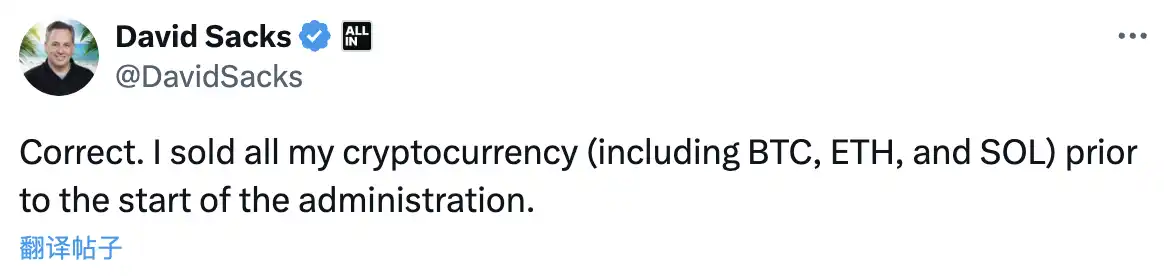
The CEO of Bitwise and co-founder of Multicoin also spoke up for him: "David Sacks has sold Bitwise equity"; "White House AI and cryptocurrency director David Sacks is clear about his role. A few months ago, his team contacted us, and we found buyers for the remaining Multicoin-related assets under his Craft Ventures."

Why the frequent accusations?
Why has David Sacks been facing accusations recently? The firepower is mainly focused on Bitwise and Multicoin Capital, two companies related to David Sacks' interests.
The immediate trigger was the high degree of alignment between the cryptocurrency reserve assets listed by Trump and the asset portfolio of Bitwise. David Sacks' venture capital firm, Craft Ventures, invested in Bitwise's seed round back in 2017, establishing a significant connection. Bitwise's cryptocurrency index fund holds a large amount of BTC, ETH, SOL, XRP, and ADA—coincidentally, these five assets are exactly the cryptocurrencies that Trump proposed to include in the reserve. Critics sarcastically pointed out that Bitwise's portfolio is "a lucky coincidence" for David Sacks; if the government purchases the strategic reserve assets proposed by Trump (such as BTC, ETH, etc.), Bitwise could naturally benefit.

However, according to a statement made by Bitwise's CEO on the morning of March 6: "David Sacks has sold Bitwise equity," it seems unlikely that David Sacks will directly receive dividends from the company's profits.
Another noteworthy point is that David Sacks was once a "Solana supporter," having invested in early Solana as an LP of Multicoin Capital in 2018. He even mentioned in a well-known podcast "All-In" that he remained steadfast in not selling SOL even after the collapse of FTX. As a defender of Republican ideals, David Sacks described the court's mixed ruling regarding XRP—where it does not constitute a security when sold on public exchanges but does when sold to institutional investors—as a victory for the entire crypto industry.
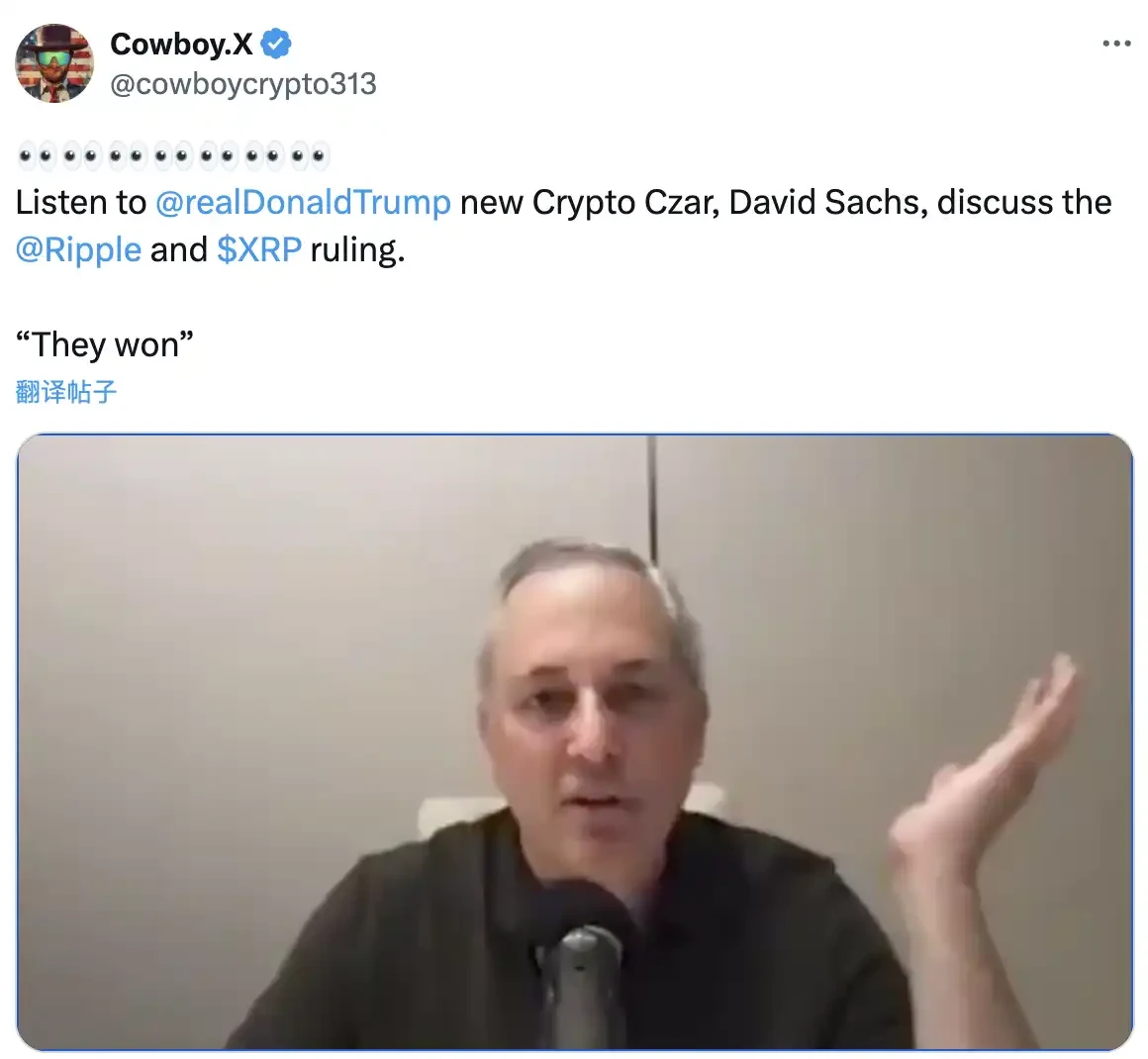
Considering the above factors, despite David Sacks repeatedly clarifying that he no longer holds crypto assets and has sold shares in related companies, his previously outspoken support for certain altcoins has made it difficult for market skepticism to subside.
What are the highlights of the inaugural Crypto Summit?
For David Sacks, the upcoming White House Crypto Summit is of utmost importance. This summit is the first of its kind hosted by the White House and is of high caliber. In addition to U.S. President Trump, AI and crypto czar David Sacks, and Executive Director of the Crypto Working Group Bo Hines, sources indicate that political figures attending the summit will also include U.S. Treasury Secretary Scott Bessent, U.S. Commerce Secretary Howard Lutnick, New York Attorney General Letitia James, U.S. Attorney General Pam Bondi, and SEC Chairman Paul Atkins, among others. Notable figures from the crypto industry will also attend the summit, such as Ripple CEO Brad Garlinghouse, Strategy Executive Chairman Michael Saylor, and Paradigm co-founder Matt Huang.
According to multiple media reports, the most eye-catching aspect of this summit may be the "National Crypto Strategic Reserve" plan. This plan aims to incorporate mainstream cryptocurrencies such as Bitcoin, Ethereum, Solana, Cardano, and Ripple (XRP) into the national reserve system, with a scale and functional positioning similar to traditional oil reserves. According to Forbes, the selection of reserve assets takes into account the characteristics of each currency: Bitcoin's anti-inflation properties as "digital gold," Ethereum's smart contract ecosystem, Solana's high-performance application platform, Cardano's research-driven security architecture, and Ripple's efficiency in cross-border payments.
In terms of regulatory framework construction, the summit will focus on the top-level design of stablecoins and the overall regulatory framework. Cointelegraph revealed that Trump advisor David Sacks advocates for strengthening the dollar's hegemony through stablecoins, a viewpoint that may influence federal regulatory proposals. Currently, the draft bill being advanced by the House Financial Services Committee indicates that stablecoin institutions with issuance exceeding $10 billion may fall under the Federal Reserve's regulatory framework, forming a dual regulatory structure between federal and state governments. Additionally, the "21st Century Financial Innovation and Technology Act" proposed in 2023 may see substantial progress, focusing on coordinating the regulatory responsibilities of the SEC and CFTC to create a regulatory paradigm for digital assets that balances innovation and safety.
To achieve the strategic goal of becoming a "crypto capital," the summit may introduce a series of innovative incentives. CryptoBriefing analysis suggests that the government may relax regulatory restrictions imposed during the Biden administration. An unexpected detail is that the summit may also discuss tax reforms related to crypto. According to BeInCrypto, tax reform could be part of the agenda, potentially affecting investors' tax burdens, involving simplification of tax reporting for crypto transactions or providing tax incentives to promote industry growth.
David Sacks is responsible for formulating a legal framework conducive to the development of the crypto industry. At a press conference on February 4, 2025, he discussed the U.S. leadership in the digital asset ecosystem with Republican policymakers, emphasizing the importance of maintaining innovation domestically. It is foreseeable that if public opinion continues to ferment, it will not only weaken David Sacks' voice but may also significantly undermine the transparency and credibility of the Trump administration's crypto policies.
The White House Crypto Summit may become a key moment for David Sacks, the crypto czar, to turn public opinion around. In a market already mired in trust crises due to various rug pulls, insider trading, and other scandals, whether this summit can restore market confidence and rebuild trust, whether David Sacks can counter the accusations of "conflict of interest" with "policy outcomes," or continue to be questioned for "endorsing specific tokens," remains to be seen.
免责声明:本文章仅代表作者个人观点,不代表本平台的立场和观点。本文章仅供信息分享,不构成对任何人的任何投资建议。用户与作者之间的任何争议,与本平台无关。如网页中刊载的文章或图片涉及侵权,请提供相关的权利证明和身份证明发送邮件到support@aicoin.com,本平台相关工作人员将会进行核查。


