Original author: Lao Bai, ABCDE Investment Research Partner
Since @jason_chen998's article "Anger at Its Lack of Competition" on ETH has gained traction, there has been a lot of discussion online in recent days about the rivalry between ETH and Solana. I do not intend to repeat or elaborate on that. I would like to add a perspective (not FUD), which is from the angle of primary market innovation and financing. After all, many of these projects have not yet entered the public eye and are still being actively organized.
In the past two years at ABCDE, we have discussed over 1,000 projects. Although this certainly does not cover the overall situation of the primary market, the sample size should not be small. My feeling in 2023 was that ETH and Solana were developing separately in the primary market, and even due to the expectations surrounding Eigenlayer and the entire Restaking + LRT ecosystem, ETH had a stronger momentum in the primary market.
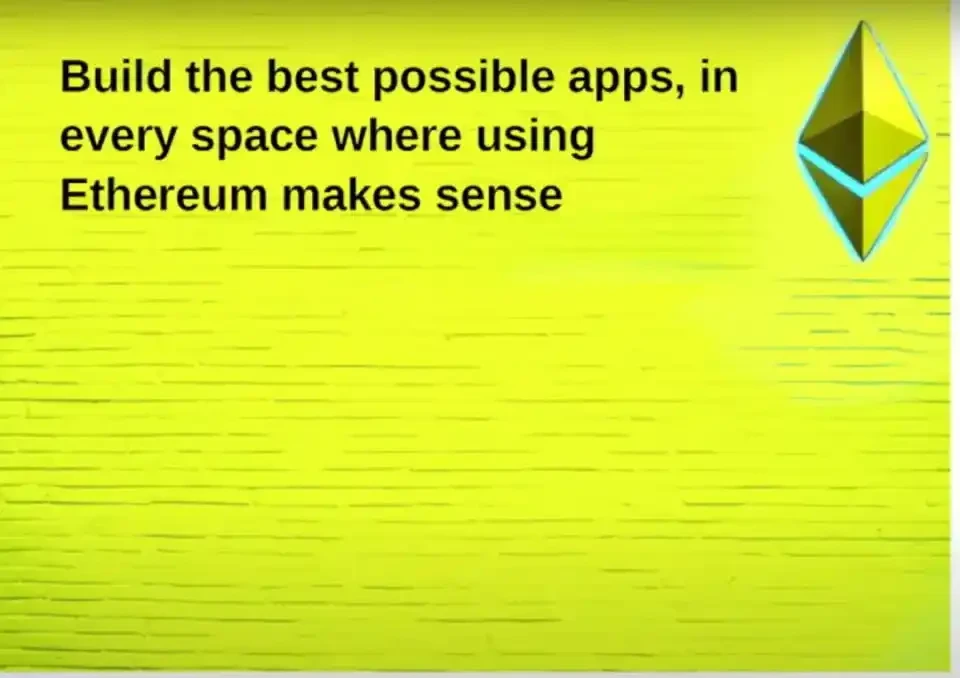
In 2024, there was a relatively significant shift. The entire market no longer buys into the completely oversaturated Infra projects, and the phenomenon of "ghost chains in empty cities" has sparked everyone's disdain. Vitalik Buterin himself showed a clear change in tone in his August article "The Next Decade of Ethereum," stating, "Basically, I think we have or are about to have the tools necessary to build the best applications in every area suitable for using Ethereum."
In the early second half of 2024, Vitalik's change in tone, a nearly $100 million seed round financing for an AI Infra project, and the opening of Matr1x with over 2.5 million downloads at just over $100 million FDV - the overlap of these three independent but closely timed events marks a turning point in my view - the peak of Infra and the trough of applications. After this, Infra began to decline, while applications started to slowly rise. Of course, this is a timeline that extends over the next few years and will not happen overnight.
In the past major innovations in Crypto, such as the ICO in 2017, DeFi Summer in 2020, and Play2Earn and NFTs in 2021-2022, all occurred on ETH, and more importantly - on ETH L1. This has allowed ETH's price to soar. However, the current market sentiment shows that people are very confident about Solana breaking its previous highs, while there is endless worry about ETH returning to $4,000, not to mention the previously mentioned concern about ETH breaking $10,000. In the secondary market, Solana PumpFun is thriving, while ETH, despite its TVL still leading by a wide margin, has applications that are still the same old faces from 2020-2021, and more and more users are moving to L2, with L1 Gas remaining low for a long time.
The primary market is facing the same problem. In the past six months, I have personally noticed a significant increase in application-based projects, with various prediction/gambling markets, AI applications, Depin, micro-innovative DeFi, Payfi, AAA games, and so on emerging one after another. It is uncertain where the next major innovation breakthrough will occur, but based on my impressions, the ecological distribution of projects looks roughly like this:
- Prediction/Gambling Market - Ton/Solana/Monad
- AI - Solana/Base/Monad
- Depin - Solana/MegaETH/Monad
- DeFi - Arbitrum/Berachain/MegaETH/Monad
- Payfi - Ton/Solana/Monad/MegaETH
- Game - Sui/Ronin/Immutable X
- RWA - ETH/Solana
It can be seen that regardless of where the next major application-level innovation occurs, Solana currently appears to have the greatest opportunity, followed by Monad and MegaETH. Aside from some RWA-related projects, there are very few new projects that are completely running on ETH L1. In L2, Arb and Base are the most capable (referring only to the application level, OP has basically taken the path of chain infrastructure), but unfortunately, even if explosive or even phenomenal applications emerge from them, the value that ETH L1 can capture under the current architecture is likely very limited.
I personally believe that the most promising new tracks are AI and PayFi. Currently, Solana and Base are far ahead in AI, with Base having completed the first-ever AI-to-AI payment and recently launching a new fully on-chain AI agent that can create an AI agent with an encrypted wallet and Twitter account (optional) in just three minutes. Solana has even given birth to the new track of AI Meme. Of course, if you really study Goat and ACT, you will know that they are far more than just memes; they have the potential to create a brand new track and paradigm.
PayFi is a competition between the two veterans, Ton and Solana, versus the two newcomers, Monad and MegaETH. This is a track that is almost impossible to be falsified; everyone knows that Crypto is actually most suitable for payments, which is also the original intention behind Satoshi Nakamoto's invention of Bitcoin. It is just a matter of which chain/project can ultimately realize this aspiration at what point in time. (Lastly, I should mention that several projects based on the Lightning Network for PayFi have also emerged recently; let's see if this round of Lightning can rise.)
Saying all this is not to continue FUD against ETH. I personally do not believe that Solana, riding this wave of momentum, can truly flip ETH. ETH, based solely on its current community and technological accumulation, is enough to firmly hold the second position. My only concern is whether ETH is content with the status quo, accepting that innovation and value capture are happening on L2, while L1 remains focused on DA and settlement (while also facing competition from projects like Celestia), with its price remaining stable. However, I do not have an answer. The current weak value capture of ETH L1 for L2 is a given fact, and L1's GAS and TPS are indeed insufficient to support mass adoption-type applications. Relying solely on old DeFi and possibly new RWA tracks seems insufficient for everyone to see ETH soaring to $10,000. If in the next few years, BTC is at $150,000 to $200,000, Solana at $500 to $1,000, and ETH is still hovering around $3,000 to $4,000, the confidence and status accumulated over the past decade will surely be slowly eroded.
How to break the deadlock? This is probably not the responsibility of VCs; we look forward to ETH developers and entrepreneurs to tell us the answer.
免责声明:本文章仅代表作者个人观点,不代表本平台的立场和观点。本文章仅供信息分享,不构成对任何人的任何投资建议。用户与作者之间的任何争议,与本平台无关。如网页中刊载的文章或图片涉及侵权,请提供相关的权利证明和身份证明发送邮件到support@aicoin.com,本平台相关工作人员将会进行核查。