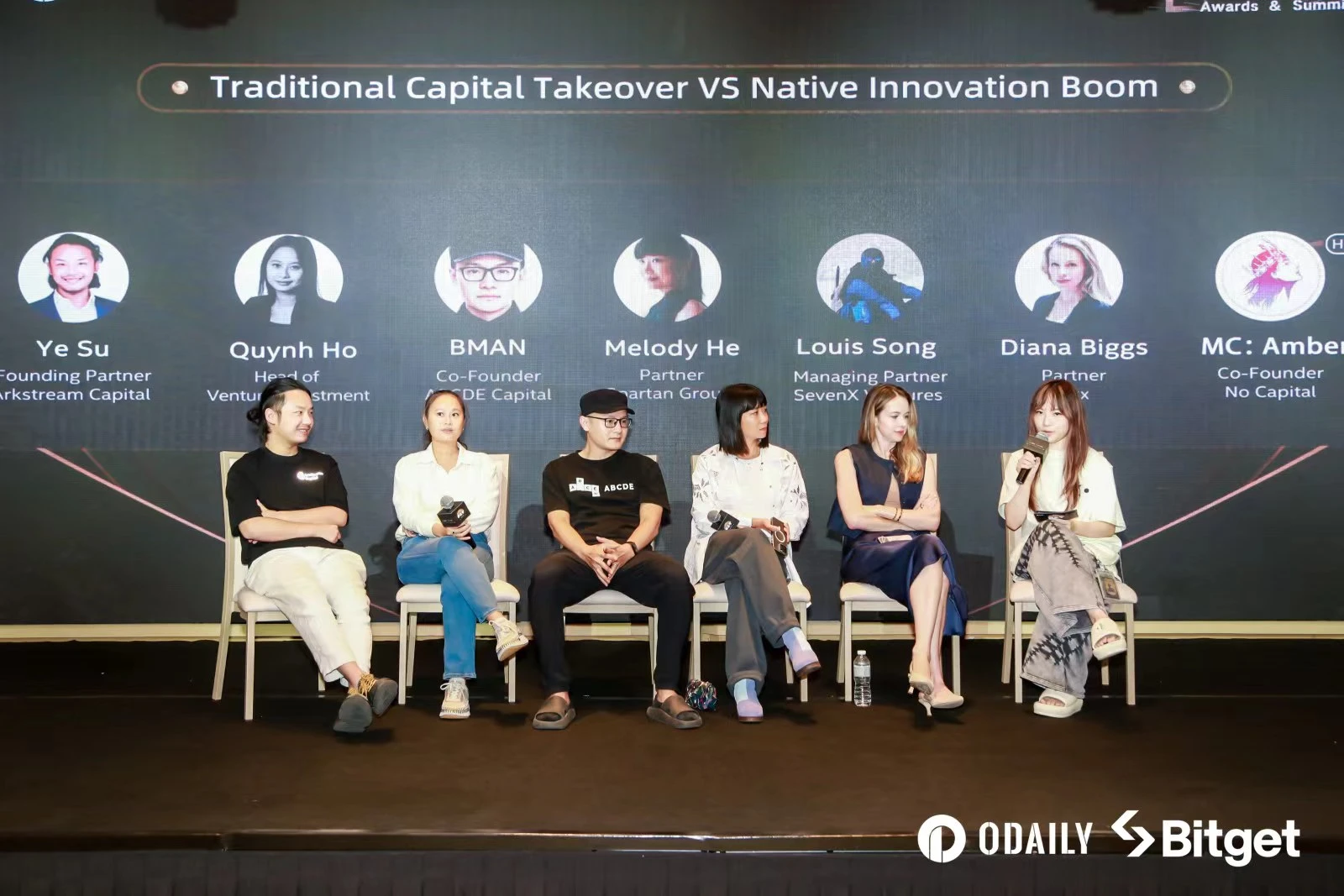
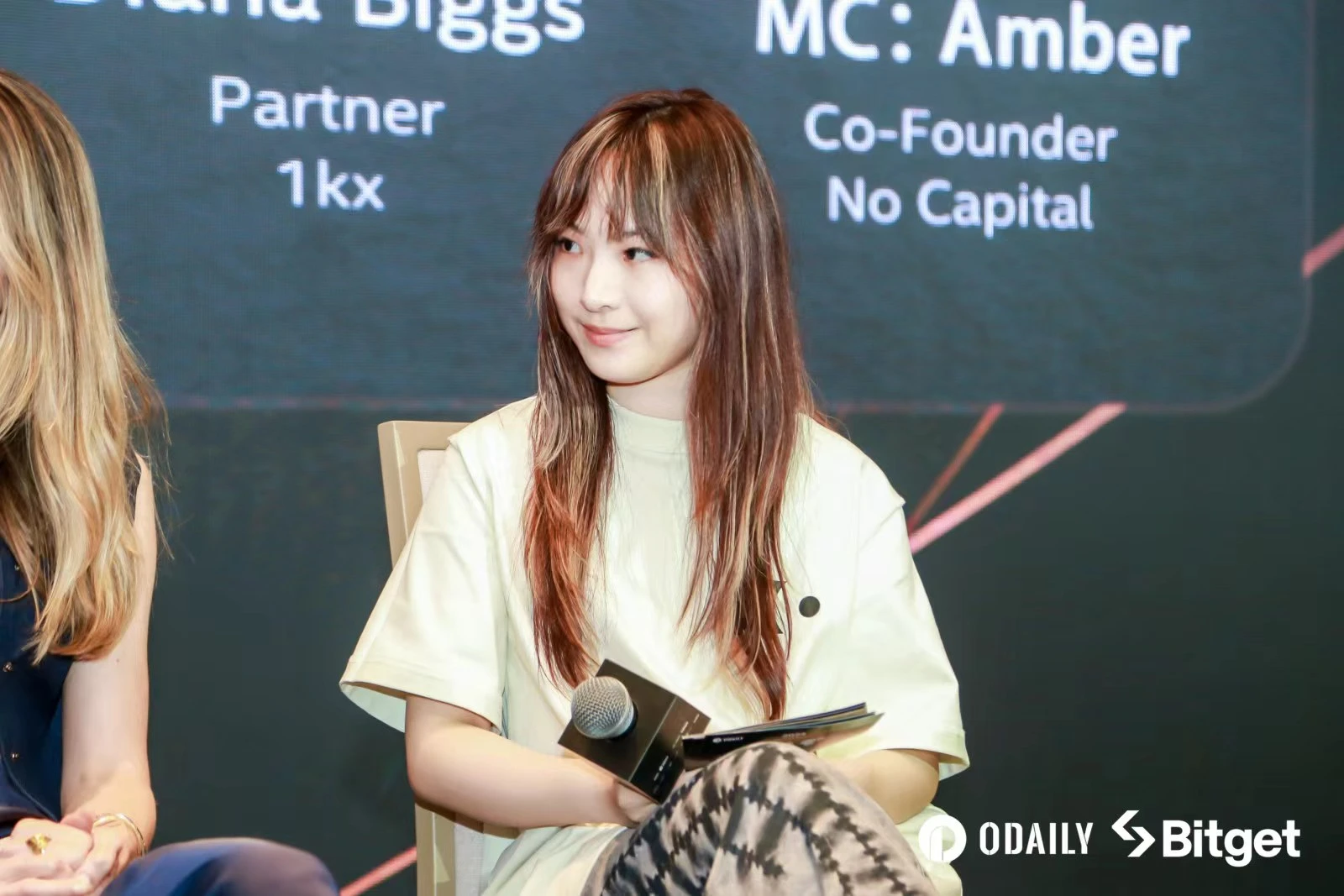
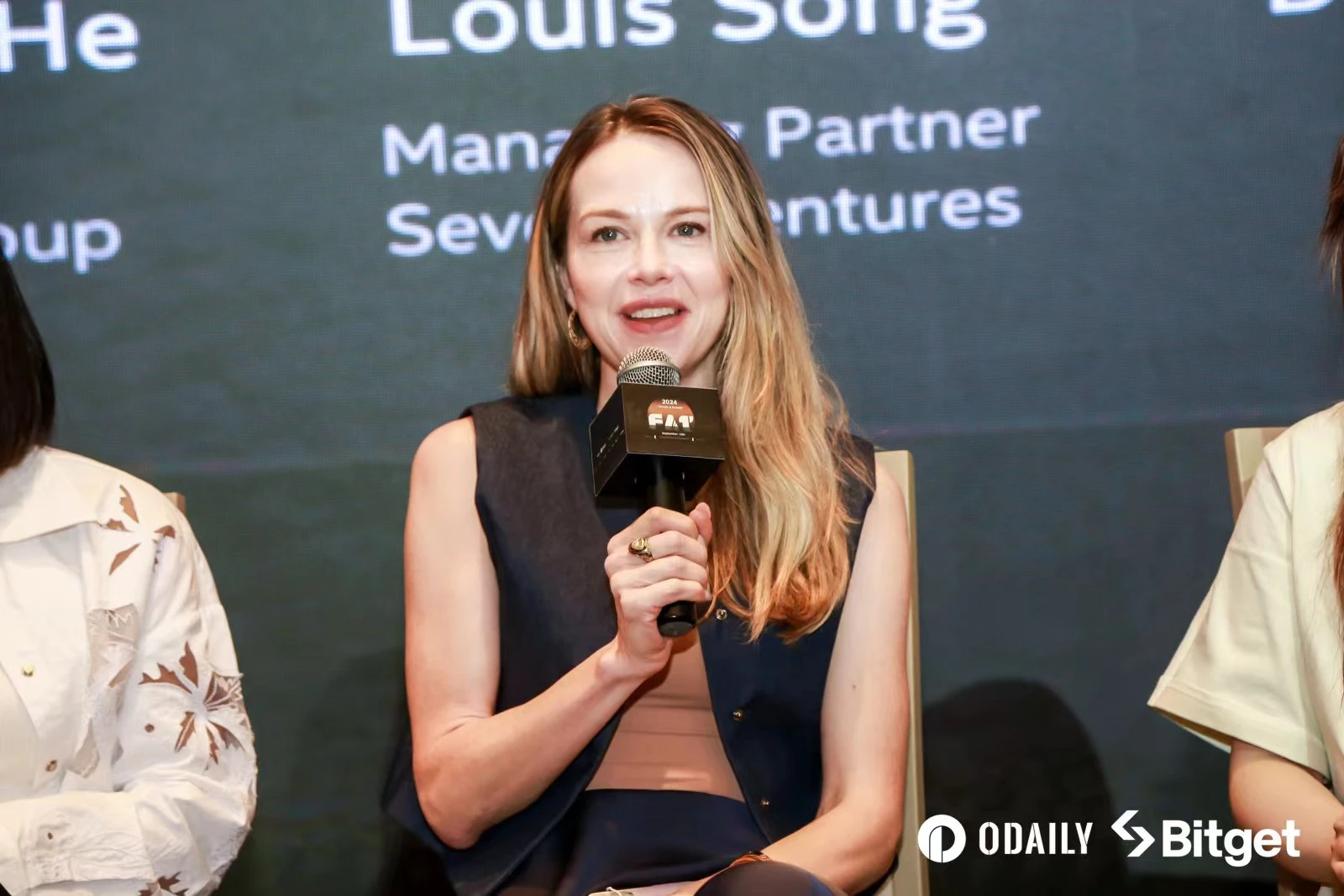
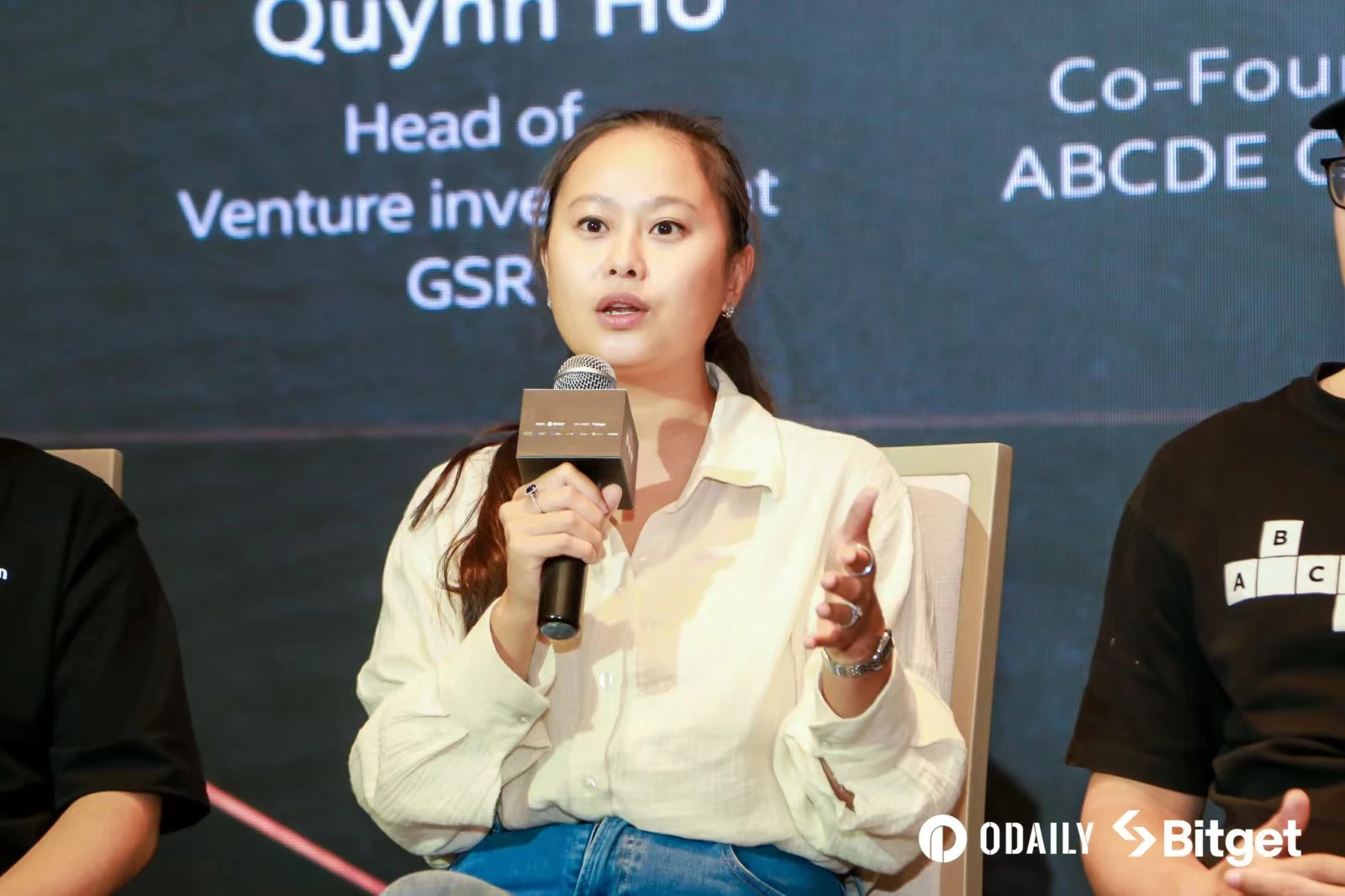
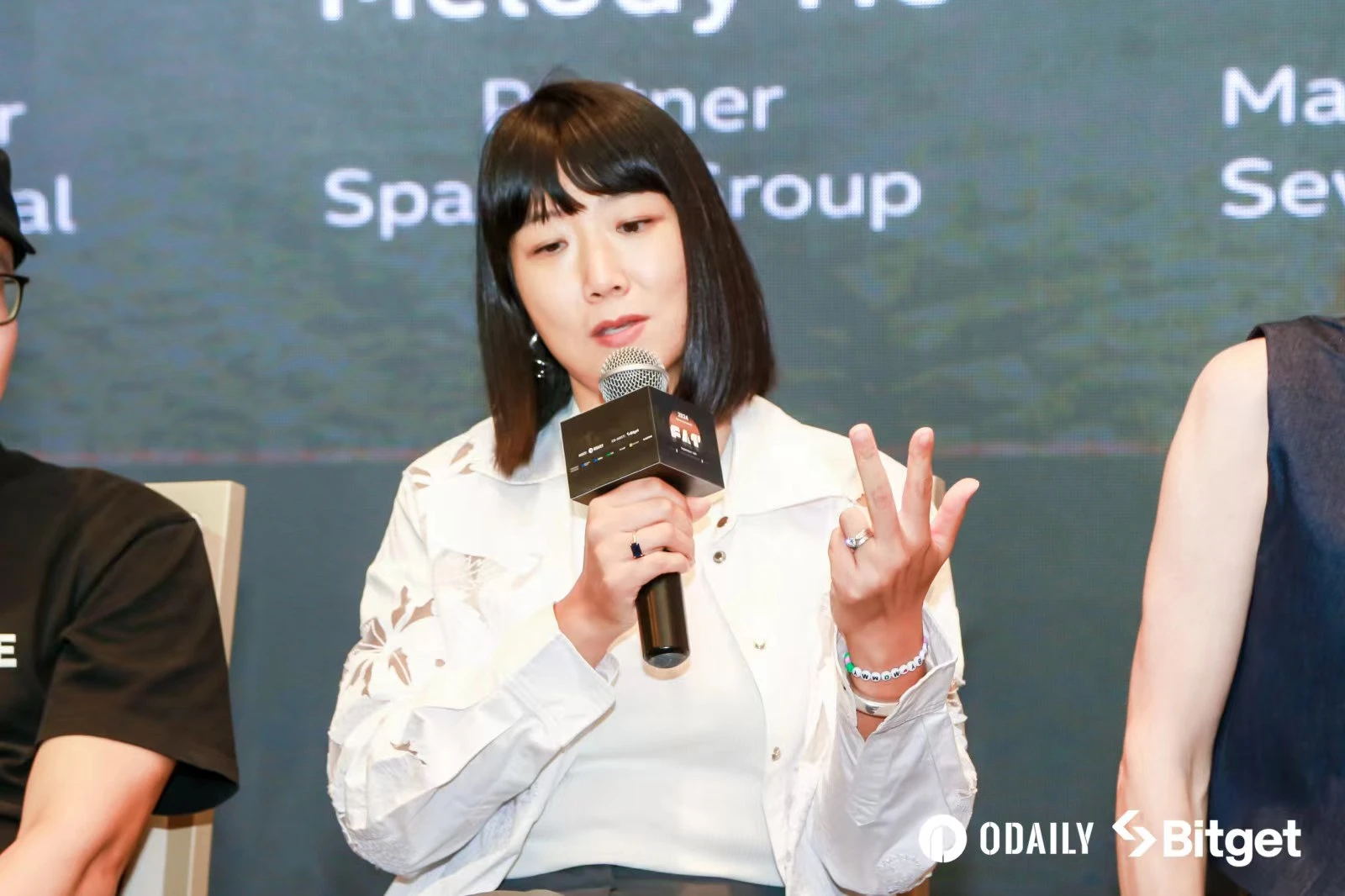
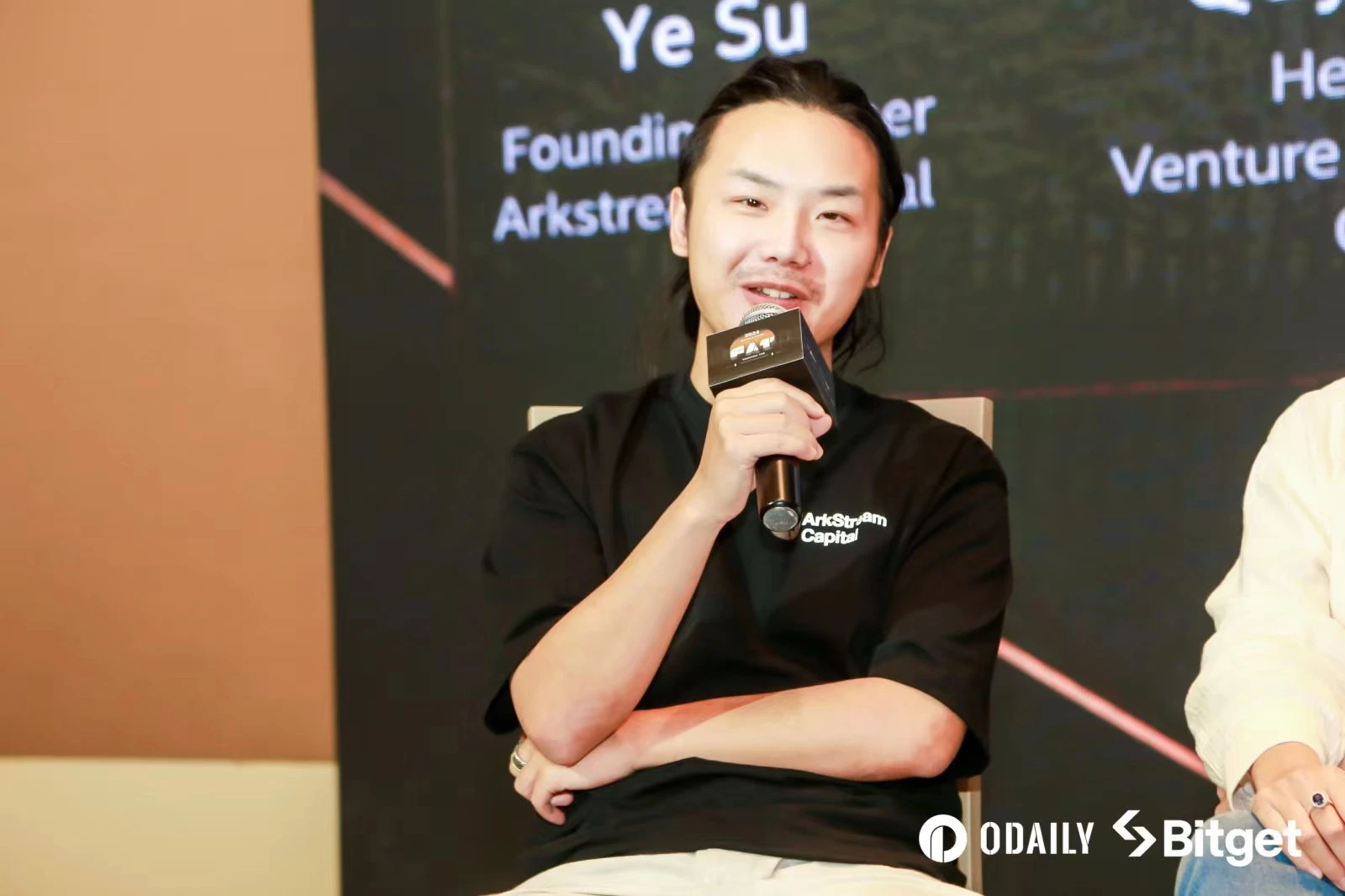
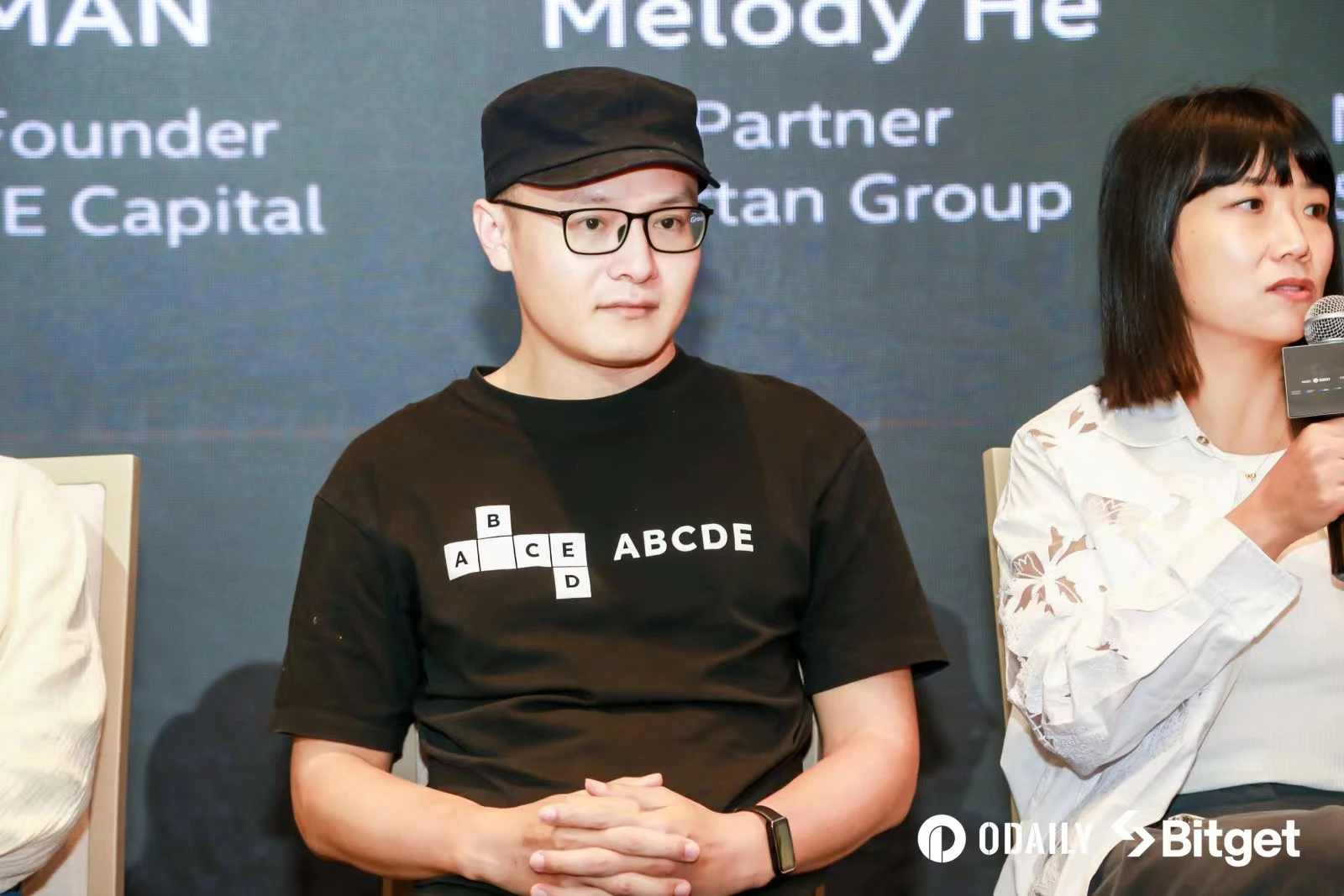
On September 16, at the "FAT Awards 2024" annual summit hosted by Odaily Planet Daily and co-hosted by Bitget, the heads of several well-known institutions presented a wonderful discussion at the roundtable meeting on the theme "Traditional Capital Takeover vs Native Innovation Boom". The roundtable meeting was hosted by Amber, co-founder of No Capital, and the guests included Melody He, partner of Spartan Group; BMAN, co-founder of ABCDE Capital; Quynh Ho, head of GSR Ventures; Ye Su, founding partner of Arkstream Capital; and Diana Biggs, partner of 1kx.
The following is the transcript of the roundtable meeting, compiled and translated by Odaily Planet Daily.
Amber: Hello everyone, I am Amber, co-founder of No Capital, and I am honored to host this roundtable meeting. First, please introduce yourselves.
Melody: Hello, I am Melody He, partner of Spartan Group. Spartan Group was established in 2018 and is involved in investment banking.
BMAN: Hello, I am BMAN, co-founder of ABCDE Capital. ABCDE Capital has been in the cryptocurrency field for 11 years and has many businesses in trading, venture capital, and SaaS.
Quynh: Hello, I am Quynh Ho, head of GSR Ventures. Our venture capital business started in 2019, and we have been focusing on cryptocurrencies and finance.
Ye Su: Hello, I am Ye Su, founding partner of Arkstream Capital. We manage over 100 investment portfolios and continue to grow, with a special focus on Bitcoin infrastructure.
Diana: Hello, I am Diana Biggs, partner of 1kx. I am delighted to participate in this roundtable meeting.
Amber: Most tokens in the market are currently very weak. What do you think is the reason behind this, and what is the next opportunity?
Diana: ETFs can cover any market. I was the CEO of Valor, a company engaged in exchange-traded products, and these investors typically seek the convenience of traditional stock exchanges or for compliance requirements. In the EU, cryptocurrency ETPs have been available since 2018, but they have not really attracted a large number of users, mostly serving existing users. I believe that over time, it will only further promote the development of the market.
We have had these products in the EU for quite some time, and as managers, a lot of funds have been invested in user education, which will help improve users' comfort in the financial services sector. People in the cryptocurrency field may not have anticipated the huge impact it could have, and there may even be more changes.
BMAN: This is an important milestone for Bitcoin. Physical ETFs have a long history, and when you have a gold ETF, many gold derivatives are created. I believe that Bitcoin will give rise to a large number of derivatives, especially in the traditional financial sector, for those accustomed to holding Bitcoin ETF assets.
Ye Su: I echo BMAN's view on gold ETFs. After the launch of the gold ETF in 2004, its market value reached $10 trillion in 7 years. We are not sure what kind of ups and downs Bitcoin will experience in the next two years, but I believe the prospects in this field will be better.
Quynh: I want to comment on the venture capital market of Web3. It is difficult to directly compare one market with another, such as Web3 project investments typically being around $5 million, but may have reached about $17 million. I also want to point out that this is just the beginning—most of the innovation is still focused on Layer 1 and Layer 2 protocols. When we start developing super apps, such as Polymarket having 5 million open contracts per day, this is undoubtedly a strong sign of people's interest in this field. Solana also has many projects receiving funding, so I believe we will soon see more changes.
Amber: Another phenomenon is whether the calm at the top of the market will affect institutional decisions?
Melody: I think that not only cryptocurrencies, but the whole world is experiencing the impact after the COVID-19 pandemic—severe inflation, dominated by factors such as China's growth, the war in Turkey, and South America over the past 15 years. Economic growth has been weak in the past 2 years, and this is a speculative period. So, I think the reality is that we need more time to adapt to these changes, not just in the cryptocurrency field, but also in traditional investments and technology adapting to real value propositions and user behavior. I don't think this is a bad thing; in fact, it's a good thing that we can return to basics. Overall, it's not a bad period for us right now, and you can still get reasonable valuations. Expectations are lower than in the past.
Ye Su: Overall market growth has experienced similar changes. In 2019, you may have also felt this change, with everyone expecting fewer cryptocurrencies in the retail market. In my era, the market has undergone similar changes multiple times—the good thing is that there is ample cryptocurrency supply. During the interest rate cycle in 2018, we saw a 40% increase in the valuation of global leveraged capital. With the continuation of this trend, all RFPs are seeking more trading opportunities.
Amber: Currently, the most attention is on the cryptocurrency and artificial intelligence fields, and many institutions are researching the development directions of these two fields. Can you talk about your views on this phenomenon?
Quynh: The combination of cryptocurrency and artificial intelligence is exciting, especially in using cryptocurrency to verify the identity and data of AI creations. How do you distinguish between robot and human creations? Additionally, customizing AI agents with AI is also interesting, for example in gaming applications, this technology can enhance the player's gaming experience and also train AI, which is very promising. However, combining cryptocurrency with AI requires a certain technical threshold. I remember creating 500,000 tokens within a few months, which indicates that the entry threshold is very low, so cryptocurrency is a long-term asset class, while other projects may bring returns in a short time.
Diana: I think this is a very interesting phenomenon because it allows us to see the cultural impact, which is the contribution we can make through culture.
BMAN: As early as 2015, I had been working in the AI field for 5 years. At that time, AI technology was not very mature, but we were passionate about cryptocurrency and AI. I don't think banks will open accounts for AI, but today AI has made a lot of money, and 90% of daily active users (DAU) are not human, but robots and AI.
I believe that in the future, 99% of transactions and interactions will be carried out by AI and robots, with about 99% of transactions being conducted by robots. Many friends are discussing whether we should grant AI rights, identity accounts, and make it an independent entity. I think blockchain is an excellent way to introduce AI, as it provides an ecosystem and economic foundation for AI. I believe that in the future, blockchain will be operated by AI.
Ye Su: I am skeptical about MEME tokens. I think the magic of it is that it has created a licensed market for issuing asset classes. So how do we define it? To me, meme tokens represent a pricing model for a political movement. Some people believe in this, and it has formed a sustained movement. I think this is the first time we have seen the combination of a virtual movement and asset class, and it has liquidity. Although these assets have internal support, we only trade them based on the market.
免责声明:本文章仅代表作者个人观点,不代表本平台的立场和观点。本文章仅供信息分享,不构成对任何人的任何投资建议。用户与作者之间的任何争议,与本平台无关。如网页中刊载的文章或图片涉及侵权,请提供相关的权利证明和身份证明发送邮件到support@aicoin.com,本平台相关工作人员将会进行核查。