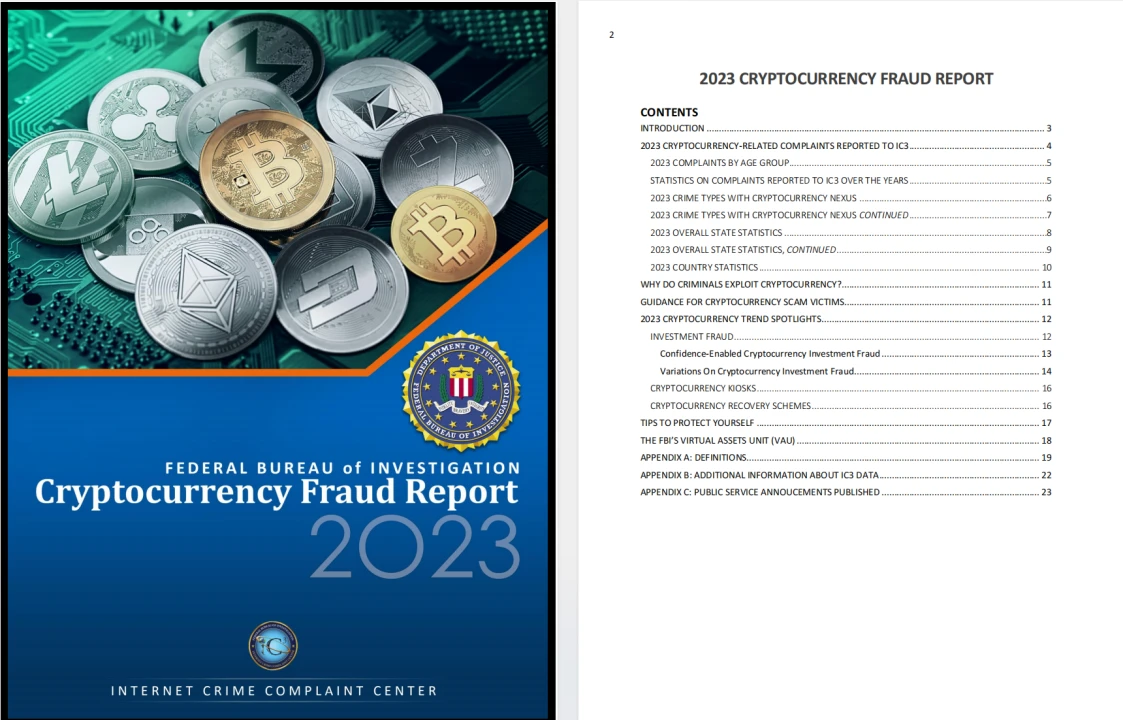
On September 9, 2024, the Federal Bureau of Investigation (FBI) of the United States released the "2023 Cryptocurrency Fraud Report." The report provides an in-depth analysis of the cryptocurrency-related complaints received by the Internet Crime Complaint Center (IC3) in 2023 from both macro and micro perspectives, discussing the characteristics of cryptocurrencies and the main types of cryptocurrency crimes that year. This article will interpret the core content of the report to help readers quickly grasp the key information and enhance their awareness and ability to respond to complex security threats.
Key Point 1: 2023 Cryptocurrency-related Complaint Data
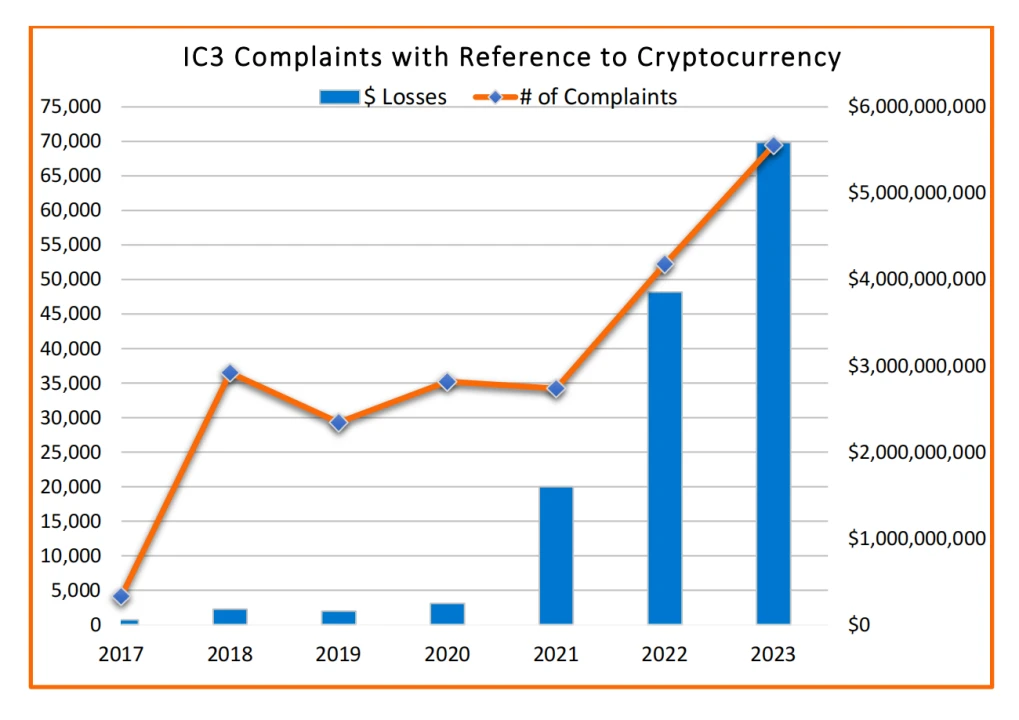
In 2023, the Internet Crime Complaint Center (IC3) of the FBI received over 69,000 financial fraud complaints related to cryptocurrencies, with total losses exceeding $5.6 billion. Although cryptocurrency-related complaints accounted for only about 10% of the total financial fraud complaints, the losses from these complaints accounted for nearly 50% of the total losses.
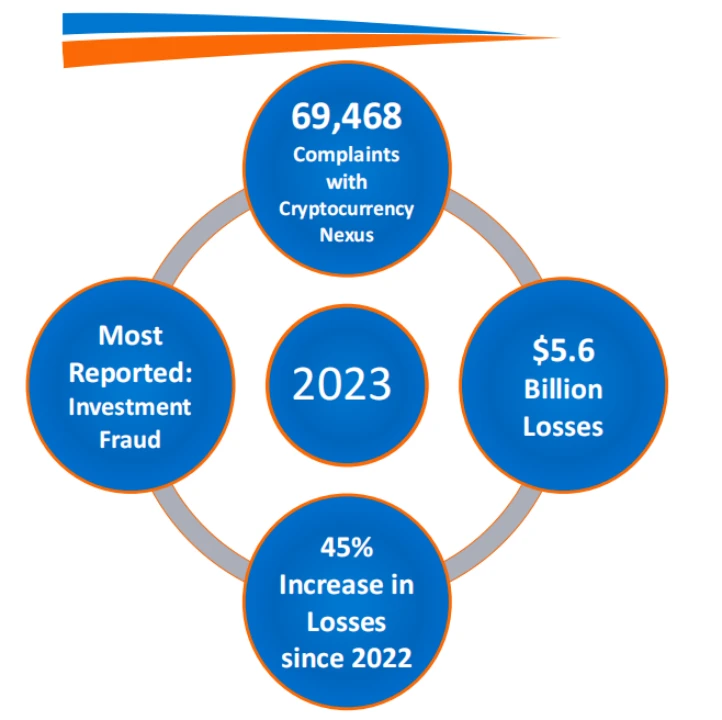
Cryptocurrency-related losses in 2023 increased by 45% compared to 2022.
1. Classified by Age:
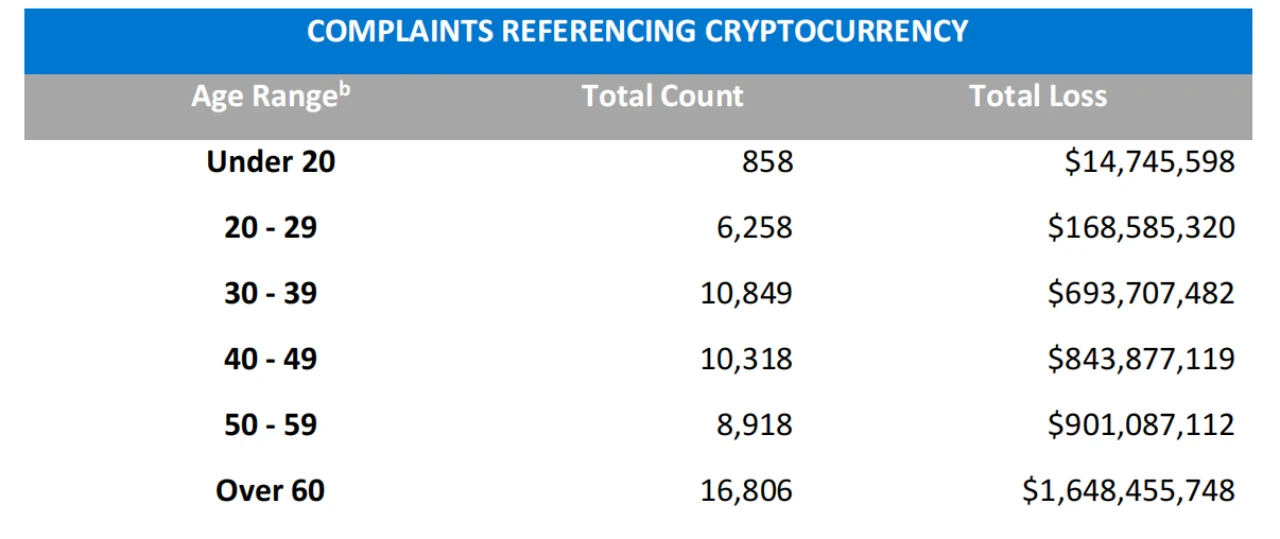
Victims over 60 years old suffered the greatest losses, totaling $1.648 billion.
2. Classified by Type of Crime:
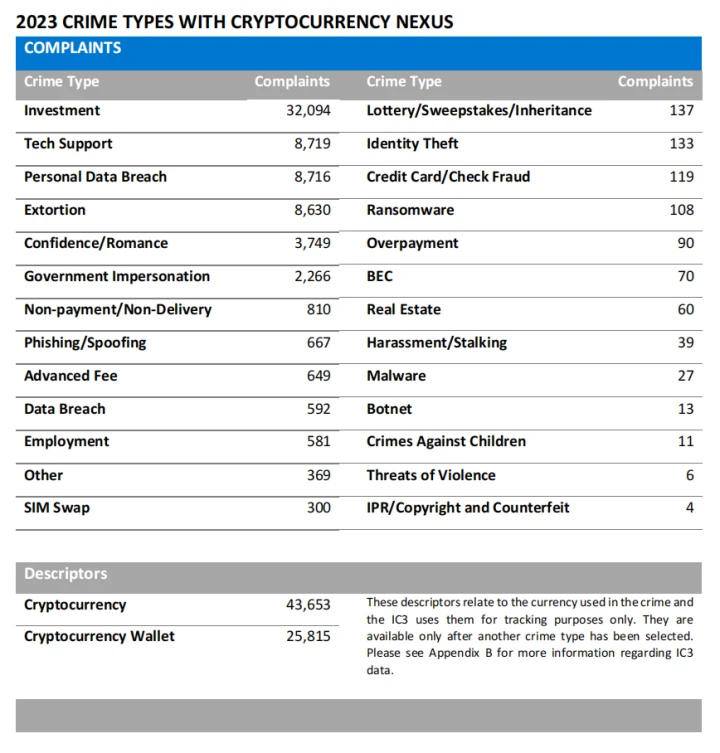
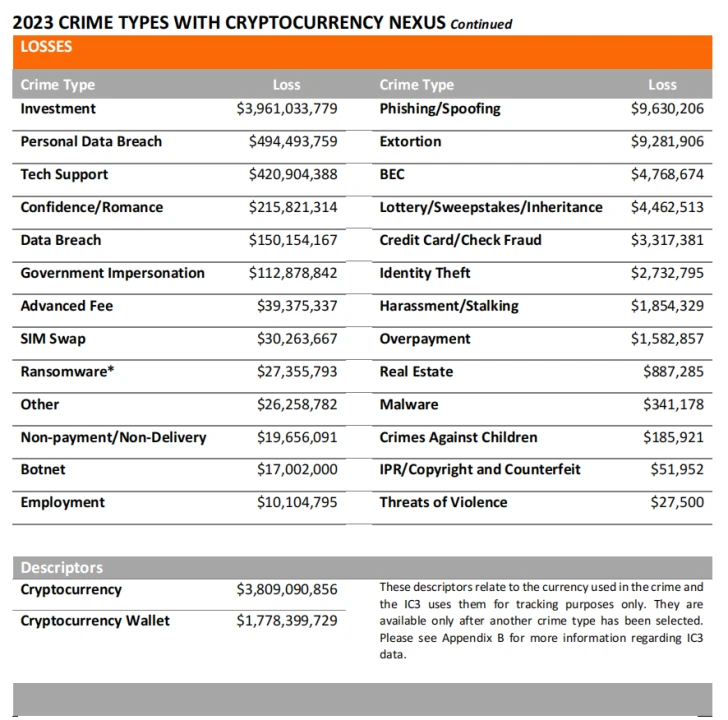
Investment Fraud:
Number of complaints: 32,094
Losses: $3.961 billion
Tech Support Scams:
Number of complaints: 8,719
Losses: $0.421 billion
Personal Data Breach:
Number of complaints: 8,716
Losses: $0.495 billion
Extortion/Ransom:
Number of complaints: 8,630
Losses: $9.28 million
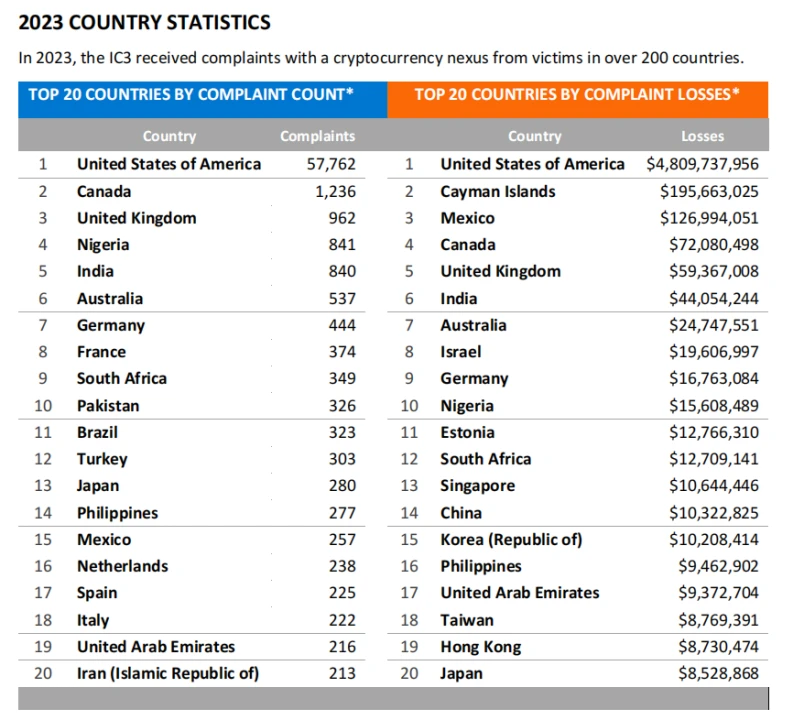
3. Classified by Country/Region:
Countries/regions with the most complaints: United States (57,762), Canada (1,236)
Countries/regions with the most losses: United States ($48.09 billion), Cayman Islands ($1.96 billion)
Key Point 2: Why Criminals Use Cryptocurrencies
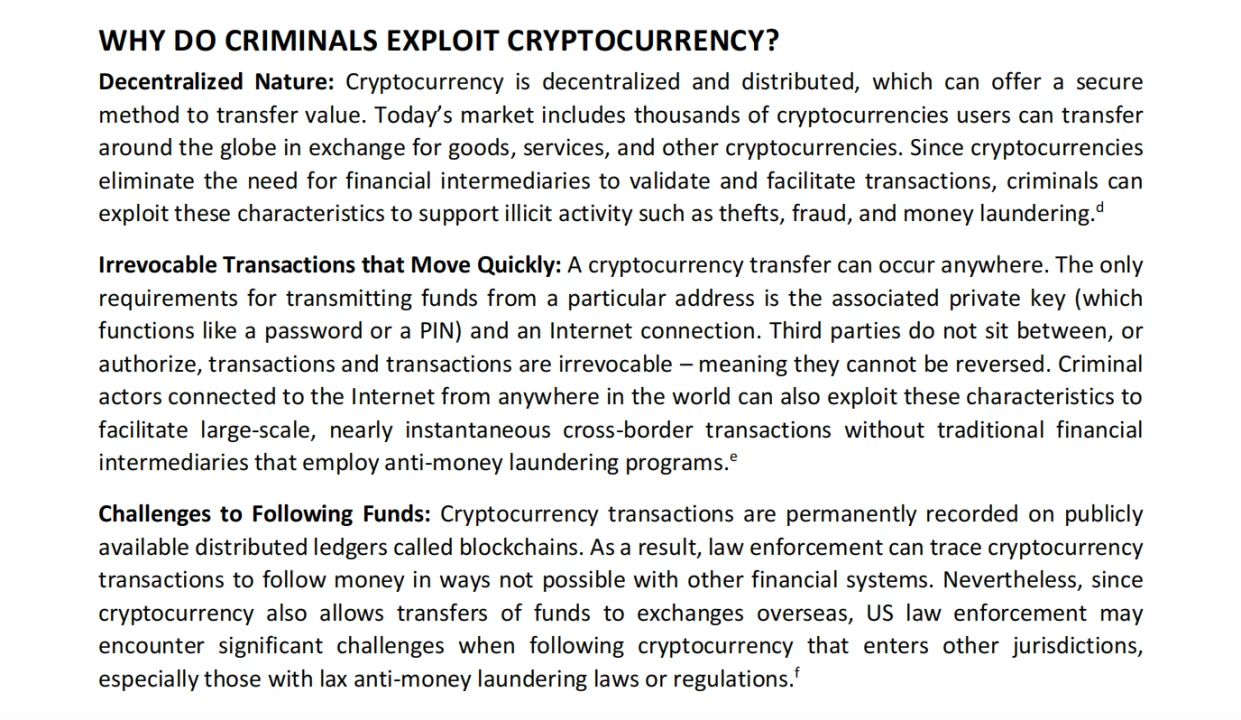
Decentralized Nature: The decentralized and distributed nature of cryptocurrencies makes them a secure means of value transfer, allowing users to transfer cryptocurrencies globally in exchange for goods, services, and other cryptocurrencies. Therefore, criminals exploit these characteristics to engage in theft, fraud, and money laundering.
Irreversibility of Transactions: Cryptocurrency transfers/trades can take place anywhere and are irreversible, enabling criminals to conduct cross-border transactions quickly and on a large scale without being constrained by traditional anti-money laundering measures of financial institutions.
Challenges in Tracking Funds: Although blockchain provides a public distributed ledger, allowing law enforcement agencies to track funds, there are still many difficulties in tracking cryptocurrencies transferred "across borders." Therefore, SlowMist believes that effective law enforcement requires reliance on international cooperation. For more details, please refer to Opinion | International Cooperation in Law Enforcement Will Become a Major Trend in Combating Cryptocurrency Crimes.
Key Point 3: Focus on Types of Cryptocurrency Crimes in 2023
1. Investment Fraud
Investment fraud accounted for the largest proportion of losses in cryptocurrency-related crimes in 2023, approximately 71% of the total losses, representing a 53% increase from 2022 ($2.57 billion). The most common type of investment fraud in 2023 was trust-based cryptocurrency investment fraud:
Scams: Fraudsters use dating apps, social media, social networking sites, or encrypted communication apps to find targets and spend weeks or even months building trust with the targets. Once trust is established, fraudsters introduce the topic of cryptocurrency investment, such as claiming to have some expertise or knowing experts who can help potential investors make money, and induce victims to invest by showing false profits and encouraging them. Fraudsters allow victims to withdraw a small amount of funds in the early stages to give them a taste of success, in order to build more trust in the fraudulent platform. When victims attempt to withdraw their principal and so-called profits, they are told they need to pay fees or taxes. However, even if victims pay the mandatory fees or taxes, the fraudulent platform does not return any funds.
Labor Trafficking: Fraudsters post false job advertisements on social media and online job websites, mainly targeting Asian populations. Once job seekers arrive at the corresponding location, fraudsters usually confiscate their passports and travel documents and use violence or threats to force them to cooperate. These victims are told they must pay various fees, such as transportation and document processing fees, which means they start off heavily in debt. Then they must work while repaying the debt, while also managing to pay for food and accommodation. Fraudsters use the increasing debt and fear of local law enforcement as additional means of control over the victims.
In addition to trust-based cryptocurrency investment fraud, there are many other variations of cryptocurrency-related investment fraud.
Liquidity Mining Scam: Liquidity mining is an investment strategy in the cryptocurrency field. In legitimate liquidity mining operations, investors place cryptocurrencies into liquidity pools to provide the liquidity needed for trading and receive a portion of the trading fees as a reward. However, scammers often exploit people's interest in cryptocurrencies to commit fraud. Scammers typically gain the trust of victims (often investors holding USDT or ETH) and entice them to participate in fraudulent liquidity mining schemes by offering high daily returns of 1% to 3%. The scammers eventually persuade the victims to transfer cryptocurrencies to the so-called liquidity mining platform, which are actually fraudulent platforms, making it difficult to recover the money once transferred. We have previously explained this type of scam in the Web3 Security Beginner's Guide to Avoiding Pitfalls: Fake Mining Pool Scams, and readers can click the link to learn more.
Play-to-Earn (P2E) Games: Scammers promote their created fake game applications as games that can make money and offer economic rewards to players. Scammers contact potential targets online and build relationships with them. Then, scammers introduce the game to victims, claiming that they can earn cryptocurrency rewards by participating in certain activities (such as planting "crops" in an animated farm). To participate in the game, scammers instruct victims to create a cryptocurrency wallet, purchase cryptocurrency, and join a specific game application, claiming that the more money stored in the wallet, the more rewards they will receive in the game. However, the rewards victims see are actually fake. When victims stop depositing funds into the wallet, scammers take the funds. Scammers also tell victims that they can recover the funds by paying additional taxes or fees, but it's a bottomless pit. If users want to participate in such legitimate games, it is recommended to use a dedicated wallet and regularly check for unusual authorizations using tools like Revoke.Cash or Scam Sniffer, and cancel them promptly if found.
2. Cryptocurrency ATMs
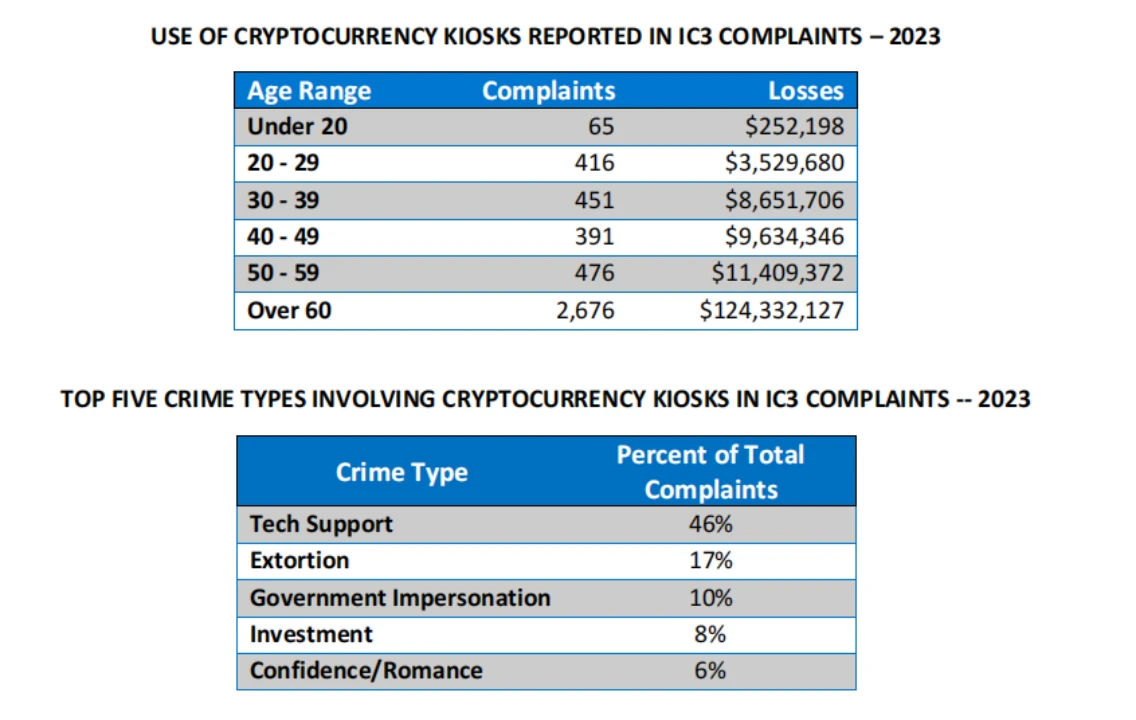
Cryptocurrency ATMs are devices or electronic terminals similar to ATMs, allowing users to exchange cash and cryptocurrencies. Typically, scammers provide detailed instructions to victims, including how to withdraw cash from banks, find cryptocurrency ATMs, and use the ATMs for deposits and remittances. This method offers higher anonymity compared to depositing cash in financial institutions. In 2023, IC3 received over 5,500 complaints related to cryptocurrency ATMs, with losses exceeding $189 million.
3. Cryptocurrency Recovery Scams
Victims who have suffered losses from various scams may be targeted for a second time. Some fraudulent companies claim to provide cryptocurrency tracking services and promise to recover lost funds. They advertise fraudulent cryptocurrency recovery services on social media and actively contact victims seeking help online. These fraudulent companies charge victims upfront fees, then "disappear," or provide incomplete and inaccurate tracking reports, and demand additional fees from victims to recover funds. These fraudulent companies also claim to have connections with law enforcement or legal service departments to appear legitimate.
SlowMist reminds users that based on their experience, if funds are stolen or scammed, it is important to report the incident as soon as possible. Technical companies like SlowMist are unable to access user data or freeze accounts, only law enforcement agencies can freeze accounts and recover funds through compliant processes at exchanges. However, if you have been stolen from or scammed, you can submit a form to SlowMist, and they can provide a free basic tracking assessment and fund flow analysis, while also synchronizing verified hacker addresses to the InMist threat intelligence cooperation network for blacklisting. SlowMist will make every effort to conduct a fund tracking assessment and fund flow analysis, but the assessment results are for reference only and not a legal basis. Users need to follow the facts and comply with regulatory policies and laws in their respective countries. (Note: Submit the Chinese form to https://aml.slowmist.com/cn/recovery-funds.html, and the English form to https://aml.slowmist.com/recovery-funds.html)
Conclusion
This article provides an interpretation of the "2023 Cryptocurrency Fraud Report" released by the Federal Bureau of Investigation (FBI), revealing the data on cryptocurrency-related complaints in 2023, how various criminals cleverly exploit the unique properties of cryptocurrencies for fraud, and specific criminal methods and types. Faced with increasingly complex and diverse cryptocurrency fraud methods, it is important for everyone to be vigilant, enhance their awareness and ability to prevent fraud. Only by distinguishing between true and false, operating with caution, and maintaining a healthy skepticism, can individuals effectively protect their financial security while enjoying the convenience and innovation brought by cryptocurrencies.
免责声明:本文章仅代表作者个人观点,不代表本平台的立场和观点。本文章仅供信息分享,不构成对任何人的任何投资建议。用户与作者之间的任何争议,与本平台无关。如网页中刊载的文章或图片涉及侵权,请提供相关的权利证明和身份证明发送邮件到support@aicoin.com,本平台相关工作人员将会进行核查。