TLDR
POKT Network has built a decentralized RPC node network, which is of great significance for decentralizing Web3 data. Compared to centralized providers, POKT Network has higher scalability, lower maintenance and operating costs, lower usage fees, and more stable infrastructure, avoiding transaction censorship and centralized failures.
POKT Network has completed the early launch of the DePIN network, with the number of nodes and business data continuously growing. The token economic parameters are constantly being adjusted to reduce the inflation rate, transitioning from early launch to continuous development.
POKT Network has recently launched the modular strategy of Gatewayverse, separating the demand side into multiple independent gateway operators. The protocol itself will focus on becoming the underlying protocol supporting different gateway needs, focusing on node cluster incentives and construction.
POKT Network is committed to becoming a general data service provider, opening up the market for non-Web3 native services. The main business currently under development is open-source LLM hosting, opening up to the LLM reasoning market, which will greatly increase the market and demand for the POKT network, but the specific implementation still needs further observation.
From a financial perspective, the POKT token has been fairly unlocked, the token inflation rate is continuously decreasing, half of the POKT token circulation is used for staking, and the chip structure is concentrated. From a financial perspective, it is a good target.
1. Which decentralized deficiency does POKT Network address?
To understand POKT Network's position in the industry, we must first answer the question: Which decentralized deficiency does POKT Network address in the industry? Why is POKT Network indispensable for the industry's development? Let's start with the two most basic aspects of blockchain data writing and reading.
1.1 On-chain data writing
The process of data writing is essentially the process of sending and completing a transaction on the blockchain. The lifecycle of a transaction can be divided into several stages:
(1) The transaction is prepared by the application front end and submitted to the user for signing. The user approves the signature in the wallet (using Metamask as an example);
(2) Metamask sends a JSON RPC call to the Ethereum RPC node, which checks the validity of the signature, balance, and inputs, verifies the transaction, broadcasts it to other nodes, and stores the transaction in the mempool;
(3) Miners select the transaction and include it in a block, which is then propagated through the network. Once the block is finally confirmed, the transaction is officially recorded on the blockchain;
(4) The RPC node returns the transaction result for user queries.
Where might a transaction encounter difficulties?
A crucial stage is that default RPC nodes can refuse to broadcast transactions, preventing them from being accepted by other nodes and ultimately included in a block. While users can choose to switch nodes, RPC nodes are mainly provided by multiple centralized entities, most of which run on existing Web2 platforms (such as AWS, Amazon Cloud). For example, Infura is the default node provider for Metamask, and due to misconfigurations, it caused service interruptions in some regions in March 2022, rendering transactions inaccessible via Metamask. Centralized RPC nodes increase the risk of single point failures and transaction censorship.
1.2 On-chain data reading
There is a constant demand for data retrieval. Application developers need to display relevant data in dApps in real time, and provide quick results for user data queries. Analysts and investment institutions use layered analysis of on-chain data to assist in market judgments and future decisions. There are two ways to obtain data:
Use Ethereum client applications like Geth to sync Ethereum data to one's own computer
Use node service providers' data by sending API session calls to RPC nodes to return data on the public chain
Running and maintaining a node oneself consumes a lot of time and resources, and node service providers offer a way to access blockchain data without running one's own node. Therefore, most decentralized applications currently directly obtain data from nodes. When requesting data from centralized RPC node operators, it means trusting the results they return. In the Web3 data track, RPC nodes are at the lowest level, and while projects like The Graph and Covalent have made significant efforts in decentralized aspects of data indexing and higher-level ecosystems, centralized data retrieval still poses a certain threat.
1.3 Summary: POKT Network achieves decentralization of RPC nodes
The main RPC providers in the market, such as Infura, Alchemy, Flashbots, and QuickNode, can be considered centralized providers, with most of their nodes operated by centralized entities and deployed on servers of Amazon/Google. Therefore, in the top-down decentralized architecture of Crypto, a critical link with centralization risks has emerged, where we need to accept more or less transaction censorship, centralized failure risks, unconditionally trust their returned data, and accept monopolistic pricing.
POKT Network addresses this issue through a decentralized node "market." Unlike Infura or Alchemy, the POKT network does not have any team-built nodes, and its redundant design has ensured 99.9% uptime over the past three years on the mainnet. Currently, there are over 15,000 nodes in the POKT network, distributed across 22 countries/regions. Infura and Alchemy are more like companies that provide node services, requiring the setup and maintenance of nodes, while POKT Network focuses on building the protocol and improving the incentive layer, attracting more nodes to join the network, and matching supply and demand, without needing to set up and operate nodes itself.
2. DePIN Narrative: How does POKT achieve decentralized RPC?
A decentralized RPC node network is also an important module in the DePIN narrative. The core logic of DePIN is to incentivize network participants with tokens to provide resources, while the network charges demanders for accessing resources, forming a decentralized resource market. POKT Network incentivizes RPC nodes from different blockchain networks to join through the POKT token, and demanders use the POKT network to request data or send transactions to RPC nodes, while paying usage fees to the network.
POKT Network's modular architecture is as follows. The Gateway ecosystem replaces the previous single POKT Network front-end portal, built on top of the RPC network and the POKT network's underlying layer, abstracting the complexity of integrated protocols. Application developers access the RPC node cluster of the POKT network through Gateway operators. Currently, there are three Gateway providers: Grove, Nodies, and the recently announced Liquify. Grove, rebranded from Pocket Network Inc, is the first gateway on the POKT Network. Nodies became the second Gateway provider for POKT Network in December 2023, created by former AWS engineers, and is also a provider of public endpoints for the POKT Network.
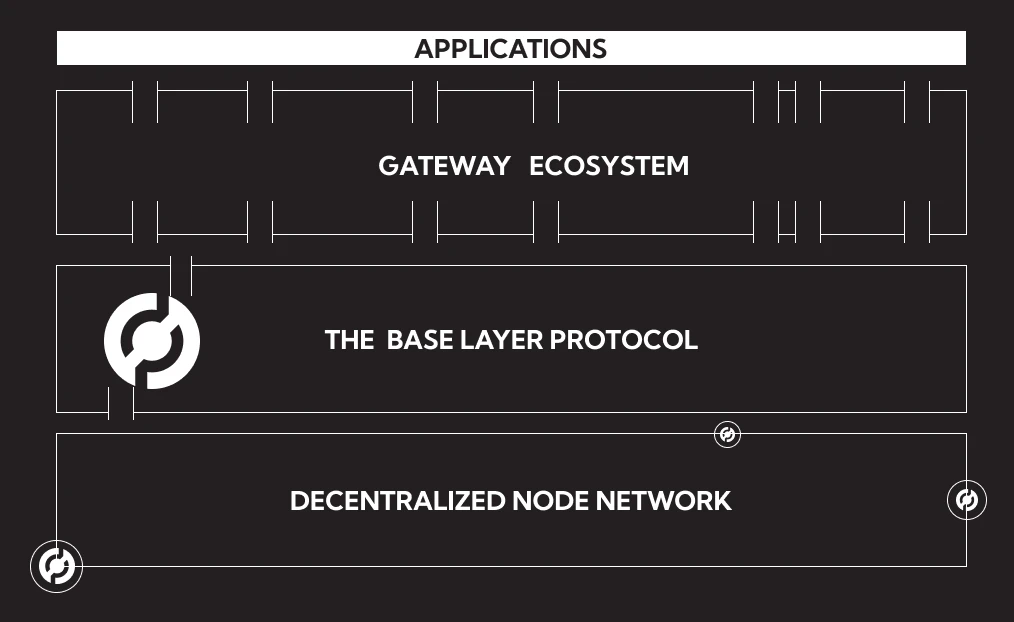
In terms of value transmission, users utilize the services of Gateway providers and pay the corresponding usage fees to the service providers. Gateway providers pay the Gateway Operator Fee based on the number of relays sent to the POKT network each week, with each relay fee being $0.00000085, which is paid through POKT burning. POKT Network provides incentives to network participants through POKT token inflation. A more detailed analysis of the token economic system and value circulation process will be provided in the fifth section.
Establishing the Gateway ecosystem is currently one of the key development focuses of the POKT network, known as the "Gatewayverse" strategy. The richness of Gateways will significantly reduce the cost for developers to access the POKT network, improving the overall service quality and competitiveness of the system. Gateways abstract the complexity of direct access to the POKT network protocol. Without Gateway operators, application developers would need to complete the following steps to directly send requests to the POKT network:
- Generate an AAT (Application Authentication Token)
- Send a request to the full node of the POKT network to obtain the latest nodes in the session
- Construct and sign a relay proof and submit it to a node in the session
- Receive a reply from the node
- Determine if the reply is valid
- Proxy the reply back to the web application
Gateway abstracts the retrieval of sessions, signing relay proofs, and other processes, optimizing the developer experience and providing usability, as well as offering innovative value-added services. POKT Network is currently in discussions with multiple institutions to introduce more Gateway providers. After the Shannon upgrade (expected to go live on the mainnet in Q2 2024), developers or RPC node operators can become Gateway service providers without the need for permission. Development work to build Gateways is ongoing, and on February 8, 2024, Nodies released an open-source Gateway Server integrated with the POKT network protocol, allowing developers to quickly build Gateways tailored to their needs by maintaining a familiar HTTP JSON-RPC server interface for sending and receiving RPC requests, further simplifying the difficulty of accessing the POKT protocol.
In summary, POKT Network is separating the operation of Gateways to achieve decentralization on the demand side, while focusing on the construction of the underlying RPC node network. The advantages of this development path include: (1) providing more customized Gateway services to meet the needs of different types of developers and encouraging operators to develop value-added services to optimize user experience; (2) strengthening distribution power, with each Gateway operator becoming a distributor for the POKT network, thereby enhancing the BD capabilities of the entire network protocol and driving demand-side growth; (3) all Gateways default to not issuing coins when working with the POKT network and use $POKT for transaction settlement, ensuring that the growth of the ecosystem is fully empowered by $POKT without causing value dilution.
3 AI Narrative: Unleashing the Potential of POKT Network as a Universal Data Service Provider
POKT Network is currently the leading underlying protocol for blockchain data services and is committed to providing data services for a wider range of open databases, becoming the underlying layer of decentralized data relay services for DePIN.
Two proposals in October 2023—PIP-31 and PIP-33—have opened up the market for non-web3 native services for POKT, unleashing its potential as a universal RPC provider. RPC request services can be applied not only in blockchain but also support other types of data services, such as LLM reasoning. Specifically, POKT can support open-source LLM hosting for node operators, completing reasoning tasks based on open large models. Unlike stateful blockchains that require continuous synchronization with the network, LLM is stateless and only needs to be manually updated periodically when the model is updated.
According to an estimate by POKT Network's co-founder Michael O'Rourke, opening up to the LLM reasoning market will increase the market for POKT Network by approximately 30%.
Currently, PIP-31 and PIP-33 have been approved through community voting. POKT's decentralized node cluster can support the inference steps of over a hundred models. LLM reasoning will be a key focus of POKT Network's development in 2024, and the official POKT Twitter account has already begun promoting its market expansion in LLM. Compared to centralized providers, the costs of decentralized providers will be significantly lower. POKT Network's greatest competitive advantage lies in its mature incentive mechanism and large-scale node cluster—POKT protocol already has over 15,000 nodes, making it the largest decentralized node network in web3, providing strong potential in this narrative. Additionally, RPC nodes are the entry point for users to read and write blockchain data, providing direct benefits to AI products that use blockchain data for reasoning. AI+crypto has become one of the core narratives in this cycle, and POKT Network's transition towards AI is still in its early stages, yet to be fully discovered in terms of value. It is currently a good opportunity for investment.
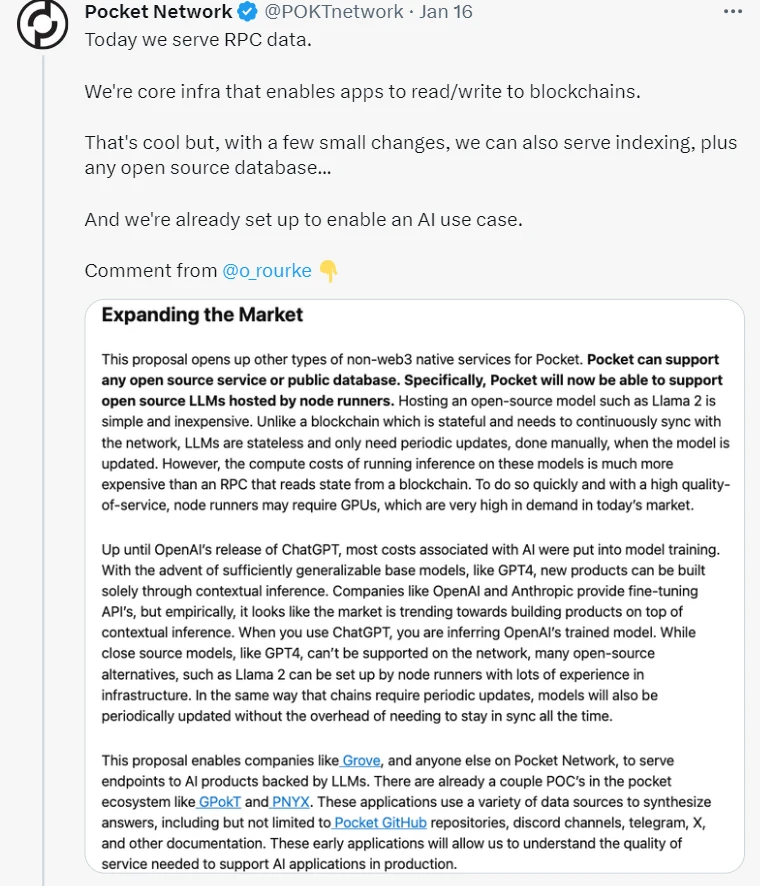
However, it is important to note that the official detailed development plans and roadmap are not clear at the moment, and the computational costs and hardware requirements for running reasoning are high. Node operators may need GPUs, and the specific feasibility of implementation is unknown, requiring continuous monitoring of the subsequent progress in this direction.
4 Industry Landscape and Business Data Comparison
According to estimates by the founder of POKT Network, the conservative daily RPC request volume in the Web3 market is 100 billion, assuming a cost of $3-6 per million requests. This puts the total market value of Web3 RPC at $100 million to $200 million annually. With the arrival of the bull market and the construction of more blockchain networks, the volume of RPC requests will continue to increase.
In terms of industry landscape, POKT Network is currently the absolute leader in decentralized RPC nodes. Its main competitors are centralized players such as Infura and Alchemy. Here, we will compare the business data of POKT Network with the main centralized RPC service providers.
In terms of business data, POKT Network currently has over 15,000 RPC nodes distributed across 22 countries/regions. The average daily relay volume over the past year has been 950 million, with a peak of 2 billion. Since November 2023, the relay volume on the POKT network has significantly decreased, with the current daily relay volume at around 400-500 million. This is due to the largest Gateway operator, Grove, announcing its independence, closing public endpoints, and reducing its free package. In terms of the distribution of relayed data on public chains, the main demand comes from Ethereum, accounting for 15%.
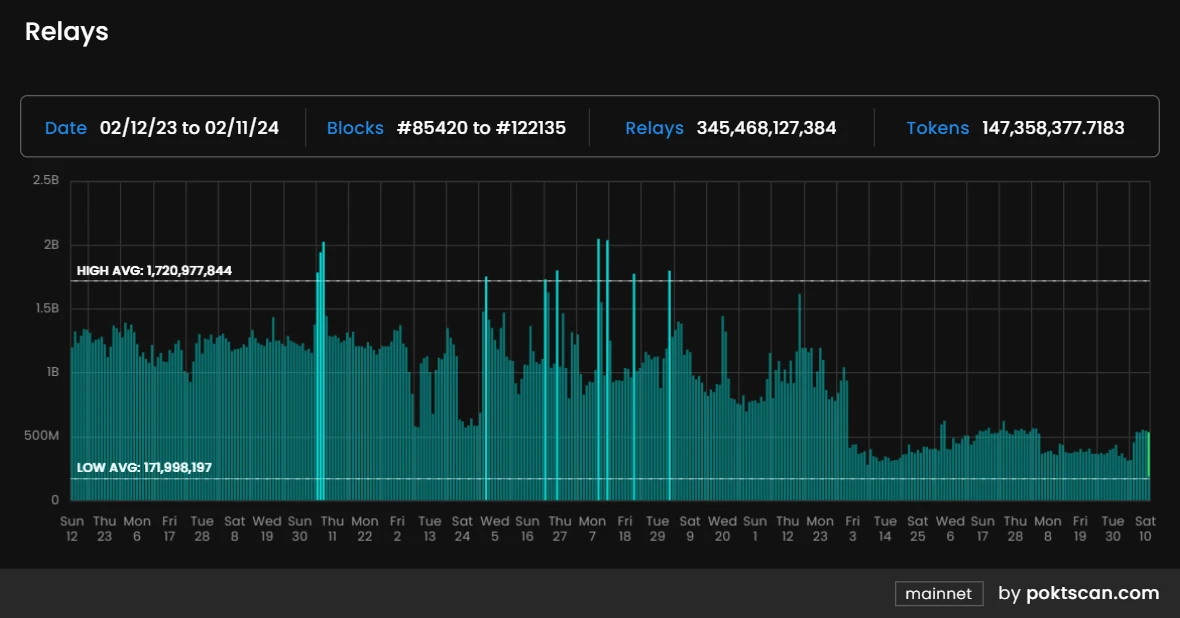
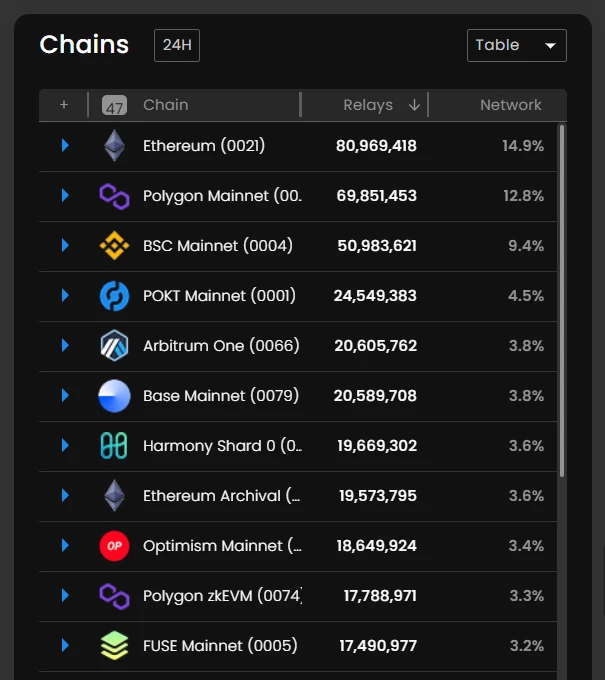
In terms of relay quantity, POKT Network's market share is still very small. Centralized providers such as Infura and Alchemy remain the preferred choice for applications, with estimated daily data relay volumes in the billions or even trillions. In terms of market competition, POKT Network still faces strong competitors and a challenging competitive landscape, but it also has sufficient room for market expansion.
In terms of supported blockchain quantity, POKT Network currently supports 75+ blockchain RPC requests, compared to Infura and Alchemy, which only support 9 blockchains. POKT Network provides services by attracting full nodes from different chains, rather than building full nodes from scratch, significantly improving the scalability of the ecosystem.
In terms of pricing plans, both POKT Network and Infura charge based on relay quantity, while Alchemy and others use Compute units as the pricing unit. Currently, POKT Network charges $0.85 per million relays for Gateways, while Infura's cheapest Growth plan charges approximately $6.67 per million relays, about 8 times that of POKT Network. However, most developers currently access the POKT network through Gateway providers, who do not use subscription plans but instead pay based on relay quantity. For example, Grove charges $7.456 per million relays outside of the free plan, Nodies charges $4.5 per million relays outside of the free plan, and enterprise users are charged $3.4. Grove, as the largest Gateway operator, has relatively high pricing, but with the increasing number of Gateways and the permissionless access to Gateways, the competitive market on top of the POKT network will gradually improve, and developers can operate their own Gateways to reduce costs.
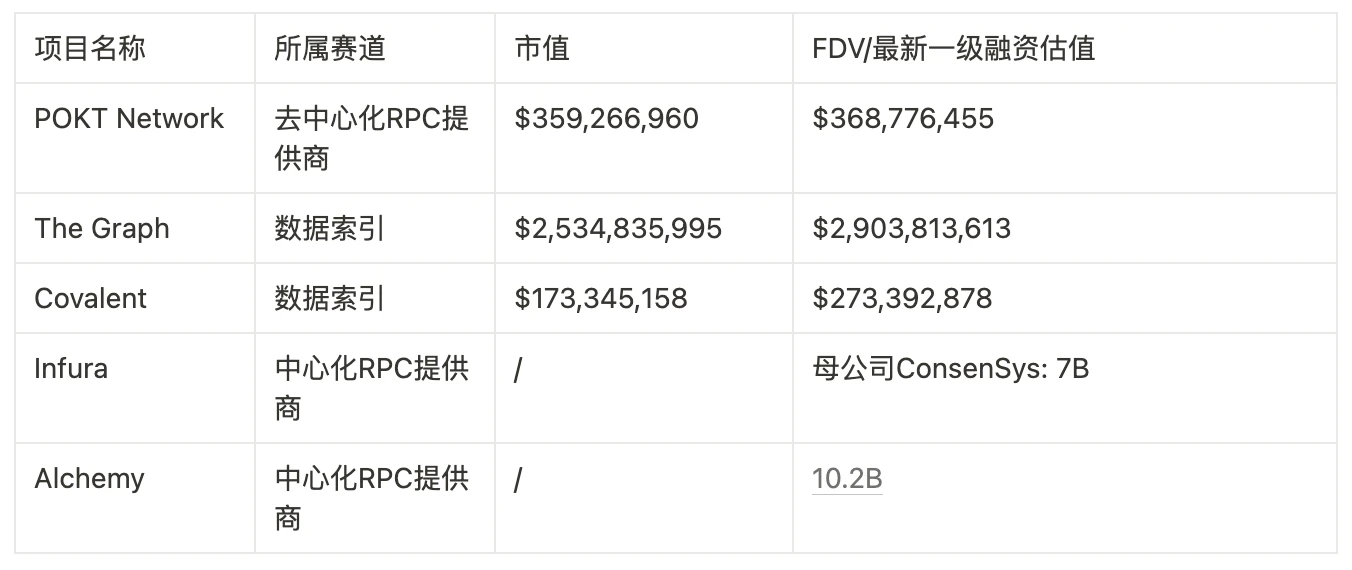
In terms of valuation comparison, there are currently no decentralized RPC providers directly competing with POKT Network. Therefore, projects that can provide valuation comparison references include:
(1) Centralized RPC providers such as Infura and Alchemy; (2) Web3 data infrastructure projects such as The Graph and Covalent.
The valuations of Infura (ConsenSys) and Alchemy are much higher than that of POKT Network, due to their higher market share and richer product portfolios. POKT Network's competitive point lies in the "decentralization" argument. If the argument for decentralized infrastructure can be accepted by more investors and developers, POKT Network will have a unique competitive advantage.
The Graph/Covalent and POKT Network are all part of the Web3 data infrastructure and are categorized as DePIN tracks by Messari. However, POKT Network is upstream of both projects. The valuation of The Graph is much higher than that of POKT, while the valuation of Covalent is relatively lower. The entire decentralized data infrastructure track is currently in the relatively early stages and will see an increase in valuation as data demand and decentralized demand increase with the bull market.
5 Token Economy and Chip Structure
5.1 Token Economic System and Value Circulation
As mentioned earlier, the core logic of DePIN is to incentivize network participants to provide resources through token rewards. The basic mechanism of the DePIN network is for individual suppliers to provide the corresponding hardware or services to receive token incentives. In the early stages of the project, a high inflation rate is needed to incentivize supplier participation through higher token rewards. As the project matures, reducing the token inflation rate is necessary to avoid excessive token release diluting the token price, and eventually transitioning to a low inflation or even deflationary era. This point also applies to POKT Network, as a balanced and healthy economic system is crucial for the sustainability of the entire network.
From the supply side, the latest supply plan for POKT, determined by Proposal PUP-32 passed in June 2023, mints an average of 220k POKT per day. The newly minted POKT is allocated as follows:
- 85% distributed to node operators,
- 5% distributed to validators of the POKT network,
- 10% goes into the DAO treasury.
From the consumption side, POKT Network will burn the service fees paid by Gateway providers. Currently, the price for each Gateway relay is $0.00000085 (since major market competitors, i.e., centralized RPC, use USD pricing, POKT Network also uses USD pricing). The service fees to be paid are calculated based on the relay quantity sent to Gateway operators each week. This fee is then converted into the corresponding amount of POKT based on the seven-day average price of POKT, and the POKT pre-deposited by the Gateway for relays is burned weekly.
The token inflation rate of POKT will be determined by the combined supply and burn quantities. With the supply quantity remaining relatively stable, relay pricing, relay quantity, and the price of POKT will all affect the token inflation rate. From a business data perspective, the higher the pricing and relay quantity of POKT Network, the lower the inflation rate of the network. The POKT Foundation is working to reduce its inflation rate and plans to eventually enter a deflationary economic era.
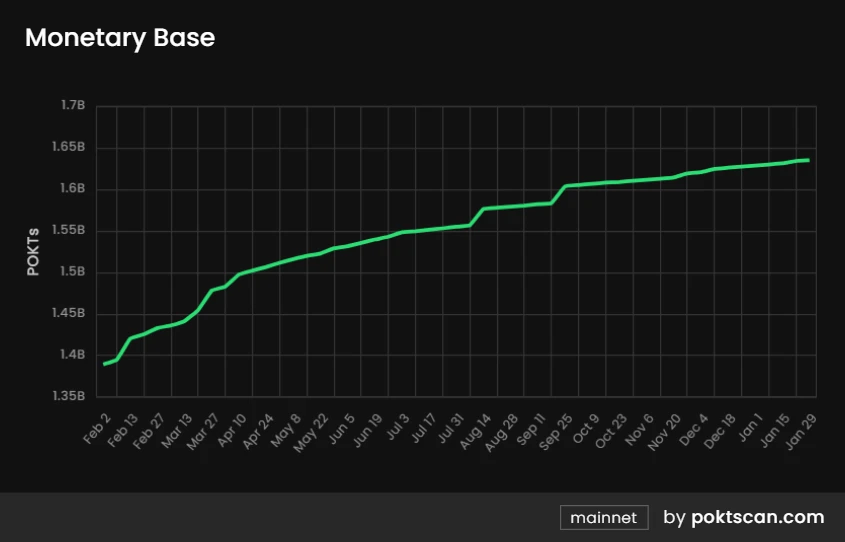
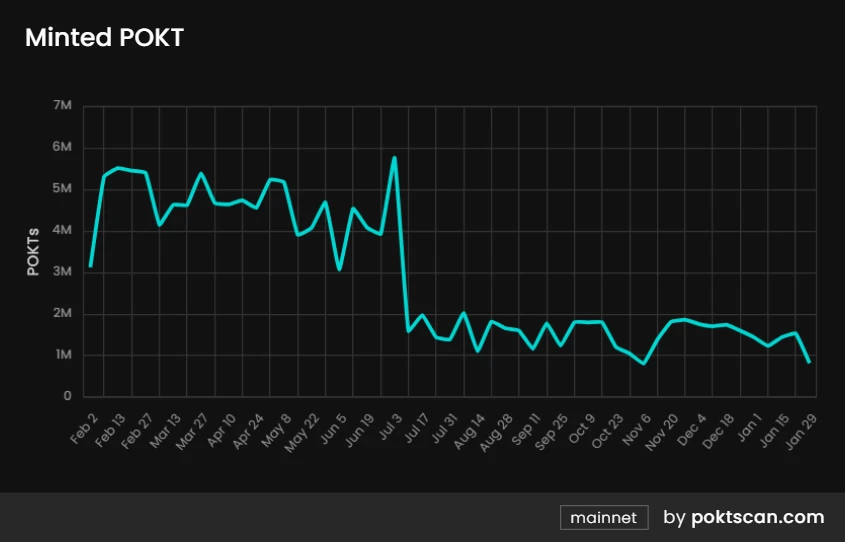
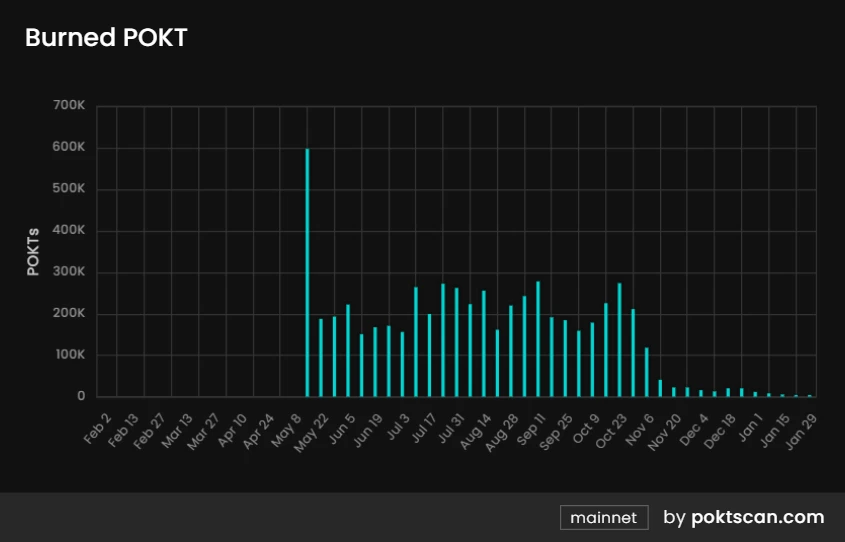
In terms of specific data, the total token supply (Monetary Base) has been gradually slowing down in growth over the past year. Since the passing of PUP-32 in June 2023, the quantity of minted POKT has significantly decreased, with the weekly release amount remaining at around 1.5M. POKT has been burned since May 2023, with the weekly burn amount at around 200k for some time, but has seen a significant decrease after November, accompanied by a reduction in relay quantity.
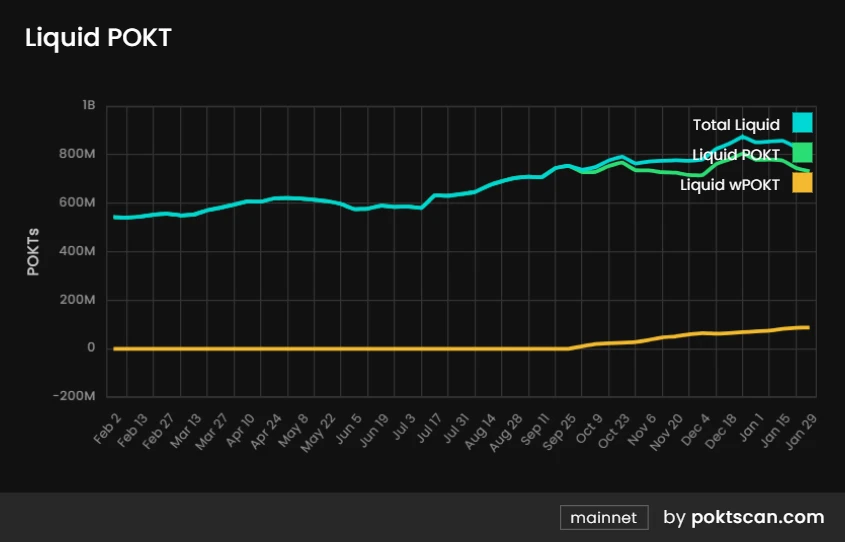
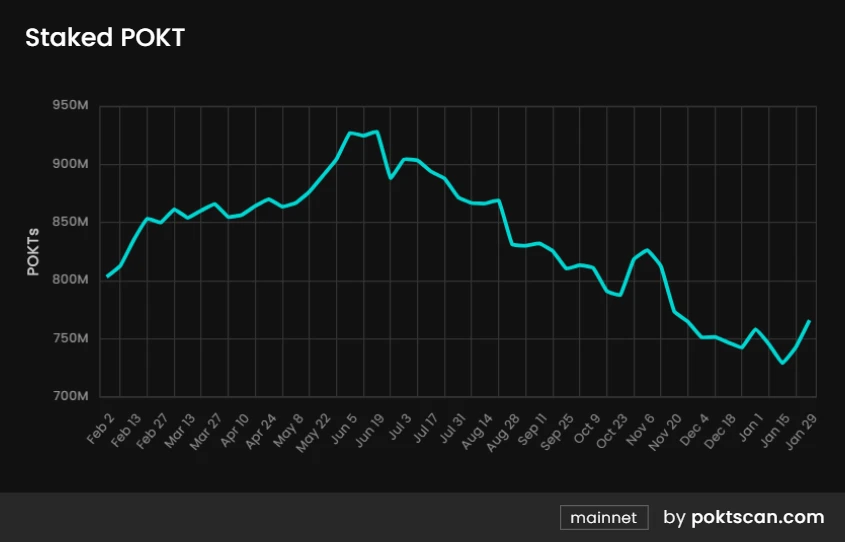
The circulating supply of the token depends on both the total token supply and the staking quantity. Node operators need to stake at least 15,000 POKT to join the node network, and the top 1000 staked nodes will become validators of the POKT network. According to Poktscan, the minimum staking quantity required to become a validator is currently 75,100. Since June 2023, the total staking quantity of POKT Network has decreased, leading to a gradual increase in Liquid POKT after June.
5.2 POKT Chip Structure and Token Performance
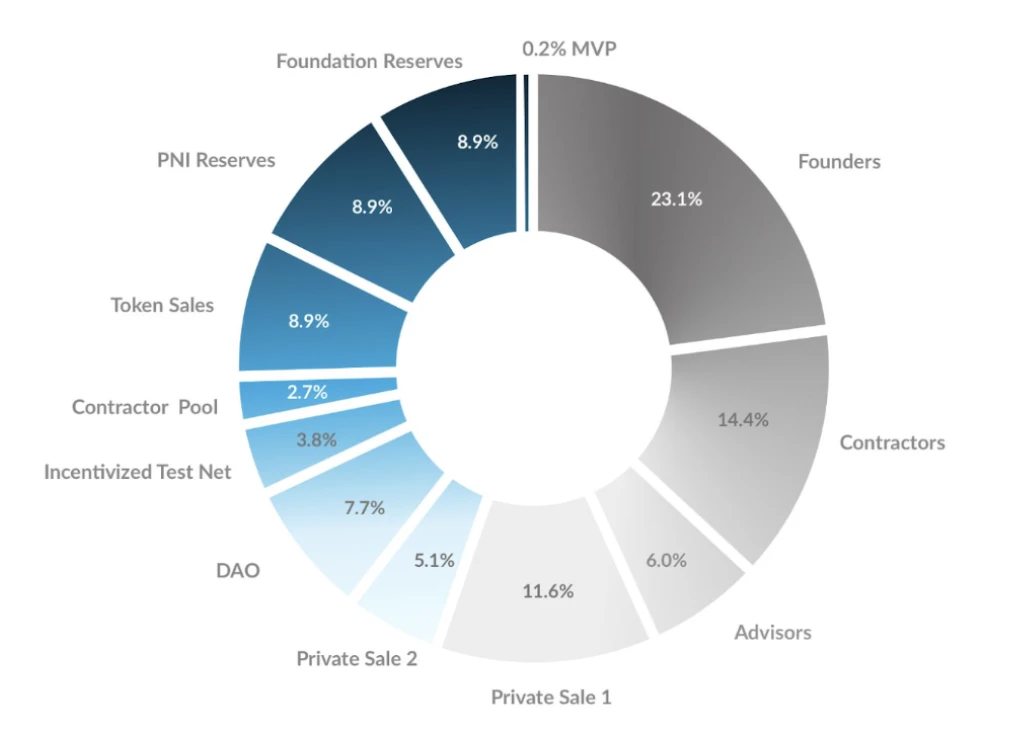
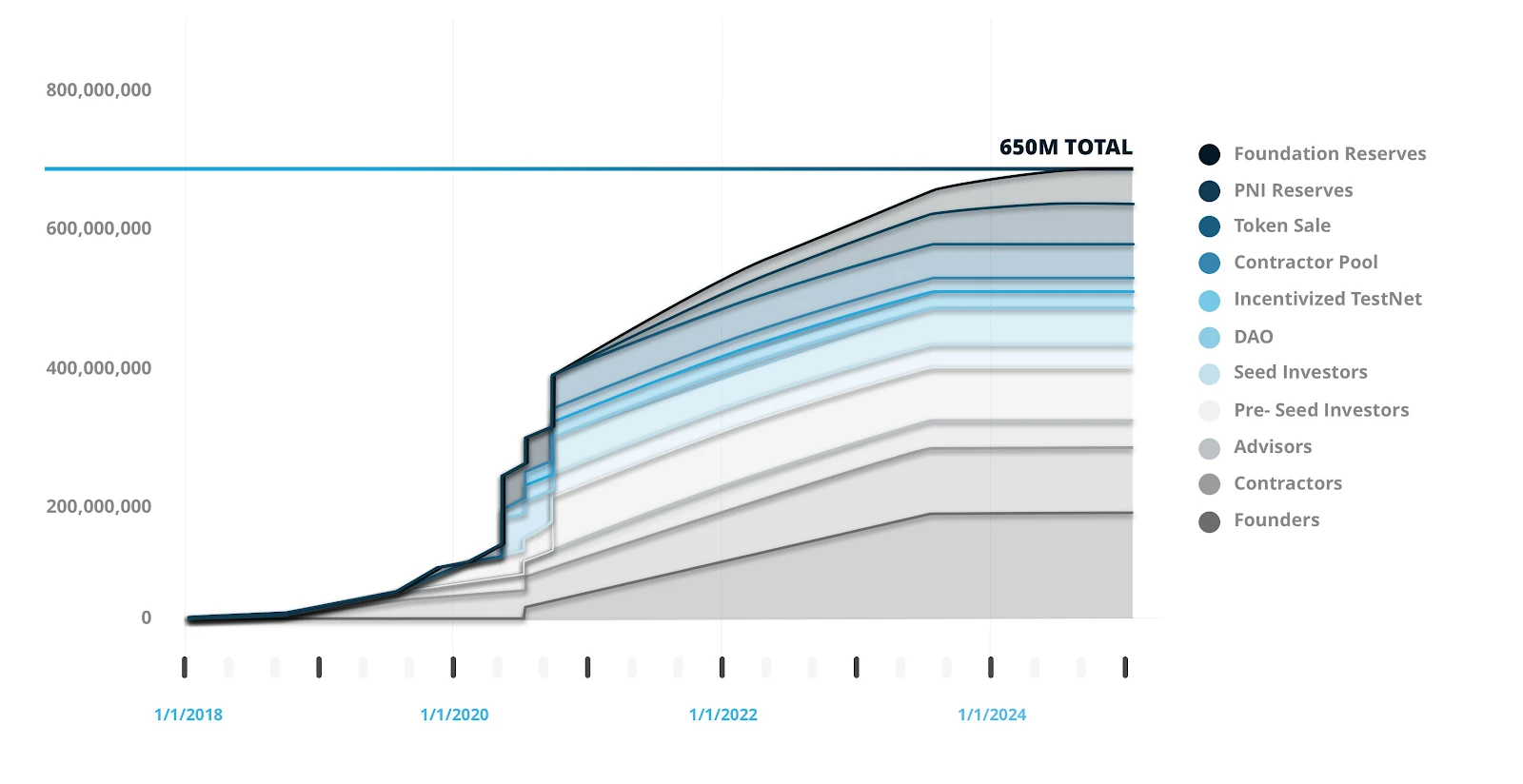
The initial supply of POKT is 649,984,998, with no maximum supply. The initial token allocation and unlocking schedule are as shown in the following figure. The current total supply is 1,637,686,745, with a circulating supply of 1,548,744,251 (Coingecko data). Token unlocking is relatively sufficient, with most investor and team tokens already unlocked.
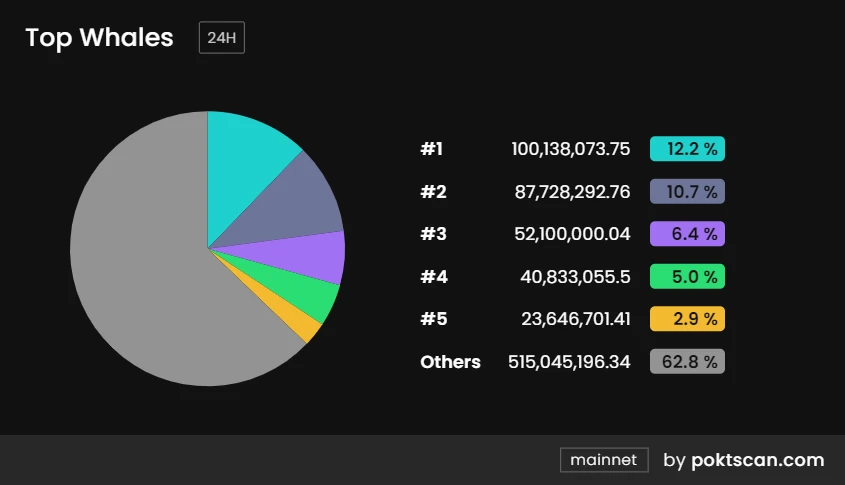
In terms of token distribution, the current staked token quantity is 766,214,731, approximately 50% of the circulating supply, indicating that half of the POKT is actively used in the network. According to Poktscan data, the total number of addresses holding tokens is around 10,000, with the top 5 holders owning a total of 304,546,121. Apart from the staked token quantity, the top 5 holders account for 38.2% of the total holdings, indicating a relatively concentrated holding ratio.
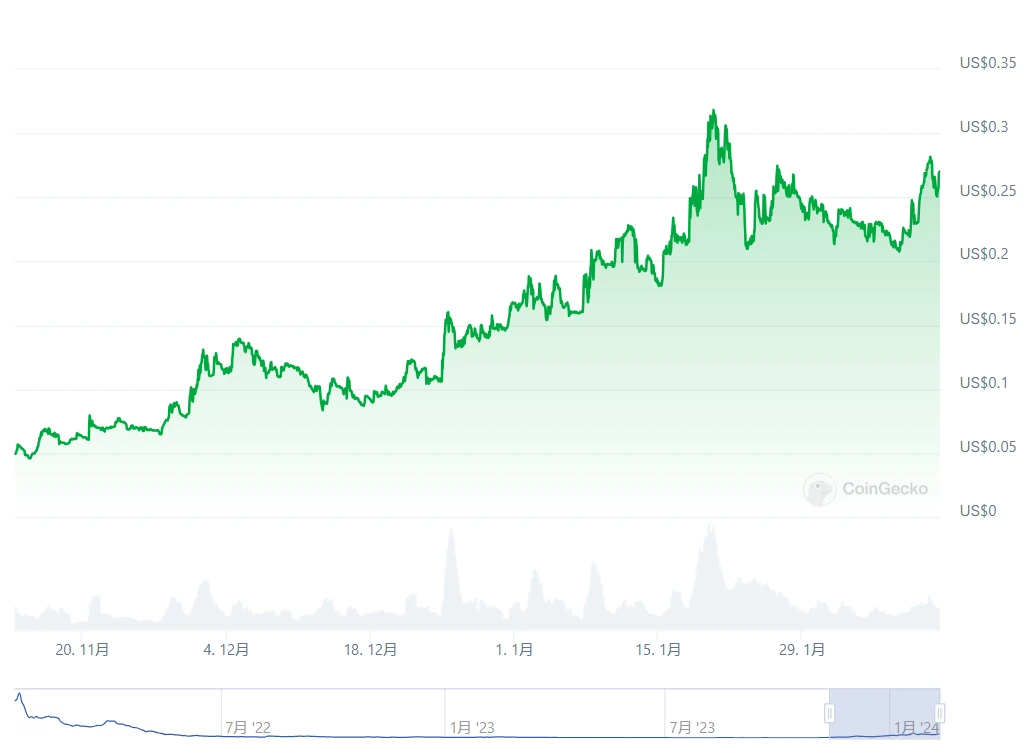
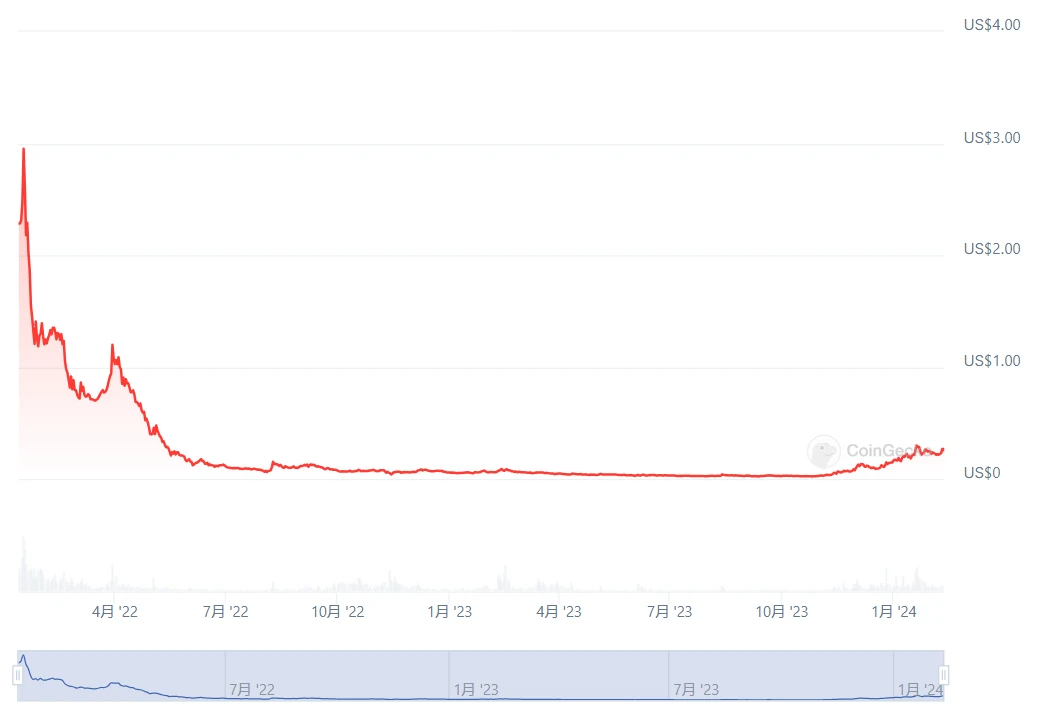
In terms of token performance, the current market cap of POKT is $359,266,960, with a FDV of $368,776,455. Over the past 3 months, it has increased approximately 10 times from the lowest point to the highest point, completing a round of price discovery. However, it is still more than ten times below the previous high.
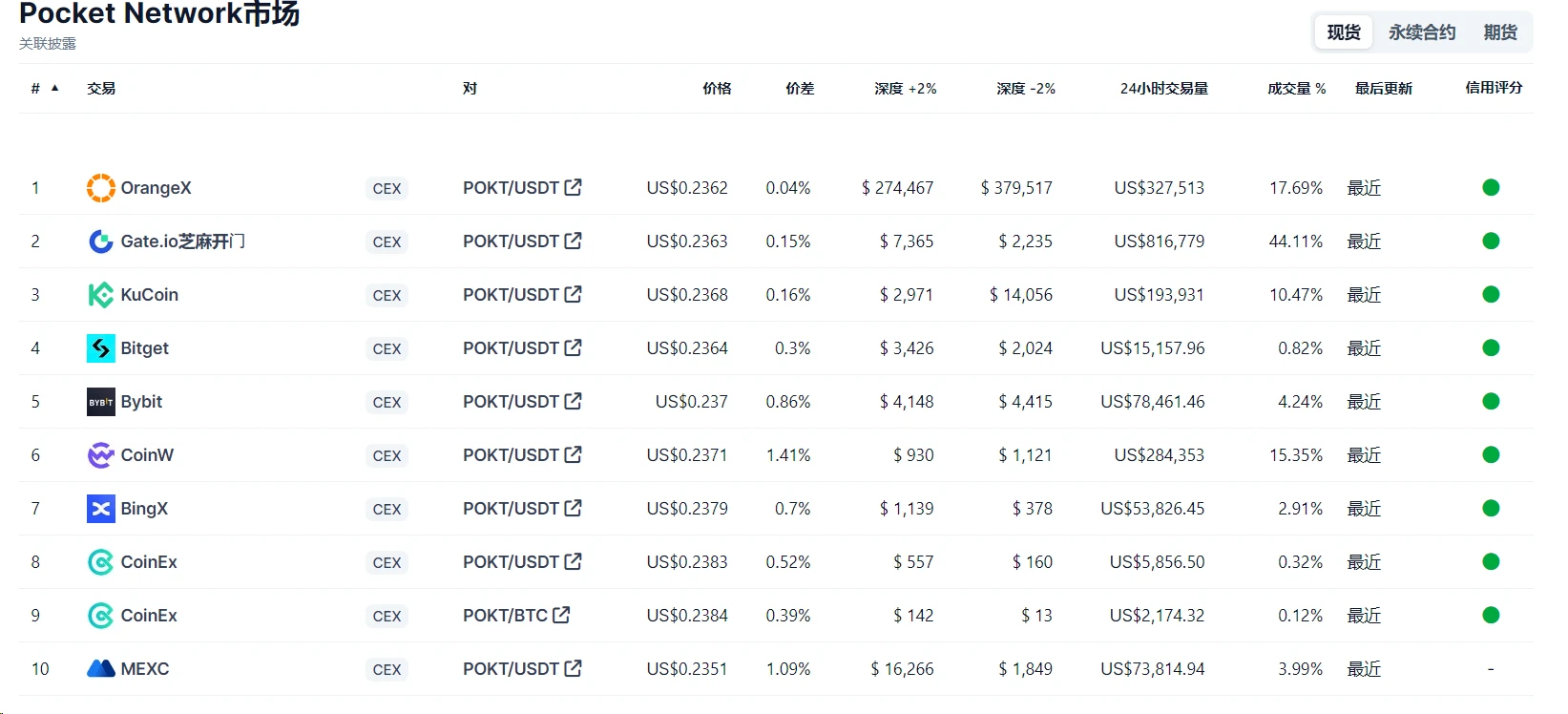
In the trading market, the majority of POKT's trading volume is concentrated on Gate. POKT has not yet been listed on first-tier exchanges, leading to a certain liquidity discount.
6 Conclusion: POKT Network Transitioning to Sustainable Development Stage
From a fundamental perspective, we believe that the highlights of POKT Network are as follows:
(1) Decentralized RPC node incentive protocol occupies an important ecological position in the Web3 industry: RPC nodes are the entry points for users and developers to interact with blockchains, and they also occupy the lowest level of the entire Web3 data track. The centralization of RPC nodes brings hidden dangers such as transaction review and single point of failure. POKT Network has filled the gap in this track by providing decentralized RPC nodes, and currently has no competitors in the decentralized RPC node provider track. Compared to centralized providers, POKT Network has higher scalability, lower maintenance and operating costs, lower usage fees, and more stable infrastructure.
(2) Completed the early launch of the DePIN network, transitioning to the next stage of sustainable development: POKT Network has completed the cold start of the node network, proving the feasibility of this protocol. It is currently transitioning from early launch to continuous development, as evidenced by: ① Business data: a large-scale node network and continuously growing daily relay quantity; ② Token economy: a continuous decrease in the inflation rate and ongoing adjustments to token economic parameters.
(3) Launched a new strategy for the demand side, with existing modular structure and growth strategy in line with the development stage: POKT Network has launched the Gatewayverse development strategy, separating the demand side into multiple independent gateway operators. The protocol itself will focus on becoming the underlying protocol that supports different gateway requirements, focusing on incentivizing and building the node network. Multiple gateway operators will enrich the types of product services they provide and will attempt to introduce non-Web3 native businesses, including AI, in the future, thereby increasing the application of the POKT network. As mentioned earlier, POKT Network has completed the supply-side construction of the DePIN network and is now turning to a demand-side growth strategy, which is in line with the development stage.
From a financial perspective, POKT tokens have been relatively well unlocked, the token inflation rate is continuously decreasing, and due to the existence of the burning mechanism, the token inflation rate is negatively correlated with the daily relay quantity that continues to grow during the bull market. Half of the circulating supply of POKT tokens is used for staking, and the chip structure is concentrated, making it a good target from a financial perspective.
From a narrative perspective, POKT Network currently aligns with two major hot narratives, DePIN and AI, and the market currently has a high speculative enthusiasm for these two narratives.
The potential risk points to be monitored in the future include:
Changes in market share in RPC nodes: Compared to centralized RPC service providers, POKT Network has a relatively low market share, and the strategic adjustment of Gatewayverse has also led to a decrease in daily relay quantity. It is necessary to continuously monitor changes in core business data.
Changes in node quantity and staking quantity: Node quantity and staking quantity both affect the fundamentals and chip structure. In the recent period, both node quantity and staking quantity have shown a temporary downward trend, posing potential risk points.
Implementation of the AI narrative: There is still uncertainty about whether the node network can truly be applied to open-source LLM reasoning. With the hot trend in the AI track, there is currently fierce competition in AI decentralized reasoning services, and there is significant uncertainty about the implementation and competitiveness of POKT Network in this track.
About Us
Metrics Ventures is a data and research-driven secondary market liquidity fund for crypto assets, led by an experienced team of crypto professionals. The team has expertise in primary market incubation and secondary market trading, and plays an active role in industry development through in-depth on-chain/off-chain data analysis. MVC collaborates with influential figures in the crypto community to provide long-term empowerment support for projects, such as media and KOL resources, ecological collaboration resources, project strategy, and economic model consulting capabilities.
Welcome everyone to DM, to share and discuss insights and ideas about the market and investment of crypto assets.
Our research content will be simultaneously published on Twitter and Notion. Feel free to follow us:
Twitter: https://twitter.com/MetricsVentures
Notion: https://www.notion.so/metricsventures/Metrics-Ventures-475803b4407946b1ae6e0eeaa8708fa2?pvs=4
We're hiring! We are recruiting traders with competitive compensation and flexible work locations.
If you have bought sol below 40, ordi below 25, inj below 14, rndr below 3.2, or tia below 10, please contact us at admin@metrics.ventures, ops@metrics.ventures if you meet any two of the above criteria.
免责声明:本文章仅代表作者个人观点,不代表本平台的立场和观点。本文章仅供信息分享,不构成对任何人的任何投资建议。用户与作者之间的任何争议,与本平台无关。如网页中刊载的文章或图片涉及侵权,请提供相关的权利证明和身份证明发送邮件到support@aicoin.com,本平台相关工作人员将会进行核查。