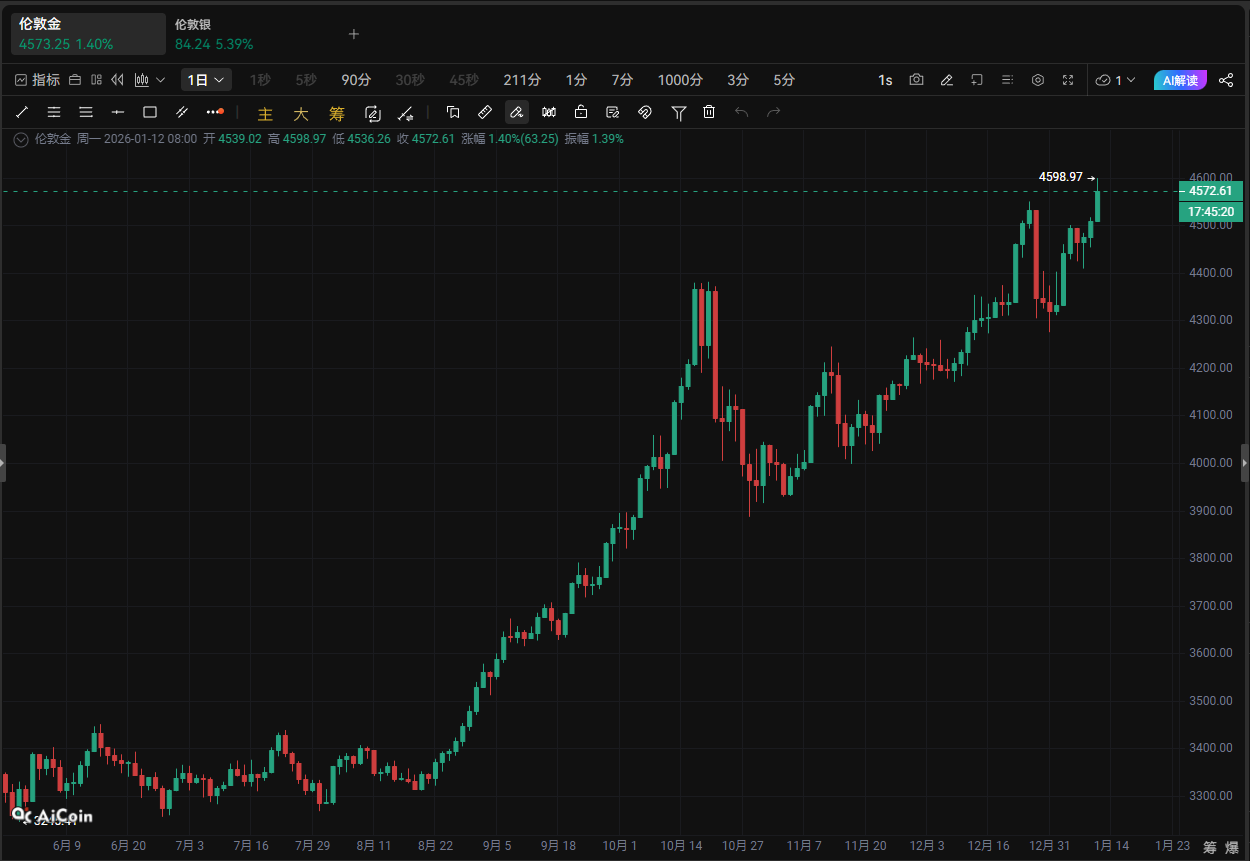
Observation shows that those who lose more than 50% within a month are usually two types of people:
The first type trades very infrequently, only a few times in a month, but refuses to cut losses and ends up losing big in the end. (Single-minded thinking!)
The second type trades very frequently, loses a small amount each time, but continues to lose money consistently. In intraday trading, there is not much room for profit, and the focus is on having more successful trades than losing trades.
If you can't achieve this, you need to find a new intraday trading method. Continuously losing money and still trading, why? Eager to recover the losses, eager to trade, not trading based on facts, often leads to even more losses. (Reckless operation!)
Many investors often say, "I know what is right and can make money, but I can't do it."
There are no secrets in the market, and the principles of success are well known to everyone. Successful people persist in achieving them, while failures follow their psychological feelings. For example, wanting to take profits at the slightest gain, fearing that the money in hand will fly away; when facing losses, always wanting to wait for a rebound, often making small gains and ultimately losing. Another example is that making big money involves following long-term trends, but most investors feel that intraday trading is the safest. Is it really safe? After doing intraday trading every day, for a week, a month, or a year, has the account balance increased or decreased? (There is a saying: "Intraday trading is silver, long-term trading is gold." This is incorrect. If you are good at intraday trading, the returns will inevitably be better than long-term trading. The key is whether you have such a trading system. Especially in futures trading, intraday trading is much safer than overnight trading. The most popular and effective trading method in the world today is high-frequency trading.)
Adapt to the correct principles of trading to make money; do not adapt to trading based on your own comfort.
Some people have done research and found that if you refuse to cut losses, 80% of trades can be held until they become profitable, but it is these 20% that cannot be recovered that ultimately lead to a blowout! (It's all about the amount of capital. In theory, if you have infinite capital, refusing to cut losses will definitely bring back the lost capital, and not only that, it will also make a profit. The problem is that in reality, you don't have enough capital to refuse to cut losses, and you might die halfway through. There is also the issue of effective use of capital. Even if you have enough capital to refuse to cut losses, if you go with the trend, the effective utilization of capital will be much higher.)
Therefore, you can open a smaller position and set a wider stop-loss, which can control risk and increase the success rate of trades. (It's still a balance between risk management and effective use of capital. The best solution to this problem is to find a balanced trading system through statistical probability.)
Compared to the stock market, the futures market has greater power and freedom. You can go long, go short, close positions today or tomorrow, use less capital or more. A philosopher once said, "Those with power are not immune to misuse."
You have to give up something in order to gain something (the principle of being willing to give up; learning to give up something may lead to more opportunities in the market).
1. Give up your own imagination, predictions, and long/short views; only then can you trade according to technical rules and actual market conditions;
2. Give up going against the trend and trying to catch the top or bottom; only then can you go with the trend;
3. Give up short-term small fluctuations; only then can you seize long-term trends;
4. Give up the mentality of luck; only then can you trade according to rules;
5. Give up exceptional circumstances; only then can you grasp tradable market conditions;
6. Give up the concept of money; only then can you trade with ease.
Understanding trading correctly
Traders must understand trading correctly. It is important to understand that holding positions and trading are two different things. Trading is a verb, an action, and often done intentionally and frequently.
The vast majority of people in the world feel uncomfortable when they are not trading, and they don't feel like competent traders if they are not frequently entering and exiting the market, or cleverly analyzing and trading the market every day.
Holding positions is passive. The profit and loss of the position are constantly changing with the market trend, but the trader's mind and hands do not worry excessively or easily change their positions.
When the trend is complete, the price movement will indicate when to take profits. At this point, the trader naturally closes their position. As for the next trade, how to enter, and when to enter, it depends on the price trend and the trader's work and leisure schedule. Profit opportunities are always available.
Strangely enough, most investors or traders cannot do this simple way of making profits. Why is that? Perhaps, as Laozi said, true profit comes from being "wise as a fool" in a state of tranquility, while those "strivers" who seek the "thrill of trading" are in the midst of "foolish as wise" buying and selling.
The basic idea in Yin and Yang theory or dialectics is that when you are still, everything in the world is changing, so there is no need for you to move too much. If you do need to move, it should be in response to the movement of the surrounding world, which is called responsive or following movement. Because the achievement of anything is the result of the various conditions in the surrounding world moving together, not the subjective will of the individual. Therefore, individuals must be still and wait for change, or adapt to change.
The relationship between candlestick movements and trader behavior is also like this. To control through stillness, to be active through stillness, to stand in opposition to weakness, to be in a state of passive strength, is the truly proactive way. This is also the way we do everything.
- I am Zhou Yueying, a teacher specializing in technical analysis. If you have any questions about trading or trends, you can communicate and learn with me! Let's exchange ideas and profit together! Public account: I am Zhou Yueying, V-blog: Financial Expert Zhou Yueying
免责声明:本文章仅代表作者个人观点,不代表本平台的立场和观点。本文章仅供信息分享,不构成对任何人的任何投资建议。用户与作者之间的任何争议,与本平台无关。如网页中刊载的文章或图片涉及侵权,请提供相关的权利证明和身份证明发送邮件到support@aicoin.com,本平台相关工作人员将会进行核查。