Author: Daniel Li, CoinVoice
The highly anticipated Lens V2 version of the Lens Protocol has recently completed the migration work successfully. This new version, with the core concepts of "open and composable, shared benefits, trust and security," brings exciting functional updates to users. Users can not only interact with smart contracts within social media, but also execute external smart contract operations in Lens publications. As one of the earliest startups to lay the foundation for the web3 social networking field, Lens aims to overcome the limitations of traditional Web2 platforms such as Facebook and X. Stani Kulechov, CEO of Lens Protocol, stated that the goal of V1 was to launch a Web3 social network, promote innovation, and test tools beneficial to the Lens ecosystem. V2, on the other hand, aims for a more flexible modular design, with the goal of further increasing user autonomy in the social networking experience. Lens V2 is expected to bring revolutionary changes to web3 social networks in terms of social capital and user experience.
Challenges and Breakthroughs: The Web3 Social Revolution of Lens Protocol
Currently, the development of Web3 social platforms faces some challenges. It is difficult to establish traditional social networks in the Web3 environment because social activities are much more complex than simple financial transactions. Traditional social media platforms focus on content sharing and connecting users, but in the Web3 world, social networks need more features and characteristics to meet the needs of users.
One major challenge is that social networks established solely based on specific content or business models often lack vitality. Users may only flock in for rewards rather than being genuinely interested in Web3 social interaction. This leads to the problem of transient user participation and lack of deep interaction.
Furthermore, traditional social media platforms control users' data and social relationships, making it difficult for users to focus on building their own Web3 social networks. They are accustomed to building and maintaining their social relationships on traditional social media, so there are certain barriers to transitioning to decentralized platforms to build new social networks.
In the past, Web3 social platforms attempted to establish social value through the issuance of social tokens, community passes, NFT artworks, and other means. However, these platforms still rely on traditional Web2 social platforms (such as X, Discord, live streaming platforms) to connect users and propagate value. This dependency is fragile, and once the connection between traditional Web2 platforms and Web3 social platforms is severed, the social value built on them will also disappear. To overcome these challenges, Lens Protocol, as a decentralized social networking underlying protocol, has emerged. Unlike familiar social media such as X, Facebook, and TikTok, Lens Protocol is a social network in itself. By sharing users and user data, third-party developers can easily build their own social media applications based on this protocol. The goal of Lens Protocol is not just to realize a Web3 social network through a single application, but to create a shareable social network in the form of a foundational protocol, driving the development of Web3 social networks by promoting the growth of the entire ecosystem.
Lens: Creating a Shareable Social Network in the Form of a Foundational Protocol
Lens is an innovative social network based on a foundational protocol, standing out with its shareable features. By transforming personal profiles, followers, collectors, and content into NFTs, Lens empowers users with more rights and opportunities. At the same time, the introduction of programmable modules enhances the composability and openness of the social platform.
Personal Profile NFT: The personal profile NFT is one of the innovative core concepts of Lens. It transforms a user's personal profile into a non-fungible token, with each token containing the user's personal information, followers, and data related to content. The tokenization mechanism of personal profile NFTs empowers users to autonomously manage their personal identity and trade on the NFT market. Users can gain economic returns through methods such as selling, leasing, or authorizing their personal profile NFT, while ensuring the security and privacy of their personal information. The introduction of personal profile NFTs achieves the sharing of social capital and the realization of economic value.
Follower NFT: To fairly represent the status of followers in the social network, Lens introduces the concept of follower NFTs. Each follower NFT is associated with a specific personal profile NFT and gives the follower a unique serial number, representing their sequence and importance in the social network. Follower NFTs not only serve as an identity credential, but also represent the social rights of followers in the social network. The serial number and rights of follower NFTs ensure a fair representation of the contributions and status of followers in the social network. The existence of follower NFTs promotes interaction and sharing among users, establishing a more balanced and fair social relationship.
Collector NFT: Lens introduces the concept of collector NFTs, enabling the realization and sharing of content collections in the social network. Users can transform their favorite content into non-fungible collector NFTs, which are associated with their personal profile NFT. Collector NFTs grant users the rights to specific content collections and showcase the interests and tastes of users in the social network. Other users can obtain collector NFTs through trading or authorization, thereby sharing and showcasing common interests and values among users. The introduction of collector NFTs enriches the content ecosystem of the social network, creating more social interaction and sharing opportunities.
Content NFT: Lens allows users to transform their creative works into NFTs and associate them with their personal profile NFT. Content NFTs represent users' creative works, which can take the form of articles, photos, videos, and more. Through the introduction of content NFTs, creators can widely share and circulate their works in the social network, and can trade them in the NFT market. This provides creators with a broader platform for showcasing and trading, promoting the appreciation and protection of their creative works. At the same time, users can obtain other users' content NFTs through trading or authorization, enriching the content selection and experience of the social network.
Programmable Modules: As a foundational protocol, Lens provides programmable modules that allow developers to customize various social interaction functions according to their needs. These modules include social behaviors such as following, collecting, commenting, and sharing, and developers can expand their functionality by writing smart contracts. The introduction of modules provides users with flexibility and personalized experiences, opening up innovative application scenarios such as paid subscriptions, ad incentives, and more, further enriching the functionality and value of the social network. Through the above design and features, Lens creates a shareable social network in the form of a foundational protocol. Personal profile NFTs, follower NFTs, collector NFTs, and content NFTs collectively build users' social capital, enabling them to autonomously manage and share it. The programmable modules provide developers with innovative application scenarios, expanding the functionality and possibilities of the social network. This token-based social relationship design makes Lens an open, scalable, and customizable social network ecosystem, meeting the diverse needs of users and driving the sharing and appreciation of social capital.
New Features of Lens V2: Open Operations and Shared Value
Lens V2 is the latest version of the Lens Protocol, released during the Ethereum Community Conference (EthCC) in Paris in July 2023. At the release event, Lens V2 showcased a series of exciting new features, including "open operations, shared value, personal profile updates, and personal profile management." The release of Lens V2 marks further improvements to modular design, providing users with greater autonomy and flexibility.
Open Operations - Composable Social Network
Lens V2 introduces the Open Actions feature, further enhancing the composability of the social network and providing more freedom and creativity for users and developers. Open Actions provide an open framework, allowing developers to directly integrate external smart contract operations into Lens, creating innovative experiences within the social network. Through the composability of open operations, users and developers can select different functions on Lens based on their interests and needs, and combine them to create unique social experiences. This provides users with greater freedom to participate in their areas of interest and share these experiences with other users. The composability of open operations also provides the possibility for cross-chain operations. This means that users on Lens can interact with other blockchain networks and participate in different ecosystems. For example, users can use Lens to purchase land in Decentraland, join DAOs, or make donations on Gitcoin. This cross-chain operation expands users' social networks into the broader blockchain world, providing them with more opportunities and experiences.

Shared Value
In Web2 social media, there has long been a problem of content scraping and plagiarism. Although various platforms have taken measures to encourage original content, the lack of effective protection for content creators' rights due to conflicting interests between platforms has allowed the problem of scraping and plagiarism to persist in Web2 social media.
However, with the release of Lens V2, this long-standing problem in Web2 may find a good solution in Web3. Lens V2 provides an innovative solution by building a value contribution chain, allowing everyone involved in content publishing to share the revenue generated by that content.
In this process, content creators, content promoters (curators), and the platform can all participate in content revenue. Original users can enjoy revenue from multiple platforms without the need to promote or repost on other platforms. The role of curators becomes very important, as they are responsible for promoting users' original content to more people or posting it on other platforms, while also sharing in the revenue. This creates a mechanism for revenue sharing.
Additionally, Lens V2 also supports intelligent algorithms to help users and curators promote content more efficiently, allowing more people to see and share in the revenue. This approach ensures that all participants in the chain can receive revenue, incentivizing continuous creation of original content and attracting more attention, while also promoting the prosperity and development of the community.

Personal Profile Updates
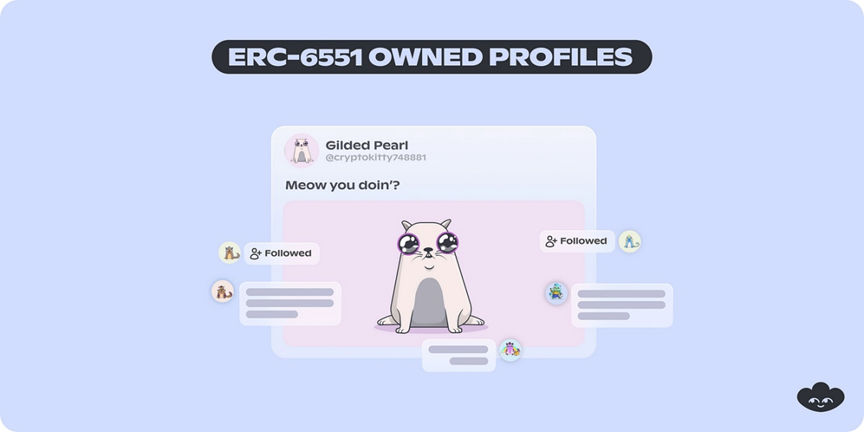
Lens V2 further expands the functionality of personal profiles by introducing the ERC-6551 standard. Each Lens personal profile can create a smart contract wallet account with all the functions of an Ethereum account. This includes holding NFTs and token assets, as well as interacting with DApps. This added functionality gives personal profiles greater programmability and interoperability, allowing users to more flexibly manage and use digital assets.
In Lens V2, the follower architecture has also been improved. Follower relationships have been moved from wallet addresses to personal profiles, and all social operations occur between personal profiles. This improvement enhances developers' experience with Lens operations. Additionally, personal profiles can now choose to tokenize NFTs, with all follower relationships associated with personal profiles rather than followers. When a personal profile moves, its social network moves with it, providing users with greater flexibility and convenience.
Furthermore, Lens V2 has changed the paradigm of the social asset system. Personal profiles are no longer just static entities associated with wallet addresses, but have become independent entities with their own social graph and follower system. The value of social graph relationships is directly attached to personal profiles, making personal profiles themselves valuable social assets.
Personal Profile Management
After improving the functionality of personal profiles, Lens V2 introduces a new layer of personal profile security, allowing users to delegate social operations to different wallets. This means that users can switch between multiple wallets according to their needs, without having to bind all social functions to a single wallet address. This flexibility allows users to more conveniently manage their personal profiles and choose the most suitable wallet for operations.
Additionally, Lens V2 supports various association modes, allowing users to bind one personal profile to multiple wallet addresses, or allowing one wallet address to manage multiple personal profiles. This flexibility allows users to choose the most suitable association mode based on their needs and usage scenarios.
The improvements in account management allow users to more flexibly manage their personal profiles. Users can choose to host their personal profiles in secure cold wallets, while delegating social functions to other wallet addresses for operations. This decoupling of the association between personal profiles and wallet addresses enhances security and provides users with more choices and convenience.
Conclusion
Lens Protocol is steadily advancing through continuous version iterations, aiming to become a truly decentralized Web3 social platform with sustainable social value. On Lens Protocol, users have more control and data sovereignty, and are encouraged to actively participate, contribute, and interoperate with other applications and protocols. Currently, the Lens Protocol ecosystem has developed over 100 applications, covering various areas such as social entertainment, incentive mechanisms, and professional communication, meeting the diverse needs of users.
This diverse collection of applications demonstrates the advantages of an open social graph, surpassing the limitations of traditional single social media applications. Users have gained more power, and their profiles and relationships no longer exist solely on privately hosted servers, but have become assets owned by them personally. As a protocol-based shared social network, Lens Protocol is creating a new landscape for Web3 social by empowering users and allowing them to choose how to develop and monetize their social networks.
免责声明:本文章仅代表作者个人观点,不代表本平台的立场和观点。本文章仅供信息分享,不构成对任何人的任何投资建议。用户与作者之间的任何争议,与本平台无关。如网页中刊载的文章或图片涉及侵权,请提供相关的权利证明和身份证明发送邮件到support@aicoin.com,本平台相关工作人员将会进行核查。


