Original Author: Pete Boyle
Translation:
Chain Marketplace
When I started market analysis, I focused on studying the Growth Models of Web 2.0 brands. To be honest, I never lack strategies for analysis. In the Web3 field, the situation is much more difficult, as many projects seem to be following the old path of "community first." This may be good, but many projects are not doing well, and they have missed some really easy opportunities. Dune Analytics is one of the brands that has left a deep impression on me in the past few years. I have had conversations with people with ten years of experience in the field as well as newcomers, and they have all mentioned Dune.
The magic of Dune is that they have not adopted common methods in Web3, such as:
- Airdrops
- "Pay-to-follow" community growth
- Using their own tokens for earning models (they don't have tokens)
They have leveraged many strategies that I think are traditional public relations and brand awareness strategies, which easily dominate the search engine results page, all stemming from the way they build their product. This is an incredible tool and one of the first tools that people think of when it comes to blockchain analysis.
So, how did Dune rise so quickly?
What is Dune Analytics?
Dune is a web-based application that allows anyone (with a certain level of SQL knowledge) to query blockchain data and create visualizations like the ones below.

Some people even spend time building complete dashboards to give others an overview of a project, series, or even a subset of the industry, like this example about CEXs.

This is a puzzling thing. Dune did not spend money to hire people to build these dashboards, but there are countless new visual contents appearing every day, promoted by the people who create these dashboards (I will explain later why they do this). In my opinion, they are more attention-grabbing than many other brands that provide data visualization (such as Nansen).
The question is, how did they do it? Let's take a look together.
Explosive Growth of Dune
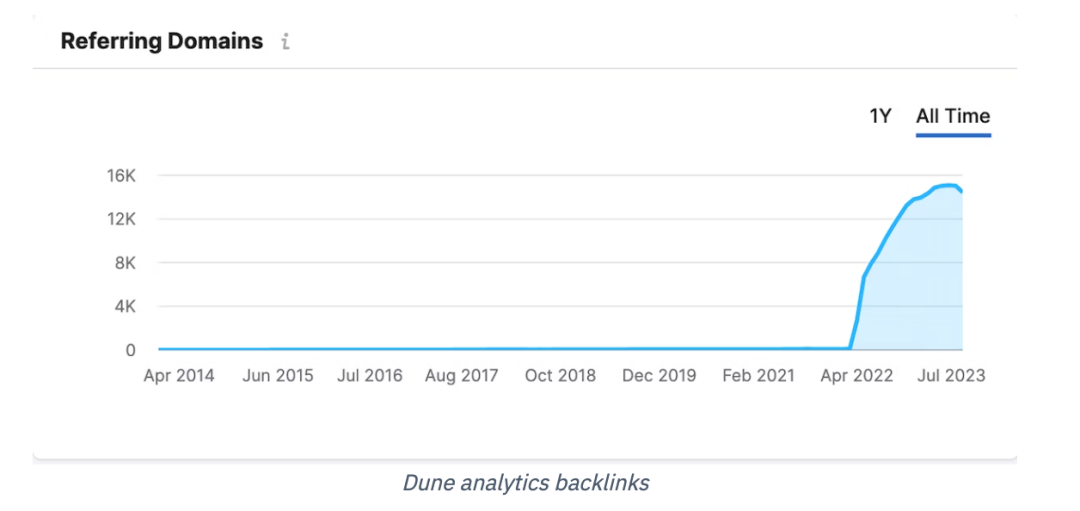
Dune was founded in 2018. But if you observe the existing analysis tools in the market, you will find that this platform really took off around 2021. SEMRush's organic traffic took off from early 2022 (SEMRush's data is low and is only considered organic traffic).

At the same time, they started generating backlinks.
This seems to coincide with the Series A funding that the brand conducted in August 2021.
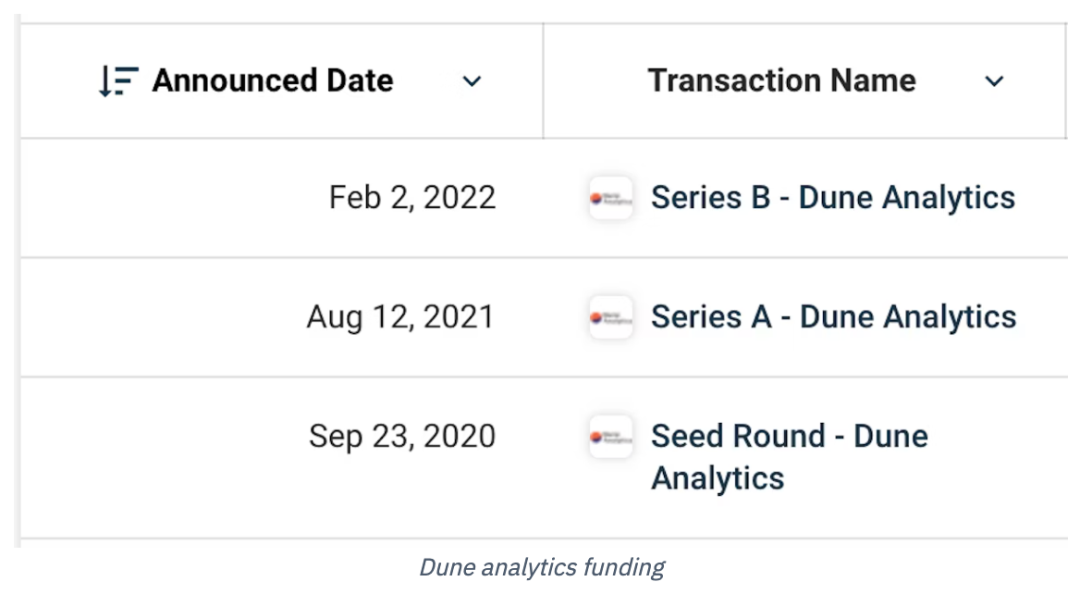
At that time, Dune seemed to suddenly appear in everyone's field of vision. People talked about it, shared links, and created visualizations like crazy. For a while, Dune was everywhere.
Interestingly, their traffic comes mostly from direct visits, with very little coming from Google search. In fact, I was surprised that more of their traffic is not referral traffic (we will discuss this later).
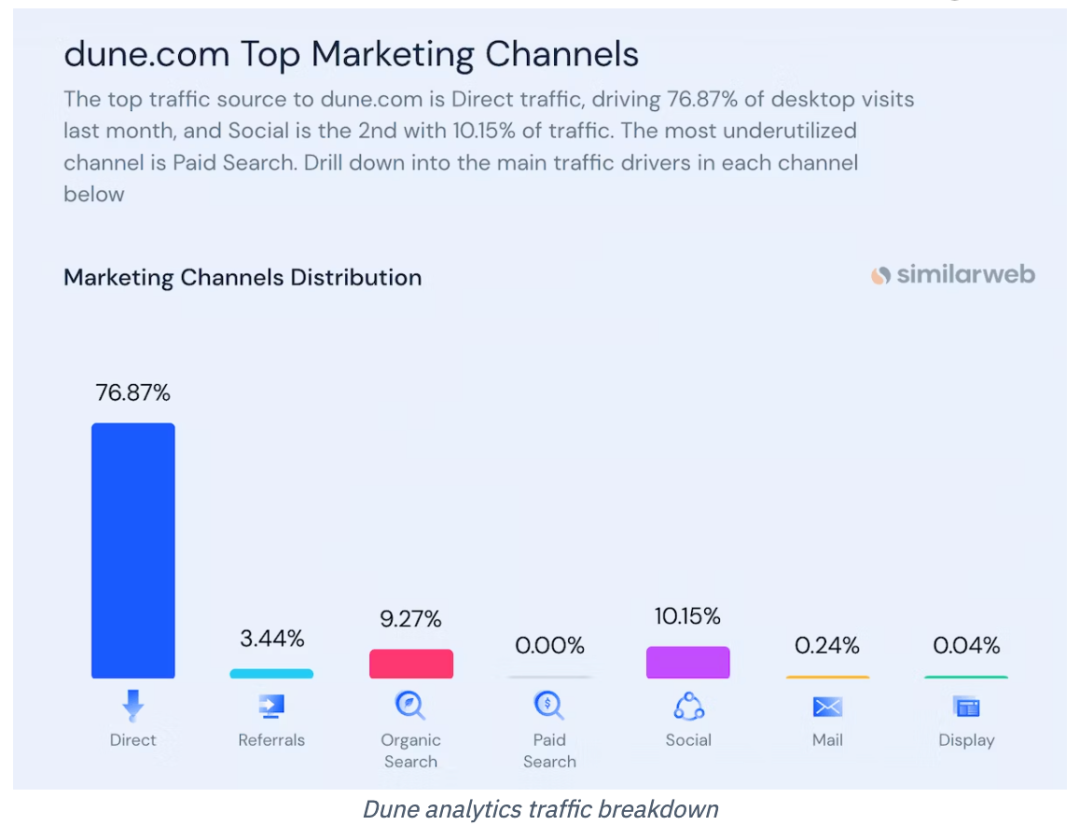
Few brands can do this. They have become synonymous with their category (blockchain analysis), and when someone needs to analyze visualizations, they are usually the preferred service. As a result, they have gained a lot of users without even needing to search. They just go directly to the website. I will analyze how they have achieved this and discuss several aspects that I think they can improve.
Dune Helps Both Supply and Demand of Blockchain Data Visualization
This is the crux of the matter.
Dune's platform excels in helping both the supply and demand sides of data visualization.
Dune helps data scientists gain attention and get paid work.
Dune also helps people in need of analysis (venture capitalists and content creators) get detailed information about the entire industry.

They position themselves in the middle of these two groups, creating a product that is helpful to both. The result is that everyone wants to talk about them, so let's delve into the details.
Demand - Supporting Content Creators, Enhancing Public Relations and Visibility
Frankly speaking, the best tools, projects, and products can help users achieve their goals. Usually, they can make achieving the goal faster, easier, or more economical. We are currently in the creator stage. Everyone is creating content, from individuals looking to earn some extra income to brands looking to attract thousands of new users, and the volume of content production is huge. And if I may be critical, a lot of the content is very average, just noise.
The people creating this content are not necessarily experts (at least not yet), they just have enough drive to invest time in continuously creating content. Building an audience by providing a similar overview to others is a long and difficult process.
However, if you have unique insights, perhaps derived from data analysis, you will immediately stand out. Points supported by data not only carry more weight but can also attract attention through cool visuals, helping to explain various elements.
This is the role of Dune.
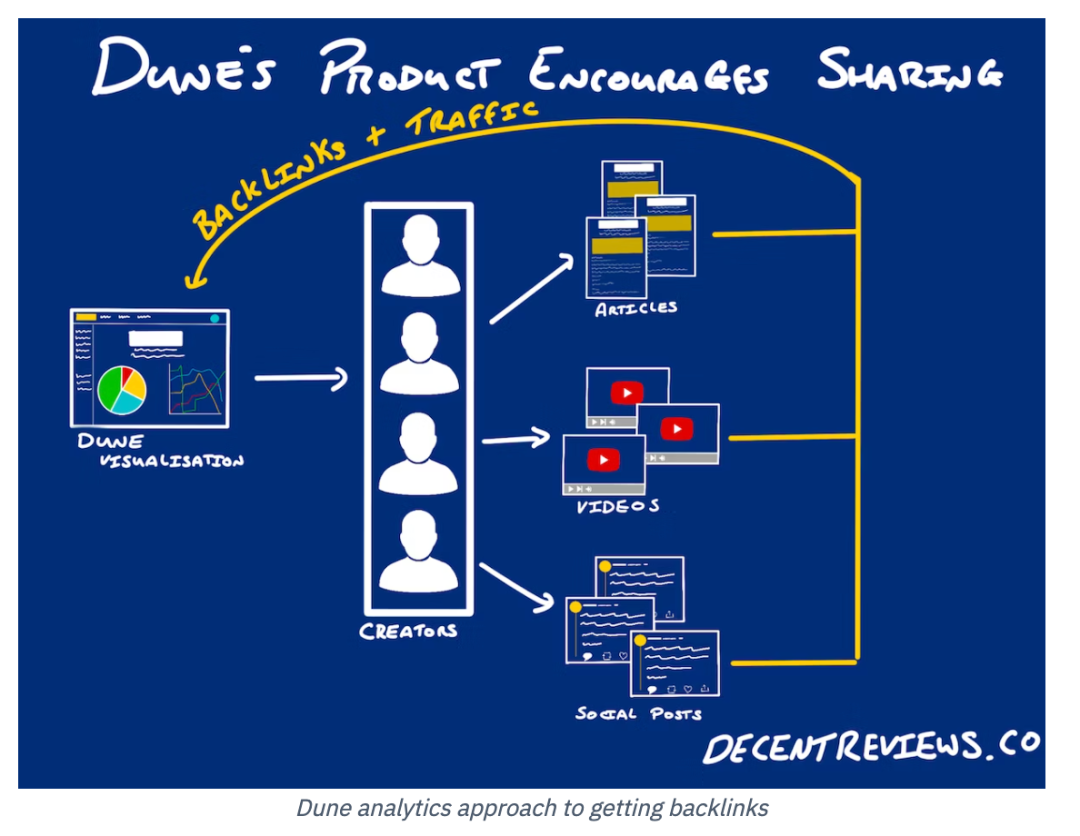
Before Dune appeared, analyzing blockchain data was difficult for anyone other than the most professional technicians. But with Dune and some SQL knowledge, anyone can create simple charts or more detailed analysis dashboards, resulting in various creators referencing Dune in their work.
Brands and influencers use Dune to talk about project growth or interesting changes in the market.

Large publications like Cointelegraph, with millions of readers, use Dune to enhance their reporting.

Dune also appears in video tutorials about Web3 analysis.
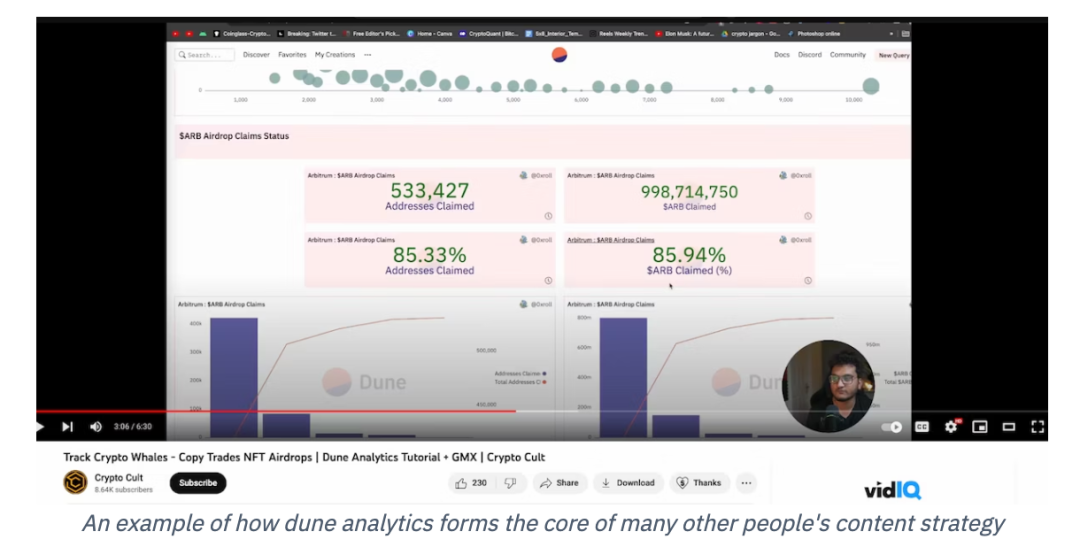
All these references not only expose Dune to a wider market but also bring them backlinks, helping their organic ranking on Google.
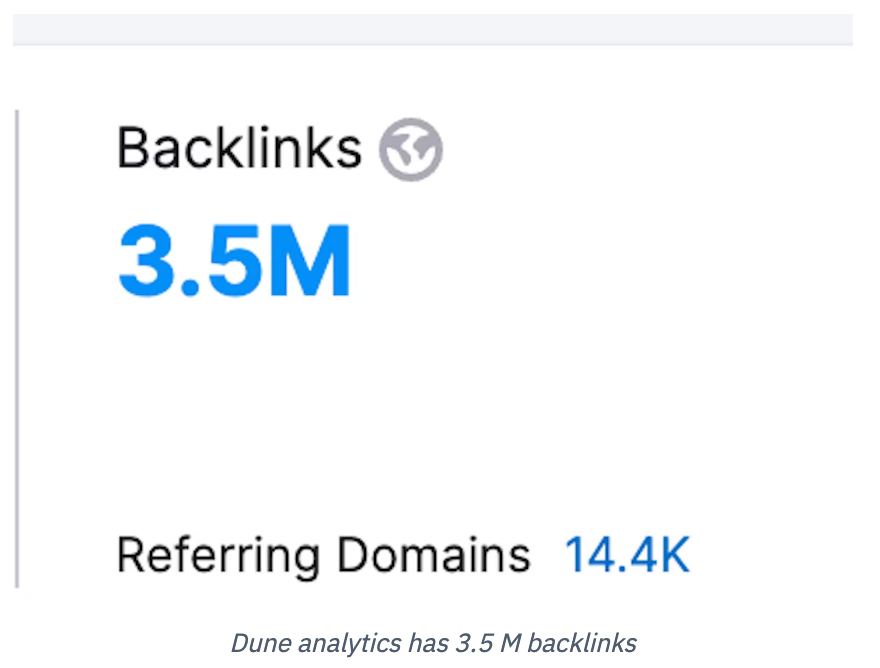
According to SEMRush's data, Dune has about 3.5 million backlinks from over 14,000 domains pointing to its website.
Dune has essentially created a product that creators need to develop their business, and if they use this product, they must reference it. The result is massive exposure and backlinks, helping the brand grow.
Supply - How Dune Enables Data Scientists to Create Visualizations
When I started researching Dune, my first thought was, "How do they enable these people to create these visualizations?" I mean, without visualizations, Dune would not have gained media attention and usage.
These people are actually creating marketing materials for Dune. But why would anyone bother to learn how to use Dune?
Again, this comes down to Dune relinquishing control and allowing others to benefit from the product. It is difficult to find work as a data scientist. You need a specific set of skills and need to prove your abilities to potential employers. Furthermore, the position of a data scientist is highly competitive and relatively well-paid. This means that brands looking to hire data scientists only need those who are verified.
Dune provides an opportunity for newcomers to showcase their skills and find work in this field. Dune allows anyone to register an account and start building dashboards for free.
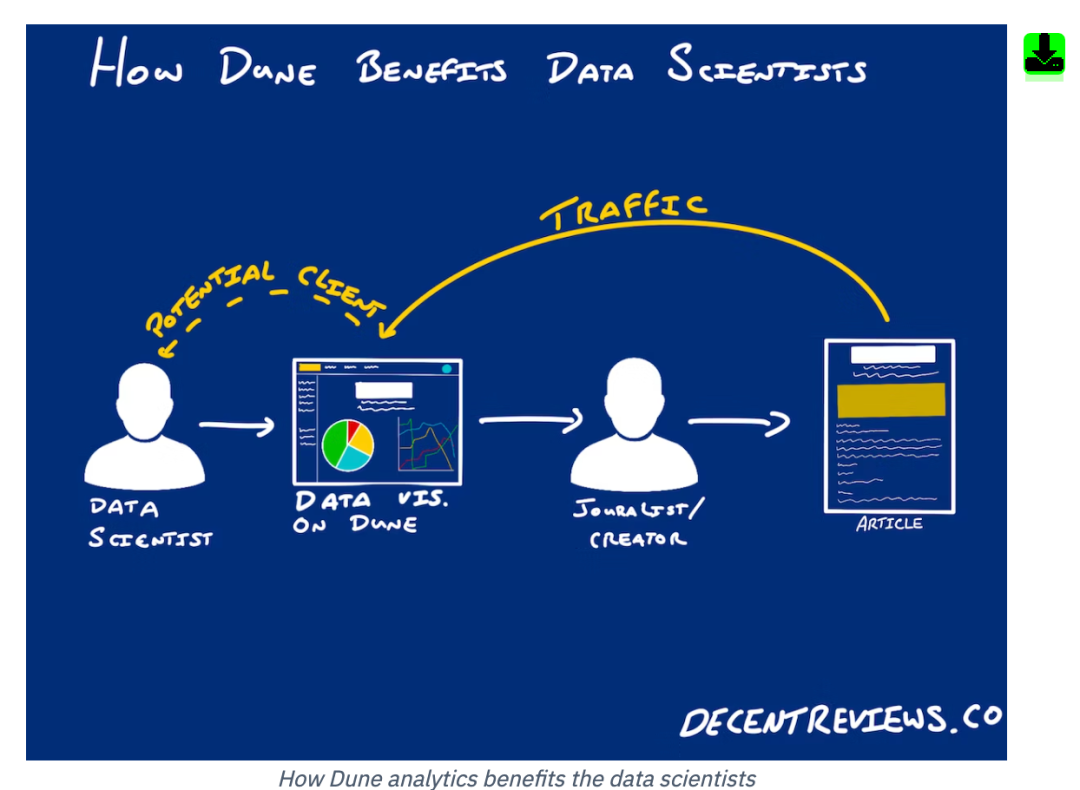
Because they can build public dashboards for free, Dune actually becomes a portfolio for data scientists.
For example, it's the equivalent of a data scientist:
- For writers, it's WordPress or Medium (if you like Web3, it's like Mirror.xyz)
- For video editors, it's YouTube
- For user experience designers, it's Figma
Aspiring data scientists can create dashboards to showcase their skills and use them to find work.
This is great because if someone's visual work is used by well-known media like Cointelegraph, creators can gain backlinks, attracting potential clients.
But Dune goes further; they have launched the Wizard program. Those who are proficient on Dune can become Dune Wizards and showcase their work. They have a special category on the main search page.

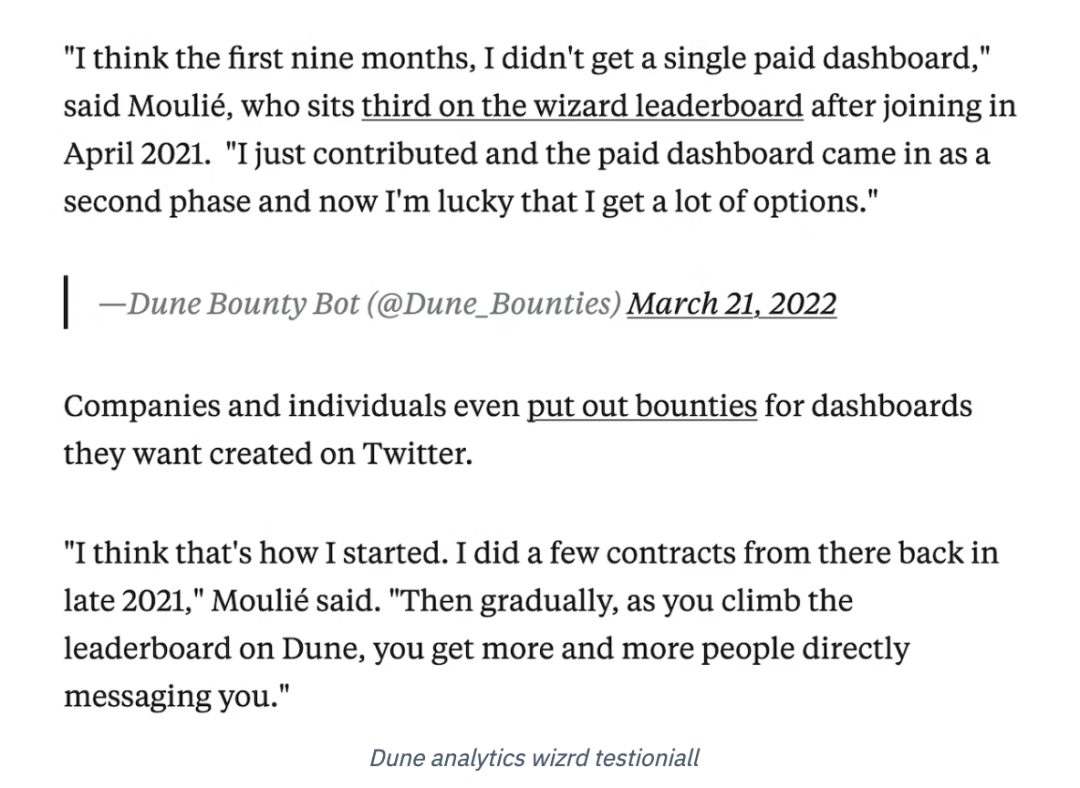
As more people see the work of Wizards, more brands will contact them seeking help in building their own dashboards, as mentioned in this interview with a Dune Wizard.
Dune also has a job recruitment section to help these Wizards apply for and find work.
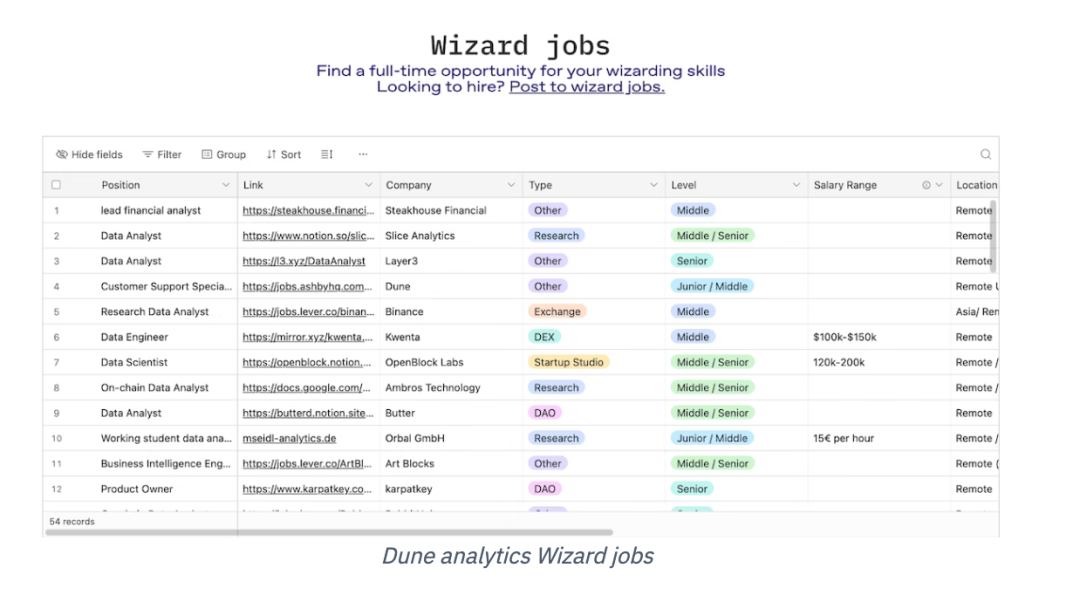
Some of these jobs pay six figures, which is great for beginners looking to understand visualizing blockchain data. But again, Dune is not the focus for these individuals; they enable others to pursue their goals using their product.
Matchmaking the Supply and Demand of Blockchain Data
Dune's entire approach is to provide tools for others to grow and achieve their goals, and this approach is very effective.
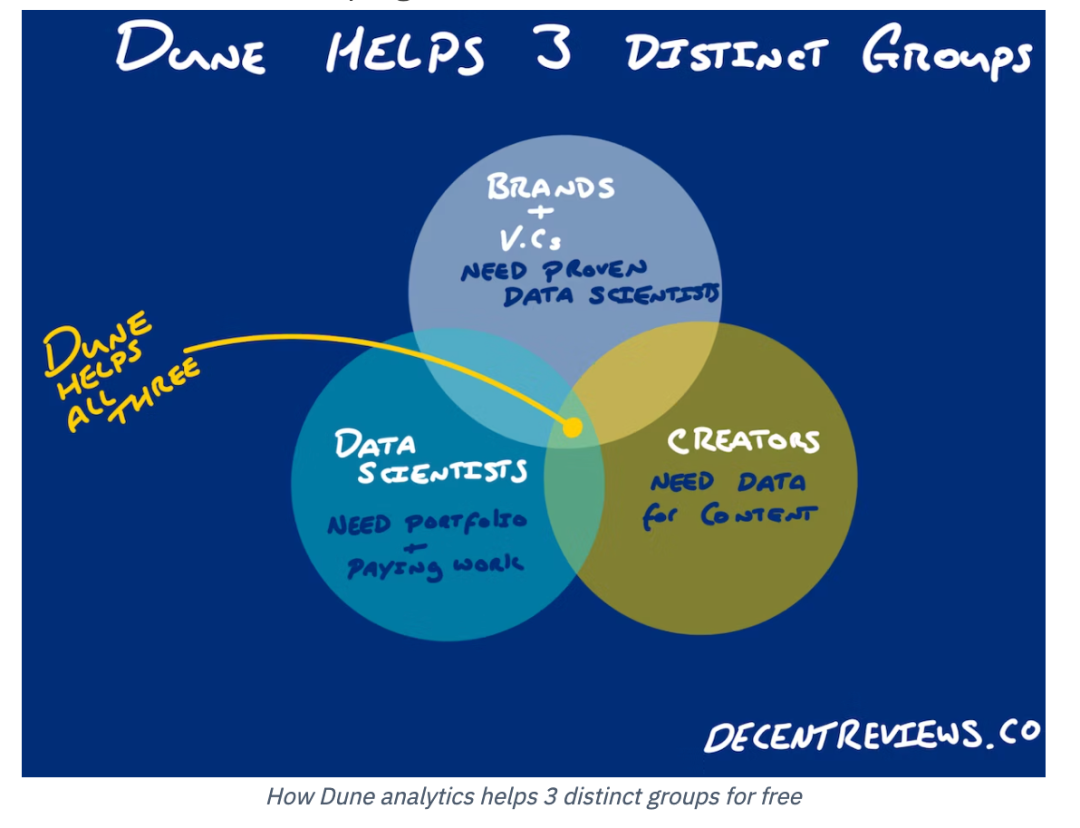
Dune is at the wonderful intersection of three types of demand:
- Data scientists - who want to build their portfolio and find work;
- Creators - who need data scientists to create more engaging content;
- Institutions - who need reputable data scientists to help them understand investments or their own development.
Few brands can do this; most brands want their detailed data visualizations to be behind a paywall, accessible only to clients. Some brands charge high fees, making it inaccessible to budding creators. And some brands are very protective of their intellectual property and do not allow others to share their products.
Dune breaks all these trends. Anyone can create visualizations for free and can use them for free in any marketing material (with proper attribution). On the surface, you might think Dune is just a tool for visualizing vast amounts of blockchain data, but it is much more than that.
Dune is a matchmaking platform, providing opportunities for those in need of data while also providing valuable data for data scientists. By helping everyone, they are also helping themselves. But if everything is free, how do they help themselves?
Dune's Revenue Model
While you can create dashboards for free and share visualizations from Dune, they also have paid plans. They know that everyone wants (or needs) to make their data public. Many projects need specific on-chain data analysis to help them understand how to develop as a brand, and they need specific analysis for their internal processes, which Dune provides through paid plans.
Institutions can sign up for paid plans to help with their internal data analysis. This is suitable for projects with a large amount of on-chain data to organize or for venture capital firms needing to understand project developments.
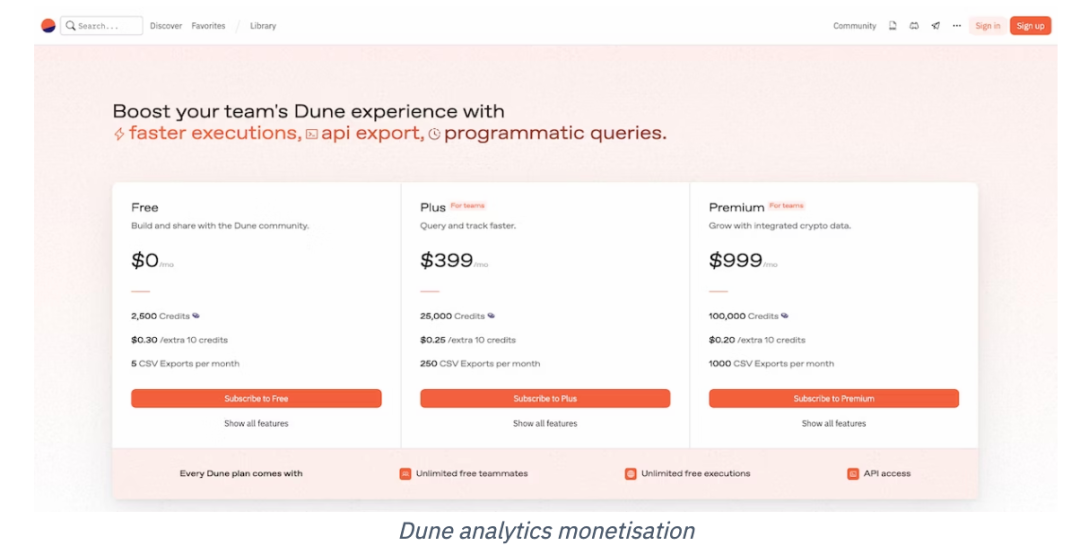
I like this model because you essentially get a full product demo for free. Anyone considering purchasing a premium plan can access Dune to see what kind of data results they can produce. If they like the data output, they are more likely to sign up for a paid plan. If they need help, they can easily find it on the Wizards portal.
Areas Where I Think Dune Is Missing Out
I am surprised that Dune has not gained more organic traffic. If they notice this, they could significantly increase their traffic. Their domain authority is high. As of writing this, according to Ahrefs data, their DA value is 78. If you don't know, DA is a third-party metric that evaluates a website's authority. Generally, the higher the DA value (on a 100-point scale), the higher it ranks on Google. A DA of 78 is very high.
However, their organic traffic is very low. SimilarWeb indicates that organic traffic accounts for less than 10% of their total traffic. Why?
Many visualized data is not optimized for Google search. And I don't recommend changing that. I think they are already doing well. So what is Google indexing for Dune? They tend to index a lot of creator pages.
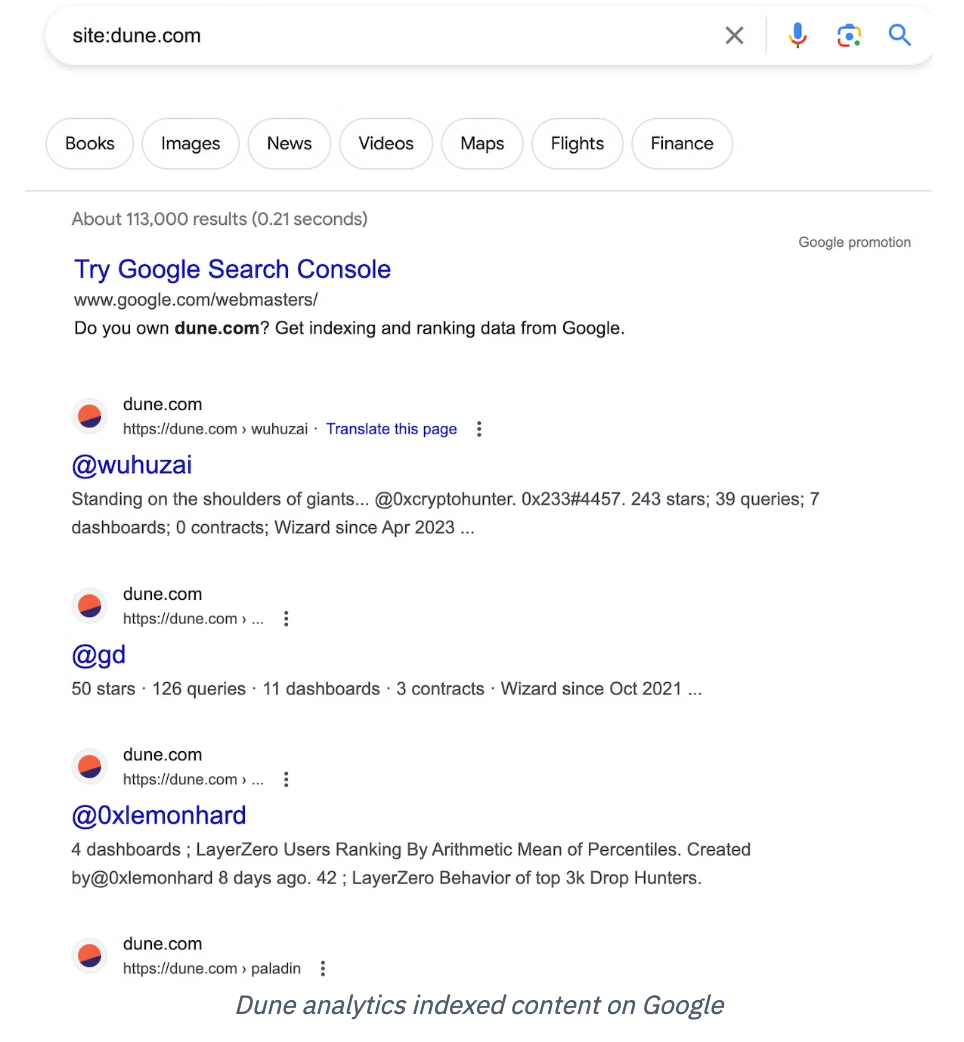
In reality, I can't imagine these pages getting much visibility in search. If I were a consultant for Dune and they wanted to increase traffic, I would try to use the platform to create data outputs related to what people are searching for. Here are some basic Crypto search keywords. This is just a small snippet.
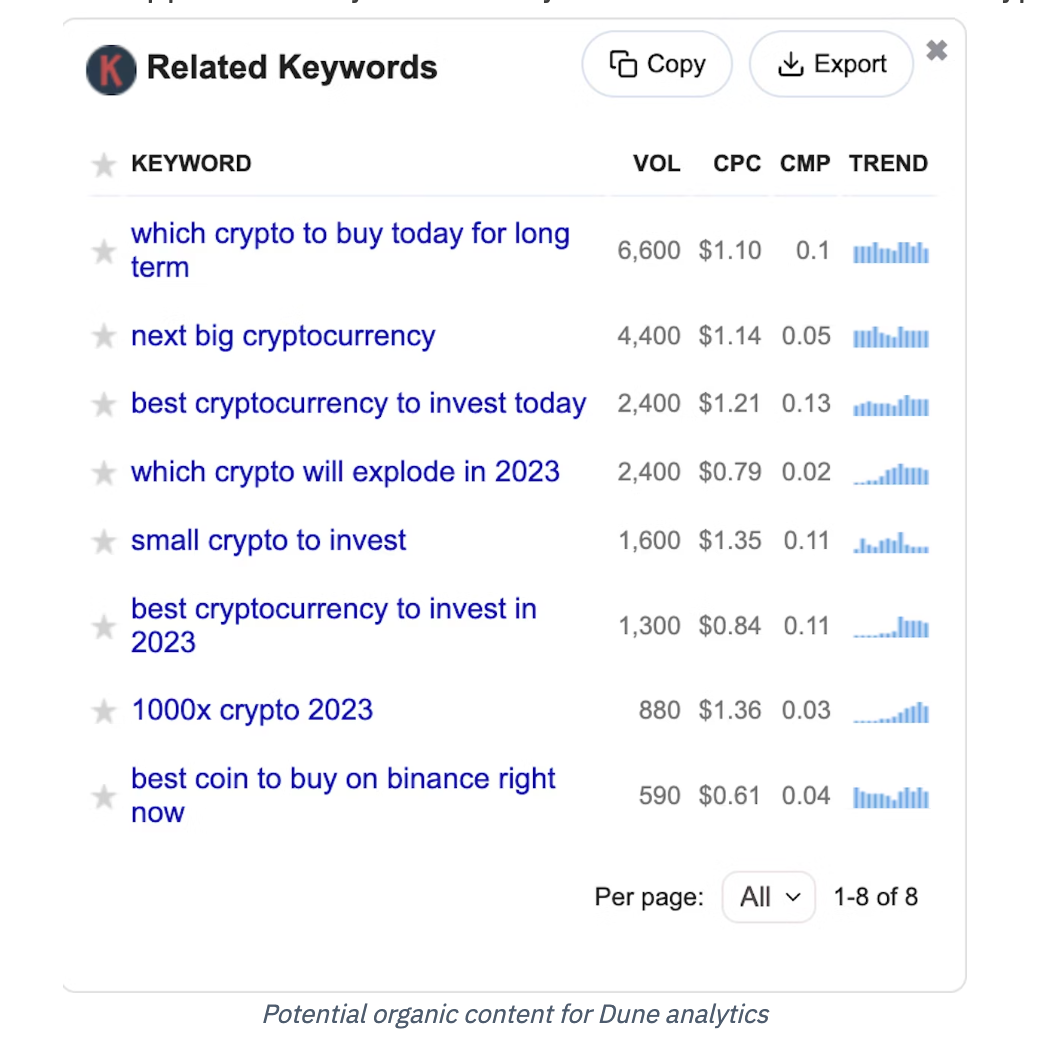
There are about 20,000 searches per month here, with relatively low competition (CMP on a scale of 0-1, where 1 indicates the most competitive). With Dune's DA, they could easily rank quite high on Google by creating articles updated monthly.
They have the following advantages:
- Recognized authority
- Direct access to data
- Established audience
They can easily create articles targeting high search volume and use their data to create unique content. In the above scenario, care should be taken to avoid providing "financial advice," but angles to avoid this issue can be easily found. For example, an article titled "The Most Active Crypto in Trading in the Past X Months" instead of focusing on "Which Crypto to Buy for Long-Term Holding Today." They can still optimize for the main keywords listed in the image but avoid making specific investment statements. I imagine they could easily increase their visitor count by several hundred thousand each month by handling this content. Especially in the current weak SEO methods of Web3.
In Conclusion, Dune
I believe Dune's success truly comes down to two key factors:
- Having an excellent product that benefits multiple groups;
- Allowing people to use their product for free, thus promoting free public relations.
While this is not a marketing strategy in itself, the way they have built it has made Dune well-known. They have built their business with the goal of helping others. They have not put themselves at the center of everything but have found themselves there, thanks to their generosity.
This is a true Web3 approach.
I do think they could do more in terms of traffic, and I hope their monetization model is enough to keep them vibrant as they grow.
Original article by Pete Boyle, translated and compiled by the Chain Marketplace team. All rights to the English version belong to the original author. For Chinese reprint, please contact the compiler.
免责声明:本文章仅代表作者个人观点,不代表本平台的立场和观点。本文章仅供信息分享,不构成对任何人的任何投资建议。用户与作者之间的任何争议,与本平台无关。如网页中刊载的文章或图片涉及侵权,请提供相关的权利证明和身份证明发送邮件到support@aicoin.com,本平台相关工作人员将会进行核查。


