Last night at 8:30 PM, the US July CPI was released on time.
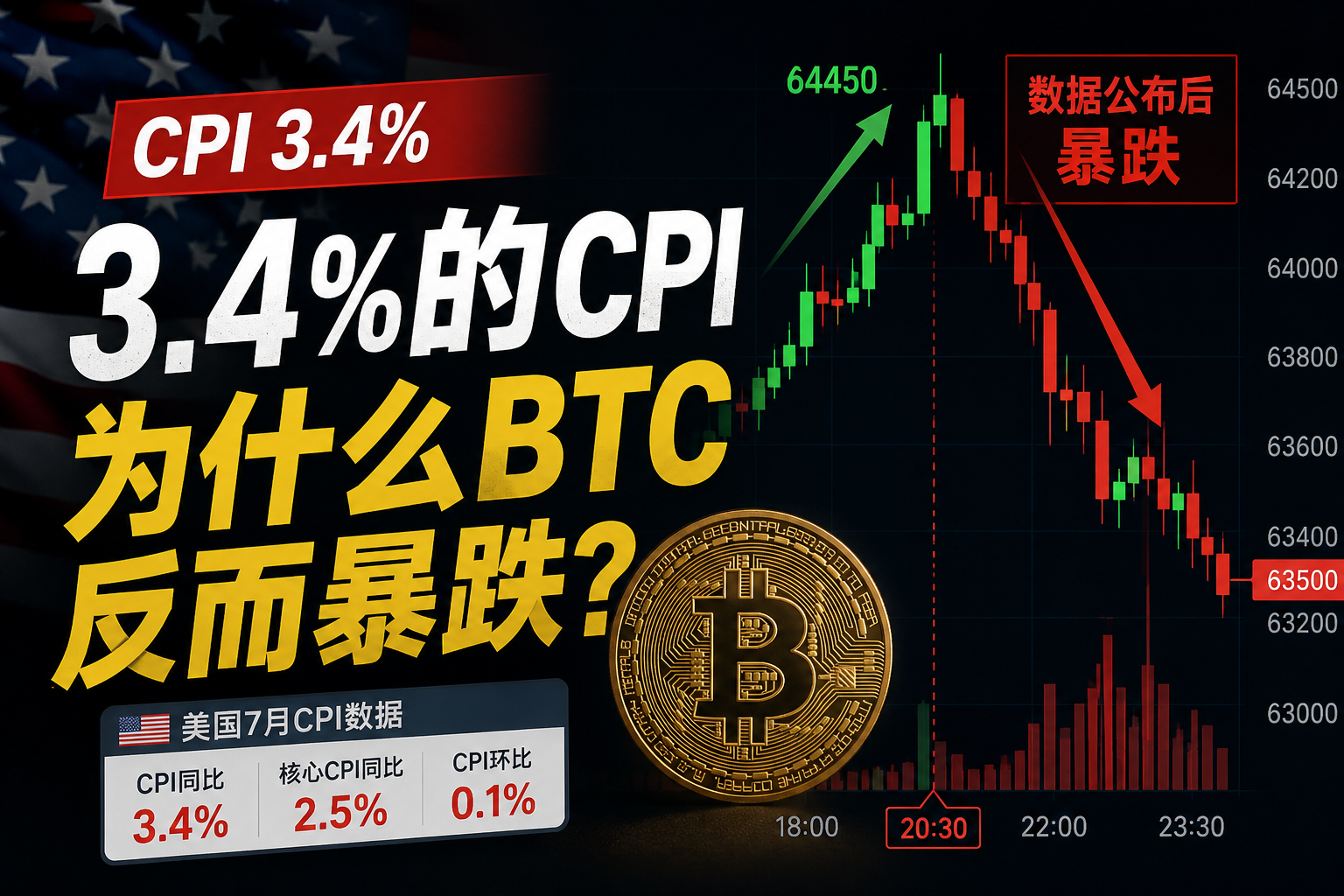
Year-on-year 3.4%, core 2.5%, month-on-month 0.1%, three numbers almost perfectly aligned with expectations.
Before the data came out, Bitcoin had already risen from around 63,200, reaching a high of 64,450. The moment the data was released, the price briefly surged even further. And then what?
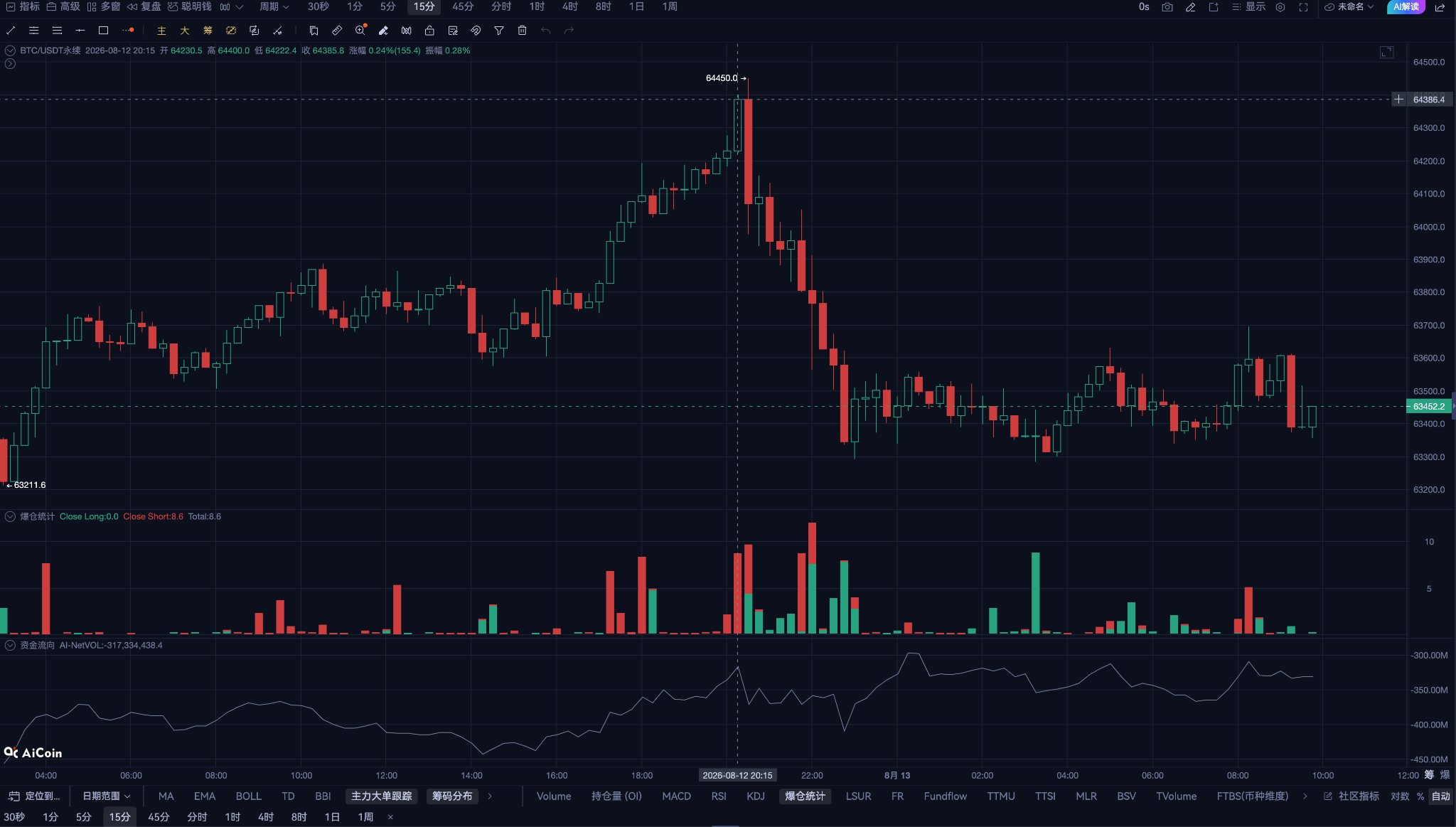
In less than half an hour, a series of large red candles broke the price below 64,000. The price did not continue to drop in a one-sided manner but entered a consolidation phase near 63,500.
As I was watching the market, I thought: This is not about trading "cooling inflation," it is clearly about trading "expectation fulfillment."
1. Why is it "buy the expectation, sell the fact"?
"Buy the expectation, sell the fact" is a common phenomenon in trading.
In simple terms: The market tends to hype up "potential good news" in advance. Once the actual data is released, even if the result is indeed good, those who had already positioned themselves may choose to sell and take profits. Thus, we see the situation where "the data looks good, yet the price drops."
This time is a typical example. The market had already expected a more moderate CPI, so Bitcoin had risen beforehand. Once the number was actually released and expectations were fulfilled, the bulls started to take profits, and the bears also increased pressure, leading to a price drop.
Many people may wonder: If the data is clearly good, why does Bitcoin not rise but drop instead?
The answer is simple—what the market is trading is never about "whether the numbers are good," but rather "how much room is left for expectations after the numbers come out."
2. What exactly is CPI? Why does the market care so much?
CPI stands for the Consumer Price Index, which measures the price changes of everyday expenses for ordinary Americans: groceries, gas, rent, medical care, etc.
Core CPI removes the highly volatile food and energy prices, thereby better reflecting the more stable underlying inflationary pressures.
One of the key tasks of the Federal Reserve is to keep inflation around 2%. If inflation is too high, money will lose its value; if inflation is too low, deflation can easily occur. Therefore, each time the CPI is released, the market watches nervously: Is the number going higher or lower?
Although the Federal Reserve places more emphasis on another indicator called PCE (Personal Consumption Expenditures Price Index), the CPI is released earlier, is more intuitive, and often has a greater impact on market sentiment. When the CPI changes, US Treasury yields, the dollar, gold, Bitcoin, and US stocks almost always reset their pricing accordingly.
In simple terms:
- CPI is the "market sentiment switch."
- PCE is the "policy's ultimate basis."
Both are important, but the rhythm is different.
3. After 3.4%, what is the market really trading?
3.4% is a slight decrease from last month's 3.5%, and the core dropped from 2.6% to 2.5%.
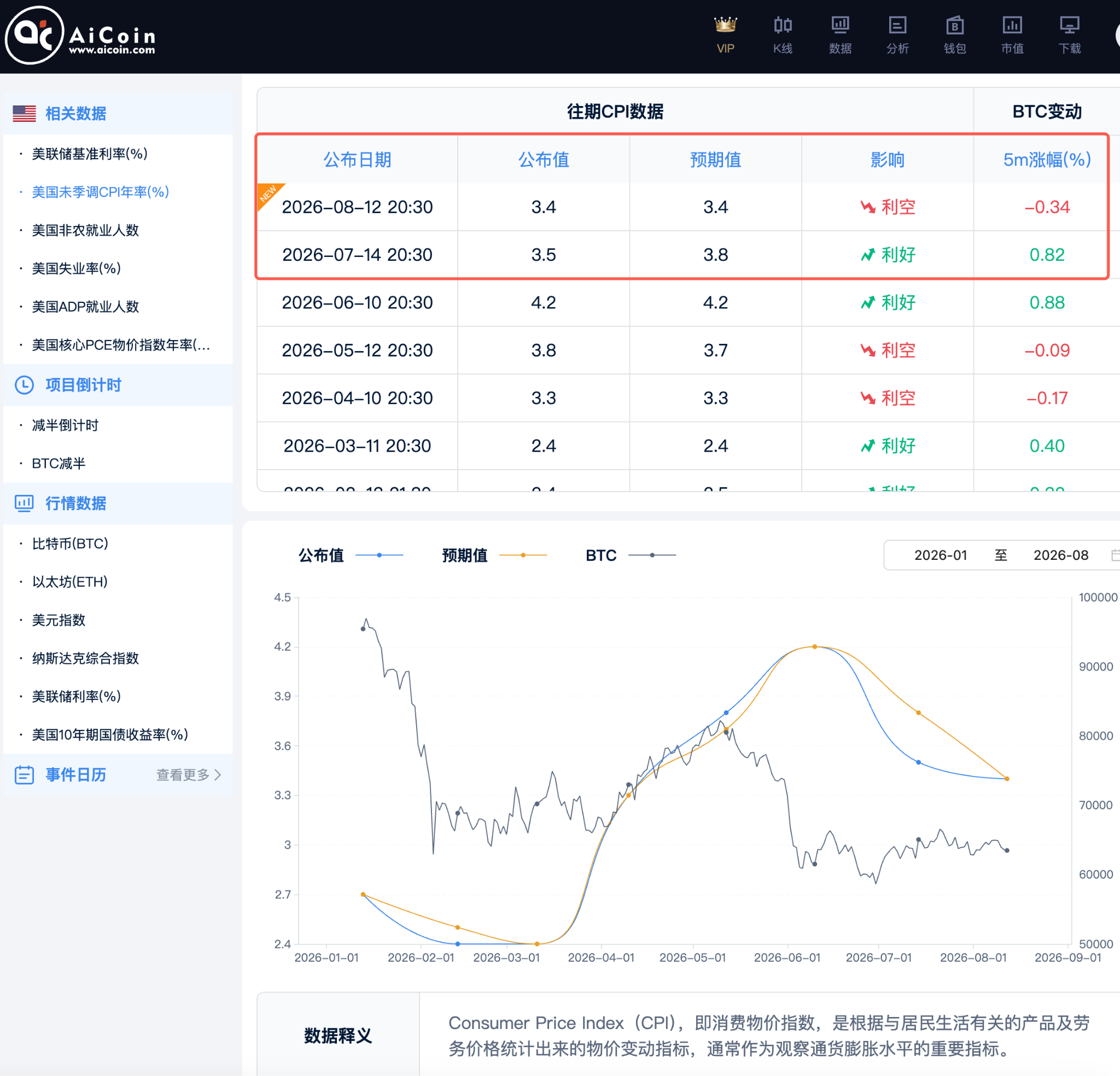
On the surface, it appears to be a continued cooling, but there is still a significant distance to the Federal Reserve's 2% target.
It has only "eliminated the worst possible scenarios" and has not opened a clear window for rate cuts.
After the data came out, the probability of a rate hike in September dropped from about 50% to around 40%. The market shifted from "possible rate hikes" to "temporary wait-and-see," but it did not turn into "imminent rate cuts."
The current macro environment can be described as "high-level contest": inflation is cooling, but it hasn't dropped to a level where easing is possible; there are signs of job slowdowns, but it hasn't reached a clearly weakened state. Both sides are not extreme enough, making it difficult for the market to establish a one-sided trend.
4. Key upcoming events
1. PPI at 20:30 tonight
PPI is the Producer Price Index, which measures the price changes of goods sold by companies. It is upstream of CPI and PCE, and can reflect in advance whether inflation pressures will continue to transmit downstream. If tonight's PPI continues to be mild, it will further solidify the narrative of "inflation being under control"; if it is on the hotter side, especially in the core aspects, the expectation for rate hikes will rapidly revert.
2. August CPI + Employment Report
This is the last round of key data before the September Federal Reserve's policy meeting (FOMC), which carries significant weight.
3. Jackson Hole Annual Meeting
At the end of August each year, the Federal Reserve holds a meeting at Jackson Hole, where officials' public statements often influence market expectations regarding subsequent policies.
The real trends often take shape only after several months of data align or the Federal Reserve clearly shifts its stance. Until then, the market is likely to continue digesting information in a volatile manner.
5. Thoughts on trading
At this stage, I personally prefer to take light positions and enter and exit quickly.
Avoid heavy positions before the data is released, and react based on actual fluctuations after the data comes out. If the price rebounds later on, consider small positions to short, with strict stop-loss measures, focusing on volatility rather than trends.
To be honest: the cryptocurrency market is inherently volatile, and leverage can magnify both gains and losses several times. The above are just my personal observations and thought processes; they do not constitute any investment advice. Each individual's situation is different, so it's best to be clear about how much you can afford to lose before entering the market; do not treat trading as gambling.
Understanding macroeconomics is not about guessing numbers correctly every time, but rather understanding what logic the market is trading right now.
This CPI tells you: Inflation is cooling but far from the point where easing is possible.
Before a trend really forms, patience is more important than opinion.
We will look at how the market prices again after tonight's PPI release.
Lastly, a practical reminder:
In times of dense data releases, the market can change quickly. Instead of scrambling to find platforms and transfer funds at that moment, it's better to prepare your tools in advance. Set up your accounts, ensure funds are in place, and develop a habit of setting stop-losses, so you can be more composed when it matters.
If you still don't have a handy trading account, you can register for a backup on Binance:
👉 https://jump.do/zh-Hans/xlink-proxy?id=3
(Referral code: aicoin668, enjoy a 10% rebate)
With the right tools, your mindset will remain steady.
Join our community to discuss together and become stronger!
Official Telegram community:
AiCoin Chinese Twitter:
Binance Benefits Group:
https://www.aicoin.com/link/chat?cid=gmLgwvKD1
Risk warning: The content is only market observations and does not constitute investment advice. The cryptocurrency market is highly volatile, please participate within your risk tolerance.
免责声明:本文章仅代表作者个人观点,不代表本平台的立场和观点。本文章仅供信息分享,不构成对任何人的任何投资建议。用户与作者之间的任何争议,与本平台无关。如网页中刊载的文章或图片涉及侵权,请提供相关的权利证明和身份证明发送邮件到support@aicoin.com,本平台相关工作人员将会进行核查。