The Bitcoin network is on track for an event unprecedented since its creation. According to current statistics shared by analyst PlanB, Bitcoin's annual mining difficulty is heading toward its first-ever net decline, falling from 148.3 trillion at the end of last year to 126.2 trillion.
It is important to emphasize that the annual difficulty decline is not yet a final fact. It is only the end of July, and the network is expected to undergo five more automatic adjustment rounds before Dec. 31. If the BTC price recovers and mining equipment comes back online, difficulty could still close the year above its 2025 level.
2026 is the first year ever in which bitcoin difficulty dropped. What do you think it means? pic.twitter.com/0czgWD0zu1
— PlanB (@100trillionUSD) July 27, 2026Nevertheless, the industry is currently moving confidently toward the first annual difficulty deflation in Bitcoin's history, creating a unique economic paradox: traditional mining is generating losses, mining stocks are rising because of AI, and strong bullish signals for Bitcoin's price are developing across the market.
Inside the strict $76,000 math for miners
The reason equipment is currently being shut down is the severe compression of mining margins. With Bitcoin's price down 26% since the beginning of the year and industry revenue cut in half, miners have started operating at a loss.
HOT Stories Coinbase CEO Rejects 'Pivot to AI' Narrative Zcash (ZEC), XRP, Shiba Inu (SHIB) and Bitcoin (BTC) Price Analysis for July 26: Liquidity Chooses Wrong Direction
According to estimates from the onchainmind platform, the average cost of mining one BTC currently stands at $76,100, while Bitcoin's market price is hovering near $65,000.
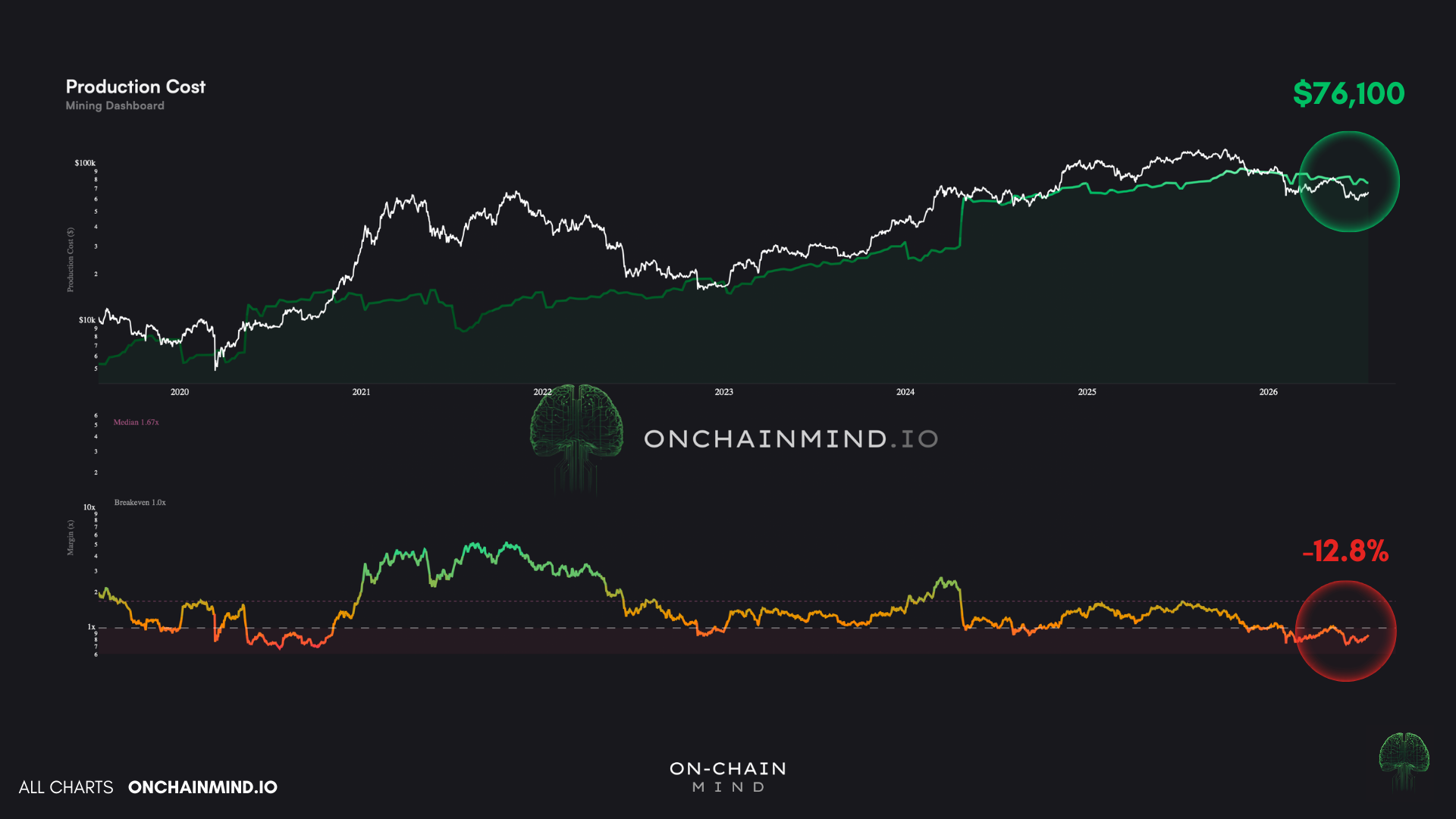
Bitcoin production cost for miners as of July 2026, Source: Onchainmind.io
The situation was further aggravated by February's Superstorm Fern and the summer heat in Texas, which forced companies to shut down their ASIC miners to avoid overpaying for electricity. As a result, the network's total hash rate has fallen nearly 20% from its historical peak.
What does this mean for the BTC price?
For the cryptocurrency ecosystem itself, this crisis is a historic sign of health. The network's algorithm automatically reduced mining difficulty, lowering competition and making life easier for the remaining operators with access to cheap electricity.
The on-chain Puell Multiple metric, which has fallen into the deep 17th percentile, historically confirms that the network is passing through the classic final stage of clearing inefficient mining capacity from the market.
You Might Also Like

Mon, 07/27/2026 - 15:17 Michael Saylor Suspends Bitcoin Buy to Boost Cash Reserves With $525 MillionByCaroline Amosun
For investors, this combination of falling difficulty and miner capitulation has traditionally served as a reliable signal that a major price bottom is forming.
The fact remains that the industry landscape has changed irreversibly. Even if difficulty recovers during the five remaining adjustments, the current trend has demonstrated that Bitcoin can automatically protect mining margins, while the financial stability of miners themselves now depends less on the cryptocurrency's price and more on the computing power of their servers rented out to AI giants.
免责声明:本文章仅代表作者个人观点,不代表本平台的立场和观点。本文章仅供信息分享,不构成对任何人的任何投资建议。用户与作者之间的任何争议,与本平台无关。如网页中刊载的文章或图片涉及侵权,请提供相关的权利证明和身份证明发送邮件到support@aicoin.com,本平台相关工作人员将会进行核查。


