Key Takeaways
- Despite a 39.1% annual rise, crypto handles just 0.7% of El Salvador’s remittances, showing lackluster adoption.
- Salvadorans still rely on traditional channels, with banks and firms processing over 84% of all funds.
- The state-sponsored Chivo wallet is winding down under an IMF deal, ending hopes of saving $400M in fees.
El Salvador, referred to as the bitcoin country, still lacks adoption of digital currencies in the remittances arena.
Numbers issued by the Central Bank of El Salvador revealed that during the first half of 2026, only $35.4 million of the total volume of external remittances was sent to the country using digital currency channels. The figure represents less than 1% of all funds sent to the country in 2026, which reached over $5 billion.
In comparison, cash remittances, which are handed over personally when senders travel from another country to El Salvador to visit their relatives, rose to 3.8%. Even so, crypto remittance numbers are significantly higher than those reached during H1 2025, when these registered $25.4 million in volumes, a rise of 39.1%.
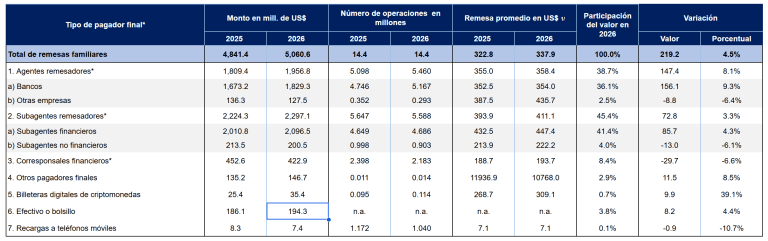
Remittance Data. Source: Central Bank of El Salvador.
Total remittances for the period also rose from $4.84 billion to 5.06 billion, a rise of 219.2 million (4.5%). Remittance companies and banks constitute the preferred channels for Salvadorans to send money home, intermediating over 84% of the volume received from abroad.
Since El Salvador passed the so-called Bitcoin law in 2021, crypto remittances have failed to gain traction, with Salvadorans abroad still relying on traditional remittance channels to send money.
Remittances were one of the key elements touted by the Salvadoran government for crypto adoption, allowing citizens to save money and achieve faster settlement times using digital assets.
Bukele himself promoted the use of the Chivo wallet, a state-sponsored wallet now winding down operations as part of a credit deal with the International Monetary Fund (IMF), to receive remittances and payments, sidestepping incumbents such as Western Union. Early reports estimated that pivoting to crypto could save Salvadorans $400 million each year in transaction and middlemen fees.
Nonetheless, five years since bitcoin was declared legal tender, digital assets only account for 0.7% of all volumes received by Salvadorans.
免责声明:本文章仅代表作者个人观点,不代表本平台的立场和观点。本文章仅供信息分享,不构成对任何人的任何投资建议。用户与作者之间的任何争议,与本平台无关。如网页中刊载的文章或图片涉及侵权,请提供相关的权利证明和身份证明发送邮件到support@aicoin.com,本平台相关工作人员将会进行核查。


