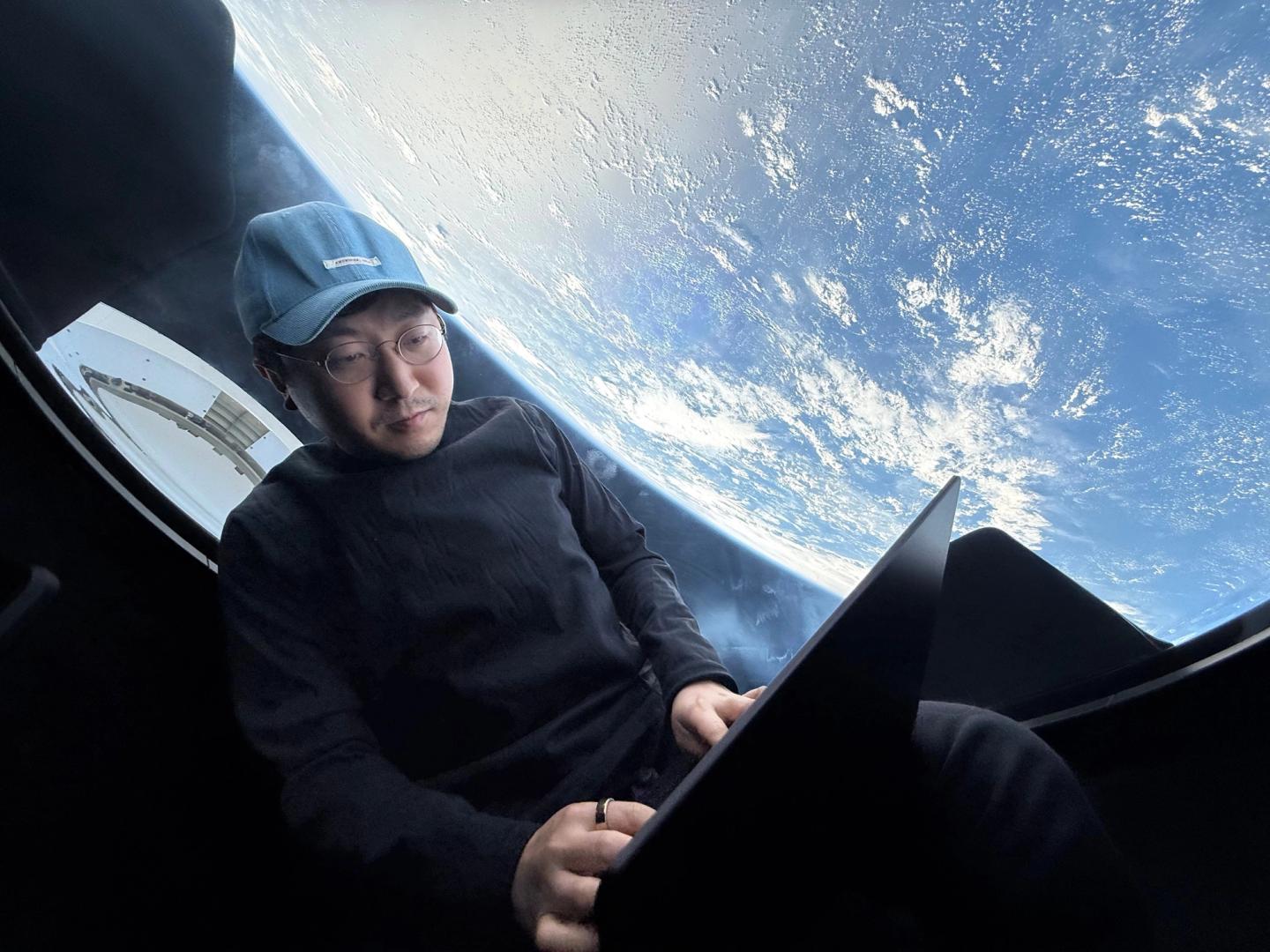
What to know : ChunWang, a Chinese-born Maltese-Kittitian crypto investor and co-founder of F2Pool, has been named mission commander for SpaceX’s first commercial human spaceflight interplanetary mission to Mars. The two-year mission, targeted for launch in 2026, will include a circumlunar flyby, a high-altitude Mars flyby and a complex return trajectory, testing SpaceX’s new Starship V3 architecture and deep-space operations. Data from the mission, including biomedical telemetry and hardware performance, is intended to underpin Elon Musk’s plans for rapid Starship reuse and the eventual transport of massive cargo and up to a million people to Mars, as SpaceX pursues a record-breaking IPO and discloses significant bitcoin holdings.
Chun Wang, the Chinese-born Maltese-Kittitian crypto investor who co-founded F2Pool, has been named Mission Commander for SpaceX’s first commercial human spaceflight interplanetary mission to Mars, crucial to Elon Musk’s plans to send one million people to the Red Planet.
Wang, whose mining pool controls roughly 11.3% of the global Bitcoin network hashrate and whose personal bitcoin assets are estimated to exceed $300 million, will take a two-year leave from his current role securing digital ledgers to leading humanity’s next frontier in deep space.
The SpaceX announcement comes as the company owner Elon Musk’s aggressive plans to colonize the Red Planet and establish a multi-planetary civilization continue to accelerate.
A two-year trek into the unknown
The ambitious, multi-phase timeline will take Wang on a a week-long circumlunar fly-by within approximately 125 miles of the moon’s surface alongside Dennis and Akiko Tito before launching on the historic Martian trajectory.
Target launch windows are currently driving technical preparations for a planned 2026 departure. Once launched, the crew will spend two consecutive years in space. The deep-space itinerary includes a full external exploration of the Earth-Moon system, a high-altitude fly-by of Mars, and a complex return trajectory back to Earth.
Navigating deep-space risks
Operating in deep space for 24 months introduces severe operational risks, including severe hardware fatigue and the volatile thermodynamics of managing cryogenic fuel during extended coasts in deep space.
To mitigate these hazards, SpaceX is debuting its next-generation Starship V3 architecture. The upgraded vehicle features vacuum-jacketed header feed lines, high-voltage cryogenic recirculation systems, and 60 integrated custom avionics units capable of handling distributed fault isolation up to 9MW of peak power.
The crew will faces acute biomedical dangers when gathering critical diagnostic telemetry. One of Wang’s team key tasks is performing advanced behavioral health tracking and capturing the first-ever human X-ray images in microgravity to evaluate long-duration physiological deterioration.
The path to a multi-planetary future
Wang's mission is designed to deliver the crucial operational data required to transition Mars exploration from short-term novelties to permanent, self-sustaining habitats.
The data crew is expected to return to Earth, which will directly stress-test Starship’s autonomous navigation matrix, deep-space radiation shielding, and in-space propellant transfer mechanisms.
The SpaceX team's findings will be vital to achieving Musk’s ultimate objective: verifying rapid vehicle reuse and validating the logistical baseline required to safely transport millions of tons of cargo and eventually a million citizens to the Martian surface.
The journey to Mars announcement comes as SpaceX, the satellite and space rocket company, confidentially filed for its public offering targeting a valuation upwards of $1.75 trillion, the largest in history. It also comes as Musk’s company officially revealed, for the first time, its bitcoin holdings, totaling 8,285 BTC.
免责声明:本文章仅代表作者个人观点,不代表本平台的立场和观点。本文章仅供信息分享,不构成对任何人的任何投资建议。用户与作者之间的任何争议,与本平台无关。如网页中刊载的文章或图片涉及侵权,请提供相关的权利证明和身份证明发送邮件到support@aicoin.com,本平台相关工作人员将会进行核查。


