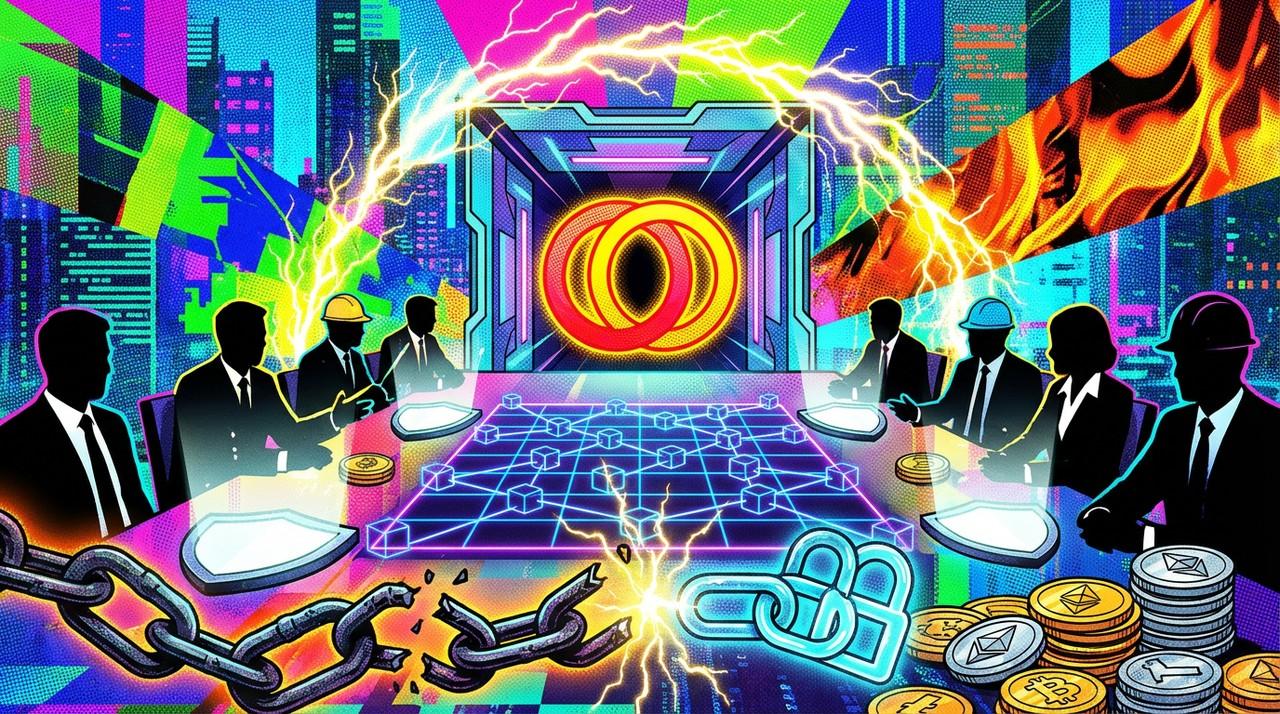
After Mastercard was confirmed to join the Blockchain Security Standards Committee (BSSC), what the market really needs to see is not just another traditional payment giant "touching crypto," but that it has begun to participate in the formulation of the security framework for blockchain networks and tokenized assets. Unlike previous news revolving around cooperative trials and payment access, this time it touches upon the underlying rule layer: what security requirements will be deemed acceptable, and what risk control pathways will be commonly accepted by the industry.
More critically, there are not only traditional financial institutions at this table. According to currently available information, BSSC members also include exchanges, custodians, and other native crypto participants, which means the focus of industry discussions is shifting from "first building scale, then addressing security" to "first establishing standards, then discussing expansion." When traditional finance and on-chain native institutions begin to write rules together, the core tension of this event lies in whether the enhanced industry trust or the retreat from decentralized ideals will be amplified in the future.
Mastercard at the Security Rule Table
The confirmed information is not complex; the core is a single action: Mastercard joins BSSC and participates in the construction of security frameworks for blockchain networks and tokenized assets. At the publicly disclosed and verifiable level, this is already sufficient to explain the issue. It is no longer merely observing the crypto industry from the perspective of payment networks or interfaces, but it has started to engage in the co-construction of infrastructure security standards.
This has significantly extended Mastercard's role. In the past, discussions about its relationship with the crypto industry typically focused on payment acceptance, network connectivity, or business boundaries; now, the narrative's focus is moving to a more foundational position—beginning to influence which security requirements will be included in consensus and which frameworks may become the default configurations for the future market.
For this reason, the significance of this matter lies not in the act of "joining" itself, but in "where it sits to discuss the rules after joining." Once traditional payment giants begin to participate in the formulation of security frameworks, the focus of industry observation shifts from "Is Mastercard touching crypto?" to "What kind of security thresholds and governance language will it help shape?"
Native Giants at the Same Table: Power Begins to Shift
Based on the information visible in the research brief from a single source, known members of BSSC include Coinbase, Fireblocks, Anchorage Digital, BitGo. From just these four names, it is clear that the committee covers not a single business line but multiple key security segments such as trading, custody, and wallets. This implies that BSSC is discussing not a specific product standard but closer to an industry-wide foundational security negotiation.
In this member structure, Mastercard's addition brings a clear change: it is no longer merely an internal coordination among native crypto institutions but seems to be traditional financial power and on-chain institutions beginning to jointly allocate standard-setting authority. Security common knowledge, which previously emerged spontaneously within the industry, is being incorporated into a more institutionalized, auditable negotiation scenario.
Who gets to sit at this table is part of the power distribution itself. Because security standards have never been just technical recommendations; they often crystallize into the industry's default thresholds. Those who participate in the development of these standards have more opportunities to decide which audit requirements are widely accepted, which risk control boundaries are considered reasonable, and which participation methods will be gradually marginalized.
Barbaric Growth Exits: Compliance Begins to Write the Draft
BSSC targets the security standards for blockchain networks and tokenized ecosystems. Once such frameworks are more broadly adopted, the impact will not be limited to single product points but will cascade along the chain of trading, custody, wallets, clearing, and institutional access. In other words, it is not writing a set of isolated regulations, but potentially the common draft for the entire industry chain's future.
This reflects changes in the industry's stage. In the past, the crypto industry was more accustomed to running and mending during rapid expansion, with security, compliance, and auditability often being repaired after growth; but as larger institutions prepare to enter, these conditions are rapidly changing from "additional points" to "admission tickets." Without standards, traditional capital finds it hard to deploy on a large scale; without verifiable security frameworks, tokenized assets also find it challenging to be more widely integrated into the existing financial system.
For traditional financial institutions, standardization primarily means controllability, defining, isolating, and auditing risks. But for the crypto industry, the other side of standardization implies the ecosystem moving from spontaneous evolution to institutional filtering. The order relying on open trial and error in the past may increasingly be redefined by standard texts, audit processes, and access conditions in the future.
Decentralization Encounters Strong Adversaries: Who Defines Security
Security standards have never been a neutral technical checklist. What they truly determine is which behaviors are permitted, which participants will be excluded, and which compliance costs will ultimately be passed onto platforms, project parties, and users. What appears to be simply "security enhancement" often means a complete re-definition of accountability relationships.
Traditional payment institutions tend to value risk isolation, identity verification, and anti-crime requirements more, as this logic naturally serves large-scale network collaboration and accountability tracing; while the native crypto world has long emphasized open access, composability, and permissionless entry, focusing on lowering entry barriers and maintaining system elasticity. The two are not completely opposed but often compete for priority at the standards level.
When these two sets of values are forced into the same framework, the focus of the game will shift. The issue is no longer merely "whether to regulate" or "whether to ensure security," but rather who will define what constitutes qualified security. If defining authority skews more towards the traditional financial discourse system, then the industry may gain greater trust and accessibility; but at the same time, the open innovation and permissionless native space may be further compressed.
Details Remain Murky: Don't Rush to Announce It for Him
It is particularly important to be cautious about the many widely circulated details in this incident, which the research brief has marked as not fully verified. This includes the specific date of Mastercard's joining BSSC, its specific member level within the committee, whether it entered the board, and the accurate titles of related representatives, which cannot currently be considered established facts to be directly written in.
Likewise, the identity description surrounding Claire Le Gal, as well as the widely cited statement, currently comes from a single source, with the evidence chain incomplete. In such a case, packaging these details as an official conclusion not only increases the certainty of the narrative but also blurs the originally clear factual boundaries.
Therefore, the judgment in this article must be built upon the confirmed action: Mastercard joins BSSC and participates in the construction of security frameworks for blockchain networks and tokenized assets. As for the unverified positions, seats, levels, and quotes, they should not be preemptively written as "already settled" official information.
Once Rules Are Established: Admission Tickets Will Be More Expensive
The real consequence of Mastercard joining BSSC may not manifest in short-term sentiment but could be reflected more in the future industry's entry costs. As these security standards continue to be refined, the thresholds faced by on-chain institutions are likely to become higher, more detailed, and closer to the scrutiny criteria of traditional finance. Security will no longer just be a technical capability issue but will gradually become a matter of institutional adaptability.
If similar frameworks continue to spread, those platform-based institutions that already possess compliance, security, and custody capabilities often benefit first; comparatively, the adaptation costs for small and medium participants may rise significantly. For the latter, heightened thresholds not only mean more resource investment but also signify that strategic space is further compressed before standards are fully transparent.
The next thing worth tracking is not slogan-like statements but rather what BSSC will disclose subsequently: whether the member composition becomes clearer, how governance arrangements are designed, and in what form the specific standards will be output. The true rewrite of industry rules comes not from a joining announcement but from the institutional texts that follow the news.
Join our community to discuss together and become stronger!
Official Telegram Community: https://t.me/aicoincn
AiCoin Chinese Twitter: https://x.com/AiCoinzh
OKX Benefits Group: https://aicoin.com/link/chat?cid=l61eM4owQ
Binance Benefits Group: https://aicoin.com/link/chat?cid=ynr7d1P6Z
免责声明:本文章仅代表作者个人观点,不代表本平台的立场和观点。本文章仅供信息分享,不构成对任何人的任何投资建议。用户与作者之间的任何争议,与本平台无关。如网页中刊载的文章或图片涉及侵权,请提供相关的权利证明和身份证明发送邮件到support@aicoin.com,本平台相关工作人员将会进行核查。