Author: Deep Tide TechFlow
TAO suddenly dropped 15% today, currently around $277, with a downward trend continuing.
The sudden price drop may have been triggered by an open letter.
The writer is Sam Dare, the founder of Covenant AI. Bittensor is currently the project with the highest market value in the AI+Crypto sector, while Covenant AI is the most important subnet team in its ecosystem.
Last month, this team accomplished a major feat, using civilian hardware from over 70 contributors to run a 72B parameter large model Covenant-72B, claiming to be the largest scale decentralized AI training in history.
A month ago, this event made TAO the brightest narrative in the entire crypto circle, resembling a beacon of AI.
NVIDIA CEO Jensen Huang publicly praised it, well-known Silicon Valley investor Chamath mentioned it in a podcast, and $TAO even rose 90% in a month, appearing quite eye-catching in the current bear market environment.
But today, Sam Dare announced he is leaving Bittensor with his team, simultaneously dismantling the foundation of this narrative.
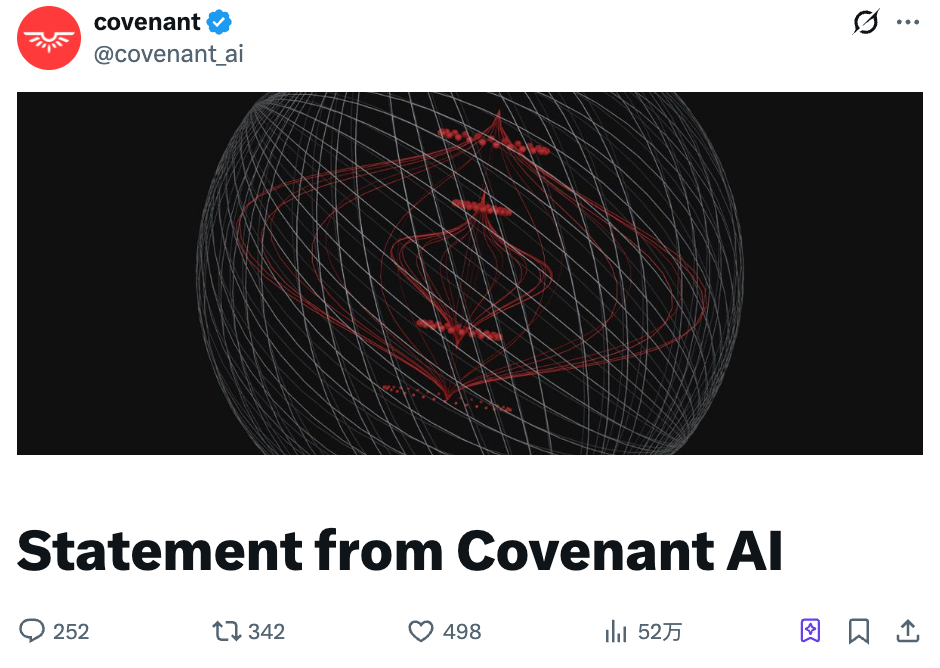
Sam Dare's open letter is lengthy, but the core accusation boils down to one point:
Bittensor founder Jacob Steeves (known in the circle as Const) controls the entire network by himself, and decentralization is merely a facade.
He listed several actions in his letter, with the most severe two being the direct suspension of the Covenant subnet's emission, which effectively reduced the team's income to zero; and during the conflict, conducting large token sell-offs to exert pressure, using market methods to coerce compliance.
The whistleblower website Tao Papers, launched simultaneously today, provided sharper evidence. According to the on-chain data disclosed by the site, Bittensor has undergone 41 network upgrades from 2023 to 2026, with 38 of them—from proposal to signature to deployment—entirely deriving from infrastructure controlled by Const, while the other two signatories joined within minutes of each time, with no public discussion records.
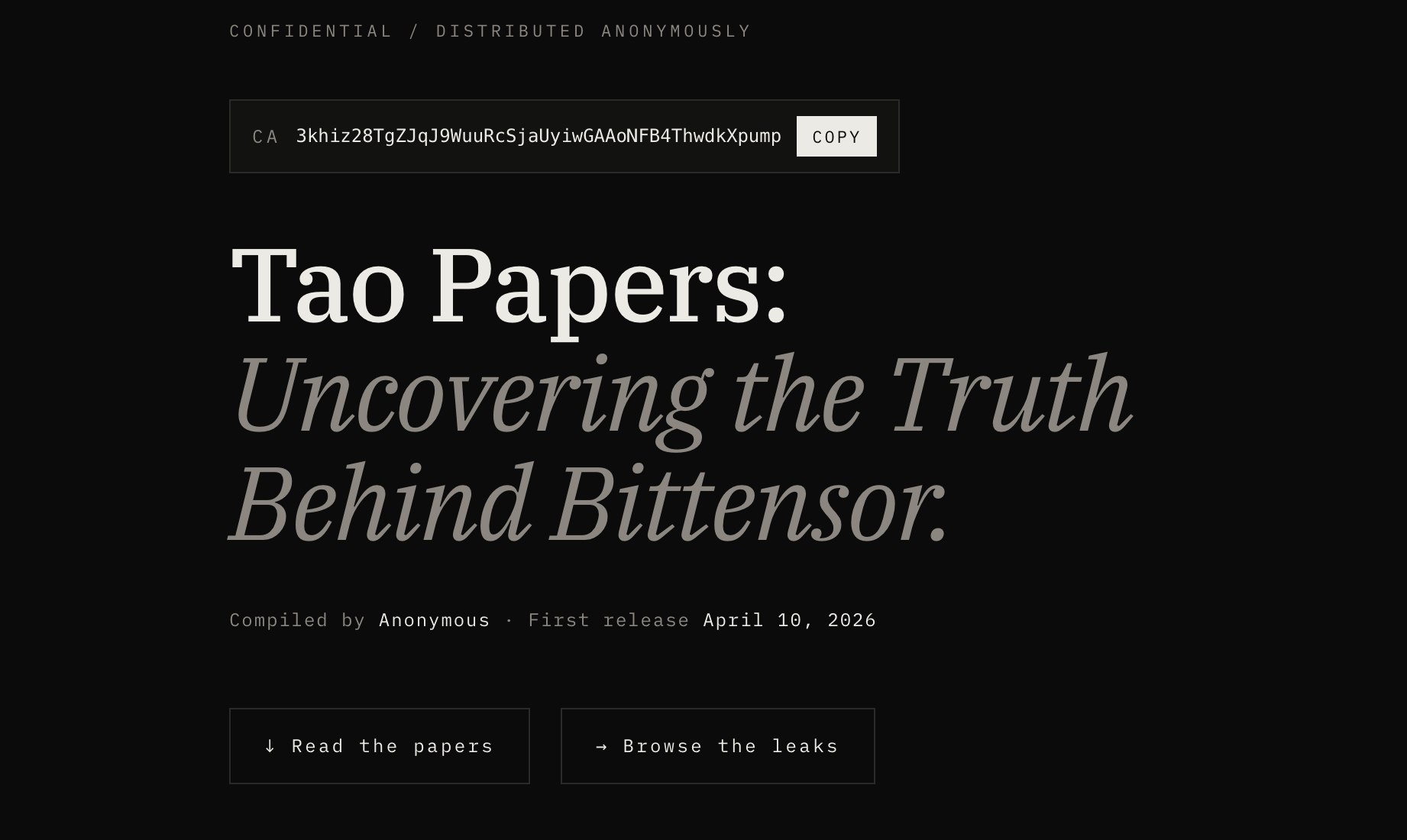
The so-called three-person "governance committee" is, in fact, a decision made by one person, with two others simply stamping it.
The open letter and the whistleblower website launched on the same day, clearly suggesting that Sam's intentions were not spontaneous.
Correspondingly, two months ago, Bittensor's founder Const had just announced his resignation as CEO of the Opentensor Foundation (the development foundation behind Bittensor), stating the purpose was to promote decentralization.
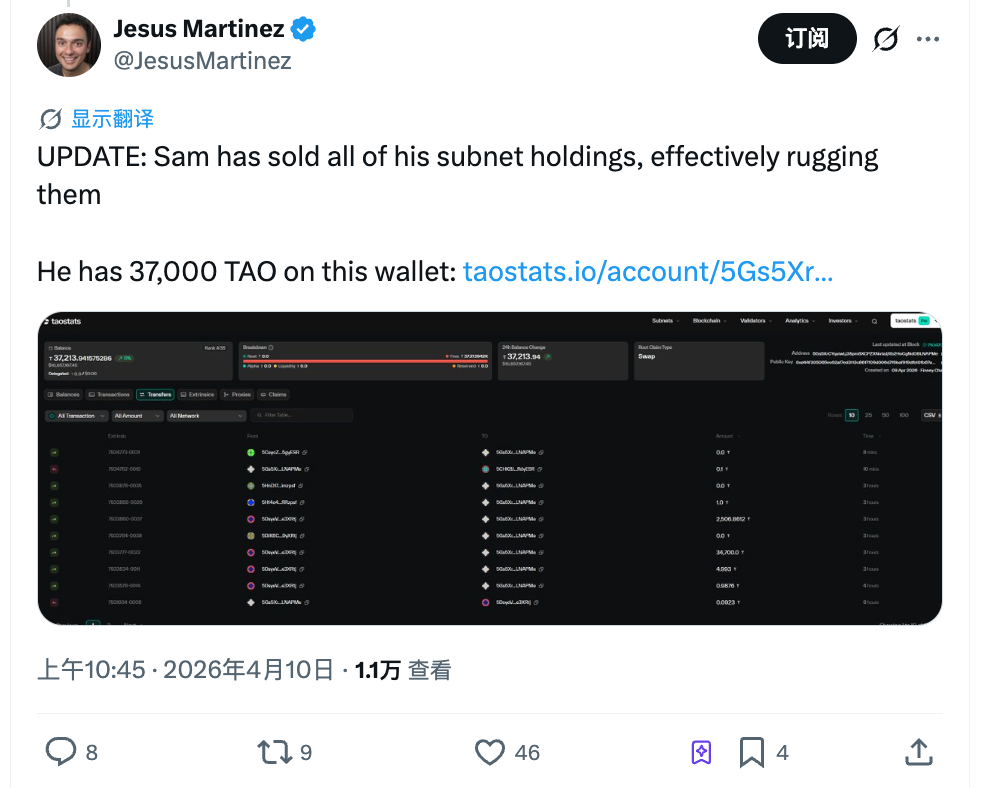
Meanwhile, after announcing his team's departure, Sam also sold all of his 37,000 TAO tokens, provoking more FUD in the market.
As of now, Const's response to all of this has been a single statement, implying that Covenant's departure is actually a good thing, as it can give rise to subnets that operate autonomously without relying on any teams.
As for the accusations listed by Sam Dare, he has responded to none. However, whether it’s a public spout or contributions, it has already been priced by the market.
In March, $TAO rose from about $170 to $337, nearly doubling. According to The Block, after the release of Covenant-72B, TAO increased by over 50% in the first two weeks, being the largest single catalyst in the entire round with a 90% rise.
CovenantAI is associated with templar, basilica, and grail (sn3, sn39, and sn81 subnet), with subnet tokens linked to TAO through a staking mechanism. When news of Covenant-72B came out, subnet tokens surged by up to 400%, pulling TAO up with it.
Thus, for those buying TAO, they are ostensibly purchasing a decentralized AI network with hundreds of subnets, but the price structure tells another story, with nearly half of the rise dependent on a single team.
Success is due to Covenant, and failure is also due to Covenant. This phrase has been quoted by many today, but most people only see the surface meaning.
What is more worth pondering is, why does a network purported to have 125 subnets depend on a few subnets to pump during rises, and rely on the drama of a few subnets during drops? More subnets, in these two rounds of market activity, have been almost invisible.
Bittensor has sold the narrative of decentralization for three years, but the price structure still appears centralized. As for who is right or wrong in this conflict, I believe is not the main point.
Every ecosystem will have star teams, and any star team may leave.
The challenge is how to handle this situation.
It is not new for crypto project teams to bicker in a bear market; when the market lacks hotspots, a project's rise depends on whether there is a narrative to hype. Covenant-72B is one of the best narratives of this year; with Jensen Huang's praise, TAO doubled, and the community felt that decentralized AI has finally produced a capable contender.
However, the gains driven by narratives have an inherent issue: those who create narratives can also destroy them. When the price rises, it is seen as the light of crypto; when it falls, it is the escape of the team. For those who bought TAO, the 90% profit that you made and the 15% loss today stem from the same thing.
This may be the most genuine investment dilemma in current crypto. The price always chases after narratives that may emerge at unexpected times, while the narratives are dependent on certain key individuals.
When people are present, the story is also present. When they leave, you may not even find a counterpart.
免责声明:本文章仅代表作者个人观点,不代表本平台的立场和观点。本文章仅供信息分享,不构成对任何人的任何投资建议。用户与作者之间的任何争议,与本平台无关。如网页中刊载的文章或图片涉及侵权,请提供相关的权利证明和身份证明发送邮件到support@aicoin.com,本平台相关工作人员将会进行核查。


