Written by: RWA Research Institute
In early April 2026, Dubai, UAE. At a luxurious resort construction site just 5 kilometers from Burj Khalifa, the construction team of Energy-saving Iron Man Company is packing up —— this listed company's first overseas project has announced its exit less than two years after signing. The project, worth over 5.5 billion yuan, has been handed over to another state-owned enterprise. Geopolitical conflicts, cooling local real estate markets, and the company’s continuous losses over four years have intertwined, bringing this overseas debut to a halt.
Miles away in Ecuador. China Cupronickel Holding’s subsidiary, China Railway Construction Copper Crown, has invested heavily in the second phase of the Mirador copper mine project. Despite completing system-linked trial operations and heavy-load trials with all indicators meeting standards, the signing of the key Mining Contract has been delayed due to fluctuations in Ecuador's political situation, changes in presidents, and repeated changes in leadership of the regulatory department. According to a report from Securities Daily on April 7, 2026, China Cupronickel stated on an interactive platform that the company is actively promoting the signing of the Mining Contract for the second phase of the Mirador copper mine, and will continue to closely monitor the related progress. A modern mine that was built efficiently over 22 months is now stuck in production limbo due to "a piece of contract."
These two events reflect an unavoidable reality: as state-owned enterprises' overseas footprint expands to over 180 countries and regions and operates more than 8,000 projects, the previous regulatory framework is undergoing a deep-level stress test.
While these events are still unfolding —— on April 8, 2026, according to Xinhua News Agency, the State-owned Assets Supervision and Administration Commission (SASAC) established the Bureau of Foreign Investment Work. According to the official website, the main responsibilities of the Bureau of Foreign Investment Work are to guide the international operations and overseas asset layout optimization and structural adjustment of the regulated enterprises, undertake relevant overseas asset supervision work, strengthen risk prevention and resolution in overseas investment and operations, as well as handle emergencies and crisis management related tasks.
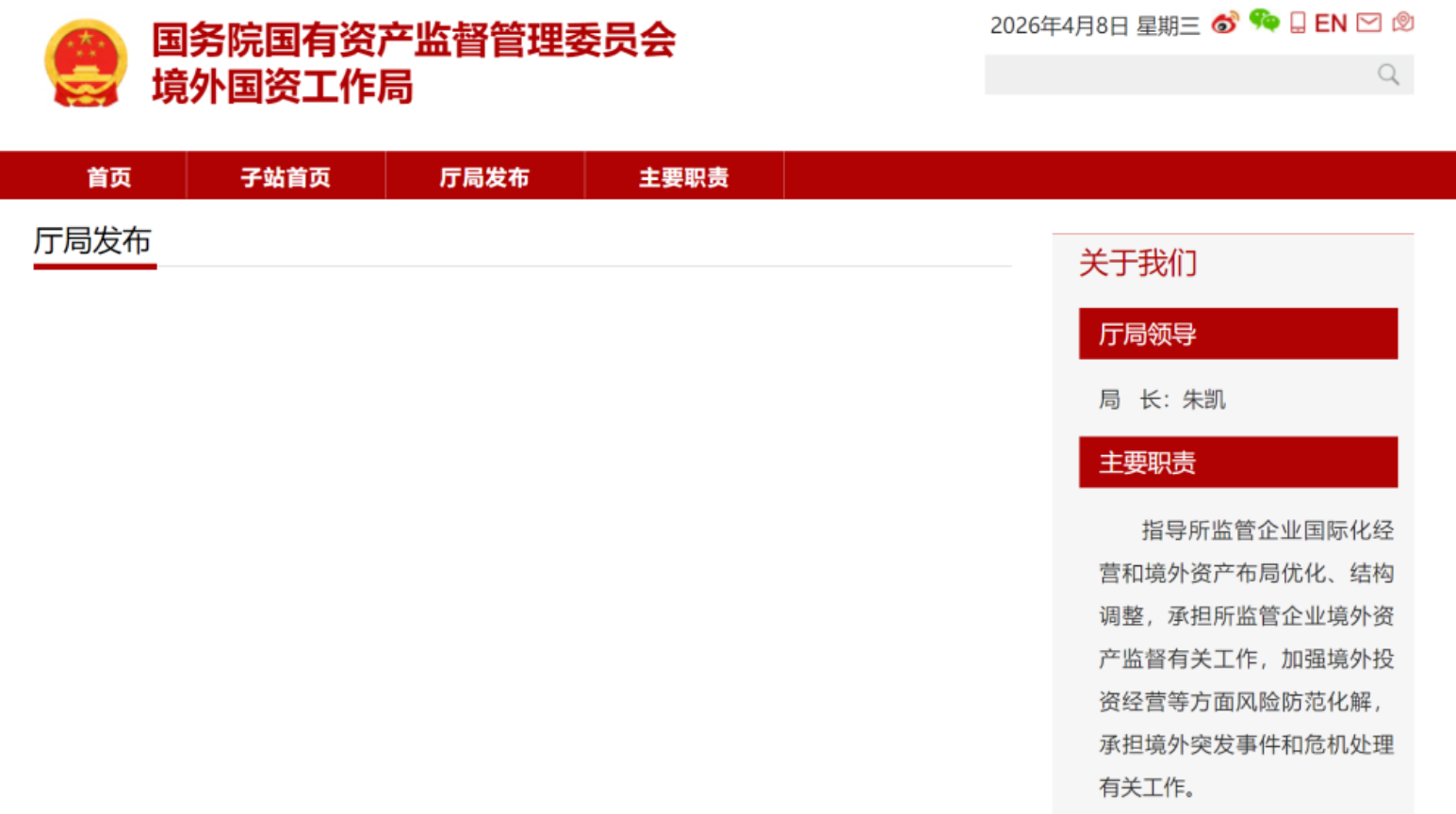
Screenshot of the State-owned Assets Supervision and Administration Commission website
1. From "Divided Management" to "Centralized Coordination": A Late Response from the System
The emergence of the new agency is not coincidental.
According to a report released by Sina Finance on April 9, 2026, citing the latest statistical approaches from the Ministry of Commerce, the State Administration of Foreign Exchange, and SASAC, by the end of 2025, the total overseas assets of central enterprises had surpassed 8.5 trillion yuan. This substantial "fortune" is distributed across over 180 countries worldwide, involving energy, minerals, infrastructure, and high-tech R&D centers. What does 8.5 trillion mean? It accounts for nearly 7% of the projected national GDP in 2024, equivalent to the annual output of the sixteenth-largest economy in the world. This large "fortune" constitutes approximately 18% of the total assets of state-owned enterprises, and in 2024, the total overseas tax paid by state-owned enterprises exceeded 220 billion yuan, driving domestic equipment exports over 300 billion yuan.
The larger the scale, the greater the risk exposure.
However, prior to the establishment of the new agency, the supervision of these vast overseas assets was characterized by a "multiple dragons managing the river" pattern. According to a report from Xinhua Finance released on April 9, 2026, before the establishment of a dedicated Bureau of Foreign Investment Work, the core of supervising state-owned enterprises' overseas assets involved three departments within SASAC: the Planning and Development Bureau responsible for the approval of overseas investment "entrances", the Financial Supervision Bureau responsible for asset ownership registration and value preservation assessments, and the Comprehensive Bureau and the Supervision and Accountability Bureau responsible for compliance supervision and post-event accountability. Each department managed a segment, like a relay team —— someone is in charge at the start, someone watches during the baton exchange, and someone takes responsibility in the sprint phase, but that long running process in between has become a blind spot.
Currently, the "going global" business of state-owned enterprises is developing rapidly, with state-owned assets covering over 100 countries and regions, but the supervision of overseas investment is scattered across multiple departments, leading to unclear responsibilities and insufficient coordination, making it difficult to respond to complex risks such as geopolitical conflicts and international compliance. In the past, multiple departments each managed their segment, emphasizing preliminary approvals while neglecting mid and late-stage operations and risk management. Establishing specialized departments can achieve integration from planning and layout, investment decisions, asset operations, risk prevention and control, supervision and accountability, to crisis handling, filling the regulatory vacuum for overseas assets.
The term "regulatory vacuum" carries significant weight in a cross-border context. This is because the challenges faced by overseas assets are never a single-dimensional test, but rather a complex matrix formed by geopolitical factors, legal differences, cultural barriers, and exchange rate fluctuations.
The political risks faced by physical operation projects, the speculative risks of financial derivatives, the risks of vicious competition and internal consumption, decision-making errors, corruption and interest transfer risks, operational and compliance risks —— in facing this overlay of five types of risks, the previously decentralized regulatory model struggles to form a synergy. Establishing a specialized agency for overall coordination, risk warning, and crisis management can better address these issues.
It is such a reality that has necessitated the establishment of the Bureau of Foreign Investment Work.
The official website shows that the head of the Bureau of Foreign Investment Work is Zhu Kai, with four divisions: International Business Division, Risk Prevention Division, Supervision and Governance Division, and Emergency Management Division. The setting of these four divisions is not arbitrary, but rather represents a clear logical chain —— from strategic planning (Business Division), to process monitoring (Risk Prevention Division), to compliance and accountability (Supervision and Governance Division), and finally to crisis management (Emergency Management Division), forming a complete closed loop that covers all stages: before, during, and after.
From this we can see their specific responsibilities: first, to guide state-owned enterprises in internationalization and the optimization of overseas asset layout and structural adjustment; second, to ensure safety, creating a robust "pre-warning, mid-control, post-retrace" prevention and control network. The management of foreign investment and the regulatory conditions differ fundamentally —— the legal and regulatory environments inside and outside the country are different, company governance and ownership structures are more complex; the extended geographic and information transmission distances, along with the reduction in management radius and efficacy, make the traditional domestic regulatory model more prone to failure.
The logic of regulation has changed. It has shifted from decentralization to centralization, from "managing a segment" to "managing the entire process", from "remediation after problems arise" to "seeing problems before they occur".
2. From Dubai to Ecuador, Going Global Has Never Been Smooth
The upgrade of the system is never designed out of thin air. Behind it are the lessons from specific projects, the costs in real money.
According to the Daily Economic News on April 7, 2026, Energy-saving Iron Man (SZ300197) has announced the conclusion of its first overseas project —— the Dubai Mygaitura resort project has been transferred to CITIC Construction UAE. The project was originally planned with a total investment exceeding 5.5 billion yuan but exited due to geopolitical conflicts, company operations, and local real estate market pressures. The contract amount was close to four times Energy-saving Iron Man's audited revenue (1.418 billion yuan) in 2023, which the company had hoped would "enhance internationalization and corporate reputation". However, according to the news report from the Economic and Commercial Office of the Chinese Consulate General in Dubai in April 2026, the Dubai real estate market, mainly driven by off-plan sales, has significantly cooled, with a 21% month-on-month decline in real estate transaction volume in March. Coupled with the continuous losses the company incurred from 2021 to 2024, this ultimately led to the premature exit of this "first overseas project". This case encapsulates almost all typical risks of overseas investment: drastic changes in the external environment, internal capability mismatches, inadequate preliminary judgments.
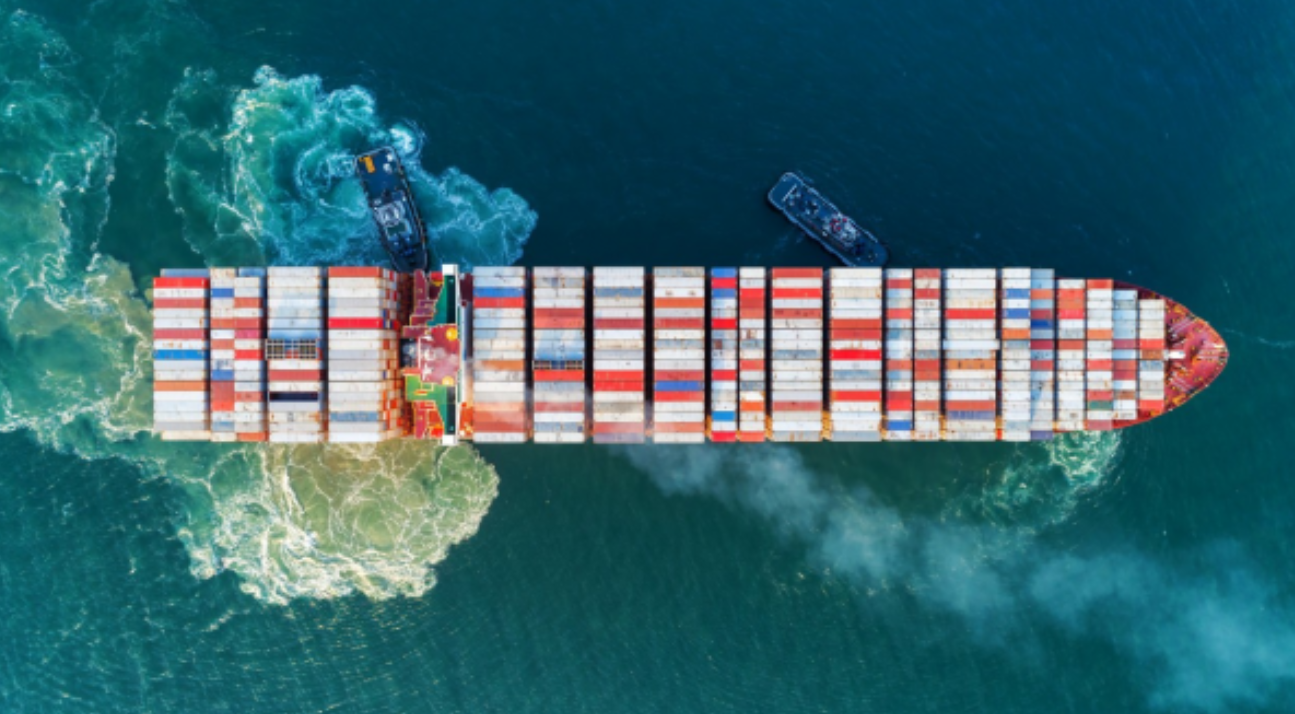
Going global is not a banquet. Especially when your ship has already sailed into entirely different waters, yet you are still using inland navigation charts.
China Cupronickel's encounter in Ecuador more profoundly reveals the destructive power of "soft risks". The Mirador copper mine second phase project has been efficient in its construction stage —— completed in 22 months, which is impressive among similar projects abroad. However, according to Securities Times on January 4, 2026, due to fluctuations in Ecuador’s political situation and frequent personnel changes, the progress of signing the Mining Contract has been affected, and formal production work can only proceed after the contract is signed. A mine that has been built is now stuck in the approval process due to the disruption of policy continuity. In the world of multinational investments, even the fastest construction speed cannot outpace the slowest political decision-making. The uncertainties brought about by "non-linear political changes" are precisely the types of risks that are hardest to predict and respond to in a decentralized regulatory model.
If the dilemmas of the Dubai project and the Ecuador mine belong to "visible" risks, then the internal competition among state-owned enterprises represents a more covert "internal consumption risk". Multiple state-owned enterprises are competing internally in overseas infrastructure and energy sectors, compressing profit margins; financing difficulties and lack of trust are prominent in non-controlling projects; some state-owned enterprises have terminated acquisitions due to failures in cross-border mergers. Behind each story is the cost of lacking top-level planning and coordination.
The scale of state capital’s overseas assets is growing, while the international geopolitical landscape is becoming increasingly complex, sharply rising the risk of state capital's overseas assets being lost.
3. Strategic Transition from "Control" to "Success"
If we broaden our view from individual projects and institutional settings, we will find that the establishment of the Bureau of Foreign Investment Work is not only a response to immediate risks but also a profound iteration of governance concepts.
On November 28, 2025, the State-owned Assets Supervision and Administration Commission issued the "Implementation Measures for Accountability of Central Enterprises for Violating Investment Responsibilities" (SASAC Order No. 46), which took effect on January 1, 2026, clearly outlining 98 types of accountability scenarios covering 13 aspects including group control, risk management, and overseas business investment. This "institutional prelude" paved the way for the emergence of the Bureau of Foreign Investment Work —— accountability is "post-hoc punishment," while the specialized agency serves as an organizational guarantee for "prevention" and "mid-control".
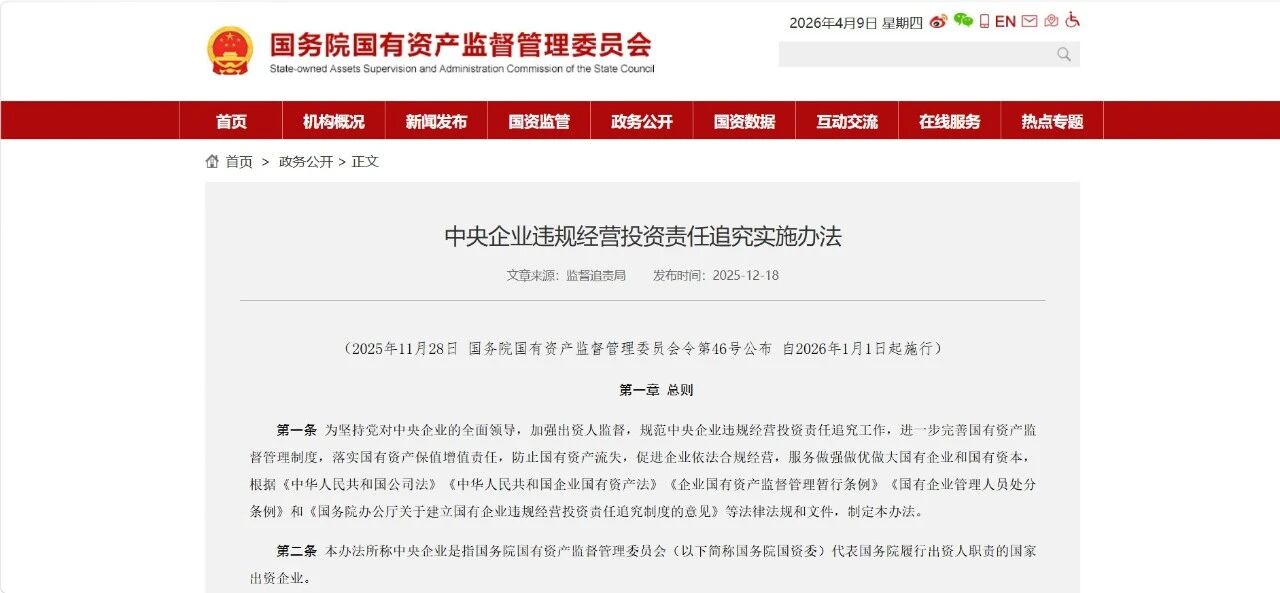
Accountability is "settling accounts after the event," while regulation is "monitoring the entire process."
The regulation of overseas assets is never as simple as "preventing losses". Every move of state-owned enterprises abroad represents not only the enterprises themselves but also a business card for Chinese manufacturing, Chinese standards, and Chinese governance capabilities. In 2024, the overseas projects of state-owned enterprises facilitated domestic equipment exports exceeding 300 billion yuan and created over 500,000 indirect jobs —— behind these numbers lies the reality of the deep coupling between the Chinese economy and the global economy.
Chinese enterprises' going out has undergone a leap from "product export" to "brand and management export" and then to "governance structure and standard export". This means that the new institution must not only be a "gatekeeper" but also a "chief of staff" —— beyond risk prevention and control, it should guide enterprises in optimizing layouts, focusing on core businesses, and improving the quality of internationalized operations.
From a historical perspective, the establishment of the Bureau of Foreign Investment Work also signifies a rectification of ideas. Reviewing the "explosive period" of foreign investments from 2015 to 2016, some enterprises acted in the name of "overseas acquisitions" while actually transferring assets, triggering high-level vigilance. In 2017, the State Council issued the "Guidance on Further Guiding and Regulating the Direction of Overseas Investments," clearly restricting investments in real estate, hotels, cinemas, entertainment, and sports clubs. The then-deputy governor of the People's Bank of China, Pan Gongsheng, pointed out sharply: "Many enterprises already have high debt ratios in China and then borrow a large sum to acquire overseas. Some are even transferring assets under the guise of direct investment."
After that rectification, China's overseas investment shifted from "quantitative explosion" to "qualitative sedimentation." Now, the establishment of the Bureau of Foreign Investment Work marks a decisive step towards "systematic governance" after sedimentation.
4. Building a "Breakwater" Amidst Stormy Waves
At this point, we can outline a complete sketch of the strategic positioning of the Bureau of Foreign Investment Work:
From a functional dimension, it is a complete closed-loop system ranging from "guiding international operations" to "optimizing asset layout," from "risk prevention and resolution" to "emergency response." The four divisions correspond precisely to the four key nodes of enterprises going global: understanding the road before departure, identifying pitfalls along the way, having someone rectify if the path is deviated, and having someone to assist if they fall.
From a governance perspective, it is an organizational innovation that shifts from "decentralized regulation" to "centralized management," ending the ambiguity of "everyone manages, but no one manages thoroughly," providing clear "first responsible persons" for the supervision and management of overseas state-owned assets.
From a strategic dimension, it signifies that the internationalization process of Chinese enterprises is fully shifting from "fast" to "stable." During the 13th Five-Year Plan, the operating income of central enterprises overseas exceeded 24 trillion yuan, with an investment return rate of 6.7%, but at the new stage, the safety and sustainability behind the numbers are more important than numerical growth. As international geopolitical complexities increase, with unilateralism and protectionism on the rise, only an institutionalized risk prevention and control system can withstand the storms of going global.
Going fast is capability; going steady is skill.
The challenges facing the new agency are also worthy of attention. How to balance "strict regulation" with "market flexibility"? How to strengthen supervision without adding approval burdens to enterprises' overseas decision-making? How to respond quickly and accurately to emergencies? These questions do not have ready answers and need continuous calibration in practice. But at least, the direction has been clarified.
On April 8, 2026, the update on the official website of the State-owned Assets Supervision and Administration Commission appears to be just a routine institutional adjustment. But behind it lies the security of 8.5 trillion yuan of overseas state assets, the protection of hundreds of thousands of overseas employees, and the institutional foundation for Chinese enterprises' continued ascent in the global value chain. From "divided management" to "centralized coordination," from "post-hoc accountability" to "whole-process regulation," from "being manageable" to "successfully navigating" —— this series of keywords outlines a clear evolutionary trajectory of the system. This, in essence, is the true significance of the establishment of the Bureau of Foreign Investment Work.
The greater the storm, the stronger the dam must be.
(Note: The data in this article is as of April 2026, with the total amount of 8.5 trillion yuan of overseas assets of central enterprises sourced from the report by Sina Finance on April 9, 2026, citing the latest statistical regulations from the Ministry of Commerce, the State Administration of Foreign Exchange, and the State-owned Assets Supervision and Administration Commission; the information about the establishment of the agency is derived from the report by Xinhua News Agency on April 8, 2026; and expert opinions are based on information publicly disclosed by authoritative channels such as Xinhua Finance, Yicai, Daily Economic News, Securities Daily, and Beijing News Shell Finance.)
免责声明:本文章仅代表作者个人观点,不代表本平台的立场和观点。本文章仅供信息分享,不构成对任何人的任何投资建议。用户与作者之间的任何争议,与本平台无关。如网页中刊载的文章或图片涉及侵权,请提供相关的权利证明和身份证明发送邮件到support@aicoin.com,本平台相关工作人员将会进行核查。


