Author: TechFlow
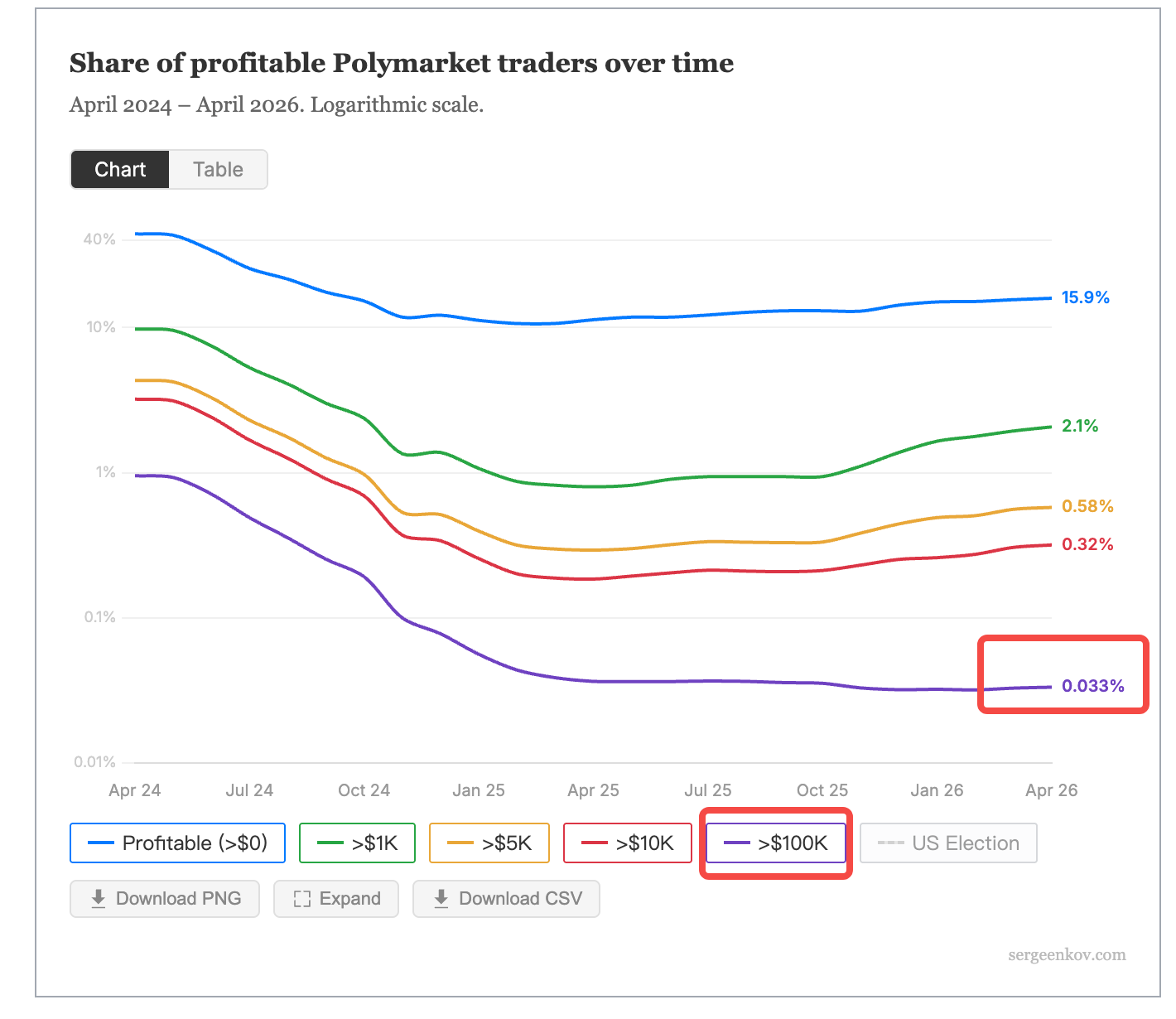
Introduction by TechFlow: The latest analysis by on-chain researcher Andrey Sergeenkov of 2.5 million Polymarket wallet addresses shows that 84.1% of traders are in a loss position, with only 2% of addresses having made a profit of over $1,000, and 840 addresses (0.033%) making over $100,000. The timing of this report is quite subtle—Polymarket has just secured exclusive prediction market partnership rights with MLB for a price of up to $300 million, and is vigorously promoting retail user growth.
The wealth distribution of on-chain prediction markets is harsher than most people imagine.
According to The Defiant on April 6, independent on-chain researcher Andrey Sergeenkov released a profit and loss analysis report covering 2.5 million Polymarket wallet addresses, with data up to April 1, 2026. The core conclusion: 84.1% of traders are losing money, with less than 16% of addresses achieving any degree of positive return.
This is not the first similar study. In December 2025, blockchain analyst DeFi Oasis analyzed 1.7 million addresses and 124 million transactions, concluding that 70% of traders were not profitable. Sergeenkov's data sample is larger and the methodology has improved (capturing token splits and merges that previous research missed), and the loss ratio jumped from 70% to 84%.
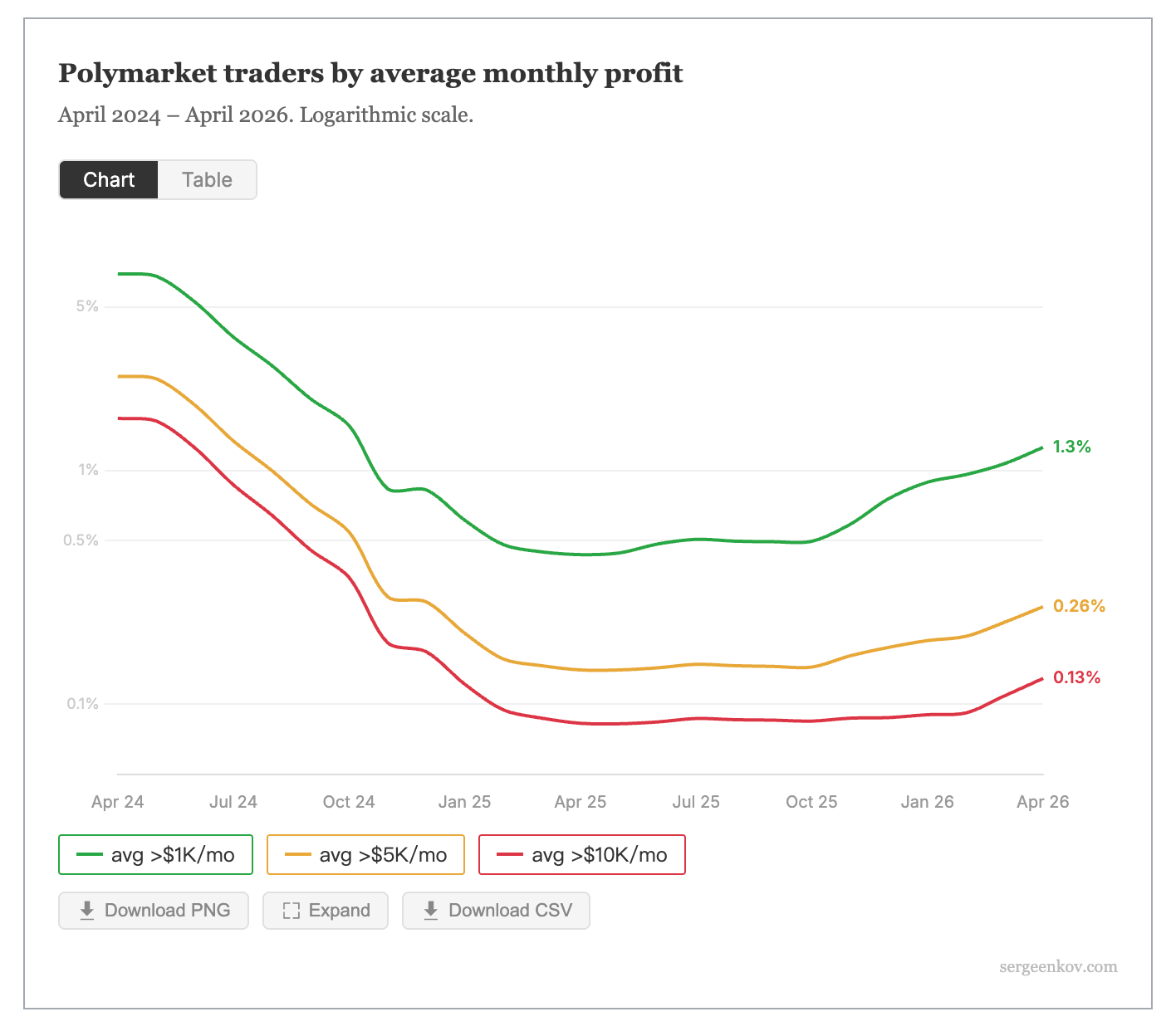
At the top of the pyramid: fewer than 0.26% earn over $5,000 a month
Sergeenkov conducted a comprehensive analysis of the transaction data from the two smart contracts CTF Exchange and NegRisk CTF Exchange by tracking all USDC fund flows on the Polygon chain (including buys, sells, redemptions, splits, and merges).
The figures for the high-profit range are quite striking: addresses earning over $1,000 a month make up 1.25%; only 0.26% earn over $5,000, about 6,600 addresses; and just 3,250 earn over $10,000, accounting for 0.13% of all traders.
More critically, there is the issue of sustainability. Among those 6,600 addresses earning an average of over $5,000 a month, 53% were only active for one month before disappearing, and only 2.6% continued trading for over a year. Sergeenkov summarized in the report: “Most traders come, trade for a while, then leave.”
In contrast, bottom arbitrageurs are steadily reaping profits. An academic paper from Spain's IMDEA Networks Institute analyzed 86 million on-chain transactions from April 2024 to April 2025, finding arbitrage traders extracted about $40 million in profits solely from price differences. One wallet achieved maximum earnings of $2 million from 4,049 transactions, averaging $496 per transaction.
Retail manual operations cannot compete with robots, information advantages are highly concentrated
The source of the losses is not complex. IMDEA's research shows that the largest profits are concentrated in the hands of wallets using automated strategies: arbitrage bots, market-making algorithms, and high-frequency trading systems. Manual trading retail investors typically enter the market only after the price has already adjusted.
This is the essential difference between prediction markets and traditional gambling. Polymarket's order book is completely open, and on-chain data is transparent, but this transparency actually makes it easier for professional traders to establish systematic advantages. A quantitative wallet equipped with low-latency APIs and probability models operates in a vastly different arena than an average user who only opens the app to place bets after seeing news.
According to Token Terminal data, Polymarket's nominal trading volume over the past 30 days was approximately $9.8 billion, with about 462,600 monthly active traders. The platform's growth itself is not a problem, but the relationship between user growth and user profitability is inverse—Sergeenkov's data indicates that the decline in the proportion of profitable traders is directly related to peaks in user growth, especially after the influx following the US elections in November 2024.
An information aggregation tool or a zero-sum game?
This report has reignited an old debate: who do prediction markets actually serve?
The core argument of supporters is information aggregation. Polymarket's official data states that its price predictions have an accuracy rate of over 94% in the month leading up to the outcome determination. In other words, even if 84% of traders are losing money, the market as a whole is still producing valuable probability signals. Losing retail investors are essentially paying for information pricing.
Critics argue that when 84% of participants on a platform are losing, and profits are highly concentrated in automated traders, the difference from a casino is merely a matter of regulatory categorization. Especially in the realm of sports contracts, the lines between prediction markets and sports betting are being deliberately blurred.
Polymarket's valuation has exceeded $20 billion, with Intercontinental Exchange (parent company of NYSE) investing $2 billion in October 2025. The capital markets are clearly betting on the growth story of prediction markets.
But Sergeenkov's report poses a simple question: when the next wave of 2.5 million users arrives, how will their fate differ from the previous wave?
免责声明:本文章仅代表作者个人观点,不代表本平台的立场和观点。本文章仅供信息分享,不构成对任何人的任何投资建议。用户与作者之间的任何争议,与本平台无关。如网页中刊载的文章或图片涉及侵权,请提供相关的权利证明和身份证明发送邮件到support@aicoin.com,本平台相关工作人员将会进行核查。


