Original author: ChandlerZ, Foresight News
During the Qingming Festival holiday, A-shares and Hong Kong stocks were closed, but the Bitcoin market never stops.
Starting from April 6, BTC rose from an early low of $67,400 in the Asian market, reaching a high of over $70,300 during the day, breaking the high since March 26, and rising more than 4% from the daily low. Ethereum simultaneously increased from around $2,050 to $2,170, with an increase of about 6%. At the close of the US stock market, it still maintained above $2,140, with a nearly 4% rise in 24 hours.
According to CoinGlass data, the total liquidation across the network in the past 24 hours was approximately $229 million, with $127 million in short liquidations and $102 million in long liquidations. When BTC surpassed $69,000, around $136 million in short positions concentrated near $69,863, and the price surge directly triggered a large-scale short liquidation.
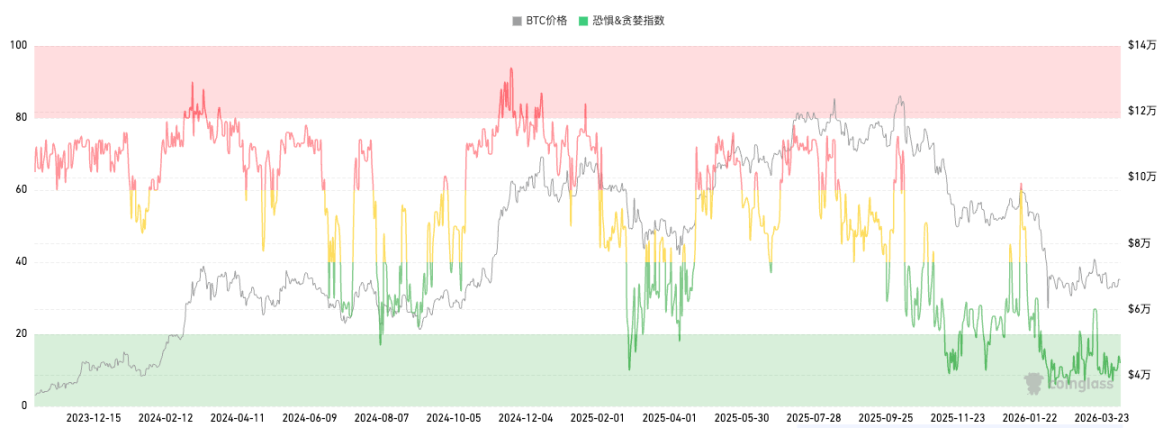
Holiday Market Driven by Middle East Situation
The macro logic driving this wave of increase remains Iran, but the scenario has changed.
On March 21, Trump once set a 48-hour deadline for Iran to reopen the Strait of Hormuz, but then extended it for over a week, instead announcing the initiation of diplomatic negotiations. In the following weeks, he wavered between "reopening the Strait after reaching an agreement" and "reopening the Strait does not require an agreement," with the market fluctuating with each headline. April 7 at 8 PM was his second final deadline, with an escalation in rhetoric; without an agreement, Iran would "live in hell," and threats were made to strike energy infrastructure and civilian targets.
Meanwhile, on April 7, US Defense Secretary Hegseth announced at a press conference that the largest airstrike since the start of actions against Iran would be launched that week. However, in the same press conference, Trump stated that Iran had active and willing negotiation participants, revealing that the US and Iran were discussing a phased plan, first achieving a 45-day temporary ceasefire, then negotiating a comprehensive agreement. The Iranian side publicly rejected the temporary ceasefire, insisting on a permanent cessation of hostilities, leading to stalled negotiations.
When asked if the war was gradually coming to an end, Trump replied: "I don't know; I can't say. It depends on their (Iran's) actions."
Influenced by this macro environment, international markets also experienced fluctuations.
WTI May crude oil futures closed at $112.41 per barrel, refreshing the high since June 2022 for two consecutive trading days; Brent futures reported $109.77 per barrel. Crude oil briefly touched $115.48 in the Asian market before sawtoothing multiple times, reflecting the market's heightened disagreement over whether the Strait of Hormuz could maintain navigation.
In terms of US stocks, the S&P 500 rose by 0.44%, and the Nasdaq rose by 0.54%, both reaching at least a two-week high, with chip stocks increasing by over 1%, and Micron and SanDisk rising over 3%. VIX reported 24.15, slightly up from the previous day.
This combination of rising oil, rising stocks, and rising cryptocurrencies appears contradictory, but the underlying logic is consistent; the market was not pricing in an escalation of war that day, but rather the worst-case scenario being ruled out. The news of a 45-day temporary ceasefire framework temporarily eliminated the tail risk of a systemic collapse, and risk appetite collectively rebounded, with all three asset classes moving up together. The high oil prices are due to the Strait of Hormuz not yet being restored for navigation, but they are no longer accelerating upward, meaning the market has found a temporary equilibrium that is not getting worse but hasn't improved yet.
Steve Sosnick, Chief Strategist at Interactive Brokers, commented, "The market sees both the carrot and the stick; on one hand, there are ceasefire negotiations, and on the other, continued bombings. Aside from the brief volatility at the beginning of Trump's speech, investors obviously still hope that hostile actions will not escalate rapidly."
It is noteworthy that this pattern has held since the outbreak of the conflict in Iran. From February 27 when the conflict began to April 3, the top four in excess returns relative to the S&P 500 were MSCI Global Energy (+13.0%), Ethereum (+11.3%), the US Energy Sector (+10.8%), and Bitcoin (+7.0%).
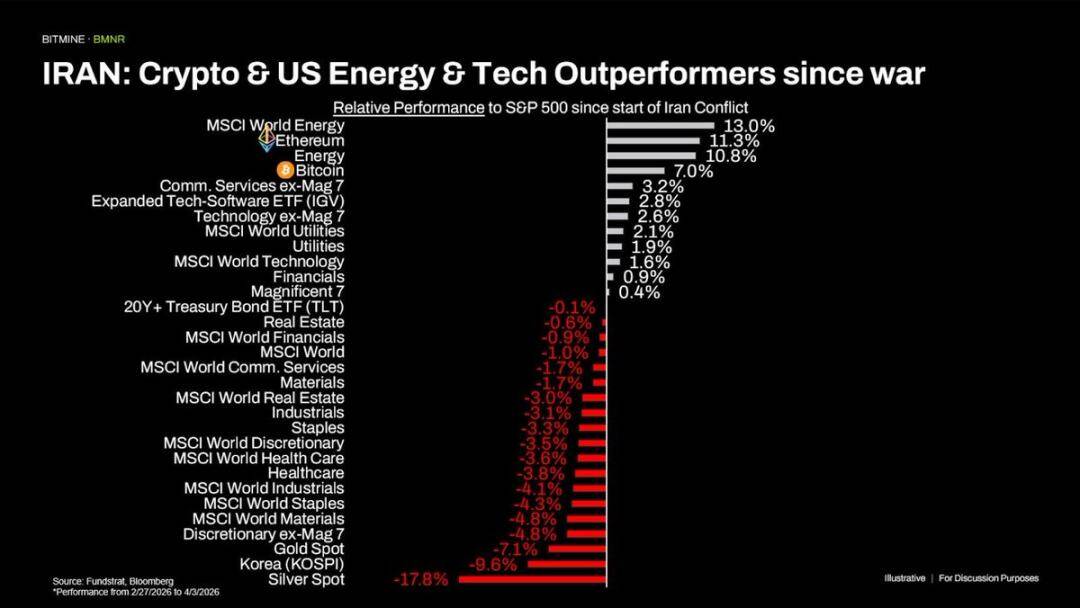
Conversely, the performance of traditional safe-haven assets was surprisingly poor; gold fell by 7.1% relative to the S&P 500, and silver dropped by 17.8%, completely contrary to the market habit of "buying gold for safety" during previous rounds of geopolitical conflicts.
On-Chain Structure Improvement, But New Funds Have Not Yet Followed
According to a report from Glassnode, internal signals of recovery have begun to appear in the structure of this rebound; momentum is strengthening, and spot demand is stabilizing, with a significant reduction in overall market losses.
The spot market reflects early signs of demand recovery, with Spot CVD reversing from -$47.8 million to +$27.9 million, net selling pressure turning into net buying pressure, and the relative strength index (RSI) rebounding strongly. The spot CVD turned positive, indicating a revival in buyer enthusiasm. However, the decrease in trading volume shows that market participation is still relatively low, suggesting that the momentum of recovery is promising but has not been fully confirmed.
In the derivatives market, adjustments in positions have not been significant, with a decrease in open contract volume and a cool-down in long funding input, indicating a lower leverage ratio and a more balanced market environment. The perpetual contract CVD rebounded sharply from -$412 million to $461 million, with clear directional buying in the futures market, and open contracts decreased from $30.3 billion to $29.7 billion, with no excessive accumulation of leverage.
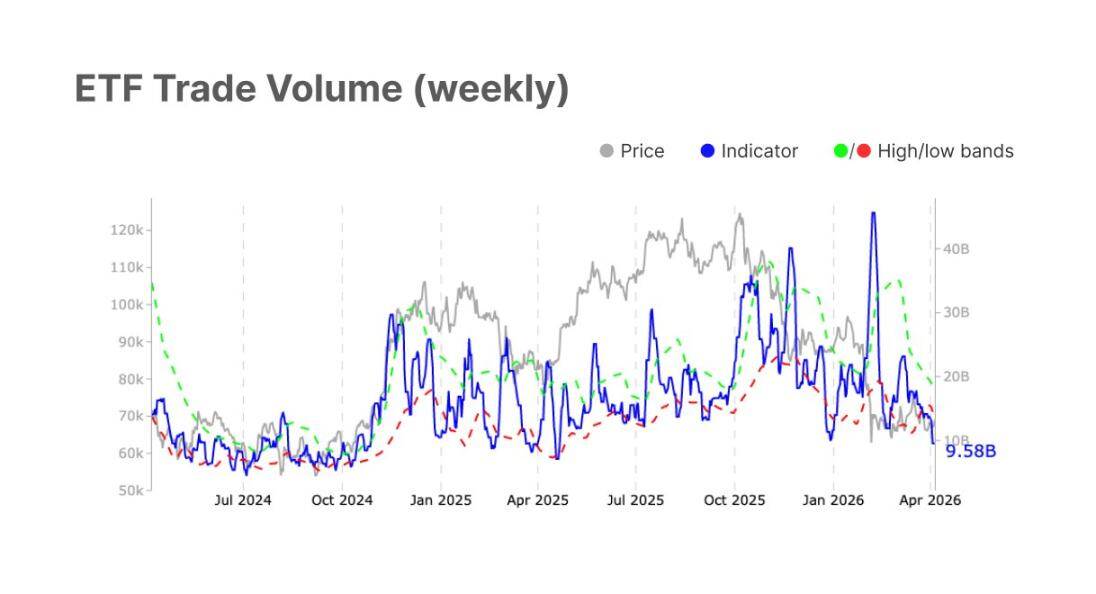
There has been a significant improvement in ETF funding, with the net outflow of the US spot Bitcoin ETF narrowing significantly from -$405 million to -$22 million, a reduction of nearly 95%, and the ETF MVRV rising from 1.10 to 1.16, expanding institutional holdings' unrealized profits.
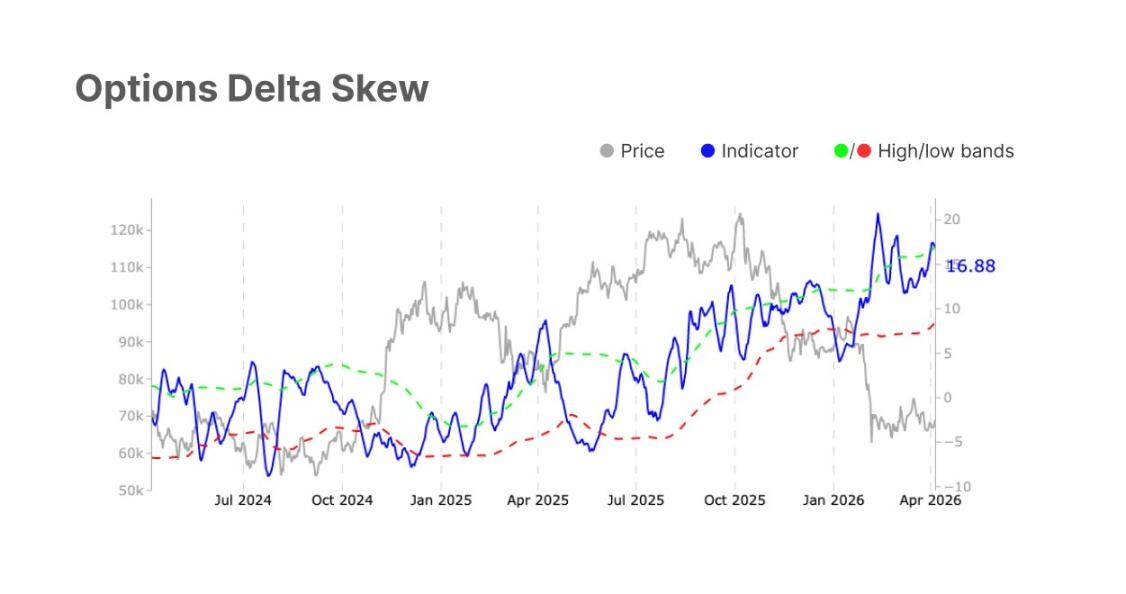
However, the recovery of on-chain fundamentals is still lagging, with realized market capitalization change further decreasing from -0.6% to -0.7%, indicating that new funds have not yet flowed back on a large scale; Hot Capital Share dropped from 21.0% to 20.1%, with short-term speculative funds continuing to drain; the 25-Delta skew rose to 16.88%, and pricing in the options market for downside risks has not faded despite the price rebound.
Future of the Crypto Market
Will the market's rise continue? Institutional views are divided.
CoinDesk cites analyst opinions stating that unless Bitcoin can recapture $75,000, the risk of a drop to lower points still exists; if the current price cannot stabilize above $70,000, there will be new round of selling pressure after the confidence loss of short-term holders.
Glassnode's conclusions are relatively cautious, stating that the rebound momentum is improving, spot demand is stabilizing, and loss selling pressure is obviously decreasing. However, participation across exchanges, ETFs, and on-chain dimensions remains soft, indicating that market confidence has not yet fully returned. To stabilize this wave of market movement, further follow-up on transaction volume, capital inflow, and network activity is needed.
April 7 was the final deadline set by Trump. Whether the situation experiences a substantial downgrade after the deadline will directly determine the next steps for oil prices and risk assets, and will also be a key variable in whether Bitcoin can hold above $70,000.
免责声明:本文章仅代表作者个人观点,不代表本平台的立场和观点。本文章仅供信息分享,不构成对任何人的任何投资建议。用户与作者之间的任何争议,与本平台无关。如网页中刊载的文章或图片涉及侵权,请提供相关的权利证明和身份证明发送邮件到support@aicoin.com,本平台相关工作人员将会进行核查。


