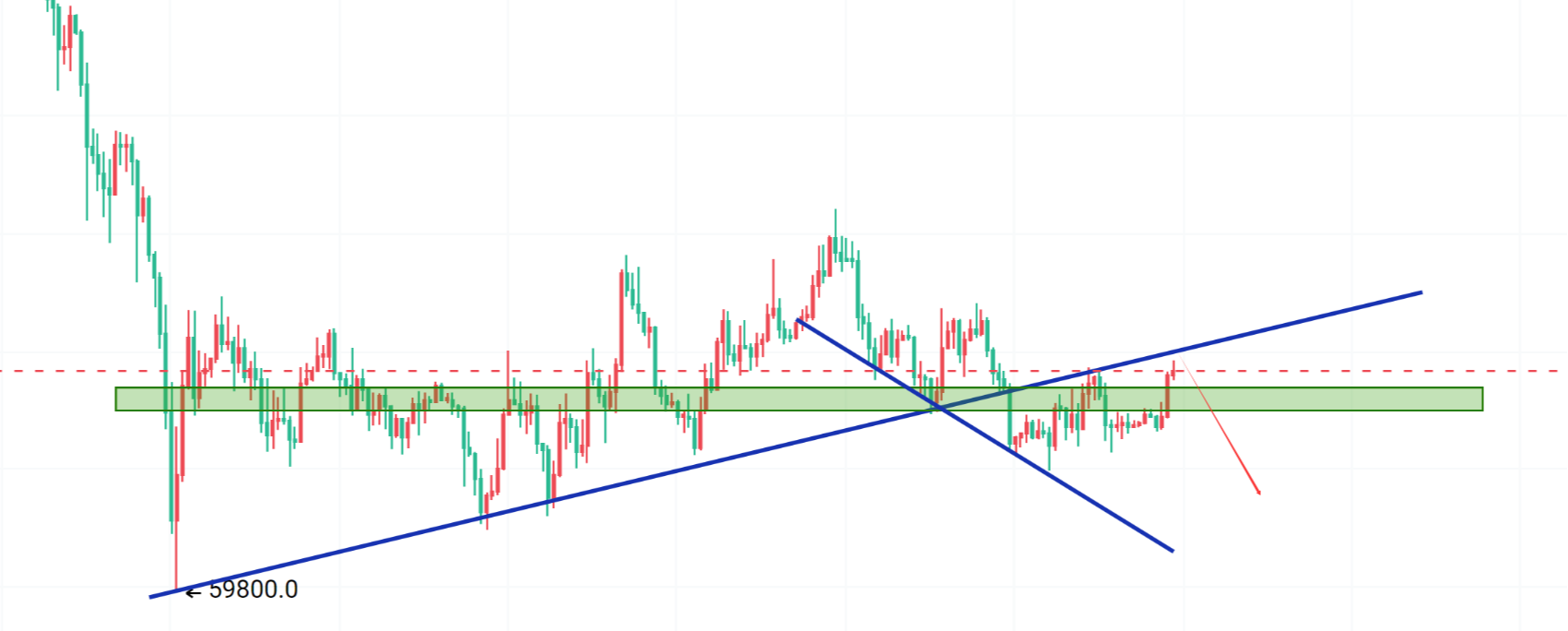
On April 6, 2026, Eastern Eight Zone Time, the dYdX community passed a proposal with a 91.07% approval rate to close 12 trading markets, gradually phasing out a batch of unpopular trading pairs viewed as "zombie" assets. According to public information from dydx.forum and industry media, these markets have seen almost no transactions in the past three months, with long-term liquidity dried up, functioning for ordinary users as mere "display items." In the derivatives sector, which demands extremely high depth, dYdX chose to "slim down" through a concentrated cleaning, but how to enhance the overall trading experience while ensuring market diversity and potential innovative assets’ survival space has become the core governance question facing the community.
91% Passed: A Governance Consensus with a Preset Answer
From the voting results, this proposal was almost a governance vote with a "preset answer." Governance data from a single source indicated a high participation rate, positioning it as a relatively active group in decentralized protocol governance, while the 91.07% approval rate far exceeds dYdX's usual set threshold of approximately 66% approval. In a governance setting typically known for disputes and debates, such high consistency alone sends a clear signal: there is almost no substantive opposition in the community regarding the cleanup of "zombie markets."
For dYdX, the governance threshold is not merely decorative but a system design to constrain "who qualifies to represent consensus." This vote not only easily crossed the threshold but also exhibited an overwhelming tilt in voting proportions, demonstrating that the opportunity cost of "maintaining a batch of shallow, non-trading markets" has been widely recognized by the community. As summarized by Foresight analysts, behind the 91% high approval rate lies the community's collective expectation of "optimizing the trading environment" — users need an efficient, tradable, and risk-controllable derivatives market, rather than a “product catalog” filled with many nominally existing assets for sheer volume.
The Symbolic Meaning of Closing 12 Unpopular Trading Pairs
According to reports from techflow and Planet Daily, as well as the proposal disclosed on dydx.forum, the proposed closed markets confirmed include JASMY-USD, KOMA-USD, TRB-USD among the 12 trading pairs (the remaining names have not been fully verified and will not be supplemented in this article). These markets share a common indicator: extremely low liquidity, with almost or completely no transactions in the past three months, both on the order book and transaction records reflecting an almost stagnant state. For professional market makers and ordinary traders, they do not fulfill effective risk hedging roles and find it difficult to form genuine price signals.
Planet Daily’s commentary directly labeled this action as "the first systematic cleanup of zombie markets." Unlike past sporadic shutdowns and individual cases, dYdX chose to recognize the necessity of "periodic cleanup" through a bundled governance proposal at the governance level. This is not only a product menu organization but carries symbolic significance: in the derivatives sector, liquidity has been placed higher than asset quantity. In other words, trading pairs that can maintain depth over the long term are regarded as a true part of this protocol ecosystem; while long-tail assets with no transactions, participation, or price discovery are gradually defined as "resources that need to be reclaimed."
DEX Cleaning Zombie Markets: Who Pays for Depth
From a micro-level perspective, the harm of low liquidity markets to participants is often underestimated. For market makers, maintaining a quiet market means constantly locking up funds, bearing position volatility, but almost receiving insufficient transaction fee returns to cover risks; any medium-sized order may tear the order book apart, magnifying slippage. For ordinary traders, contracts that superficially appear "tradable" may lead to extreme slippage once forced liquidation is triggered or an urgent unwinding is needed, resulting in losses from liquidation far exceeding expectations, even triggering a chain liquidation. Zombies markets are not neutral entities, but amplifiers of risk.
In this context, whether there is a need for a "market elimination mechanism" is no longer merely a technical issue, but a value judgment for decentralized governance: should the protocol be responsible for the long-tail assets that are "listed as support," or for the actual trading users? From the voting results, the dYdX community chose to tilt resources and governance attention more toward head markets and those with genuine needs. However, the cost is also clear — the living space for niche assets has been further squeezed, and those that may not have seen volume in the early stages but carry potential narratives may well be eliminated by liquidity assessments before they "grow up."
This choice reflects a redefinition of priority sorting: on the derivatives DEX, top depth and systemic risk control have been placed ahead of long-tail diversity. For speculators, this means tradable assets are increasingly concentrated on "mainstream + a few hot topics"; for project teams, launching on a platform like dYdX means they must continuously prove "real trading is taking place here," or else face the pressure of being expelled at any time. This indicates a clear stance in governance direction, also querying the community: what type of market structure are you willing to pay for?
CEX with Volume, DEX Shut Down: Structural Divergence of Liquidity
It is noteworthy that the assets listed for closure, such as TRB-USD, still maintain decent trading volume and depth on some centralized exchanges. This phenomenon of "CEX has volume, DEX shuts down" reflects not just the highs and lows of individual projects, but also the structural differences between DEX and CEX in terms of user composition, market-making costs, and risk preferences.
In a CEX environment, market makers often gain more refined fee incentives, more stable technical support, and more concentrated user traffic, which can support some assets with high volatility but speculative demand to maintain trading. In decentralized derivatives protocols like dYdX, market-making has to bear on-chain interaction costs, strategy maintenance, and risk control costs, and demands higher capital efficiency with naturally lower tolerance for "fringe markets." For users accustomed to using DEX, risk preference tends to lean towards leveraging on mainstream assets for hedging or strategic trading, rather than seeking extreme returns on assets with fragile liquidity.
This divergence in liquidity directly impacts price discovery and cross-platform arbitrage. When certain assets are traded actively on CEX but shut down on mainstream DEX, the price anchors on-chain and off-chain will increasingly rely on a few centralized venues, thus narrowing the reference sources for decentralized price oracles. For professional arbitrageurs, losing an important derivatives scenario means a reduced range of available hedging and arbitrage strategies, and cross-platform capital flow will lean more towards a few centralized platforms still offering related contracts. This trend towards concentration somewhat undermines the DEX's weight in a "multi-center price discovery mechanism."
From Proposal to Execution: The Tension of Governance Efficiency and Predictability
Currently, the most apparent gap around this proposal lies in the fact that there is no public, specific timeline for closures and phased execution details. Regardless of media reports or forum information, they remain mostly at the level of "approved, will gradually close," with no systematic disclosure regarding when new openings will stop, when forced liquidation will occur, or when complete shutdown of interfaces will take place. This lack of complete information is itself a source of risk that decentralized governance frequently faces at the execution level — consensus has been reached, but the path remains unclear.
How to find a balance between rapid decision-making and sufficient communication, predictability is a question every mature protocol must address. If execution is too fast with insufficient announcements, existing positions and strategies may be forced to adjust in a short timeframe, thus damaging user experience and trust; if execution is too slow with fluctuating rhythms, it is likely to be understood as "governance making proclamations while execution lags," which undermines the seriousness of the vote and proposal itself. In an ecology with multiple roles involved, governance is not just about "raising hands to show agreement," but also about incorporating every step from proposal to implementation into a predictable institutional track.
From an observer's perspective, the execution details worthy of close attention moving forward include: whether the announcement schedule has a clear advance period, whether the API and frontend interface shutdown is a "one-size-fits-all" or a phased switch, and whether handling of existing positions encourages natural unwinding, sets a window period, or employs a forced liquidation mechanism in extreme cases. Since current public documentation does not provide clear answers, these will only remain areas of observation rather than established facts. However, what can be confirmed is that how dYdX manages the "exit process" for these 12 markets will serve as a crucial reference sample for assessing its governance maturity and user-friendliness for quite some time.
Cleaning is Just the Beginning: The Next Governance Watershed for dYdX
In summary, this concentrated cleanup of zombie markets will directly improve dYdX's overall trading experience and risk management: a reduction in “empty markets” in the order book, more concentration of market-making resources and development efforts, user-facing contract options that possess genuine liquidity, and the entire protocol's settlement and risk control models capable of operating in a healthier depth environment. From a risk perspective, this is undoubtedly a structural adjustment towards becoming "a more professional derivatives platform."
However, at the same time, potential concerns are accumulating: long-tail assets are further marginalized, community preferences concentrated toward "safe large caps" and a few hotspots, which over time may weaken the DEX's original narrative of "accommodating diversified assets and early innovations." Once "as long as trading doesn't perform it will be liquidated" solidifies into a simple and blunt metric, small-volume innovative projects will struggle to secure adequate incubation space on DEX, potentially leading to funding and attention becoming more tied to major projects, reinforcing the "the strong get stronger" structure.
The next phase to watch is whether dYdX and other mainstream DEXs, after this cleanup, will establish a more refined market access and delisting system: for example, setting dynamic assessment thresholds based on trading volume, depth, number of participating addresses, introducing observation periods and appeal mechanisms, to provide a "buffer zone" for potentially valuable but temporarily quiet assets; while also standardizing pre-warning, transition periods, and technical shutdown process templates in the delisting process. All these will form the next stage of governance evolution for decentralized derivatives platforms and determine whether they can find a more precise balance between "professional derivatives infrastructure" and "open financial experimental fields."
Join our community, discuss together, and grow stronger!
Official Telegram community: https://t.me/aicoincn
AiCoin Chinese Twitter: https://x.com/AiCoinzh
OKX Welfare Group: https://aicoin.com/link/chat?cid=l61eM4owQ
Binance Welfare Group: https://aicoin.com/link/chat?cid=ynr7d1P6Z
免责声明:本文章仅代表作者个人观点,不代表本平台的立场和观点。本文章仅供信息分享,不构成对任何人的任何投资建议。用户与作者之间的任何争议,与本平台无关。如网页中刊载的文章或图片涉及侵权,请提供相关的权利证明和身份证明发送邮件到support@aicoin.com,本平台相关工作人员将会进行核查。