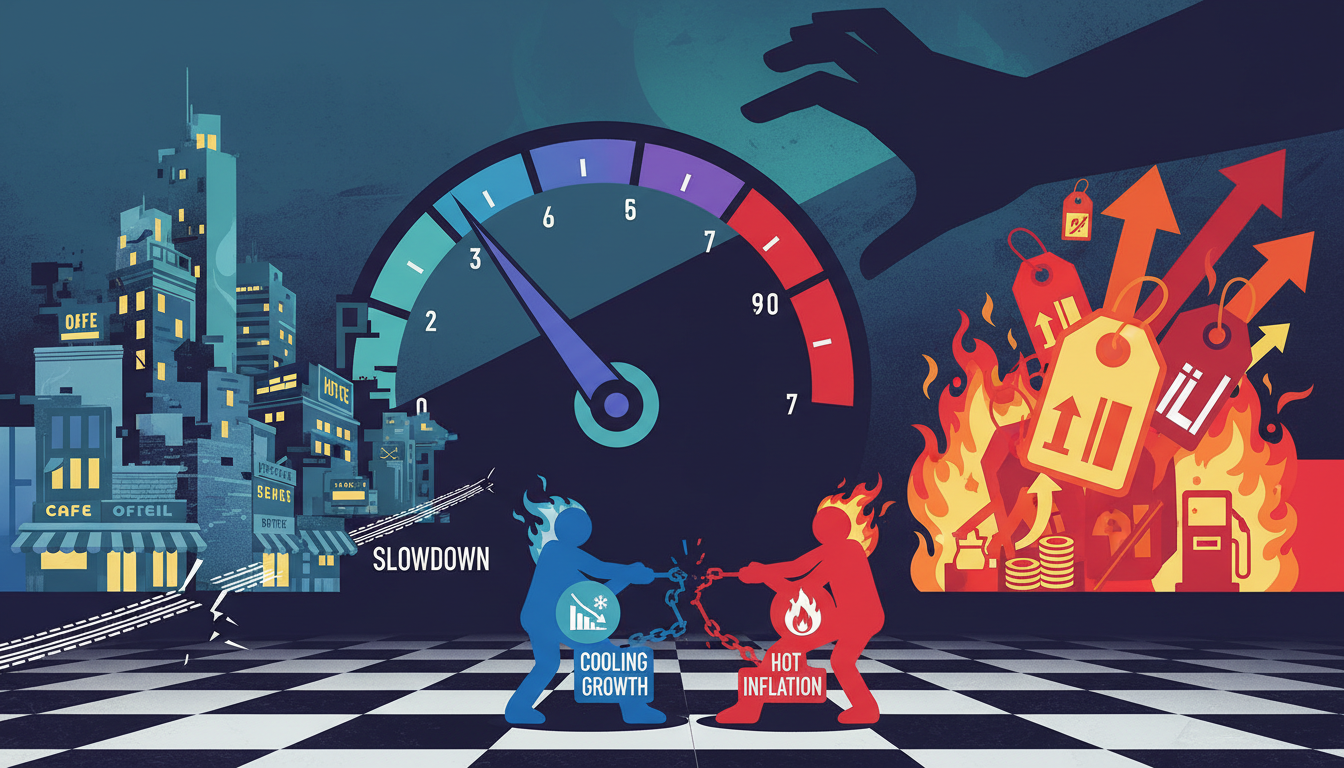
On April 3, 2026, Eastern Eight Time, the U.S. non-farm payroll report for March was released: an increase of 178,000 jobs far exceeded the market expectation of 60,000, while the unemployment rate fell to 4.3%. This significantly better-than-expected employment data quickly triggered a simultaneous repricing of interest rate futures and U.S. Treasury yields, extinguishing the bets on a substantial interest rate cut in 2026, and the market proactively "tightened" its accommodative path. On top of short-term factors like healthcare resumption and the warm winter effect, whether the strong employment is merely statistical noise or indicates a longer duration of high interest rates, with the easing cycle shifted overall, becomes a core question that cannot be ignored in the upcoming macroeconomic and asset markets.
Non-farm Payrolls Surpass Expectations: Employment Cooling Expectations are Negatively Surpassed
March non-farm payrolls added 178,000 jobs, nearly three times the expected 60,000, with the unemployment rate simultaneously dropping to 4.3%. Describing this rebound as "better than expected" is hardly sufficient. Previously, many institutions bet that the U.S. labor market would enter a stage of "clear cooling" this year, aiming to align with the narrative of economic soft landing and declining inflation. However, the latest data portrays a picture of continued strong job demand and a declining unemployment rate, revealing far greater resilience across the entire employment chain than expected.
Surrounding this report, mainstream media in the U.S. quickly provided interpretations, one particularly representative remark being: "A solid labor market allows the Federal Reserve to focus on reducing inflation." The subtext of this statement is that as long as the employment side does not deteriorate, the Federal Reserve has greater flexibility in extending high interest rates in exchange for a more thorough victory in the battle against inflation. For funds that previously relied on the "weakening labor market → forced interest cuts" logic to construct trading frameworks, this non-farm report effectively rewrote the script, thus negatively surpassing the so-called "cooling employment expectations" and forcing the market to reconsider whether a soft landing will come at the cost of prolonged tight monetary policy.
Healthcare Resumption and Warm Winter Effect: Short-term Noise of Strong Data
Upon deeper analysis, it becomes clear that this non-farm surprise did not occur in a vacuum. Briefings indicate that one of the main reasons for the non-farm figures exceeding expectations was the large-scale resumption in the healthcare sector following the end of strikes. Jobs that were previously suppressed by strikes saw a concentrated rebound in March, boosting the month's employment reading. This type of "technical rebound" appears very impressive statistically, but from a cyclical perspective, it resembles a one-time correction rather than a trend expansion.
Simultaneously, as Eastern Eight Time enters spring, a rise in temperatures in some U.S. regions has also led to an early release of seasonal jobs, including construction, services, and outdoor-related occupations. The warm winter effect combined with seasonal adjustments caused jobs that were supposed to clear gradually over a longer period to be recorded as new employment in March, providing additional upward momentum to the non-farm figures. In other words, this combination of climatic and seasonal factors "enhanced" the data, adding to its short-term brightness.
The key question is whether, after the momentum from the healthcare resumption is digested and weather factors return to normal, job growth will most likely revert to a moderate pace. From an economic logic standpoint, unless new structural demand emerges, subsequent months of non-farm payrolls are more likely to oscillate around neutral levels, rather than consistently replicating March's surprise. This is why some institutions, while acknowledging the robust data, still remind investors to be cautious: amplifying one-time factors into a long-term trend may lead to a misjudgment of the actual pace of the easing cycle.
Interest Rate Futures and U.S. Treasuries Surge: Rate Cut Paths are Forced to Contract
More directly than the data itself is the market's rapid reaction in interest rate instruments. According to CME interest rate futures data, the probability of a 25-basis-point cut in June is just 7.8%, indicating that following the non-farm report release, short-term easing expectations plummeted, with trading almost no longer betting on "substantial rate cuts in the first half of the year." Implied paths in interest rate futures show that the scope for imagining rate cut frequency and pace has significantly narrowed, as funds begin pricing in a more enduring high-interest rate environment.
In tandem, the two-year U.S. Treasury yield jumped to around 3.85%, this term being highly sensitive to expectations of policy rates and often regarded as the "market version of the Fed's future dot plot." The rise in yields reflects traders' adjustments to their positions in light of a "higher for longer" rate environment. The previously speculated path of "soon reducing interest rates and maintaining easing" is now being supplanted by "delayed rate cuts and limited easing," reflecting a recalibration of expectations that is being transmitted through the yield curve to the pricing framework of various assets.
From the market consensus perspective, "The implied path of interest rate futures shows a contraction in easing cycle expectations" has become a recurrent statement in media and institutional research reports. Non-farm data did not directly alter the Federal Reserve's actual decisions, but it forced the market to act in advance, peeling away a layer of accumulated expectations for easing in 2026. For funds betting on direction rather than volatility, the importance of this repricing path far outweighs the short-term market action triggered by one data release.
High-Interest Rates for Longer: Wall Street Transitions from "Several Rate Cuts" to "Limited Easing"
Before the non-farm report, Wall Street's mainstream narrative still revolved around "multiple rate cuts"—the only disagreement was whether to start this year or next, and whether to cut a little less or a little more. The stronger-than-expected employment in March forced this trading narrative to adjust: shifting from “how much to cut, how quickly” to “whether it will be significantly less than expected, or even remain at high levels.” The change in mentality shifted from the fantasy of abundant easing ammunition to only daring to expect a relatively restrained policy fine-tuning.
The implied path of interest rate futures reflects this pivotal shift in mentality: maintaining high interest rates for a longer duration is being incorporated into pricing, the easing cycle is being compressed overall, and the duration of high-interest rate periods is being extended. In other words, the market is no longer pricing in a future return to the "low-interest rate era" so quickly, but is labeling the scenario as a "long-term tight monetary environment."
For risk assets, the core implication of this repricing path lies in the pressure of higher discount rates and valuation compression. Whether in equities, credit, or crypto assets, as long as the discounting benchmark for future cash flows or earnings rises, current prices will face revaluation. The logical chain that previously relied on “quick rate cuts → low discount rates → high valuations” was significantly discounted at its source by the non-farm data, indicating that the dream of easing in 2026 has evidently "shrunk" in this round of repricing.
Inflation Priority Rises: Employment Resilience Provides Confidence to the Federal Reserve
The media's remark that "A solid labor market allows the Federal Reserve to focus on reducing inflation" summarizes the data and sets the tone for policy orientation. Resilient employment means the Federal Reserve can place more emphasis on "ensuring inflationary pressures are thoroughly suppressed," rather than rushing to support economic growth. Within this narrative framework, stable employment does not justify easing; rather, it becomes the "confidence" to extend the tightening stance.
As long as employment remains robust, the Federal Reserve lacks the pressure to ease prematurely in support of the economy. This contrasts sharply with past crises where rapid rate cuts were forced due to surging unemployment. Currently, the message the Federal Reserve can convey to the market is: the economy has not significantly deteriorated, and there are no systemic risks in employment, hence there is no need to hasten the release of more liquidity to prop it up. This stance objectively enhances its tolerance and resolve in combating inflation.
With the combination of "stable employment + persistent inflation," the policy tolerance for maintaining high interest rates for longer to curb inflation naturally increases. Policymakers can accept a period where financial conditions remain somewhat tight in exchange for more stable anchoring of inflation expectations around targets. For those betting on a round of easing festivities in 2026, this rise in tolerance means a heightened cost of time and opportunity, and macro trading is no longer a simplistic "wait for good news to materialize," necessitating coexistence with high interest rates over a longer cycle.
From Data Surprises to Expectation Adjustment: The 2026 Easing Rhythm is Rewritten
Overall, the strong performance of the March non-farm payrolls has, for the time being, knocked out the market's fantasies of a rapid easing. The 178,000 new jobs and the 4.3% unemployment rate, combined with the simultaneous rise in interest rate futures and two-year Treasury yields, have pulled the narrative of "multiple rate cuts in 2026" back from an optimistic version to a conservative version. Easing may still occur, but its rhythm and magnitude will no longer be solely dictated by market desires; rather, they will be reined in by data and policy preferences.
However, it must also be emphasized that short-term factors such as healthcare resumption and warm winter effects have objectively weakened the enduring persuasiveness of this data, leaving room for future expectations to reverse. Should the subsequent non-farm payrolls fall back into a more moderate range in the coming months, and inflation continues to converge toward targets, the implied paths in interest rate futures may also tilt back toward easing once more. The current repricing of expectations appears more like a correction to "align with reality," rather than a permanently fixed conclusion.
Moving forward, each release of employment and inflation data will continue to shape the market's understanding of the rhythm and magnitude of rate cuts in 2026. If employment once again leans stronger, the consensus for high interest rates lasting longer will become harder to unsettle; if systemic weakness surfaces, the political and social tolerance for high rates will be reassessed. Similarly, any surprises in the inflation trajectory will directly rewrite the implied script for interest rate futures. Standing at the present moment, the so-called "dream of easing in 2026" has not disappeared; it has merely transformed from a linear narrative to a multi-faceted game, with the real resolution likely emerging gradually in the long tug-of-war between data and expectations.
Join our community, let's discuss and become stronger together!
Official Telegram group: https://t.me/aicoincn
AiCoin Chinese Twitter: https://x.com/AiCoinzh
OKX welfare group: https://aicoin.com/link/chat?cid=l61eM4owQ
Binance welfare group: https://aicoin.com/link/chat?cid=ynr7d1P6Z
免责声明:本文章仅代表作者个人观点,不代表本平台的立场和观点。本文章仅供信息分享,不构成对任何人的任何投资建议。用户与作者之间的任何争议,与本平台无关。如网页中刊载的文章或图片涉及侵权,请提供相关的权利证明和身份证明发送邮件到support@aicoin.com,本平台相关工作人员将会进行核查。