According to numerous media reports, Elon Musk's space exploration technology company SpaceX will soon submit an IPO prospectus to the U.S. Securities and Exchange Commission (SEC), with a target valuation of $1.75 trillion and an expected fundraising scale exceeding $75 billion. If successful, this will be the largest IPO in human history, far surpassing the $29.4 billion record set by Saudi Aramco in 2019, and it will also be the most anticipated IPO of the year.
Interestingly, SpaceX suddenly acquired Musk's other AI company xAI in February 2026, incorporating "orbital data centers" into its core strategy: utilizing the vacuum of space for heat dissipation, powered by continuous solar energy, to send AI computing power into low Earth orbit. Musk believes that in the long run, space-based AI is the only viable way to achieve scalable development.
At the same time, Nvidia is also actively laying out in this direction. It invested in the orbital data center startup Starcloud, which successfully sent a Nvidia H100 GPU into orbit in November 2025, completing the first-ever AI large model training and inference in space in human history.
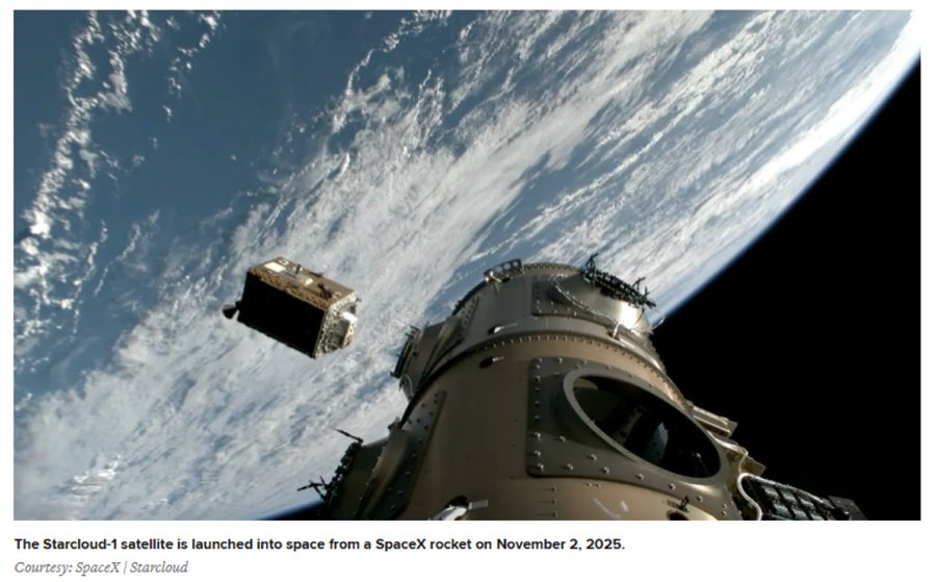
As SpaceX sends AI computing power into the sky, many people are beginning to ponder whether Bitcoin mining, which also relies on computing chips and utilizes solar energy, can also move to space. However, this question is actually far more complex than people realize.
A satellite, a solar panel, a mining machine
Mining is a competitive mathematical calculation. Millions of mining machines around the world operate simultaneously, competing to be the fastest to solve a specific hash value, with the successful one receiving the Bitcoin reward for the current block. This process is known as Proof of Work, and its cost is a significant amount of electricity. The continuous power consumption of the global Bitcoin network is about 20 gigawatts, equivalent to the total industrial electricity consumption of a medium-sized country. The profit margin for miners is largely determined by electricity prices; once electricity prices rise, profit margins are compressed.
Endless sunlight in space perfectly corresponds to the core cost variable of Bitcoin mining: electricity.
In Earth orbit, solar radiation intensity is about 1,380 watts per square meter, six times the average level on the ground, and is unaffected by clouds, day and night, or seasons. On specific geostationary orbits, satellites can receive sunlight almost continuously and generate power. Attaching mining machines to the back of solar panels and sending them into orbit for perpetual mining is the underlying logic of space mining.
Bitcoin core developer Peter Todd published a technical analysis in December 2024, transforming this idea from concept to engineering blueprint. He proposed the concept of a "panel mining machine": directly installing ASIC chips on the back of solar panels, facing the solar side to generate power, while the chips on the back consume electricity for mining, with the overall structure radiating waste heat in both directions.
Heat dissipation in space is an unintuitive challenge. On Earth, the heat from chips can be carried away by air convection; but in the vacuum of space, without air, heat can only be dissipated through radiation. Todd's calculations indicate that without additional heat dissipation devices, such a structure has an equilibrium temperature in orbit of about 59°C, well within the normal operating range of the chips. If the temperature seems too high, simply tilting the entire panel slightly relative to the sun to reduce the light-absorbing area can further improve heat dissipation.
Communication is also unexpectedly simple. The communication between miners and mining pools essentially involves receiving new block headers and submitting computation results, generating about 10MB of data per day, less than the bandwidth consumed by streaming a song. In low Earth orbit (500 to 1,000 kilometers above the ground), the communication delay ranges from 4 to 30 milliseconds, resulting in a probability of stale blocks (submitting outdated computation results) of less than 0.01%, comparable to the vast majority of ground-based miners without significant differences. In fact, Blockstream had already begun broadcasting the complete Bitcoin blockchain globally via geostationary satellites in 2017, proving that the integration of satellites and blockchains has never been an unsolved problem.
So, if it is physically feasible and the engineering framework is viable, why hasn't it become popular? The reason is that the cost of rocket transport is too high.
An economic equation that doesn't add up
Using SpaceX's Falcon 9 rocket to deliver cargo to low Earth orbit currently costs about $2,720 per kilogram.
Peter Todd estimates that a complete 20-kilowatt space mining system, covering solar panels, heat radiators, ASIC chip arrays, structural supports, and communication modules, weighs about 1,600 to 2,200 kilograms. At current prices, the cost of a single launch amounts to between $4.3 million and $6 million.
How much computing power can this system contribute, and how much Bitcoin can it mine? Researcher Nick Moran provided the answer: daily earnings of about $92.7, translating to about $34,000 per year. The payback period exceeds 100 years.
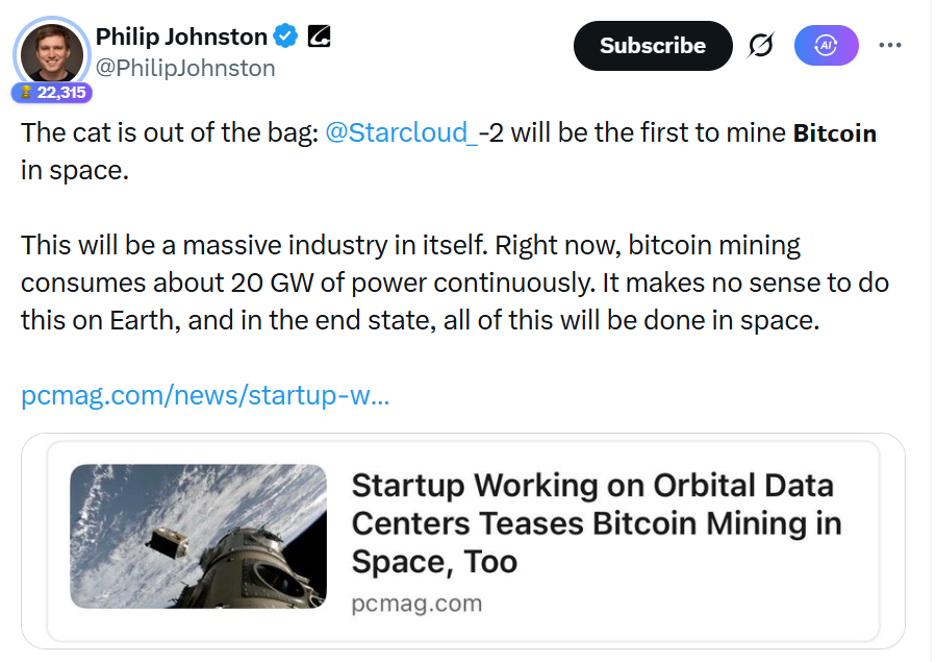
Starcloud CEO Philip Johnston has calculated that the launch cost must fall below $200 per kilogram for space mining to have a basic commercial logic. This means costs need to drop by a further factor of 13.
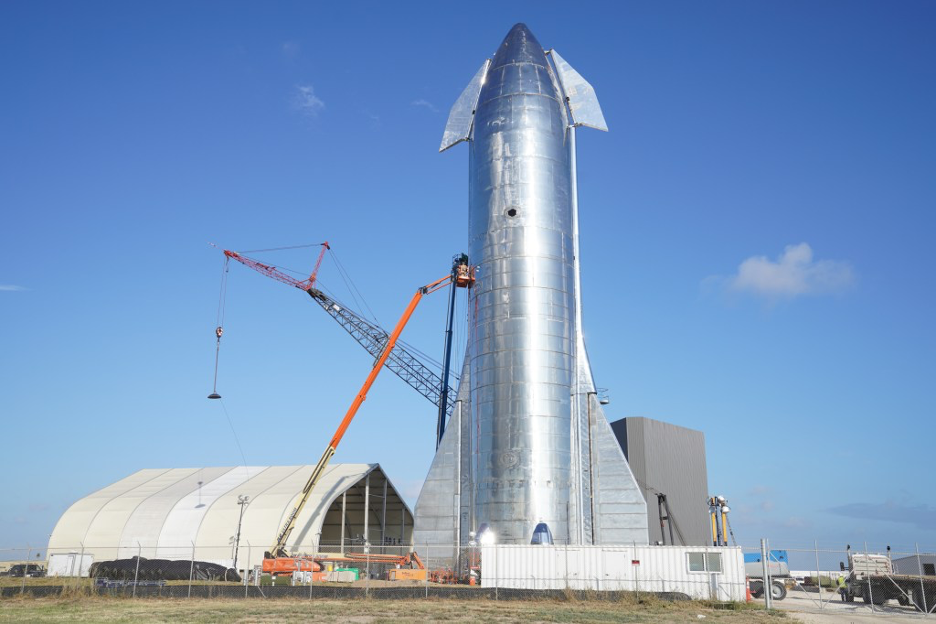
SpaceX's Starship is widely regarded as the key to achieving this leap. The fully reusable Starship could theoretically reduce launch costs to below $100 per kilogram or even lower, which is one of the prerequisite assumptions for the establishment of the space data center in SpaceX's IPO vision. However, when and if this cost curve will materialize remains an open variable.
Another challenge is the automatic adjustment of the difficulty of the entire Bitcoin mining network. The Bitcoin protocol calculates the total computing power of the network every two weeks and automatically adjusts the mining difficulty to maintain a block generation speed of approximately 10 minutes. In other words, if a large number of space mining machines flood into the market, significantly increasing the network's computing power, the mining difficulty will be adjusted accordingly, compressing profits for all miners, including those in orbit.
There are always people busy looking for treasures in this world
Nevertheless, a number of startups are actively working to advance this initiative.
Starcloud, formerly Lumen Orbit, is currently the closest company to actual implementation and is the most important observational sample in the entire field. Established in 2024 and headquartered in Redmond, Washington, it is backed by angel funds from NFX, Y Combinator, a16z, and Sequoia Capital, as well as Nvidia. The total financing amounts to around $200 million. The company's CTO worked for ten years in Airbus's defense and space division, while the chief engineer previously worked at SpaceX on the Starlink project.
In November 2025, Starcloud successfully launched the first satellite with a Nvidia H100 GPU into orbit, running the Google Gemma language model in space, sending down the first piece of information ever generated by AI in orbit in human history. In March 2026, Starcloud announced that the second satellite would simultaneously carry Bitcoin ASIC chips and Nvidia's latest Blackwell GPU, aiming to become the first organization in human history to mine Bitcoin in space. Additionally, the company has applied to the Federal Communications Commission (FCC) for a constellation plan to deploy up to 88,000 satellites, with a long-term vision of building a total of 5 gigawatts of computing infrastructure in orbit.
SpaceChain is the OG player in this field, co-founded by former Bitcoin core developer Jeff Garzik and Zheng Zhong. Since 2017, SpaceChain has launched at least seven blockchain payloads to satellites and the International Space Station. In June 2020, Garzik completed the first space Bitcoin transfer in history, totaling 0.0099 BTC, using the multi-signature wallet node installed by SpaceChain on the space station. SpaceChain’s core focus is on orbital secure nodes for blockchain transactions, rather than active mining: locking private keys in space so that no hacker or government on the ground can physically access them.
Cryptosat, founded by two Stanford PhD graduates, currently operates three satellites and primarily provides tamper-proof orbital cryptographic services. In 2023, Cryptosat participated in the largest trusted setup ceremony in Ethereum's history (KZG Ceremony), generating some random number parameters via orbital nodes, ensuring that these parameters could not be controlled by any single ground entity from an institutional level. What it explores is an alternative possibility for space blockchain: not mining but making the entire crypto-economic system harder to attack.
From orbit to market: What does this mean for the mining industry
For currently operating Bitcoin mining companies, while space mining does not pose an immediate competitive threat, many startups continue to experiment, indicating that the significant cost reduction potential it represents remains an attractive possibility for the industry. This also reflects the structural cost pressures the entire sector is facing.
After the 2024 halving, the total computing power and difficulty of the network continue to reach new highs, with energy costs accounting for 70% to 90% of total operational costs. In such a context, the one who can stably acquire clean electricity at the lowest cost will have the deepest moat. Hydropower, wind energy, and natural gas associated gas resources in the United States, Middle East, and Africa are becoming the core driving forces behind a new round of mining mergers and site selection.
The logic of space mining is an ultimate extrapolation of the aforementioned trends: if cheap electricity on the ground eventually narrows due to demand competition, then the next best option is to go to the places with the most abundant energy, namely, space.
Of course, if the Starcloud-2 satellite manages to mine the first Bitcoin in 2026, for a total computing power exceeding 900 EH/s, it would be equivalent to a grain of sand falling into the sea. However, the symbolism itself has penetrating power. Just like that 0.0099 BTC space transfer in 2020, its value lies not in the amount but in proving that this can be achieved.
From the narrative of SpaceX's IPO to Nvidia's orbital computing layout to Starcloud's ASIC satellite plan, a picture is beginning to emerge: the cosmos is becoming the battleground for next-generation computing infrastructure. AI computing power is leading the way, while Bitcoin computing power is closely following.
On that day, the global digital network connecting every corner of the Earth described in Satoshi Nakamoto's white paper could extend beyond the Earth, floating in the universe, in search of new opportunities.
免责声明:本文章仅代表作者个人观点,不代表本平台的立场和观点。本文章仅供信息分享,不构成对任何人的任何投资建议。用户与作者之间的任何争议,与本平台无关。如网页中刊载的文章或图片涉及侵权,请提供相关的权利证明和身份证明发送邮件到support@aicoin.com,本平台相关工作人员将会进行核查。


