On March 29, 2026, Eastern Eight Time, the highest level of the Iranian Navy publicly named the US aircraft carrier group "Lincoln," sending a tough signal of "launch missiles once within range," again pushing the already tense US-Iran confrontation into the spotlight. Currently, the US aircraft carrier strike group is conducting high-intensity patrols in the Middle East, while Iran is strengthening its military presence along the coast and in critical maritime areas, creating a sustained high-stakes standoff in the Strait of Hormuz and surrounding waters. This strait carries a significant proportion of the world's oil and gas transport and is the throat connecting Middle Eastern energy with global consumption markets. This article will trace the path of how the tense situation in the Middle East transmits layer by layer to the global market along the lines of "military escalation - energy and shipping risks - risk aversion sentiment and asset pricing," thereby affecting the risk/hedging narratives of gold, crude oil, and crypto assets.
Missiles Targeting Aircraft Carriers: Iran Issues Maximum Verbal Deterrence
According to multiple media reports on March 29, Eastern Eight Time, Iranian Navy Commander Shahram Irani publicly stated that Iran is "monitoring the movements of the Lincoln carrier group in real time," a statement reiterated by CCTV news and several Chinese encryption media, with a highly consistent core meaning. Irani used local Iranian media and regional news agencies to release even more deterrent expressions: "Once within range, missiles will be launched," specifically naming the "Lincoln," a symbolic platform of the US military presence in the Middle East.
This hardline statement is not an isolated incident. On the same day, according to Xinhua News Agency, the Iranian Islamic Revolutionary Guard Corps has taken action against two US military-related companies in the Middle East, indicating that its strikes against "US-related targets" have moved from the realm of public opinion to actual actions. The combination of continuous actions and the high-profile warning from the Navy commander makes the outside world more inclined to view this statement as a "combination punch" that has both realistic support and an escalation signal, rather than merely a domestic propaganda tactic.
At the same time, there remains a significant information gap. Iran has not publicly disclosed the specific technical parameters of the so-called "range," nor has it revealed the deployment locations and specific operational concepts of the missiles, and the US has not yet provided a formal and detailed response. This means that assessments of the situation are largely limited to conjectures about intentions and capabilities, lacking critical quantitative support. On one hand, the market must take seriously the signals from the highest levels of the Iranian military, while on the other hand, it must also acknowledge the significant uncertainty surrounding judgments about the actual likelihood and intensity of combat.
On the level of public opinion, this statement has strong symbolic significance: internally, it conveys a posture of "daring to confront the US head-on" to Iranian society, thereby strengthening the government's legitimacy and cohesion under high-pressure external circumstances; externally, it serves as a public deterrent to the US and its regional allies, attempting to remind opponents of the costs and risks of the battlefield in the Middle East by specifically naming the "Lincoln," a symbol of US naval power. This symbolic deterrence itself will be seen by the market as a reason for "risk premium," regardless of whether military actions are truly implemented.
Clouds Over the Strait of Hormuz Intensify: The Invisible Front of Tankers, Insurance, and Freight Rates
The Strait of Hormuz is a key waterway connecting the Persian Gulf with the Gulf of Oman and is considered one of the "lifelines" of global energy transport. A significant proportion of global maritime crude oil and liquefied natural gas must pass through here to reach major consuming countries in Asia and Europe and America, and the smoothness of this route has a natural leverage effect on international oil prices and shipping costs. Any information regarding "military drills," "blockades," or missile threats will be quickly absorbed by the market into oil price expectations and freight pricing.
If military actions from the US-Iran conflict approach or partially spread to the surrounding waters of the Strait of Hormuz, even without extreme scenarios of a formal blockade being announced, shipping companies and shipowners might choose to detour to longer routes for risk control considerations, compounded by insurance companies actively raising war zone surcharge rates, leading to temporary contractions in actual available shipping capacity. For tanker companies, longer journeys, soaring insurance fees, and decreased willingness to employ ships will collectively drive up transportation costs per barrel of oil, which often manifests quickly in international oil prices and forward contract quotes in the form of "geopolitical risk premiums."
Historically, each time tensions in the Middle East escalate and concern safety in the strait, the market tends to engage in forward pricing for the risks of the Strait of Hormuz: even in the absence of substantial blockades, oil prices and related shipping indices often rise in advance, reflecting a discount for the "worst possibilities." This "rise first, observe later" model serves as a typical reflection of how the situation in the Middle East transmits to global commodity prices, providing a historical framework for reference in this incident.
It should be emphasized that as of March 29, the current phase remains primarily at the level of military threats and high-intensity rhetoric, with no substantial interruptions reported in the shipping lanes of the Strait of Hormuz, and tankers and merchant ships are still passing normally. Therefore, the current price fluctuations largely reflect expectations and strategic gaming rather than an immediate collapse of supply. Market participants are engaged in a tug-of-war over "whether it will escalate to substantial disruption" and "where are the US-Iran red lines," with the expansion and contraction of risk premiums heavily dependent on subsequent military and diplomatic signals rather than a single news event.
Risk Aversion Narratives Rekindled: Crypto Assets Under New Stress Tests
In traditional financial markets, the escalation of geopolitical conflicts often triggers a relatively fixed set of risk aversion paths. The typical sequence is: risk assets come under pressure, the US dollar index strengthens, US Treasury yields decline (prices rise), gold as a traditional safe-haven asset attracts inflows, followed by expectations of potential supply interruptions driving crude oil prices higher. The response speed and elasticity of different assets vary, but the "dollar - US treasuries - gold - crude oil" interlinking logic has been repeatedly validated in multiple geopolitical incidents.
In contrast, the performance of crypto assets in similar scenarios is more complex. In some events, mainstream cryptocurrencies like Bitcoin have been packaged by public opinion as "digital gold," attracting some funds seeking on-chain transfer and value storage in an extremely uncertain environment; but in other shocks, cryptocurrencies behave more like high-beta risk assets, often amplifying declines during periods of market deleveraging and liquidity constriction, reflecting a high sensitivity to dollar liquidity and risk appetite. This back-and-forth of narratives keeps the question of "whether crypto is a safe haven" highly controversial.
In light of the recent escalation between the US and Iran, it needs to be clarified: one cannot simply assume a direct causal relationship between Bitcoin and the conflict, nor can fluctuations in crypto prices be attributed solely to a single geopolitical event. From a research perspective, we can only observe whether, against the backdrop of rising geopolitical uncertainty, there is funding that views crypto assets as an option for diversifying risk, and whether this choice holds statistical significance in terms of scale and sustainability.
A more actionable approach is to establish a set of critical observation dimensions:
● Large on-chain transfers and address activity: Monitor if there are any significant anomalies where large sums of money concentrate in a short period or are transferred to cold wallets, which may reflect some entities reallocating risk.
● Net inflow/outflow data from exchanges: If persistent net outflows occur, it may imply investors prefer self-custody, viewing it as a risk hedge; while persistent net inflows are more likely to represent intensified short-term trading and speculative plays.
● Synchronization or divergence with gold and US treasuries: Compare the directional movements of Bitcoin and gold prices and the changes in US Treasury yields. If a phase of synchronization appears where Bitcoin moves in tandem with gold and against stock indices, there may be reason to discuss the relative strengthening of the "risk hedge narrative"; conversely, if the performance aligns with high-risk assets, it indicates that the market still views it as an amplifier of risk rather than a safe haven.
In the absence of long-term consistent evidence, considering crypto assets as "passively involved in a risk pricing market" may be more prudent than simply labeling them as a safe haven.
Time Displacement and Information Bombardment: Crypto's "Leading Market" Role
Starting March 29, multiple European countries officially activated Daylight Saving Time, and the trading hours for European stock indices and some major commodity contracts were adjusted accordingly. For cross-market capital, this means that the opening and closing times for US and European stock index futures, spot markets, and major commodity contracts now exhibit new displacements from Asia's trading sessions and the timing of geopolitical news from the Middle East. There is a time gap of several hours or even a weekend from when news emerges from the Middle East to when it is fully absorbed during the main trading hours of Europe and the US.
In sharp contrast, the crypto market maintains 24/7 continuous trading, unaffected by weekends and holidays. Under this time structure, when geopolitical tensions suddenly escalate during "non-working days" or traditional market closures, crypto exchanges often become the primary outlet for global risk appetite and panic sentiment. Prices during relatively thin liquidity periods are susceptible to being propelled by sentiment, providing an "emotional sample" for the subsequent repricing when traditional markets open.
Institutional investors have already recognized this time structure disparity. Some cross-market trading firms may first test sentiment and liquidity elasticity by making small adjustments in the crypto market following sudden geopolitical events, before making directional or hedging adjustments in larger traditional asset portfolios when major markets open on Monday. Consequently, crypto somewhat assumes the function of a "price exploration sentinel," albeit its signal noise is significantly higher than that of traditional assets.
For ordinary investors, it is important to be cautious: weekends and holidays often see the most intense news flow, which is the most difficult for traditional markets to digest immediately. In this context, if crypto prices significantly fluctuate in response to US-Iran news over the weekend, there is a high likelihood of a "corrective drop or rise" upon the opening of traditional markets on Monday, which will, in turn, affect the subsequent trends of crypto prices. The cross-market and cross-time-zone chain reactions make technical indicators and sentiment metrics within a single market more fragile.
The Table between Washington and Tehran: The Boundaries of Conflict and Restraint
From the perspective of US global naval power and the allied network in the Middle East, nuclear-powered aircraft carrier strike groups like the Lincoln are not only combat platforms but also visual carriers of political signals. The presence of US aircraft carriers in the Middle East serves as proof of the "security commitments and deterrence capabilities" to both allies and adversaries alike. Given the current regional tensions, retreating easily or avoiding conflict could be interpreted by Iran and its supporting forces as weakness, and it would also undermine the backing for security from the US in the eyes of allies such as Israel and Gulf states. Therefore, Washington faces strong policy constraints between "avoiding escalation" and "not showing weakness" in response to Iran's specific threats regarding aircraft carriers.
For Tehran, the high-profile threats also reflect clear domestic and regional demands. Domestically, in the face of long-term sanctions and economic pressure, demonstrating a posture of "daring to counterattack the US" helps consolidate ruling legitimacy and shifts some public attention away from economic difficulties; externally, Iran seeks to strengthen its leadership role in the Shiite axis and the broader "anti-US camp" by publicly threatening core US assets, using the multifaceted tensions in the Middle East as leverage to enhance its regional discourse power. This "bargaining chip mentality" determines that Iran's rhetorical posture must be sufficiently strong, even if there remains room for maneuver in its actual actions.
Both the US and Iran have long sought a balance between "maximum pressure" and "controllable conflict": the US maintains an upper pressure limit through sanctions, military presence, and targeted strikes, while trying to avoid falling into the quagmire of full-scale war; Iran navigates between proxy conflicts, long-range strikes, and maritime threats, creating strategic uncertainty at limited costs. The concern is that as deterrence and counter-deterrence continue to accumulate, the probability of misfire cannot be overlooked, especially near aircraft carriers, critical energy facilities, or high-value targets, where a single misjudgment or technical accident could quickly escalate global market panic.
This table involves not just Washington and Tehran. Third-party powers, represented by Gulf oil-producing nations, and major energy importing countries in Europe and Asia, are also influencing the trajectory of the situation in their respective ways: on one hand, they are heavily reliant on Middle Eastern energy and prefer to use diplomacy and mediation to avoid an all-out explosion of risks in the Strait of Hormuz; on the other hand, some regional powers may seek their own bargaining leverage amidst US-Iran tensions, pursuing greater leverage in security cooperation, arms purchases, and energy agreements. Various parties are tugging between "escalation" and "de-escalation," making it challenging for the situation to thoroughly ease in the short term, yet there exists realistic incentives for behind-the-scenes coordination to prevent the worst outcomes.
Trading Amidst the Powder Keg: Risk Boundaries for Crypto Investors
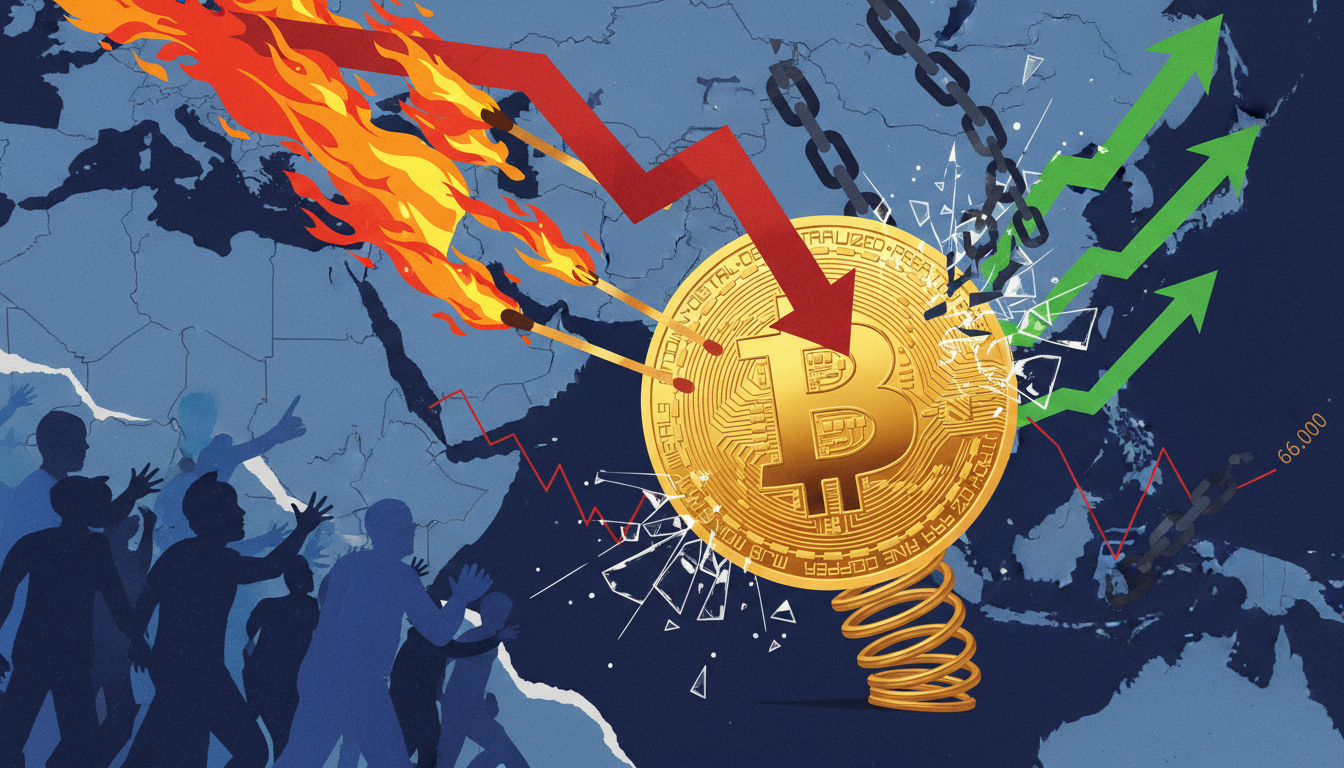
In summary, this incident of Iran threatening missile strikes against the US "Lincoln" aircraft carrier has reinforced the intensity of military confrontation in the Middle East in reality, transmitted the risk to the pricing of crude oil and shipping costs through the energy thoroughfare of the Strait of Hormuz on the expectation level; and has reignited global market interest in safe-haven assets on the emotional level. Traditional assets and the crypto market find themselves caught in the impacts of geopolitical tensions, displaying a complex interplay of time disparities, pricing logic, and capital behavior.
At the same time, the critical information gap must be addressed: Iran has not disclosed the so-called "range" and deployment details, and the US has yet to provide a clear official response, making it impossible for the outside world to quantify the actual probability of combat and loss scenarios. In such a highly incomplete information environment, betting on extreme military outcomes based on unverified rumors not only amplifies the potential for investment drawdowns but may also magnify unnecessary panic in public opinion. For any asset class, "information asymmetry + high leverage" is a lethal combination.
For crypto investors, a more realistic response path includes:
● Controlling leverage and position concentration, avoiding high-leverage impulsive trading during periods of frequent geopolitical events, and treating controllable losses as a precondition.
● Monitoring cross-market capital flow signals, combining on-chain data, net inflows/outflows from exchanges, and the performance of the dollar index, gold, and US treasuries to judge whether risk appetite is under systematic contraction or localized rotation.
● Being cautious of weekend and opening-day repricing, recognizing that crypto prices may exhibit excessive fluctuations first during news-heavy weekends and holidays, and that traditional markets opening on Monday may either amplify or reverse this volatility.
Looking ahead to the next few days, several key observation points are worth keeping track of: first, whether the US will provide a more formal and specific public statement regarding Iran's threats aimed at the "Lincoln"; second, whether there are noticeable adjustments in the actual movements of the carrier group in Middle Eastern waters or proximity to sensitive areas; third, whether the tones of neighboring Middle Eastern countries in diplomatic settings will collectively call for de-escalation or betting further on security cooperation and arms sales. The signals outlined above will collectively determine whether this tense standoff diffused with the scent of gunpowder remains contained within the "controllable conflict" framework or evolves into a systemic risk event that global markets must reevaluate seriously.
Join our community to discuss and become stronger together!
Official Telegram group: https://t.me/aicoincn
AiCoin Chinese Twitter: https://x.com/AiCoinzh
OKX benefits group: https://aicoin.com/link/chat?cid=l61eM4owQ
Binance benefits group: https://aicoin.com/link/chat?cid=ynr7d1P6Z
免责声明:本文章仅代表作者个人观点,不代表本平台的立场和观点。本文章仅供信息分享,不构成对任何人的任何投资建议。用户与作者之间的任何争议,与本平台无关。如网页中刊载的文章或图片涉及侵权,请提供相关的权利证明和身份证明发送邮件到support@aicoin.com,本平台相关工作人员将会进行核查。