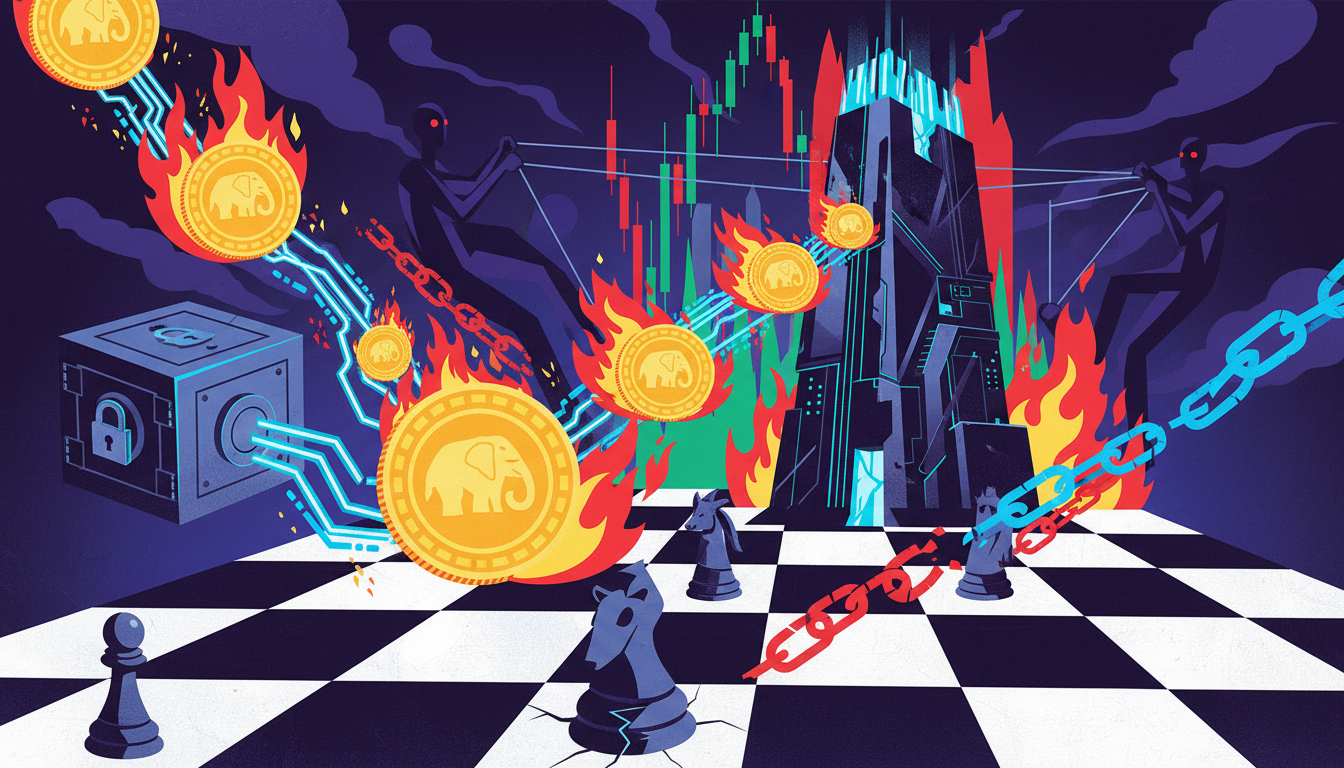
On March 26, 2026, the Canadian government submitted the "Strong and Free Elections Act" (Bill C-25) to the House of Commons, one prominent new regulation proposed is to completely exclude crypto assets, including Bitcoin, from political campaign donation channels. The scope of the bill covers registered parties, candidates, campaign teams, and third-party campaign advertising entities, attempting to cut off the flow of crypto funds at every link in the election funding chain. The core discussion of this article is how this bill positions "election transparency" in direct conflict with "crypto pseudonymity," and how it, alongside the UK's suspension of crypto political donations, outlines a collaborative trend in regulatory narratives among English-speaking countries.
From Bitcoin to Ballots: Canada Draws a Red Line
In the design of Bill C-25, "prohibiting the use of crypto assets for political donations" is not a mere accessory clause but is explicitly stated: any resources used for federal-level elections and party financing must no longer include crypto assets like Bitcoin. The core intent of the legislation is to exclude all forms of value transfer that rely on blockchain transactions, which are difficult to verify through traditional banking channels, from the election funding system at once. This means that both direct transfers of BTC into party accounts and participation in fundraising activities in the form of tokens, once pointed towards campaign purposes, will be deemed non-compliant.
The scope of this prohibition covers not only the surface-level parties and individual candidates but also fully locks down the entire campaign ecosystem: registered parties, nominated candidates, their underlying campaign organizations, and third-party entities responsible for campaign advertisements, all included in the same regulatory framework. Funds that might have previously been bypassed via third-party political action committees or advertising agencies are now preemptively blocked by design to prevent the emergence of a "surface-level absence of crypto, while in reality, on-chain blood transfusion" gray area.
To support this prohibition, legislators have categorized crypto assets alongside bank drafts and prepaid payment instruments, uniformly labeling them as "difficult to trace source of funds." The regulatory perspective is not merely targeting a particular technology but encompasses a category of payment vehicles that bypass traditional financial KYC/AML systems and present structural gaps in identity verification at the source and tracking of flow. The inclusion of crypto assets in this basket indicates that in the high-sensitivity scenario of elections, it is prioritized as a "transparency risk" rather than an "innovative financing tool."
No Cases, Yet Block First: The Logic of Risk Prevention Legislation
One tension lies in the fact that the Canadian government has explicitly acknowledged that there are currently no suspicious crypto political donation cases to date, yet it still chooses to preemptively block this channel in Bill C-25. In other words, this is a legislative approach not driven by actual scandals, but rather by a "institutional firewall" mindset: before on-chain cash flows truly trigger election controversies, potential points of attack in payment methods are excluded upfront.
The government's public narrative repeatedly mentions that the "pseudonymity" of crypto assets makes it difficult to fully verify the identity of donors and the source of funds, thus posing a potential threat to electoral integrity. This concern focuses on two points: first, who the donor is, whether there are foreign entities, nominees, or sanctioned parties; second, whether the upstream funding is clean and if it could involve money laundering, illegal gains, or circumventing political donation limits. While on-chain addresses can be publicly queried, the disconnect between them and real-world identities presents a systemic risk in the eyes of regulators.
According to information from a single source, the Chief Electoral Officer of Canada supports this comprehensive ban, adding a layer of meaning that suggests "convergence between election rule makers and regulators." This is not merely financial regulation; rather, it reflects an election management agency's active tightening of its acceptable "technical uncertainty," desiring to constrain election funds as much as possible to traditional, auditable, and traceable account systems. The risks have not yet materialized, but the "zero tolerance risk preference" has already been written into the institutional design.
UK-Canada Coordination Tightens: A Shared Narrative in the English World
Looking at the broader picture, Canada is not an isolated case. Previously, the UK had already suspended the acceptance of crypto political donations, hitting the brakes even earlier in time, echoing the proposed ban in Canada's Bill C-25. Two countries sharing a common law tradition in the English legal system have made converging tightening actions regarding the same type of funding source within a relatively close timeframe, showing regulatory resonance at the intersection of "crypto × political funding."
The common keyword in the regulatory narratives of the UK and Canada is to categorize crypto assets alongside other "hard to trace" funding channels as one of the high-risk sources of party financing. Whether it’s the UK's leading suspension or Canada's legislative advance, the signals conveyed indicate that in the realm of elections and party funding, the priority of transparency has been elevated above that of technological neutrality and payment innovation. Regulators are not denying the legitimacy of crypto assets in other scenarios but are clearly marking off the "red zone" in the area of political funding.
On the other side of the Atlantic, disputes over crypto political donations, PACs, and industry lobbying funds continue to unfold in the United States, but the synchronized tightening in the UK and Canada sketches the outlines of a potential "minimum common compliance standard" among English-speaking countries: even with differences in specific limits, disclosure requirements, and technical details, a systemic vigilance against "pseudonymous funds entering elections" is converging into a consensus. Whether through strict prohibition or setting extremely high entry barriers, such political funding compliance baselines are likely to form demonstrative paths within the English world.
The Wallet Left Outside: The Political Absence of the Crypto Community
Once the relevant clauses of Bill C-25 come into effect, political parties and candidates within Canada will be institutionally compelled to completely revert to traditional, traceable fiat currency channels: bank transfers, checks, and electronic payment tools that have integrated identity verification processes will again become the dominant means of campaign fundraising. This not only changes technological methods but also compresses the imaginative space for using on-chain tools for small-scale, high-frequency, cross-regional mobilization.
Left outside are not just certain blockchain addresses but the entire Web3 community, crypto billionaires, and potential political donation entities such as DAOs. Symbolically, participants who originally attempted to engage in the allocation of traditional political resources with "new money, new organizational forms" are clearly informed: as long as they insist on a pseudonymous structure based on blockchain, they fall outside the acceptance of existing compliance frameworks. To participate in rule-making, they must return to the old world based on real names and traditional finance.
In the short term, this exclusion likely means that the lobbying space of the crypto industry in Canada is compressed, weakening their voice on regulatory, tax, and industrial policy issues. Without legitimate and convenient political financing channels, the industry must either choose to take a detour, expressing their demands through traditional wealthy individuals and corporate entities at the fiat level, or retreat to internal battles of technology and capital outside the visible electoral power structure. Regardless of which path is taken, the political participation method of the crypto-native community, "voting with wallets," has encountered a systemic ceiling.
Regulatory Signals Spillover: The Next Round of Tightening for Privacy Tools and Anonymity Spaces
The label of "difficult to trace funds" will not be limited to political donation provisions. As Bill C-25 places crypto assets within narratives of risk alongside bank drafts and prepaid instruments, future compliance pressures surrounding on-chain privacy tools and mixing services in elections and adjacent high-sensitivity scenarios are expected to amplify concurrently. Even if these tools can technically be used compliantly, once tied to political funding, they naturally acquire a "black box" hue in regulatory perspectives.
There exists a natural mutual leveraging mechanism between party financing regulation and anti-money laundering (AML) and counter-terrorism financing (CTF) rules. Once "election integrity" is integrated into the narrative, law enforcement and legislative bodies are more likely to overlay political funding regulation with existing AML/CTF frameworks, further pushing the already gray-area anonymous transaction tools towards the margins. This spillover effect may prompt banks, payment institutions, and compliance service providers to adopt more conservative risk assessments when confronted with privacy coins, mixing protocols, and on-chain anonymity layers.
In politically high-sensitivity application scenarios, crypto assets being prioritized for inclusion on the negative list holds significant symbolic meaning: it reinforces a global regulatory narrative—when it comes to national governance, elections, and security, crypto appears more as a risk source that requires priori prevention rather than as an innovative resource that can be embraced. For other jurisdictions, the approaches taken by Canada and the UK offer a replicable path: as long as "pseudonymous funds" are bound to "vulnerabilities in democratic institutions," stronger regulatory measures can be rationalized.
The Long-Term Tug-of-War Between Election Transparency and Crypto Anonymity
In summary, the comprehensive blockade of crypto political donations in Canada's Bill C-25 firmly nails down the value ordering of "transparent elections prioritize crypto anonymity" in the regulatory framework. The openness of on-chain addresses is not viewed as an advantage here but is overshadowed by the gap of "not fully anchoring real-world identities," becoming a regulatory risk point that needs prioritizing control. Once this ordering is solidified in core political scenarios like elections, the future space for reversing this trend will be very limited.
Looking ahead, other democratic nations may evolve along two paths concerning political donations: either directly following similar crypto bans, universally excluding relevant funding channels, or while retaining the possibility of crypto donations, introducing stricter real-name systems, disclosure, and limit restrictions, effectively raising the participation threshold and allowing only a few fully transparent on-chain funds into the political system. Regardless of which option is chosen, the tightening of regulatory oversight in terms of political funding has almost become a given.
For the crypto industry, a more realistic strategy is not to continue betting on "anonymity premiums," but to proactively explore compliant political participation methods in verifiable identity, clear rules scenarios. From KYC-based wallet donations, to expressing demands through traditional company and association structures, to conducting transparent fundraising and disclosures around public policy, how to accept some identity constraints without completely abandoning the native value of crypto may become the true negotiation focus between the industry and regulators in the next phase.
Join our community to discuss and become stronger together!
Official Telegram community: https://t.me/aicoincn
AiCoin Chinese Twitter: https://x.com/AiCoinzh
OKX Benefit Group: https://aicoin.com/link/chat?cid=l61eM4owQ
Binance Benefit Group: https://aicoin.com/link/chat?cid=ynr7d1P6Z
免责声明:本文章仅代表作者个人观点,不代表本平台的立场和观点。本文章仅供信息分享,不构成对任何人的任何投资建议。用户与作者之间的任何争议,与本平台无关。如网页中刊载的文章或图片涉及侵权,请提供相关的权利证明和身份证明发送邮件到support@aicoin.com,本平台相关工作人员将会进行核查。