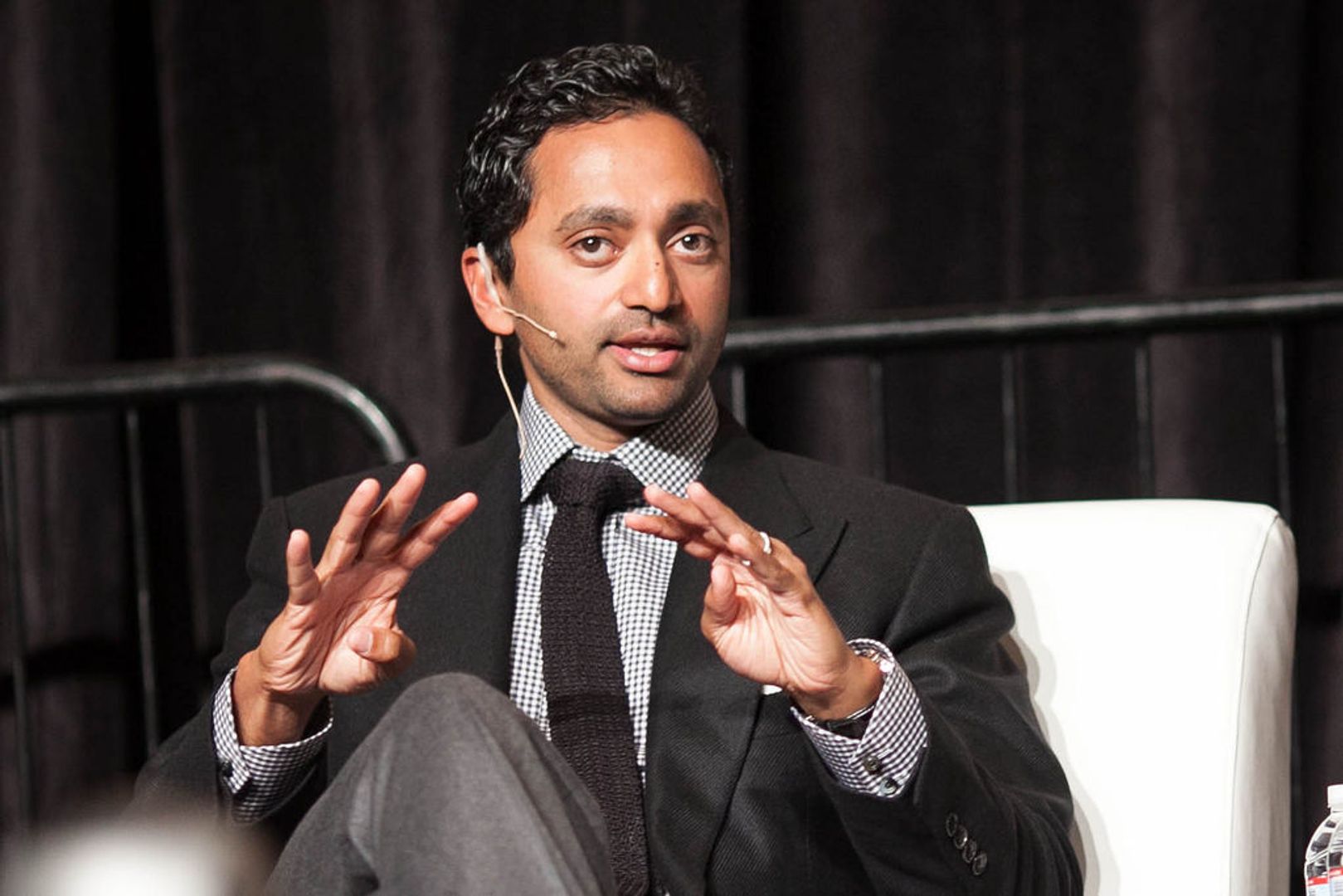
What to know : Chamath Palihapitiya argues bitcoin lacks the privacy and fungibility required for central banks to hold it as a structural reserve asset, suggesting gold still better satisfies those criteria. On a separate podcast discussion, Erik Voorhees defended Strategy’s approach of accumulating bitcoin, while investor Jason Calacanis raised concerns about complex financial metrics and transparency.
Billionaire investor Chamath Palihapitiya, a venture capitalist and former Facebook executive, recently argued that bitcoin has a “structural failing” that could limit its long term adoption by governments and central banks.
Speaking on People by WTF podcast during the World Government Summit, Palihapitiya said that for a digital asset to become widely accepted at the sovereign level it must possess characteristics that make it suitable for central bank reserves.
According to Palihapitiya, bitcoin falls short on two important dimensions, privacy and fungibility. Fungibility refers to the idea that each unit of an asset is interchangeable and indistinguishable from another. With physical cash or gold, one unit is effectively identical to any other unit.
Bitcoin, however, operates on a transparent blockchain where transaction histories are permanently recorded. Because coins can be traced back through prior transactions, some units can become associated with illicit activity, meaning certain coins may be treated differently than others.
Palihapitiya argues that this traceability weakens bitcoin’s fungibility and reduces its suitability as a reserve asset for central banks.
So far, only one central bank has publicly disclosed purchasing bitcoin, the Czech National Bank.
By contrast, he says gold satisfies both privacy and fungibility requirements for sovereign institutions, which is why central banks continue to hold large gold reserves.
For that reason, Palihapitiya suggested bitcoin may struggle to achieve another tenfold increase in market capitalization driven by central bank demand. Instead, he hinted that other crypto projects or smaller tokens may eventually address these limitations.
Palihapitiya remains optimistic about innovation in digital finance, particularly stablecoins, which are cryptocurrencies designed to maintain a stable value by being pegged to assets such as the US dollar or commodities.
He pointed to the potential for gold backed stablecoins as an example of financial innovation that could reduce friction in payments and settlement.
Meanwhile, Jason Calacanis, another venture investor and co host of the All In podcast, discussed bitcoin related corporate strategies with crypto entrepreneur Erik Voorhees on the This Week in Startups podcast. Calacanis asked Voorhees about Strategy (MSTR), formerly MicroStrategy, the public company known for holding the largest corporate treasury of bitcoin.
Voorhees, a longtime Bitcoin advocate and founder of crypto exchange ShapeShift, said the strategy of accumulating as much bitcoin as possible is coherent if the company strongly believes in bitcoin’s long term value. Calacanis was more skeptical. He said that when financial structures become difficult to explain or rely on new metrics, such as “community EBITDA”, it raises red flags for him as an investor.
This comes as hedge fund billionaire Ray Dalio recently remarked that “there is only one gold.
免责声明:本文章仅代表作者个人观点,不代表本平台的立场和观点。本文章仅供信息分享,不构成对任何人的任何投资建议。用户与作者之间的任何争议,与本平台无关。如网页中刊载的文章或图片涉及侵权,请提供相关的权利证明和身份证明发送邮件到support@aicoin.com,本平台相关工作人员将会进行核查。


