Just when everyone was focused on Nvidia's "most important financial report in history," the market provided a lesson for all.
In the early hours of February 26 in the East Eight Time Zone, chip giant Nvidia delivered a dazzling report card. Revenue, profit, and guidance all exceeded expectations, and the stock price surged by 4% in after-hours trading. However, a strange scene occurred—just a few hours later, the stock price plummeted and turned negative. What secrets are hidden in this fire-and-ice market movement?
More intriguingly, on the same day Nvidia released its financial report, Bitcoin unexpectedly surged over 7%, nearly approaching the 69000 dollar mark. Although the two seem unrelated, there are currents flowing beneath.
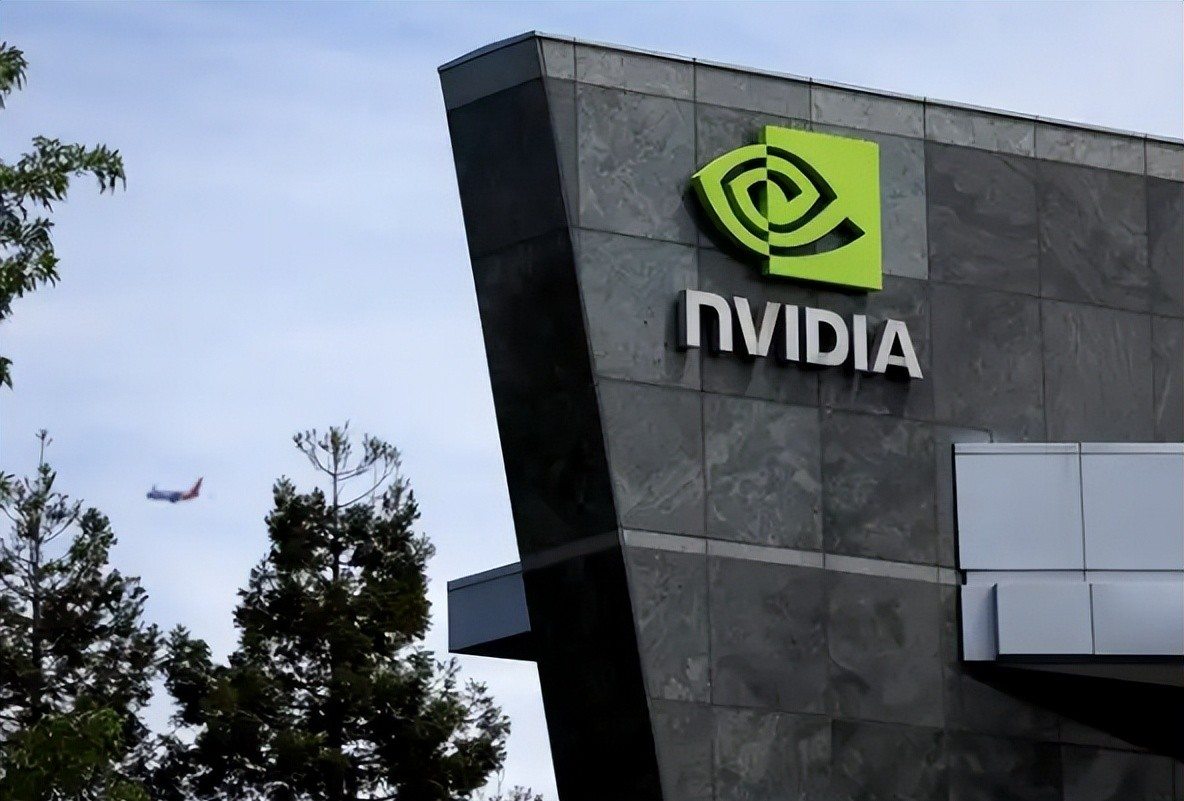
1. The Numbers Don't Lie: Nvidia is Still That Money Printer
● As of January 25, Nvidia's revenue for the fourth fiscal quarter reached 68.1 billion dollars, a year-on-year increase of 73%, far exceeding market expectations of 65.6 billion dollars. Even more astonishing, the crown jewel—data center business contributed 62.3 billion dollars, up more than 75% year-on-year. What does this mean? It equates to one quarter's revenue matching the annual size of some chip giants.
● In terms of profit, the results were equally stunning. The adjusted earnings per share were 1.62 dollars, surpassing the expected 1.53 dollars. The gross margin even climbed to 75.2%, reaching a new high in a year and a half.
● But what truly excited the market was Nvidia's outlook for the next quarter. The company expects first-quarter revenue to reach around 78 billion dollars, while Wall Street's previous average expectation was only 72.6 billion dollars. This huge expectation gap directly ignited the first wave of increase in after-hours trading.
● From an annual perspective, Nvidia's total revenue for fiscal year 2026 will exceed 215.9 billion dollars, growing 65% year-on-year, setting a historical record.
2. Power Hunger: Where Huang Renxun's Confidence Comes From
"Our customers are competing to invest in AI computing—the factory that drives the AI industrial revolution and its future growth."
● This statement from Nvidia founder Huang Renxun reveals the core logic. While the outside world worries about when the AI bubble might burst, Huang sees the power hunger phenomenon is just beginning. He put forward a heavyweight perspective in the financial report: "The inflection point for intelligent AI has arrived."
● What does this mean? In simple terms, enterprise-level AI applications are moving from "trial" to "scaling up." Huang specifically mentioned that the application of AI agents by enterprises is growing rapidly. This is no longer a toy in the laboratory but a real productivity tool.
● Who is paying the bill? The answer is clear: Microsoft, Amazon, Google, Meta, Oracle… all tech giants are frantically buying Nvidia's chips. The capital expenditure plans of these clients have reached nearly 700 billion dollars, far exceeding the previous target of 500 billion dollars.
● What is even more noteworthy is that Nvidia disclosed a key piece of information for the first time: the Grace Blackwell system accounted for two-thirds of the data center revenue in the fourth quarter. This means the penetration rate of the new generation architecture is far exceeding expectations.
3. Fire and Ice: The Truth Behind the After-Hours Plunge
Since the financial report was so brilliant, why did the stock price rise and then fall in after-hours trading? This precisely exposes the biggest contradiction in the current market—the expectations game has entered a heated stage.
Daniel Newman, CEO of the technology research and consulting firm Futurum Group, pointed out, "For Nvidia, just producing a good quarterly performance is not enough. They must deliver a perfect quarterly performance."
This psychological expectation is reflected at several levels:
● First, the gaming business fell short of expectations. Fourth-quarter gaming revenue was 3.73 billion dollars, lower than the market expectation of 4.01 billion dollars. Nvidia's CFO explained that this was due to the natural decline of channel inventory after strong holiday demand. However, investors still caught this flaw.
● Second, supply concerns linger. Although Nvidia claims to have "strategically secured inventory and capacity to meet demand for the next few quarters," the shadow of memory chip shortages has not dissipated. Samsung's newly released smartphones have already raised their prices due to rising storage costs, and the pressure throughout the supply chain is being transmitted.
● Third, there is a demand for profit-taking. Nvidia's stock price has lagged behind other chip stocks this year, but the long-term increase remains impressive. Some funds have chosen to "sell the facts" after the good news landed, which is a common operation in the capital markets.
4. The "Invisible Connection" Behind Bitcoin's Surge
On the same day Nvidia released its financial report, Bitcoin suddenly surged over 7%. Is this just a coincidence? Upon examining the data closely, one can discover the subtle connection between the two.
● The correlation between Bitcoin and the Nasdaq 100 index has reached 90%. Among the key weighted stocks in the Nasdaq, Nvidia is the largest pillar. When the leader in AI computing delivers an earnings report that exceeds expectations, the risk appetite across the entire tech sector is boosted, and cryptocurrencies naturally respond.
● A deeper logic is the expectation of liquidity. Caroline Mauron, co-founder of Orbit Markets, pointed out that the recent rise in crypto-assets might reflect a "buying on dips" behavior after sustained sell-offs. Daniel Reis-Faria, CEO of ZeroStack, explained the secret: Bitcoin is now deeply embedded in the overall market system, "when liquidity tightens, volatility will rise."
● In other words, Nvidia's financial report is not only a weather vane for AI but also a thermometer for global risk assets. When this largest stock stabilizes, all high-beta assets will breathe a sigh of relief.
5. Concerns and Confidence: What Other Key Signals Exist?
● First, the risk of client concentration. Brian Mulberry, Chief Market Strategist at Zacks Investment Management, bluntly stated that if key clients like OpenAI face financing difficulties or competitors of custom AI chips take away market share, Nvidia will face pressure.
● Secondly, the movements of the U.S. Department of Defense. According to reports, the Department is pressuring AI company Anthropic to adjust its models to meet military needs. This reflects the ethical wrestling within the militarization of AI technology, which could lead to new regulatory uncertainties.
● But Nvidia's confidence is equally solid. The company’s CFO clearly stated that they have strategically locked in inventory and capacity to meet demand for the coming quarters. SK Hynix has just announced a $15 billion investment to expand production, and the supply chain is operating at full speed.
● More crucially, Mulberry added a core point: regardless of how demand changes, Nvidia remains the most favored hardware in the AI market.
Returning to the initial question: Is Nvidia's financial report a culmination of positive news or is it a fuel-up in the air? The answer might be hidden in Huang Renxun's seemingly plain words—"Computing demand is growing exponentially."
As long as this underlying logic remains unchanged, the short-term stock price fluctuations are just noise. As for Bitcoin's simultaneous celebration, it feels more like a resonant response to this logic.
The only certainty is that the arms race for AI computing power has just entered the second half.
Join our community to discuss and grow stronger together!
Official Telegram community: https://t.me/aicoincn
AiCoin Chinese Twitter: https://x.com/AiCoinzh
OKX benefits group: https://aicoin.com/link/chat?cid=l61eM4owQ
Binance benefits group: https://aicoin.com/link/chat?cid=ynr7d1P6Z
免责声明:本文章仅代表作者个人观点,不代表本平台的立场和观点。本文章仅供信息分享,不构成对任何人的任何投资建议。用户与作者之间的任何争议,与本平台无关。如网页中刊载的文章或图片涉及侵权,请提供相关的权利证明和身份证明发送邮件到support@aicoin.com,本平台相关工作人员将会进行核查。


