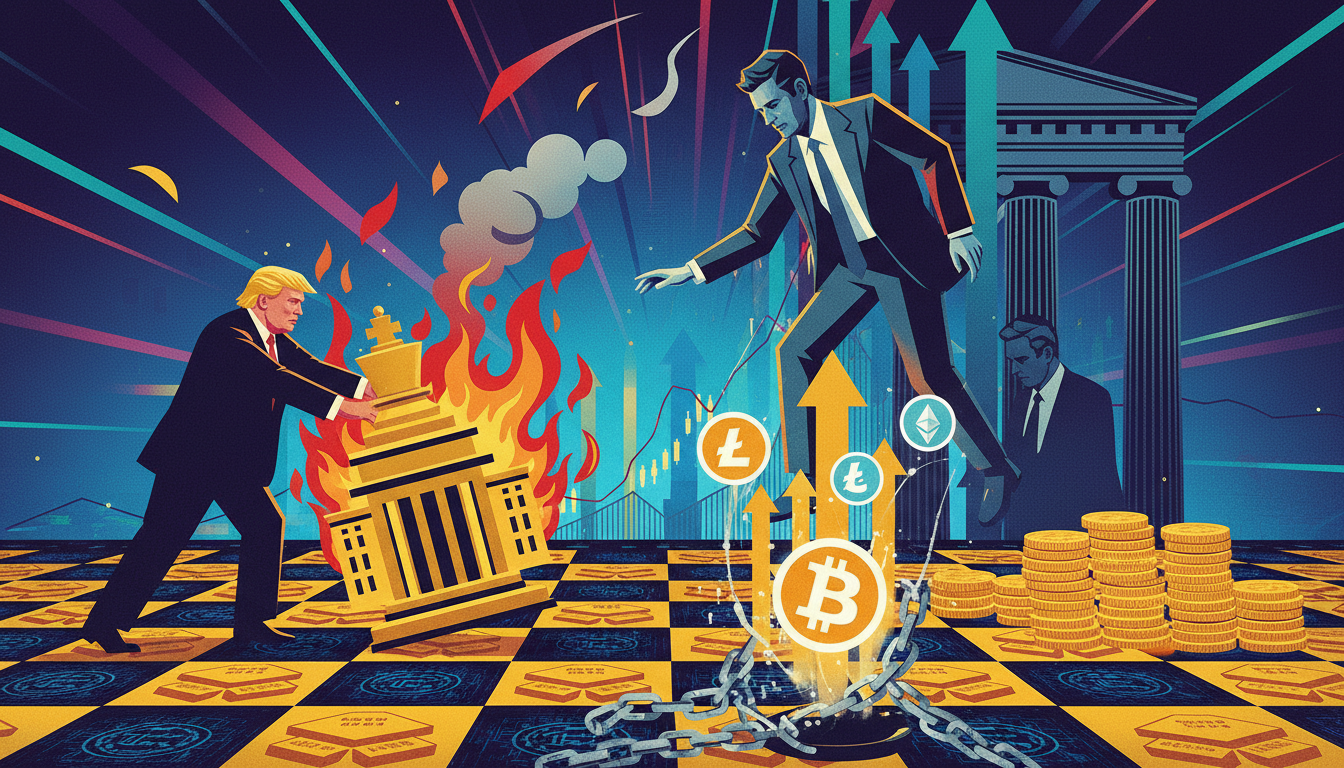
In the Eastern Eight Time Zone this week, U.S. President Trump officially nominated former Federal Reserve Governor Kevin Warsh to serve as the new Chairman of the Federal Reserve. This personnel choice was quickly interpreted by global markets as a key signal regarding the direction of monetary policy in the coming years. Current mainstream expectations among institutions are focused on a "moderate rate cut + possible acceleration of balance sheet reduction" neutral hawkish combination, which neither reignites the extreme easing of the pandemic period nor suggests a rapid shift to an aggressive easing cycle. Within this framework, the dollar interest rate differential and global liquidity logic face repricing, while the narrative surrounding assets like Bitcoin may shift from "mindless betting on loose liquidity" to a new phase of "seeking institutional hedges in a high-interest-rate world."
Hawkish Veteran Returns: Warsh's Background and Labels
● Career Trajectory Review: From 2006 to 2011, Warsh entered the core decision-making of the Federal Reserve as a governor, participating in key decisions during the subprime crisis and the global financial crisis. He has long been seen within the Fed system as a technical bureaucrat familiar with Wall Street and attentive to market structure. For institutional investors, he is not a stranger but rather a "veteran returning" with a clear policy preference formed during the crisis cycle, which explains why the nomination was viewed as a continuation rather than a break from existing policy logic.
● Consensus on Neutral Hawkishness: The mainstream understanding of Warsh's monetary policy inclination in the market centers on the four words "neutral hawkish": on one hand, he is not an extreme hawk in a dogmatic sense and acknowledges the need for flexible monetary policy in the face of economic downturns; on the other hand, he is clearly more sensitive than typical doves to the risks of rising inflation and asset price bubbles, maintaining a high level of vigilance regarding "overly cheap funding" and long-term financial stability issues. This stance leads institutions to be more inclined to exclude extreme easing scenarios when pricing future interest rate paths.
● Expectations Already Priced In: Research briefs indicate that the market had partially priced in related expectations prior to this nomination, making the actual announcement more of a formal confirmation of the established policy framework. In other words, Warsh's emergence did not break the market's discussion thread over the past few months surrounding "moderate rate cuts + possible acceleration of balance sheet reduction," but rather lent greater credibility to this framework at the personnel level, transitioning asset pricing from "guessing the path" to "verifying the path," with volatility stemming more from minor adjustments in pace rather than directional reversals.
Moderate Rate Cuts and Accelerated Balance Sheet Reduction: Repricing of Interest Rate Paths
● Probability Signals: Expectations for aggressive easing are limited: according to data from a single source, the probability of the Federal Reserve cutting rates by 25 basis points by March is only 15.3%, and the probability of a cumulative 25 basis point cut by June is 48.3%. This set of numbers conveys a clear signal: the market is not betting on a scenario of continuous, large rate cuts in the short term, but is closer to "cautious exploratory easing." Under the premise of Warsh being viewed as neutral hawkish, this probability distribution also forces funds to reassess the win rate and cost-effectiveness of "easing trades."
● Impact of Combined Policies on Liquidity: Institutions generally summarize the current framework as "small step rate cuts + possible acceleration of balance sheet reduction." Small step rate cuts can release limited pressure at the nominal interest rate level, alleviating the squeeze on the real economy and high-leverage sectors; however, if the balance sheet is simultaneously reduced more quickly to reclaim base money, the overall liquidity environment remains tight. On the curve level, short-term rates may slightly decline due to rate cut expectations, while balance sheet reduction expectations will push up long-term term premiums, resulting in a coexistence of steepening and distortion of the yield curve, introducing new uncertainties into asset pricing models.
● Reshaping of Real Interest Rates and Risk Appetite: In a combination of moderate rate cuts but accelerated balance sheet reduction, long-term inflation expectations are suppressed, while the decline in nominal rates is limited, meaning real interest rates hover at high levels. High real interest rates enhance the relative returns of risk-free assets, raising the discount rate threshold for all risk assets and creating "downward pressure" on the valuations of high-valuation, long-term cash flow assets. For high-volatility targets like crypto assets, this environment no longer rewards a simple "bet on liquidity" risk appetite but forces funds to pay more attention to the hedging properties of assets and their institutional hedging functions.
The Dollar Regains Confidence: Rebalancing of Safe Haven and Interest Rate Differentials
● Concentrated Institutional Views: Investec Chief Economist Philip Shaw pointed out that Warsh's nomination "reduces the risk of a weaker dollar, but downside risks still exist"; Danske Bank analyst Kirstine Kundby-Nielsen bluntly stated that this personnel choice "supports the dollar." Although the two institutions use different wording, they both point to one thing: the market's original bet on a "significant long-term weakening of the dollar" needs to be reassessed in terms of probability and position size within the neutral hawkish framework.
● Interest Rate Differentials and Balance Sheet Reduction Expectations Supporting the Dollar: The neutral hawkish path supports the dollar through two main lines: first, interest rate differential expectations—against the backdrop of other major economies also under pressure, even with moderate rate cuts, the U.S. may still maintain relatively higher policy rates, reinforcing the yield advantage of the dollar; second, balance sheet reduction expectations—accelerating the contraction of the balance sheet relatively tightens global dollar liquidity, giving the dollar an additional premium in terms of "scarcity." With these two forces combined, the narrative of "the dollar entering a long-term bear market" is significantly weakened, and in some institutional models, it has even been downgraded to a marginal scenario.
● Repricing of Global Risk Assets and Emerging Markets: Once the market recognizes the mid-term picture of "increased dollar resilience," global asset portfolios must face repricing pressure. For emerging markets, a stronger dollar + tighter global liquidity means increased capital outflows, rising financing costs, and renewed pressure on local currency depreciation; for risk assets like U.S. stocks, the combination of high real interest rates and a strong dollar compresses profit premium space. When weighing risk and return, funds will be forced to reallocate weights between U.S. Treasuries, gold, and high-volatility assets, and any assumptions of an era of "costless beta" need to be revised.
Shift in Crypto Narrative: From Mindless Easing to Institutional Hedging
● Boundaries of Warsh's "Crypto-Friendly" Label: Currently, in market discourse, there are frequent mentions of Warsh's relatively friendly view towards crypto assets, but research briefs clearly state that there is a lack of public details regarding his stance on Bitcoin or crypto assets. In the absence of verifiable information, it can only be cautiously stated: the market is concerned that he may not hold an extreme hostile attitude, but it cannot be packaged as "a staunch supporter." Overemphasizing the "pro-crypto" label may mislead investors to overlook the macro variables that truly impact valuations—interest rates and liquidity.
● Shift in Narrative Focus from Liquidity Trading to Digital Hedging: In an environment of "moderate rate cuts + high real interest rates," assets like Bitcoin find it difficult to continue relying on the old narrative of "extreme easing and liquidity flooding" to gain premiums. A more realistic path is to shift from pure liquidity beta to competing roles as "digital safe-haven assets and institutional hedging tools": on one hand, some funds may view them as alternative positions to hedge against long-term currency depreciation and institutional uncertainty; on the other hand, the high-interest-rate environment will filter out short-term speculation based on costless financing and pure volatility chasing, allowing medium to long-term allocators willing to endure cyclical fluctuations to occupy a larger voice in the narrative.
● Reallocation of Weights Between U.S. Treasuries, Gold, and Crypto: When the dollar strengthens and overall risk appetite is limited, traditional safe-haven assets—U.S. Treasuries and gold—naturally attract incremental funds: U.S. Treasuries benefit from the certainty of returns brought by high real interest rates, while gold maintains its historical role amid inflation and geopolitical uncertainty. If crypto assets want to carve out a place in this triangular structure, they need to prove themselves as complementary rather than simple substitutes to U.S. Treasuries and gold through attributes like "programmable, non-sovereign, cross-border settlement." The reality of fund allocation may be: increasing the weight of dollar assets and gold while reserving a smaller but more "elastic" position for crypto assets to hedge against tail risks outside the traditional system.
Personnel as Policy Signal: What the Crypto Market Needs to Understand
The core implication of Warsh's nomination is not a dramatic policy pivot but rather a clear signal: the Federal Reserve will not quickly return to an era of extreme easing, but will seek to find a new dynamic balance between inflation control, asset bubble constraints, and financial system stability. For the crypto market, this means a decreased probability of "winning by lying down" liquidity dividends, while the demand to "prove value in a high-interest-rate world" increases. What truly needs to be continuously tracked are the interest rate path and balance sheet reduction pace—how the FOMC dot plot adjusts the long-term interest rate center, whether the communication pace of balance sheet reduction accelerates, and how these variables transmit through fluctuations in the dollar index to total crypto market capitalization and funding structure. Rather than getting caught up in labeling a single individual as "crypto-friendly," it is better to focus on the data and curves: in the coming period, each downward adjustment of the dot plot, every minor adjustment in balance sheet reduction statements, and each round of changes in the correlation between DXY and crypto market capitalization will be the coordinates that the market truly remembers in this round of "Trump betting on Warsh."
Join our community to discuss and grow stronger together!
Official Telegram community: https://t.me/aicoincn
AiCoin Chinese Twitter: https://x.com/AiCoinzh
OKX Benefits Group: https://aicoin.com/link/chat?cid=l61eM4owQ
Binance Benefits Group: https://aicoin.com/link/chat?cid=ynr7d1P6Z
免责声明:本文章仅代表作者个人观点,不代表本平台的立场和观点。本文章仅供信息分享,不构成对任何人的任何投资建议。用户与作者之间的任何争议,与本平台无关。如网页中刊载的文章或图片涉及侵权,请提供相关的权利证明和身份证明发送邮件到support@aicoin.com,本平台相关工作人员将会进行核查。