Original Title: Why BTC and ETH Haven't Rallied with Other Risk Assets
Original Author: @GarrettBullish
Translated by: Peggy, BlockBeats
Editor's Note: In the context of rising asset classes, the phase of stagnation for BTC and ETH is often simply attributed to their "risk asset properties." This article argues that the core issue lies not in the macro environment, but in the crypto market's own deleveraging phase and market structure.
As the deleveraging process nears its end and trading activity declines to low levels, existing capital struggles to counteract the short-term volatility amplified by highly leveraged retail investors, passive funds, and speculative trading. Before new capital and FOMO (fear of missing out) sentiment return, the market is more sensitive to negative narratives, which is a structural outcome.
Historical analogies suggest that this performance is more likely a phase adjustment within a long-term cycle rather than a failure of fundamentals. This article attempts to step outside short-term fluctuations and, from the perspective of cycles and structure, re-understand the current position of BTC and ETH.
The following is the original text:
Bitcoin (BTC) and Ethereum (ETH) have recently significantly underperformed other risk assets.
We believe the main reasons for this phenomenon include: the stage of the trading cycle, market microstructure, and the manipulation of the market by certain exchanges, market makers, or speculative funds.
Market Background
First, the deleveraging decline that began last October has severely impacted high-leverage participants, especially retail traders. A large amount of speculative capital has been washed out, leading to an overall weakening of the market and a tendency towards risk aversion.
At the same time, AI-related stocks in China, Japan, South Korea, and the United States have experienced extremely aggressive rallies; the precious metals market has also undergone a surge driven by FOMO sentiment, resembling a "meme market." The rise of these assets has absorbed a significant amount of retail capital—this is particularly crucial because retail investors in Asia and the U.S. remain the primary trading force in the crypto market.
Another structural issue is that crypto assets have not yet truly integrated into the traditional financial system. In the traditional financial system, commodities, stocks, and foreign exchange can be traded within the same account, with almost no friction in asset allocation switching; however, in reality, transferring funds from TradFi to the crypto market still faces multiple regulatory, operational, and psychological barriers.
Moreover, the proportion of professional institutional investors in the crypto market remains limited. Most participants are not professional investors, lack independent analytical frameworks, and are easily influenced by speculative capital or exchanges that also play market-making roles, thus being swayed by emotions and narratives. Narratives such as "four-year cycles" and "Christmas magic" are repeatedly emphasized, despite lacking rigorous logic and solid data support.
There is a prevalent overly linear way of thinking in the market, such as directly attributing BTC's price fluctuations to a single event like the appreciation of the yen in July 2024, without deeper analysis. Such narratives are often quickly disseminated and have a direct impact on prices.
Next, we will break free from short-term narratives and analyze this issue from an independent thinking perspective.
The Time Dimension is Crucial
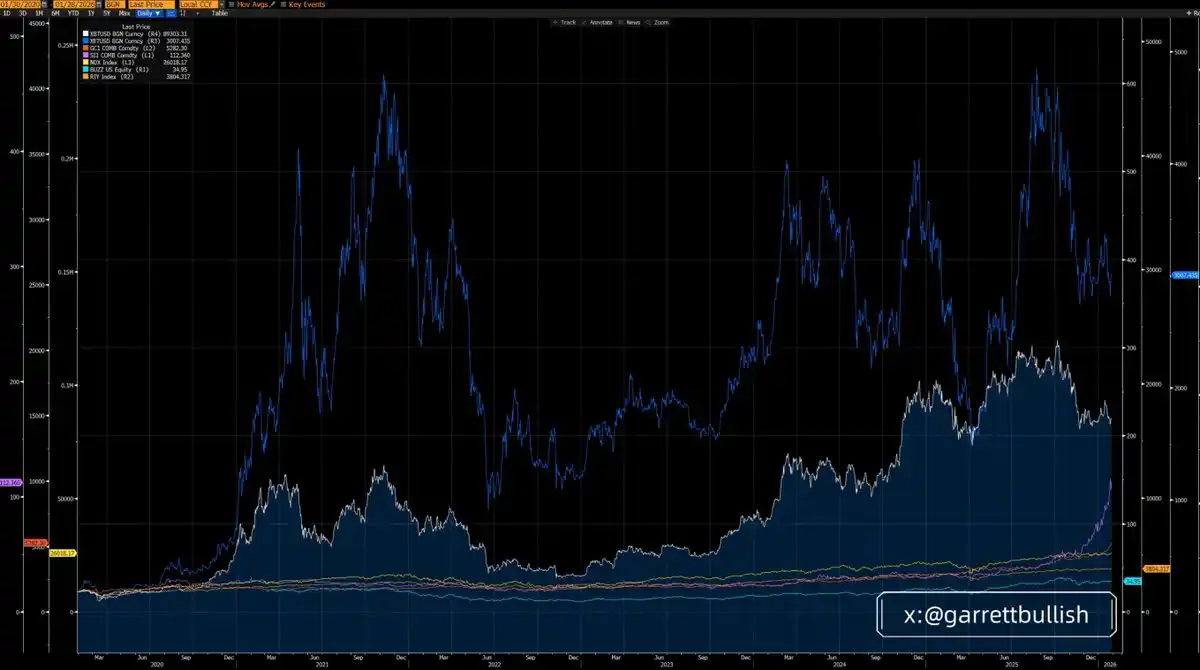
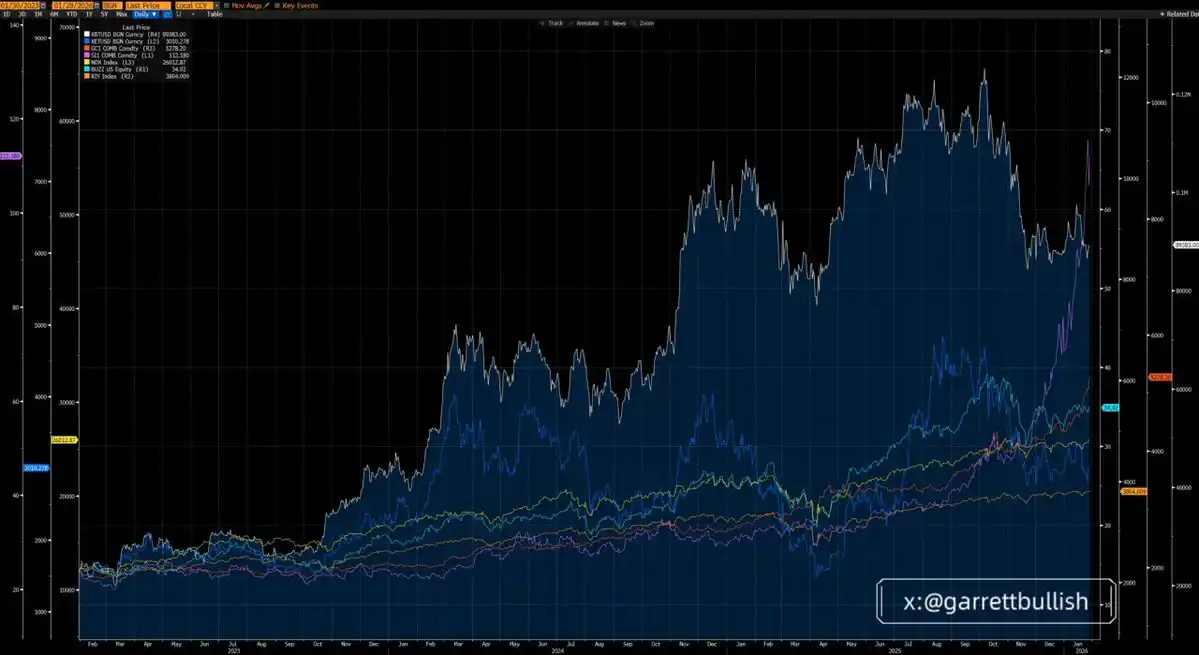
From a three-year cycle perspective, BTC and ETH have indeed underperformed most major assets, with ETH being the weakest performer.
However, when extended to a six-year cycle (since March 12, 2020), BTC and ETH's performance is clearly superior to most assets, with ETH actually becoming the strongest performer.
From a longer time dimension and placed within a macro context, the current so-called "short-term underperformance" is essentially just a mean-reversion process within a longer historical cycle.
Ignoring underlying logic and focusing solely on short-term price fluctuations is one of the most common and fatal errors in investment analysis.
Rotation is a Normal Phenomenon
Before the silver price experienced a short squeeze last October, silver was also one of the worst-performing risk assets; now, under a three-year cycle dimension, silver has become the strongest asset.
This change is highly similar to the current situation of BTC and ETH. Although they have performed poorly in the short term, they remain one of the most advantageous asset classes in the six-year cycle dimension.
As long as the narrative of BTC as "digital gold" and a store of value has not been fundamentally disproven, and as long as ETH continues to integrate with the AI wave and exists as a core infrastructure in the RWA (real-world asset) trend, there is no rational basis to believe they will continue to underperform other assets in the long term.
Again, it is emphasized: ignoring fundamentals and only selecting short-term price trends to draw conclusions is a serious analytical error.


Market Structure and Deleveraging
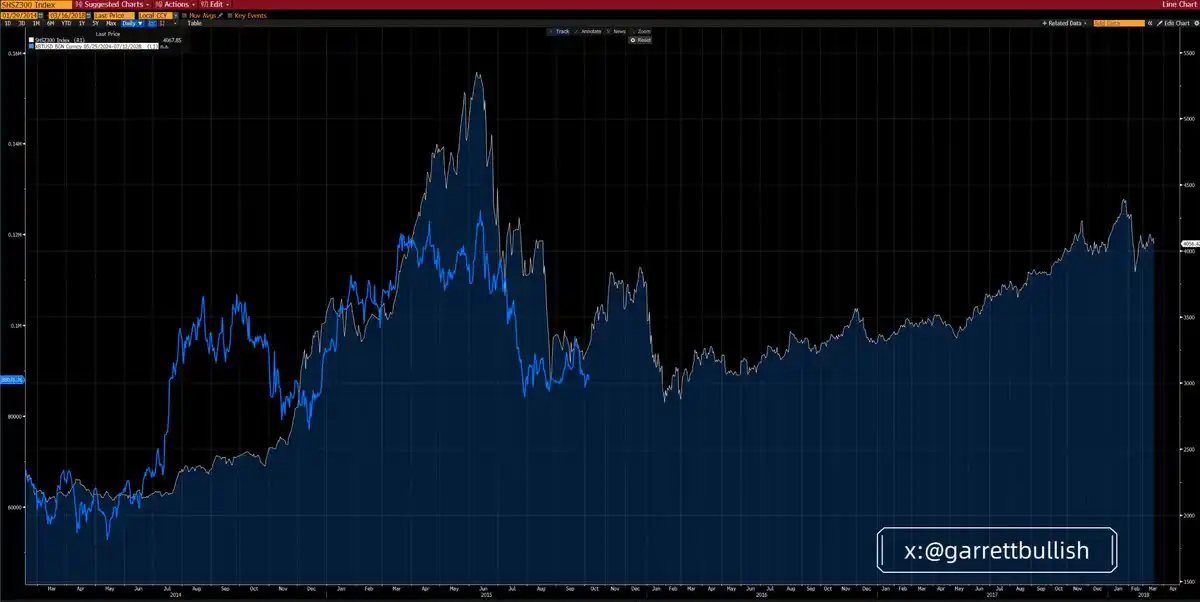
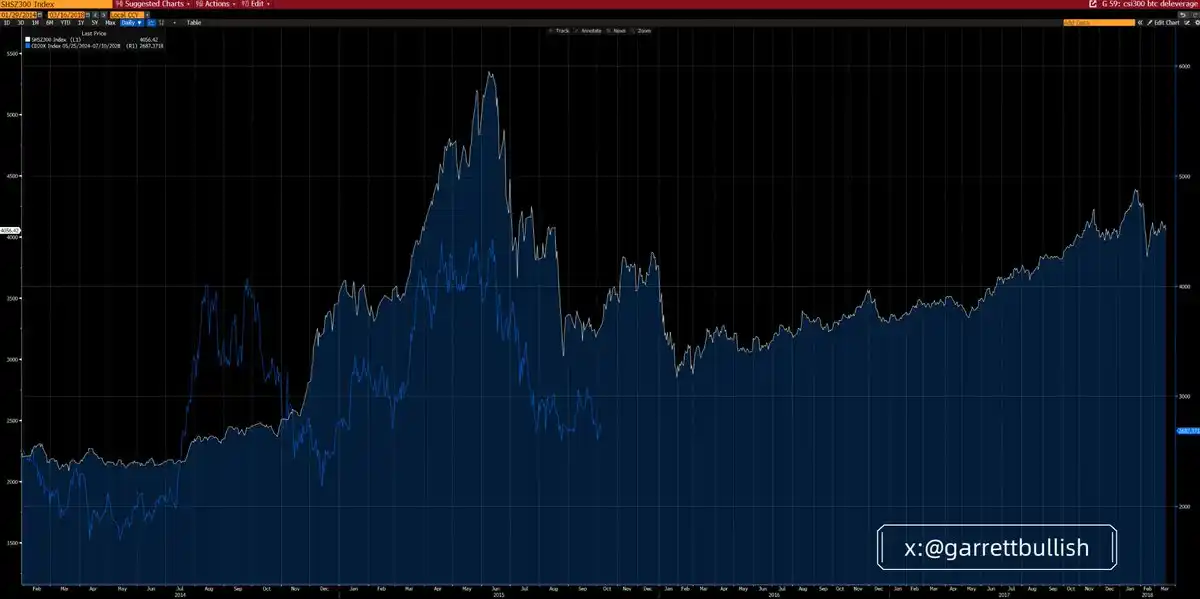
The current crypto market bears a striking resemblance to the environment of the Chinese A-share market entering a deleveraging phase after being driven by high leverage in 2015.
In June 2015, after a leveraged-driven bull market stagnated and a valuation bubble burst, the A-share market entered a three-phase A–B–C decline structure consistent with Elliott Wave theory. After the C wave bottomed, the market experienced several months of sideways consolidation before gradually transitioning into a prolonged bull market.
The core driving force behind that long-term bull market came from blue-chip asset valuations being low, an improving macro policy environment, and significant monetary easing.
Bitcoin (BTC) and the CD20 index have almost completely replicated this "leverage—deleveraging" evolutionary path in this cycle, both in terms of timing and structural form.
The underlying similarities are quite clear: both market environments exhibit the following characteristics—high leverage, extreme volatility, a top driven by valuation bubbles and crowd behavior, repeated deleveraging shocks, a long and slow decline process, continuously decreasing volatility, and a futures market that has long been in a contango structure.
In the current market, this contango structure is reflected in the stock prices of publicly traded companies related to digital asset treasuries (DAT) (such as MSTR, BMNR) being discounted relative to their mNAV (market-adjusted net asset value).
At the same time, the macro environment is gradually improving. Certainty in regulatory aspects is increasing, with legislative pushes like the Clarity Act continuing to advance; the SEC and CFTC are also actively promoting the development of on-chain US equities.
Monetary conditions are also becoming more accommodative: expectations for interest rate cuts are rising, quantitative tightening (QT) is nearing its end, liquidity is continuously injected into the repurchase market, and the market's expectations for the next Federal Reserve chair's stance are becoming increasingly dovish, all contributing to an overall improvement in the liquidity environment.


ETH and Tesla: A Valuable Analogy
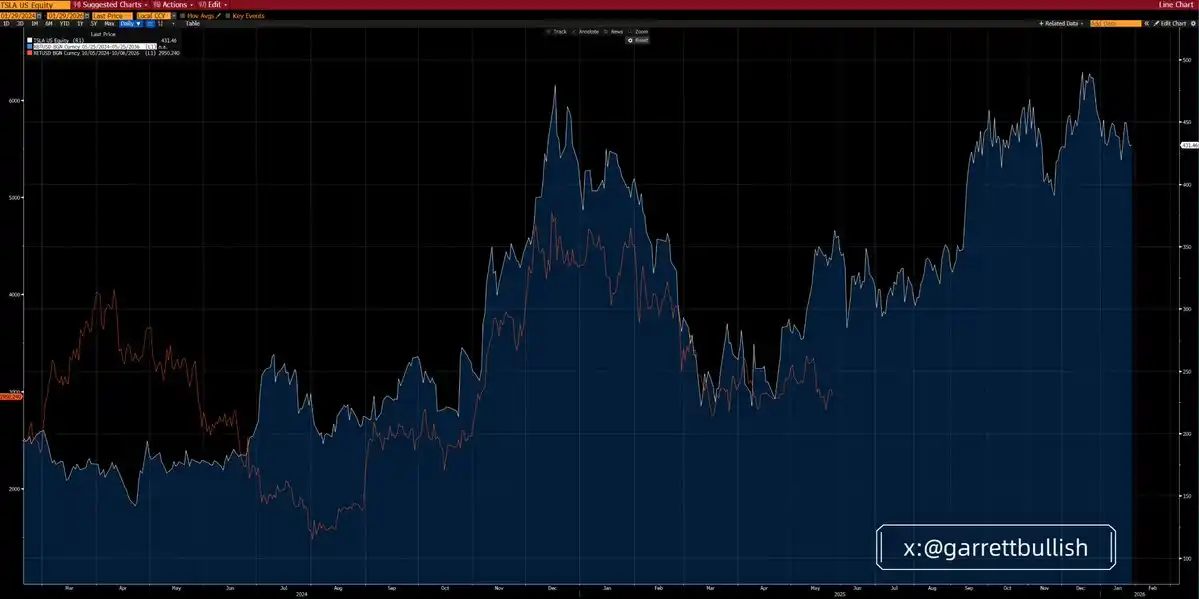
The recent price movements of ETH are highly similar to Tesla's performance in 2024.
At that time, Tesla's stock price first formed a head-and-shoulders bottom structure, then rebounded, consolidated sideways, surged again, and subsequently entered a prolonged topping phase, followed by a rapid decline and a long period of horizontal consolidation at low levels.
It wasn't until May 2025 that Tesla finally broke upward, officially starting a new bull market. Its upward momentum primarily came from growth in sales in the Chinese market, an increased probability of Trump's election, and the commercialization of political networks.
From the current stage, ETH exhibits a high degree of similarity to Tesla in both technical form and fundamental background.
The underlying logic is also comparable: both carry technological narratives and meme attributes, have attracted a large amount of high-leverage capital, experienced extreme volatility, peaked in a valuation bubble driven by crowd behavior, and subsequently entered a repeated deleveraging adjustment cycle.
As time progresses, market volatility gradually decreases, while fundamentals and the macro environment continue to improve.


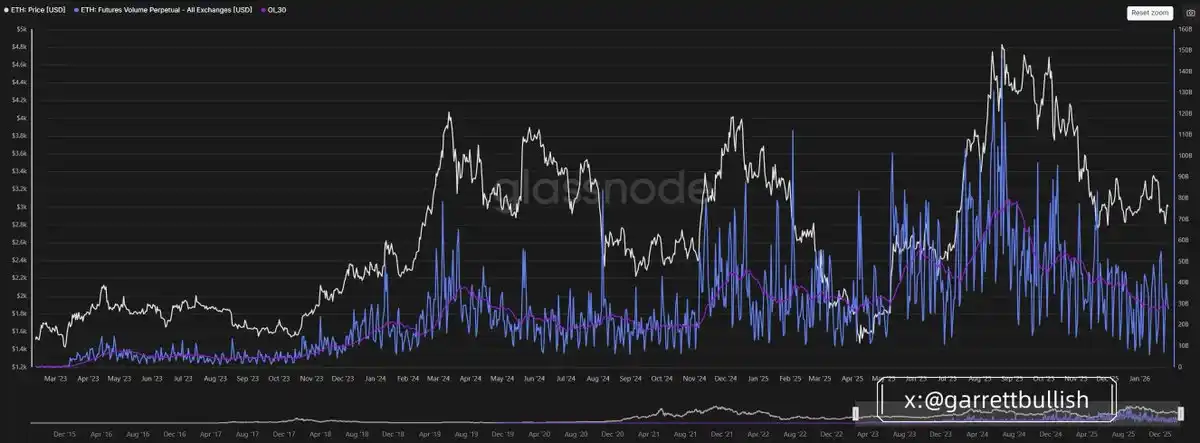
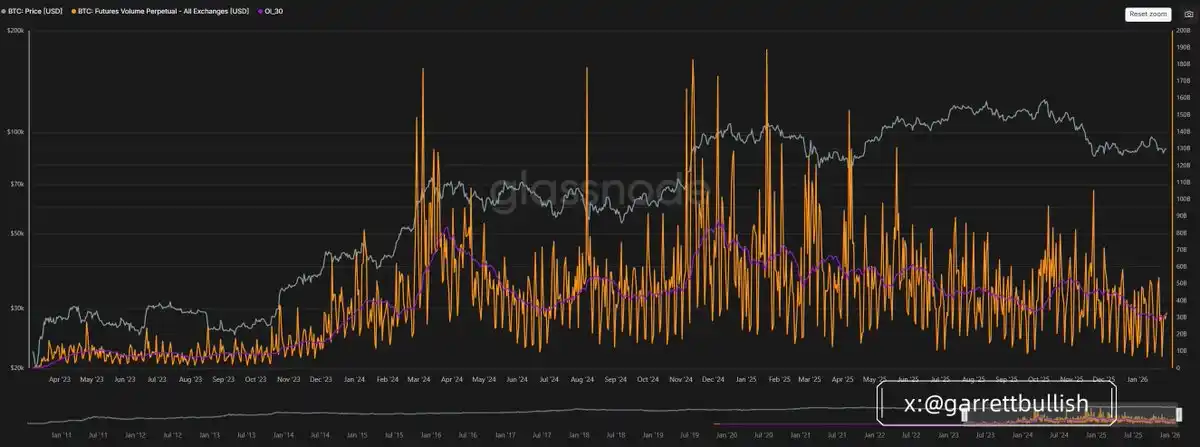
From the perspective of futures trading volume, the market activity of BTC and ETH is nearing historical lows, indicating that the deleveraging process is approaching its end.
Are BTC and ETH "Risk Assets"?
Recently, a rather strange narrative has emerged in the market: defining BTC and ETH simply as "risk assets" and using this to explain why they have not followed the rise of U.S. stocks, A-shares, precious metals, or base metals.
By definition, risk assets typically exhibit high volatility and high beta characteristics. From both behavioral finance and quantitative statistical perspectives, the U.S. stock market, A-shares, base metals, BTC, and ETH all meet this standard and often benefit in a "risk-on" environment.
However, BTC and ETH also possess additional attributes. Due to the existence of the DeFi ecosystem and on-chain settlement mechanisms, they exhibit safe-haven characteristics similar to precious metals in certain contexts, especially during times of rising geopolitical pressure.
Simply labeling BTC and ETH as "pure risk assets" and asserting that they cannot benefit from macro expansion is essentially a narrative that selectively emphasizes negative factors.
Commonly cited examples include:
The potential tariff conflict between the EU and the U.S. triggered by the Greenland issue
The Canada-U.S. tariff dispute
And the potential military conflict between the U.S. and Iran
This mode of argumentation is essentially a form of "cherry-picking" and double standards.
Theoretically, if these risks are indeed systemic, then all risk assets should decline simultaneously, except for base metals that might benefit from war demand. However, the reality is that these risks do not have the foundation to escalate into significant systemic shocks.
Demand related to AI and high technology remains extremely strong and is largely unaffected by geopolitical noise, especially in core economies like China and the U.S. Therefore, the stock market has not substantially priced in these risks.
More importantly, most of these concerns have been downgraded or factually disproven. This raises a key question: why are BTC and ETH unusually sensitive to negative narratives while responding slowly to positive developments or the fading of negative factors?
The Real Reason
We believe the reason primarily stems from structural issues within the crypto market itself. The current market is at the tail end of a deleveraging cycle, with overall participant sentiment being tight and highly sensitive to downside risks.
The crypto market is still dominated by retail investors, with limited participation from professional institutions. The fund flows into ETFs reflect more of a passive following sentiment rather than an active allocation based on fundamentals and judgment.
Similarly, most DAT (Digital Asset Treasury) accumulation methods tend to be passive—whether through direct operations or via third-party passive fund managers, they typically employ non-aggressive algorithmic trading strategies like VWAP and TWAP, with the core goal of reducing intraday volatility.
This stands in stark contrast to speculative funds. The primary goal of the latter is precisely to create intraday volatility—at this stage, this volatility is more pronounced in the downward direction, used to manipulate price behavior.
At the same time, retail traders generally use 10–20 times leverage. This makes exchanges, market makers, or speculative funds more inclined to profit from the market's microstructure rather than endure medium- to long-term price fluctuations.
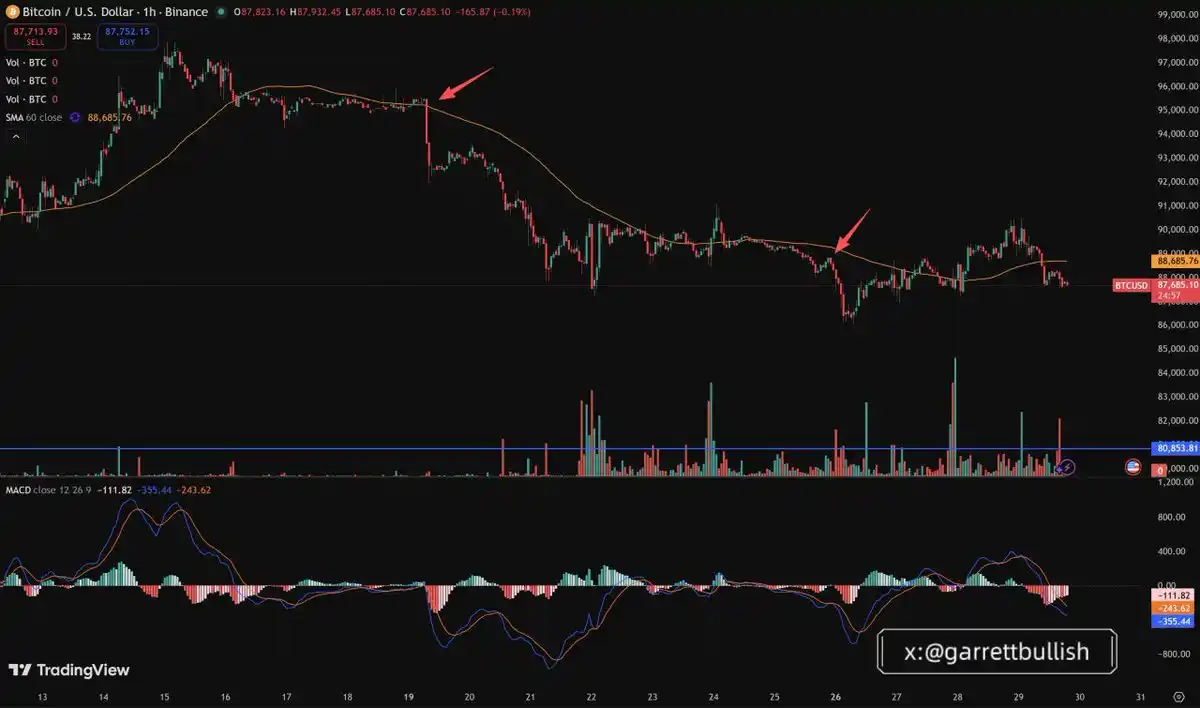
We often observe concentrated sell-offs during periods of thin liquidity, especially when Asian or U.S. investors are asleep, such as from midnight to 8 AM Asian time. Such volatility often triggers a chain reaction, including forced liquidations, margin calls, and passive selling, further amplifying the decline.

In the absence of substantial new capital inflows or a return of FOMO sentiment, relying solely on existing capital is insufficient to counteract the aforementioned types of market behavior.
Definition of Risk Assets
Risk assets refer to financial instruments that possess certain risk characteristics, including stocks, commodities, high-yield bonds, real estate, and currencies.
Broadly speaking, risk assets are any financial securities or investment tools that are not considered "risk-free." The common characteristic of these assets is that their prices are volatile, and their value may change significantly over time.
Common Types of Risk Assets Include:
Stocks:
Shares of publicly traded companies, whose prices are influenced by various factors such as market conditions and company performance, and can exhibit significant volatility.
Commodities:
Physical assets like crude oil, gold, and agricultural products, whose prices are primarily affected by changes in supply and demand.
High-Yield Bonds:
Bonds that offer higher interest rates due to lower credit ratings, but also come with higher default risks.
Real Estate:
Investments in immovable property, whose value fluctuates with market cycles, economic conditions, and policy changes.
Currencies:
Various currencies in the foreign exchange market, whose prices can rapidly fluctuate due to geopolitical events, macroeconomic data, and policy changes.
Main Characteristics of Risk Assets
Volatility
The prices of risk assets frequently fluctuate, which can lead to both gains and losses.
Coexistence of Returns and Risks
Generally, the higher the risk of an asset, the higher the potential return, but at the same time, the probability of incurring losses is also greater.
High Sensitivity to Market Environment
The value of risk assets is influenced by various factors, including interest rate changes, macroeconomic conditions, and investor sentiment.
免责声明:本文章仅代表作者个人观点,不代表本平台的立场和观点。本文章仅供信息分享,不构成对任何人的任何投资建议。用户与作者之间的任何争议,与本平台无关。如网页中刊载的文章或图片涉及侵权,请提供相关的权利证明和身份证明发送邮件到support@aicoin.com,本平台相关工作人员将会进行核查。