ETH staking data reversal: exit clears to zero VS entry surges by 1.3 million coins, when to buy the dip?

CN
1 day ago

Original | Odaily Planet Daily (@OdailyChina)

Author | Dingdang (@XiaMiPP)

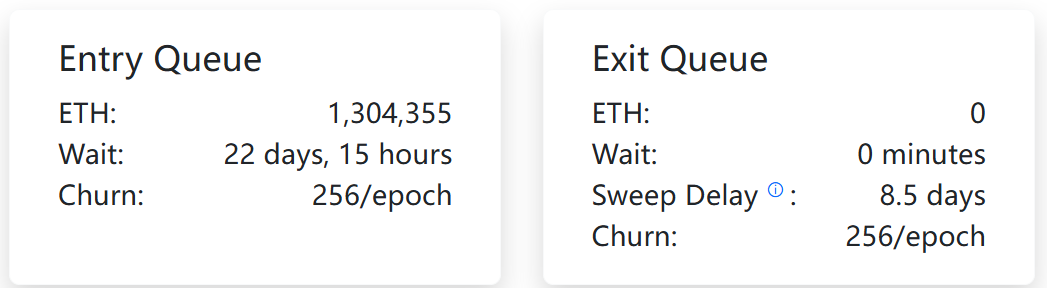
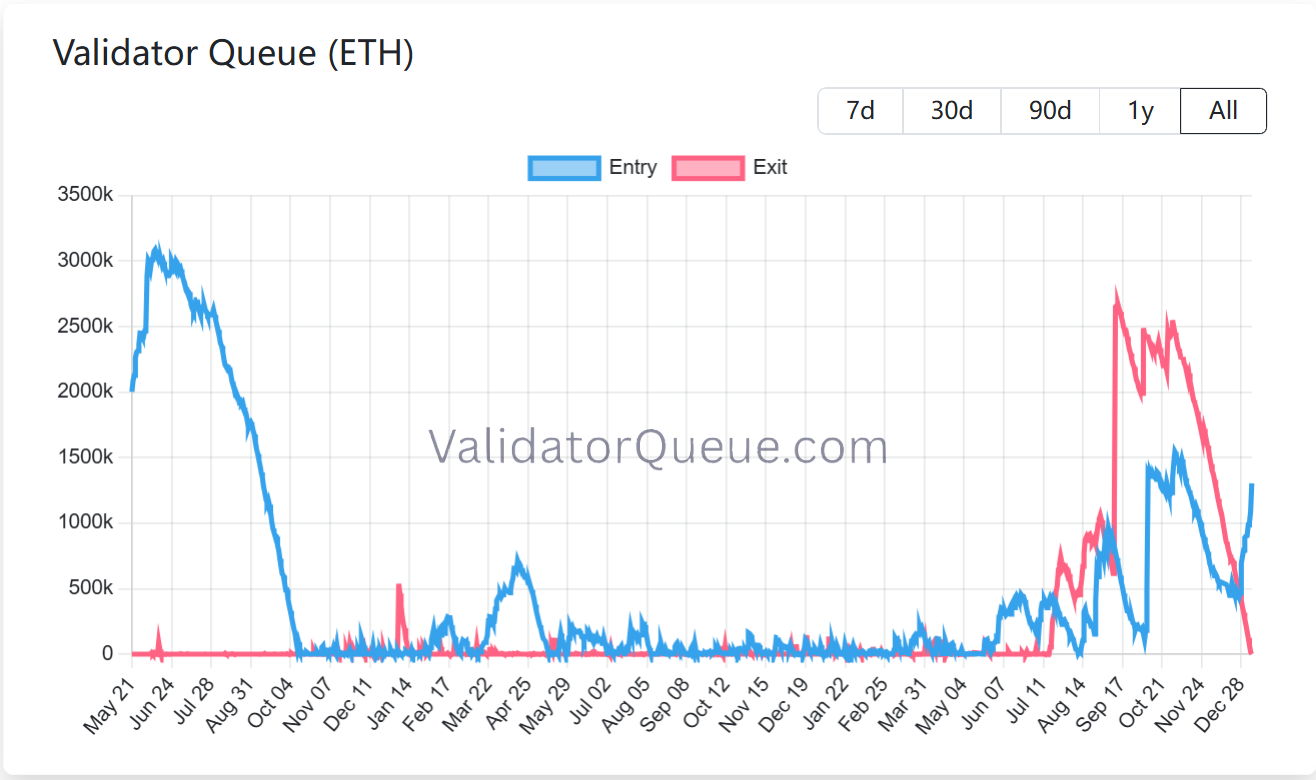
On January 7, the staking exit queue under Ethereum's PoS mechanism officially cleared. At least from on-chain data, the prolonged exit pressure over the past few months has finally been completely digested, and no new large-scale redemption requests have been observed.

At the same time, the scale of entries into the staking queue has significantly increased, with the current queue size rising to approximately 1.3044 million ETH, with a waiting time of about 22 days and 15 hours. This situation has almost completely reversed compared to mid-September last year.

At that time, the price of ETH was at a peak of about $4,700, and market sentiment was high, but the staking side showed a different attitude: 2.66 million ETH chose to exit staking, with waiting times in the exit queue exceeding 40 days at one point. In the following three and a half months, the price of ETH fell by about 34%, retreating from $4,700 to $3,100.

Now, after the price has undergone a deep correction, the exit queue has finally been fully digested.

Is the staking queue a "sentiment indicator," but not a price signal?

Generally speaking, changes in the validator queue are seen as an important barometer for observing market sentiment. The underlying logic is that Ethereum's PoS mechanism does not allow nodes to enter and exit freely to ensure consensus stability, but instead regulates the rhythm of staking and exit behaviors through a flow control mechanism.

Therefore, when the price of ETH is at a high stage, exit demand tends to accumulate, and some stakers may choose to realize profits. However, the potential selling pressure does not release instantly but is "stretched" on-chain through the exit queue; when exit demand gradually diminishes or is completely digested, it may indicate that a round of structural selling pressure is coming to an end.

From this perspective, the clearing of the exit queue this time, along with the simultaneous increase in entries, indeed constitutes a change worth noting. However, I believe that while this change superficially creates a positive resonance, its influence on market prices—note the term "influence"—is not equivalent to the "high exit, low entry" phase of September. This is because the ETH entering the staking queue does not equate to "new funds actively buying ETH at this moment." A significant portion of the ETH entering staking may have already been accumulated at an earlier stage, simply choosing to reallocate at the current time. Therefore, the rise in the staking queue reflects more of a change in preference for long-term returns, network security, and the stability of staking rewards, rather than a significant enhancement of immediate price demand. This also means that the current improvement in queue structure leans more towards expectation repair rather than exerting equal strength on short-term prices.

Nevertheless, the significant growth in the current staking entry queue is still worth attention. The main driving force behind this is BitMine, the largest DAT treasury company in Ethereum. CryptoQuant data shows that BitMine has staked approximately 771,000 ETH in the past two weeks, accounting for 18.6% of its approximately 4.14 million ETH holdings.

This means that the current trend in staking is driven by a single large institution's asset allocation behavior, rather than a result of the overall market risk appetite warming up. Therefore, it cannot be simply interpreted as a "return of overall bullish sentiment." However, in the emerging and unevenly distributed liquidity market of the crypto industry, the actions of large institutions often more easily and likely provide a certain degree of emotional support and expectation repair to the market in the short term.

As for whether this trend can continue or spread to a broader range of participants, it remains to be seen over time. However, from on-chain fundamental data, several core indicators of Ethereum are showing signs of marginal improvement.

From "staking changes" to "fundamental collaborative improvement"

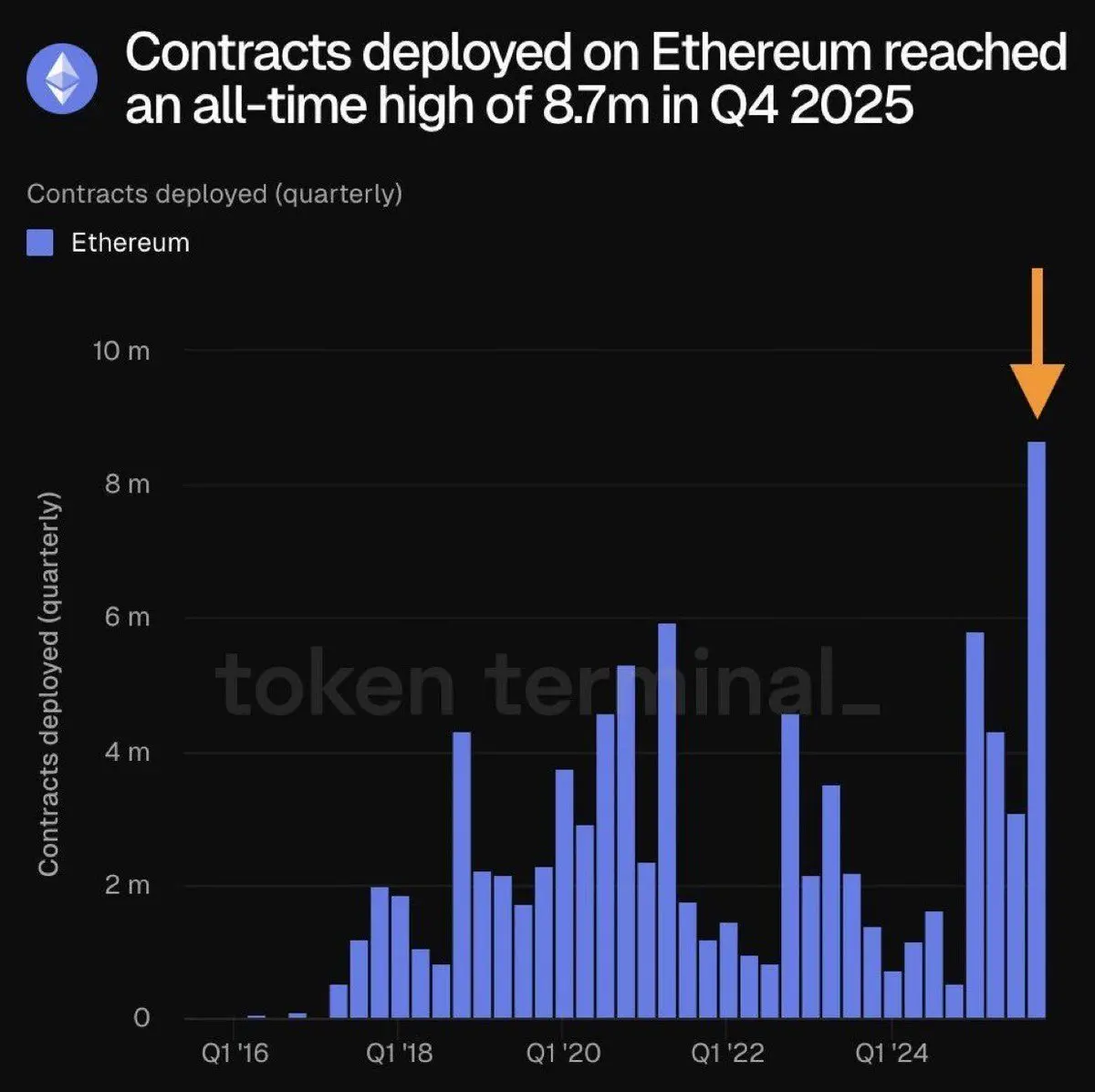
First, in terms of developer activity, Ethereum's development activity is reaching an all-time high. Data shows that in the fourth quarter of 2025, Ethereum deployed approximately 8.7 million smart contracts, setting a new historical quarterly record. This change is more aligned with sustained product and infrastructure development rather than short-term speculative behavior. More contract deployments mean more DApps, RWAs, stablecoins, and infrastructure are being established, and Ethereum's role as the core execution and settlement layer continues to strengthen.

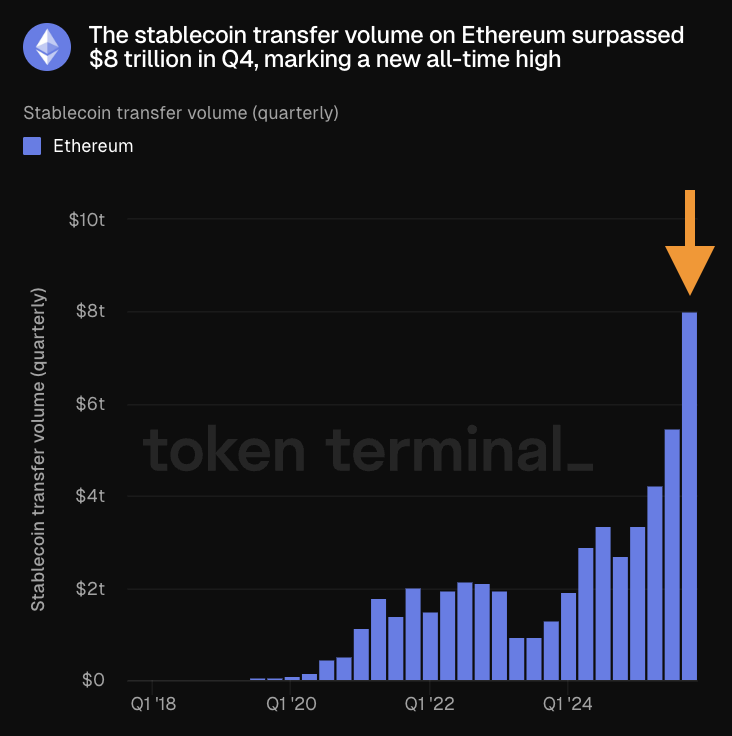
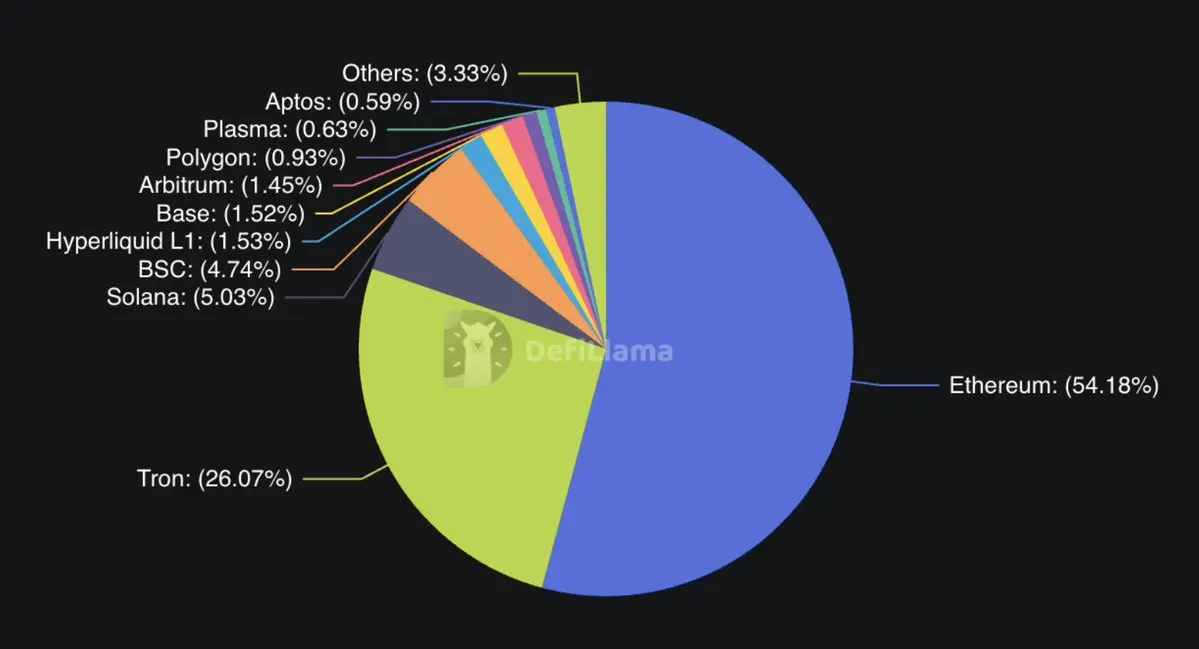
In the stablecoin sector, the on-chain transfer volume of Ethereum stablecoins in the fourth quarter has exceeded $8 trillion, also setting a historical record. From the issuance structure, Ethereum's advantages in the stablecoin ecosystem remain significant. Data shows that the issuance of stablecoins on the Ethereum chain accounts for as much as 54.18%, far exceeding TRON (26.07%), Solana (5.03%), BSC (4.74%), and other mainstream blockchain networks.

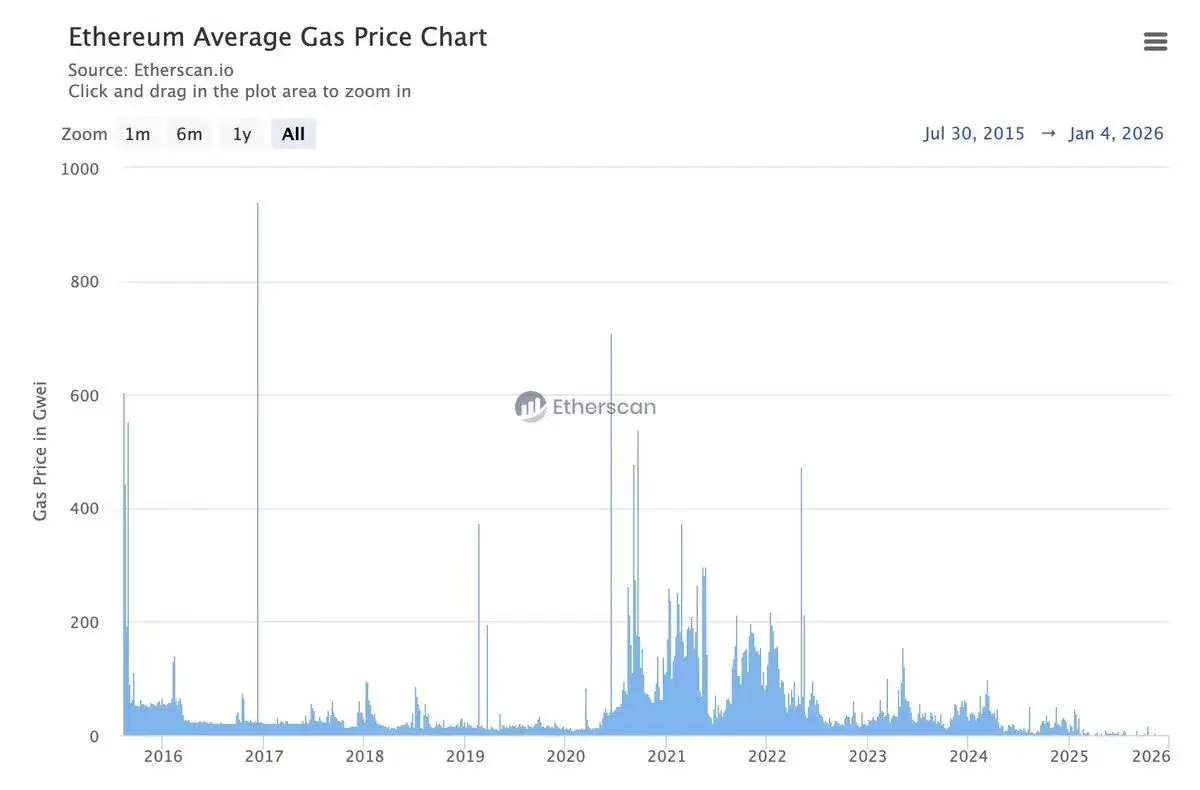
At the same time, Ethereum Gas fees have reached the lowest record since the mainnet launch and are continuously breaking records. At certain times, Gas fees have even dropped below 0.03 Gwei. Considering that Ethereum will continue to promote block expansion this year, this trend still has room for continuation in the medium term. Lower transaction costs will directly lower the threshold for on-chain activities and provide a realistic basis for the continuous expansion of the application layer.

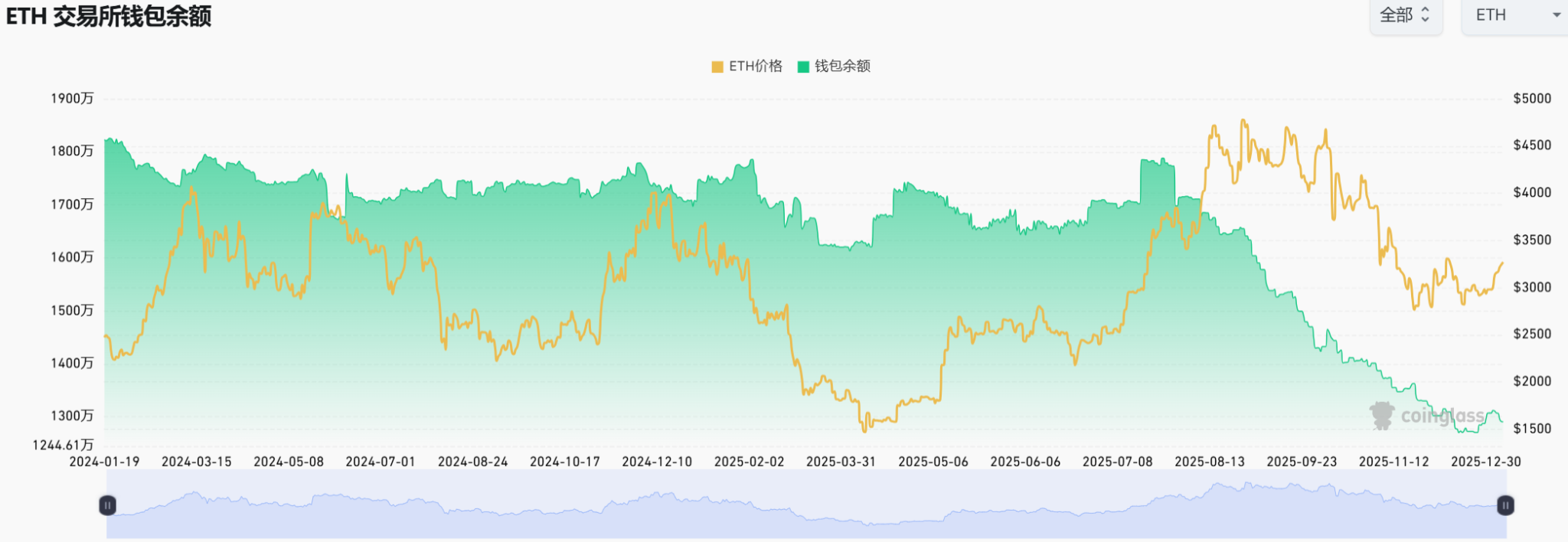
From the exchange balance indicator, Ethereum's potential selling pressure is also at a low level. In mid-December, the supply of Ethereum on exchanges dropped to 12.7 million, the lowest level since 2016. Especially since August 2025, this indicator has seen a significant decline of over 25%. Although the exchange balance has slightly rebounded recently, the increase is only about 200,000, and overall it remains in a historically low range, indicating that traders' willingness to sell is not strong.

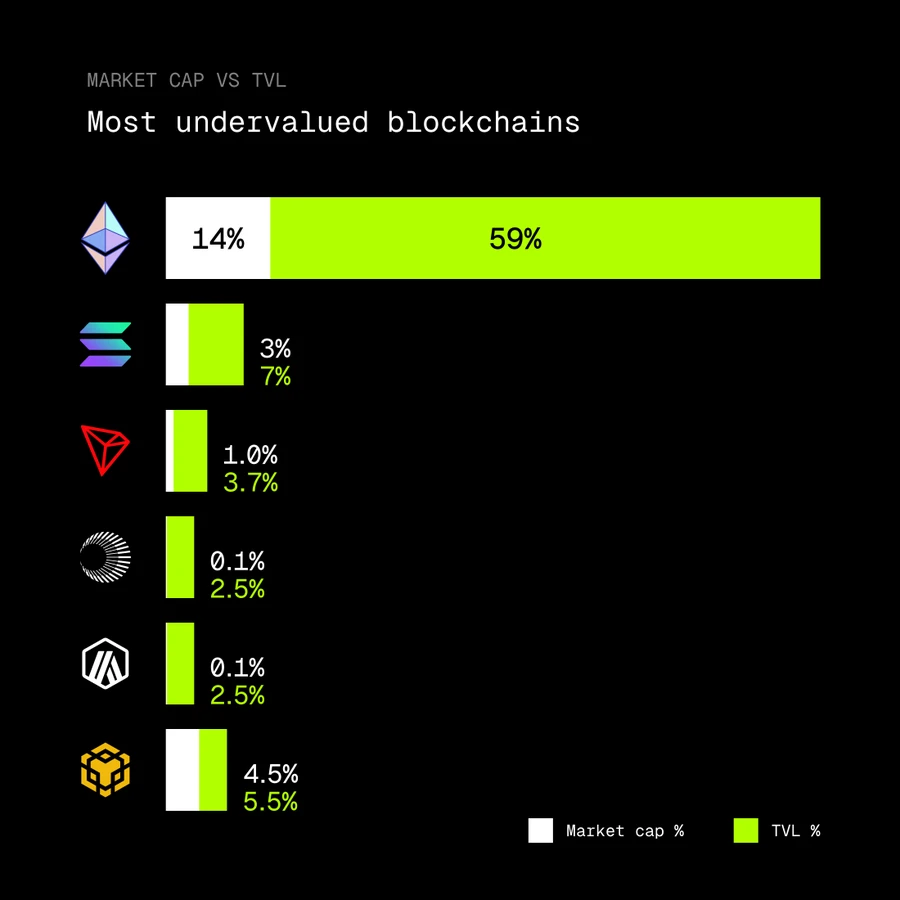
Additionally, crypto KOL rip.eth recently pointed out on the X platform that, based on the gap between total locked value (TVL) and market capitalization, Ethereum may be the most undervalued blockchain network currently. Data shows that Ethereum carries 59% of the crypto market's TVL, but its token ETH's market cap accounts for only about 14%. In comparison, Solana's token market cap/TVL ratio is 3%/7%, Tron is 1%/3.7%, and BNB Chain is 4.5%/5.5%. This reflects, to some extent, that there is still a significant misalignment between ETH's valuation and the scale of economic activity it supports.

Conclusion

In summary, changes in the staking queue may not be the "single variable" determining price trends, but when they improve in tandem with developer activity, stablecoin usage scale, transaction costs, exchange balances, and other indicators, what is presented is no longer an isolated signal but a more three-dimensional fundamental picture.

For Ethereum, this may not be a rapid reversal driven by sentiment, but rather a process of gradually restoring structural stability after completing a round of deep adjustment.

免责声明:本文章仅代表作者个人观点,不代表本平台的立场和观点。本文章仅供信息分享,不构成对任何人的任何投资建议。用户与作者之间的任何争议,与本平台无关。如网页中刊载的文章或图片涉及侵权,请提供相关的权利证明和身份证明发送邮件到support@aicoin.com,本平台相关工作人员将会进行核查。

Share To
APP

X

Telegram

Facebook

Reddit

CopyLink