Original Title: What Trump’s Embrace of Crypto Has Unleashed
Original Authors: David Yaffe-Bellany, Eric Lipton, The New York Times
Translator: Peggy, BlockBeats
Editor’s Note: From the political endorsement of the "crypto president" to the rapid spread of DAT treasury companies, tokenized stocks, and high-leverage trading, the crypto industry is advancing towards the boundaries of traditional finance and public policy at an unprecedented pace. New products, structures, and capital pathways are constantly emerging, portrayed on one hand as technological breakthroughs that enhance efficiency and reshape financial infrastructure, while on the other hand accumulating concerns in terms of lending, governance, and risk transmission.
As regulatory attitudes shift towards leniency and capital accelerates its entry, this experiment driven by policy, capital, and technology is gradually evolving from internal industry issues to structural topics that may impact the broader financial system.
The following is the original text:
This summer, a group of executives pitched a business plan to Wall Street financier and former Trump presidential advisor Anthony Scaramucci.
They hoped Scaramucci would join a publicly traded company with a rather peculiar strategy: hoarding large amounts of cryptocurrency to make the business more attractive to investors.
"I really didn’t need to be sold on it," Scaramucci said. Soon after, he was publicly announced as an advisor to three previously little-known companies that employed the same strategy. "That conversation was quite casual."
However, this enthusiasm did not last long. This fall, the crypto market experienced a significant crash, and the stock prices of the three companies Scaramucci was involved with plummeted, with the worst performer dropping over 80%.
These companies are part of a wave of crypto enthusiasm driven by Trump. Trump has pushed the relatively marginal world of digital currencies into a significant position in the global economy. He claims to be the first "crypto president," ending regulatory crackdowns on crypto companies, publicly promoting crypto investments from the Oval Office, signing multiple pro-crypto legislations, and even launching a meme coin called $TRUMP.
Now, the consequences of this positive endorsement are gradually becoming apparent.
This year, a series of new crypto businesses that continuously push boundaries have emerged, exposing more people directly to the highly volatile world of virtual currencies. Currently, over 250 publicly traded companies have begun hoarding cryptocurrencies, with the price fluctuations of these digital assets resembling those of traditional investments like stocks and bonds.
At the same time, a number of companies have launched new products that make it easier to allocate crypto assets within brokerage accounts and retirement plans. Industry executives are also lobbying regulators to introduce tokens representing shares of publicly traded companies and trade them in a crypto-driven "stock market."
This wave of experimentation has already shown signs of trouble. In the past two months, the prices of major cryptocurrencies have plummeted, causing companies that hold large amounts of related assets to fall into free fall. Other new projects have also raised warnings from economists and regulators, who point to the accumulating risks.
One of the core concerns is the rise in lending. As of this fall, publicly traded companies have purchased crypto assets through large borrowings; meanwhile, the total amount of bets by investors on future coin prices has exceeded $200 billion. These transactions often rely on leverage, which can yield huge profits if the direction is correct; but if mistakes are made, the losses can be severe.
The latest products launched in the industry have also connected crypto assets with the stock market and other parts of the financial system, increasing the possibility of "contagion," where a crypto crisis could spill over into the broader economy.
"The lines between betting, speculation, and investment have largely disappeared," said Timothy Massad, who served as Assistant Secretary for Financial Stability at the U.S. Treasury after the 2008 financial crisis. "This makes me very concerned."
White House Press Secretary Karoline Leavitt stated that Trump is making the U.S. the "world's crypto capital" by promoting innovation and economic opportunity.
Crypto industry executives believe these new businesses demonstrate the potential of the technology to reshape the outdated financial system. They view market volatility as a source of potential profit.
"The risks are higher, but the potential returns are also higher," said Duncan Moir, president of 21Shares, a company that issues various financial products to make investing in crypto assets more convenient. "Our job is to bring these investment opportunities to more people."
This entire experiment thrives on an unprecedentedly friendly regulatory environment for crypto companies. After years of litigation with the industry, the U.S. Securities and Exchange Commission (SEC) established a crypto task force this January and has held dozens of meetings with companies seeking new rules or product approvals.
An SEC spokesperson stated that the agency is working to "ensure that investors have sufficient information to make informed decisions."
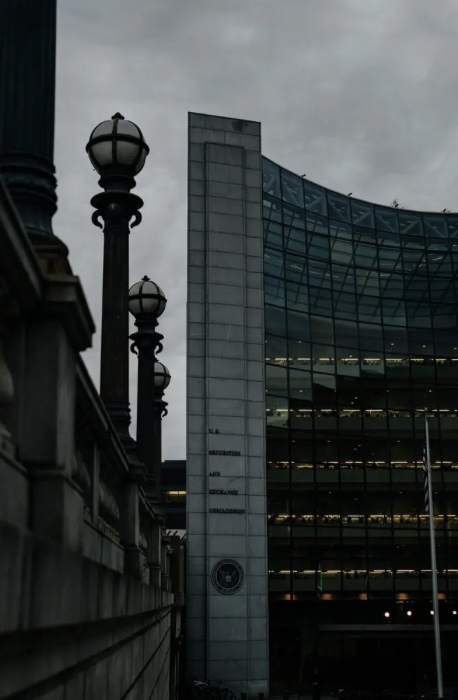
The SEC's Washington headquarters established a crypto task force this year. Photo credit: Jason Andrew / The New York Times
Many of these new companies have some connection to the Trump family's expanding crypto business empire, further blurring the lines between business and government.
This summer, the management of World Liberty Financial, a crypto startup under Trump, announced it would join the board of publicly traded company ALT5 Sigma. The company previously operated a recycling business and now plans to raise $1.5 billion to purchase digital currencies.
"Tsunami"
The crypto community has named this high-risk, high-emotion era brought by Trump’s new government "DAT Summer."
DAT, or "Digital Asset Treasury," refers to publicly traded companies whose core goal is to purchase as much crypto as possible. According to crypto consulting firm Architect Partners, slightly less than half of these newly established companies have chosen Bitcoin, the most well-known cryptocurrency, as their primary asset; however, several dozen companies have announced plans to hoard lesser-known coins, such as Dogecoin.
Since the beginning of this year, new digital asset treasury companies have been established every month, showing a clear upward trend.
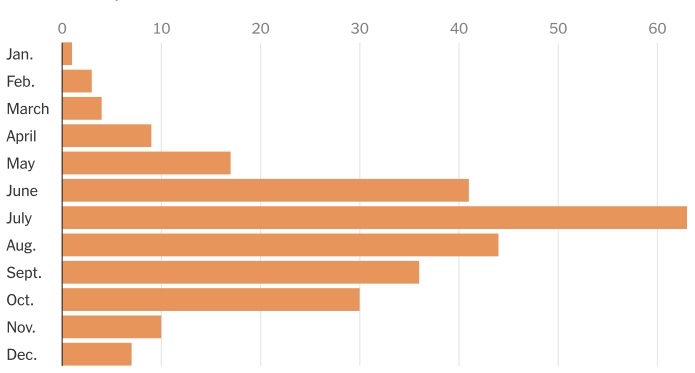
Note: Data as of December 16. Source: Architect Partners, The New York Times
These projects often follow a relatively simple operational path: a group of executives first identifies a lesser-known company that is publicly traded—such as a toy manufacturer—that intends to build a reserve of crypto assets. The team then collaborates with the company to raise millions of dollars from wealthy investors, using those funds to purchase digital currencies.
The core purpose is to indirectly expose investors to the price fluctuations of crypto assets by allowing them to purchase assets that "look like traditional stocks." This is potentially a profitable business. Some investment funds and asset management firms have been reluctant to directly buy cryptocurrencies, partly because the custody process for crypto assets is complex, costly, and frequently targeted by theft and hacking.
By investing in DAT (Digital Asset Treasury companies), fund managers can outsource these cumbersome operations. However, it has proven that DATs also carry significant risks. Many of these companies were hastily established or managed by executives lacking experience in running publicly traded companies. According to Architect Partners, these companies have collectively announced plans to borrow over $20 billion to purchase crypto assets.
"Financial crises often start with leverage," said Corey Frayer, a former crypto advisor to the SEC. "And what is being created now is a whole lot of leverage."
In fact, some companies have already fallen into operational difficulties or management crises, causing investors to incur losses. For example, Forward Industries, a treasury-type company, had hoarded a large amount of a token called Solana. In September, after raising over $1.6 billion from private investors, its stock price soared to nearly $40 per share.
Investors included Allan Teh from Miami, who represented a family office and invested $2.5 million in Forward this year.
"At that time, everyone thought this strategy would work, and asset prices would keep rising," Teh said.
But then the market corrected, and Forward's stock price dropped to $7 per share this month. The company subsequently announced plans to spend up to $1 billion to repurchase its own stock over the next two years, but this move did not stop the stock price from continuing to decline.
"The music has stopped. Now I’m starting to hesitate, should I exit?" Teh, who has already lost about $1.5 million, said, "How much loss am I ultimately going to bear for these things?" Forward declined to comment.
The surge of DATs has raised significant alarm at the SEC. "Clearly, there are concerns here," SEC Chairman Paul Atkins said in an interview at a crypto conference in Miami last month. "We are watching closely."
However, behind this emerging corner of the crypto world is a powerful supporter—the Trump family.

Founders of World Liberty Financial include Eric Trump (right) and Zach Witkoff. The two appeared together at a crypto conference in the UAE this May. Photo credit: Katarina Premfors / The New York Times
In August of this year, World Liberty Financial announced that its founding team—including President Trump's son Eric Trump—would join the board of publicly traded company ALT5 Sigma. The company plans to hoard WLFI, a token issued by World Liberty itself. (Currently, Eric Trump is listed as a strategic advisor and observer.)
This arrangement seems poised to quickly bring profits to the Trump family. According to a revenue-sharing agreement published on World Liberty's official website, every time the WLFI token is traded, a business entity under the Trump family can receive a portion of the profits.
But since then, the operational situation of ALT5 Sigma has begun to deteriorate. In August, the company disclosed that executives from one of its subsidiaries had been found guilty of money laundering in Rwanda, and the board is reviewing other "previously undisclosed issues." Shortly thereafter, ALT5 Sigma announced the suspension of its CEO and severed ties with two other senior executives.
Since August, the company's stock price has dropped by 85%. A spokesperson for ALT5 Sigma stated that the company remains "optimistic about the future."
Flash Crash
Much of the recent turmoil in the crypto market can be traced back to a night in October.
Under the public support of Trump, the crypto market had been rising for most of this year. However, on October 10, the prices of Bitcoin and Ethereum suddenly plummeted, along with dozens of other tokens.
This was a typical "flash crash," where prices collapsed sharply in a very short time.
The immediate trigger was Trump's announcement of new tariffs on China, which sent shockwaves through the global economy. However, the key reason why crypto asset prices were hit particularly hard was the high level of borrowing in the market.
On crypto trading platforms, traders can use their assets as collateral to borrow cash or leverage further to make larger bets on digital currencies. According to crypto data firm Galaxy Research, in the third quarter alone, the global borrowing based on crypto assets increased by $20 billion, bringing the total to a record $74 billion.
The most aggressive and riskiest crypto trading typically occurs in overseas markets. However, in July, the largest U.S. crypto exchange, Coinbase, announced it would launch an investment tool allowing traders to borrow up to 10 times their holdings to bet on the future prices of Bitcoin and Ethereum.
The backdrop for Coinbase launching this product was that federal regulators had withdrawn previous guidance that restricted such high-leverage borrowing, making these operations possible again in the U.S.
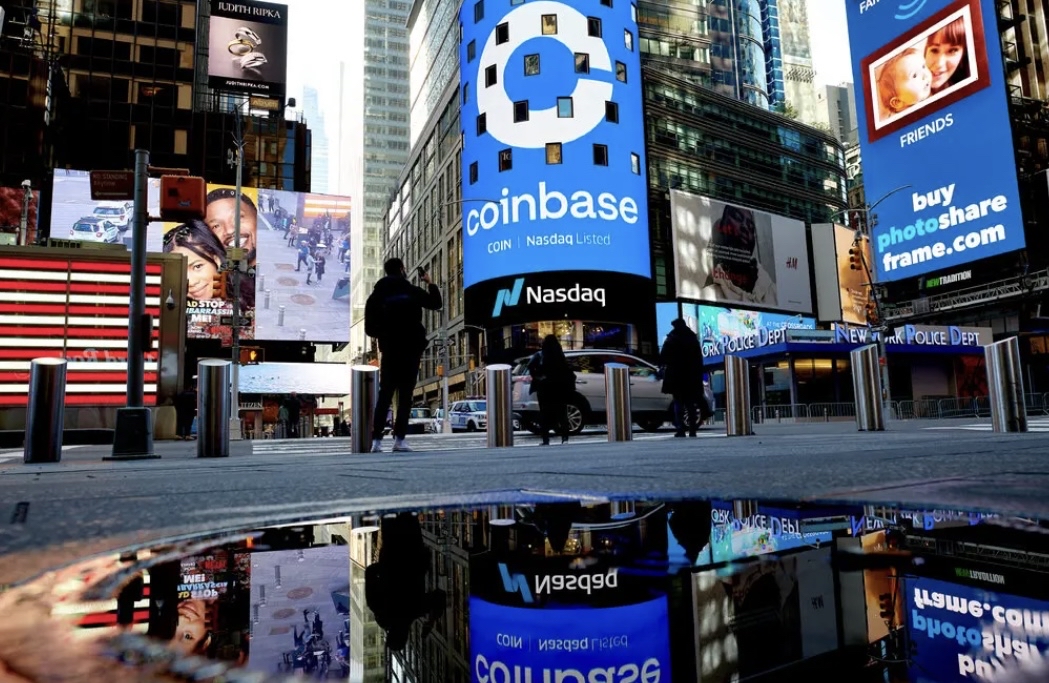
In July, Coinbase announced it would launch an investment tool allowing traders to borrow up to 10 times their holdings to bet on the price movements of Bitcoin and Ethereum. Photo credit: Gabby Jones / The New York Times
The drop in October did not trigger a systemic disaster that could destroy the industry like in 2022, when several large crypto companies went bankrupt. However, it provided a clear preview of how a crisis that could engulf the entire crypto world might unfold.
Mechanically, borrowing amplifies losses during market downturns. When prices fall, exchanges are forced to sell customers' collateral assets—a process known as "liquidation"—which often further depresses prices.
According to industry data tracking firm CoinGlass, on October 10 alone, at least $19 billion in leveraged crypto bets were forcibly liquidated, affecting 1.6 million traders. Liquidations were primarily concentrated on overseas exchanges, including Binance, OKX, and Bybit.
This crash triggered a surge in trading volume, and some traders encountered technical issues while trying to transfer funds on major exchanges. Coinbase stated it had noticed some customers "may experience delays or performance degradation" while trading.
Derek Bartron, a software engineer and crypto investor from Tennessee, said his Coinbase account was temporarily frozen. "If I wanted to close my position, I couldn't do it at all," he said. "It felt like Coinbase had almost 'locked' everyone in their accounts, losing the ability to rescue funds and being forced to ride the roller coaster."
Bartron reported that in the following days, he lost about $50,000 in crypto assets, partly because he couldn't sell his holdings at the ideal time.
A spokesperson for Coinbase responded that the company provided automated risk management tools, stating, "These tools were functioning normally, and the exchange remained operational throughout the event."
A spokesperson for Binance acknowledged that due to a significant surge in trading volume, the platform "did encounter some technical issues" and stated that measures had been taken to compensate users.
Experiment
One night this summer, crypto entrepreneurs Chris Yin and Teddy Pornprinya attended a black-tie formal reception at the Kennedy Center in Washington.
It was a high-profile social event. Yin wore a tuxedo he had bought the night before and introduced himself to Vice President JD Vance, a former Silicon Valley investor; he and Pornprinya also spoke with Treasury Secretary Scott Bessent, a former hedge fund manager; the two even took a photo with Trump, who gave a thumbs-up to the camera.
These two entrepreneurs are paving the way for another bold plan proposed by the industry this year: to extend the underlying architecture of crypto technology to other financial sectors.
For months, their startup Plume has been seeking permission from U.S. regulators to launch an online platform that would allow users to purchase digital tokens representing "real-world assets"—these assets could be a company, a piece of farmland, or even an oil well.

Plume's founders Chris Yin (right) and Teddy Pornprinya appear at the Empire State Building, which is also the site of their U.S. office's launch. Photo credit: Laila Stevens / The New York Times
In overseas markets, Plume's customers can purchase "shares" of such products and trade them like other tokens. However, this service, known as "tokenization," exists in a legal gray area in the U.S. The reason is that U.S. securities laws, which have been in place for decades, impose extremely strict regulatory requirements on any form of "share" sales.
The core purpose of these rules is to protect investors through mandatory information disclosure, requiring stock issuers to publicly disclose detailed operational, financial, and risk information. As a result, tokenizing real-world assets and trading them faces much higher compliance hurdles in the U.S. than in overseas markets.

Plume is attempting to obtain permission from U.S. regulators to launch an online platform for "tokenization." Photo credit: Laila Stevens / The New York Times
This year, tokenization has become one of the hottest concepts in the crypto industry. Industry executives believe that "tokenized stocks" can make stock trading faster and more efficient, creating a 24/7 global market that allows shares to circulate continuously around the world. Major U.S. exchange Kraken has already provided a crypto-based stock trading market for customers overseas.
In the crypto world, transactions are recorded on a public ledger, making them more transparent compared to traditional finance—so industry executives claim. "It is traceable and auditable," said Kraken CEO Arjun Sethi, "which is almost the opposite of risk."
Representatives from both Kraken and Coinbase have met with the U.S. Securities and Exchange Commission (SEC) to discuss regulatory rules for tokenized assets; meanwhile, Plume is seeking a viable legal path to expand its business into the U.S. market.
However, this race for "first release" has also raised concerns among current and former regulators, as well as heavyweight executives in traditional finance. In September, economists from the Federal Reserve pointed out that tokenization could transmit financial shocks from the crypto market to the broader economic system and "weaken policymakers' ability to maintain the integrity of the payment system" during times of stress.
Despite this, SEC Chairman Paul Atkins expressed a positive attitude toward tokenized stocks, calling it a significant technological advancement. In May of this year, he stated at a tokenization industry roundtable, "The Commission has considerable discretion under the securities law framework to make appropriate arrangements for the crypto industry, and I intend to push this forward."
To secure a favorable position, Plume's founders Chris Yin and Teddy Pornprinya have taken multiple approaches: they met with the SEC's crypto task force in May; provided illustrative content for a White House crypto report; and established Plume's U.S. headquarters on the 77th floor of the Empire State Building.
This summer, at the black-tie reception in Washington, Trump's core staff seemed to recognize these two founders quite well.
"They know Plume," Pornprinya said, "Everyone has heard of us."
A few weeks later, Plume announced a potential key connection: establishing a business partnership with Trump's family crypto company, World Liberty.
免责声明:本文章仅代表作者个人观点,不代表本平台的立场和观点。本文章仅供信息分享,不构成对任何人的任何投资建议。用户与作者之间的任何争议,与本平台无关。如网页中刊载的文章或图片涉及侵权,请提供相关的权利证明和身份证明发送邮件到support@aicoin.com,本平台相关工作人员将会进行核查。


