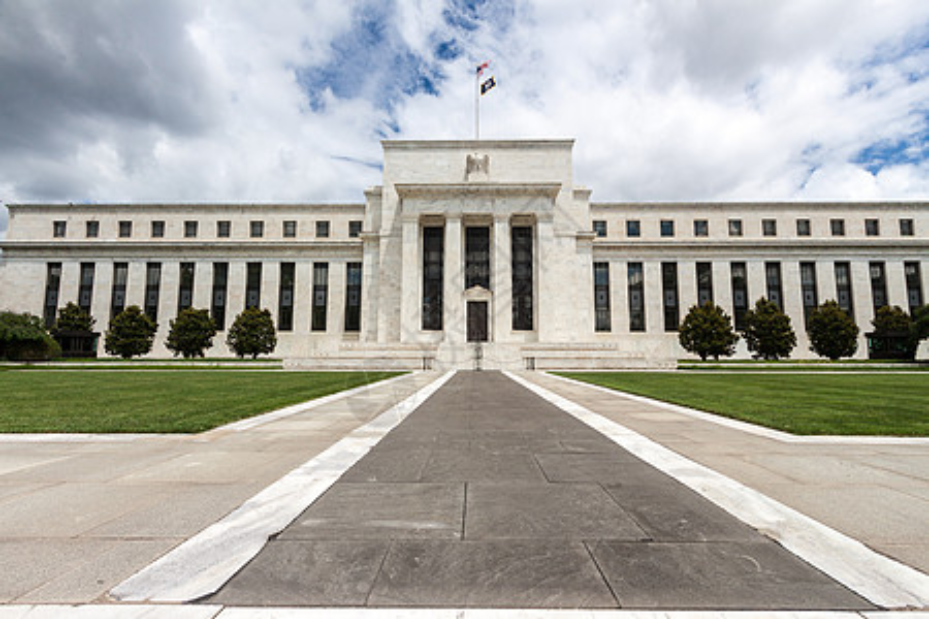
When Federal Reserve officials pressed the interest rate cut button at the December meeting, what emerged was not a clear call to action, but a series of contradictory and hesitant noises. The minutes from the Federal Open Market Committee (FOMC) meeting held on December 9-10, 2025, released on December 30 local time, revealed a rare and profound public division behind this decision.
The minutes depict a Federal Reserve standing at a crossroads: on one hand, there is ongoing internal debate about the necessity of the current rate cut; on the other hand, there are significant divergences regarding the future path. Market participants read about a central bank struggling to balance its two main objectives of inflation and employment, lacking a clear consensus on its future direction.

1. A "Reluctant" Rate Cut: The 9 to 3 Swing Behind the Decision
● Although the decision to cut rates by 25 basis points, lowering the federal funds rate target range to 3.50%-3.75%, was ultimately passed with a vote of 9 in favor and 3 against, the minutes show that the supporters' attitudes were far from resolute.
The original minutes state, "Even among the officials who supported the rate cut, a few believed that 'this decision was made after careful consideration, or they might have supported keeping the target rate range unchanged.'".
● This exposes that a considerable number of officials within the Federal Reserve were on the edge of their decision-making, with the choice to cut rates hinging on a moment's thought. Some "minority participants" even directly argued that, given the data received during the November and December meetings did not show a significant further weakening of the labor market, the December rate cut was "unreasonable."
● The dissenting voices were even stronger. Among the three officials who voted against the cut, one (Governor Milan, appointed by the White House) even advocated for a more aggressive cut of 50 basis points, while the other two regional Federal Reserve presidents argued for holding steady. Including other officials who opposed but did not have voting rights, there were actually seven dissenters regarding this rate cut, which has been interpreted by outsiders as one of the largest divisions within the Federal Reserve in 37 years.
2. The Route Dispute Between "Most" and "Some"
If the disagreement over the already implemented rate cut is understandable, the description of future policy paths in the minutes presents a more confusing picture.
● The minutes state: "Most participants believe that if inflation gradually declines as expected, further rate cuts may be appropriate." This statement has been widely interpreted by the market as a signal that the Federal Reserve will continue its easing cycle. Officials supporting this view argue that shifting to a more neutral policy stance will help guard against potential severe deterioration in the labor market.
● However, almost immediately, another distinctly different voice appeared in the minutes: "After this meeting's rate cut, it may be necessary to maintain the target range unchanged for some time." These officials wish to hit the "pause button" to assess the lagging effects of previous policy adjustments and wait for more data to bolster confidence in returning inflation to the 2% target.
The juxtaposition of the "most" supporting future rate cuts and the "some" advocating for an immediate pause makes it difficult for the market to grasp the Federal Reserve's next steps. The Federal Reserve itself also acknowledges that its policy is not on a preset path and will depend entirely on subsequent data.
3. The Core of the Division: The Tug-of-War Between Inflation Risks and Employment Risks
The root of all the disagreements lies in the starkly different assessments by Federal Reserve officials regarding the main threats to the U.S. economy.
● One faction, the officials supporting easing, is more concerned about the downside risks to the job market. They point out that "the downside risks to employment have increased in recent months," while the upside risks to inflation have weakened or remained unchanged since early 2025. Therefore, taking precautionary measures is necessary.
● The other faction, the hawkish officials, remains highly vigilant about inflation. They warn that "there is a risk of inflation becoming entrenched," and sharply point out that further rate cuts while inflation readings remain high could be misinterpreted by the market as a weakening of the Federal Reserve's commitment to its 2% inflation target. This concern about damage to the central bank's credibility is a core concern for monetary policy makers.
● The minutes ultimately acknowledge that participants generally believe that both inflation upside risks and employment downside risks are currently high, with the latter having increased since mid-2025. This "double-edged" dilemma is the fundamental reason the Federal Reserve finds itself in a stalemate.
4. The Overlooked Consensus: Initiating "Technical" Easing (RMP)
● Amidst the chorus of disagreements, the minutes reveal a key and rare consensus: to initiate Reserve Management Purchases (RMPs). All participants unanimously determined that the reserve balances in the banking system had fallen to "adequate" levels, thus deciding to begin purchasing short-term government bonds to maintain a sufficient supply of reserves.
● Although Federal Reserve officials generally emphasize that this move is a technical operation to ensure the smooth functioning of the money market, unrelated to the stance of monetary policy, its objective effect is to inject liquidity into the financial system. Market analysis suggests that this is akin to laying a "liquidity buffer" for the banking system, aimed at preventing a repeat of the "cash crunch" scenario that occurred in 2019.
5. New Challenges in 2026
This set of minutes marks the beginning of an uncertain 2026. First, the voting composition within the Federal Reserve will change in the new year. Among the four new regional Federal Reserve presidents, one is the Cleveland Fed president, who has publicly opposed this and previous rate cuts, indicating that hawkish voices within the FOMC may become stronger in the future.
● Secondly, the market is highly confused about the Federal Reserve's next actions. According to data from the CME FedWatch Tool, after the minutes were released, the futures market assigns an 85.1% probability that the Federal Reserve will keep rates unchanged at its next meeting in January 2026. This reflects the market's tendency to believe that the Federal Reserve will first enter a wait-and-see period after digesting the contradictory information.
The historical significance of these minutes lies in their candid revelation of a central bank in a classic dilemma with significant internal divisions. They do not provide a clear roadmap for the future but instead raise a series of questions: Is the "last mile" of inflation more challenging than anticipated? Will the seemingly robust job market suddenly turn under high interest rates?
Join our community to discuss and become stronger together!
Official Telegram community: https://t.me/aicoincn
AiCoin Chinese Twitter: https://x.com/AiCoinzh
OKX benefits group: https://aicoin.com/link/chat?cid=l61eM4owQ
Binance benefits group: https://aicoin.com/link/chat?cid=ynr7d1P6Z
免责声明:本文章仅代表作者个人观点,不代表本平台的立场和观点。本文章仅供信息分享,不构成对任何人的任何投资建议。用户与作者之间的任何争议,与本平台无关。如网页中刊载的文章或图片涉及侵权,请提供相关的权利证明和身份证明发送邮件到support@aicoin.com,本平台相关工作人员将会进行核查。