Original Title: "Between Risk and Hope: ETH Cali and the Colombian Ethereum Community"
Original Source: ShanhaiWoo
Cali, the salsa dance capital of Colombia, is also the birthplace and growth place of ETH Cali. Here lies Zonamerica, a comprehensive offshore industrial and service park, where an innovative ecosystem, an active entrepreneurial community, and tax incentives for resident companies have attracted ETH Cali to establish itself. In addition to office spaces, Universidad del Valle and Universidad ICESI, located within five kilometers of Zonamerica, have also become important hubs for ETH Cali to host events and connect with student groups.

Growth Trajectory of the Colombian Ethereum Community
William Martinez, who prefers to call himself a core member rather than a founder, shared the current development status of the Ethereum community in Colombia. The Ethereum Colombia community has adopted a geographically-based and localized organizational structure, forming a local community network that includes multiple nodes such as ETH Medellin, ETH Bogota, ETH Caribe, ETH Eje Cafetero, ETH Arauca, and ETH Cali.
Among them, ETH Arauca and ETH Cali were both established in October 2022 after Devcon VI was held in Bogotá. Unfortunately, Emerson David Silva, the community leader of ETH Arauca, was tragically killed last year while promoting Ethereum in high-risk areas. Currently, the active Ethereum communities in Colombia mainly include ETH Bogotá, ETH Medellín, and ETH Cali.

ETH Arauca Community Leader Emerson David Silva
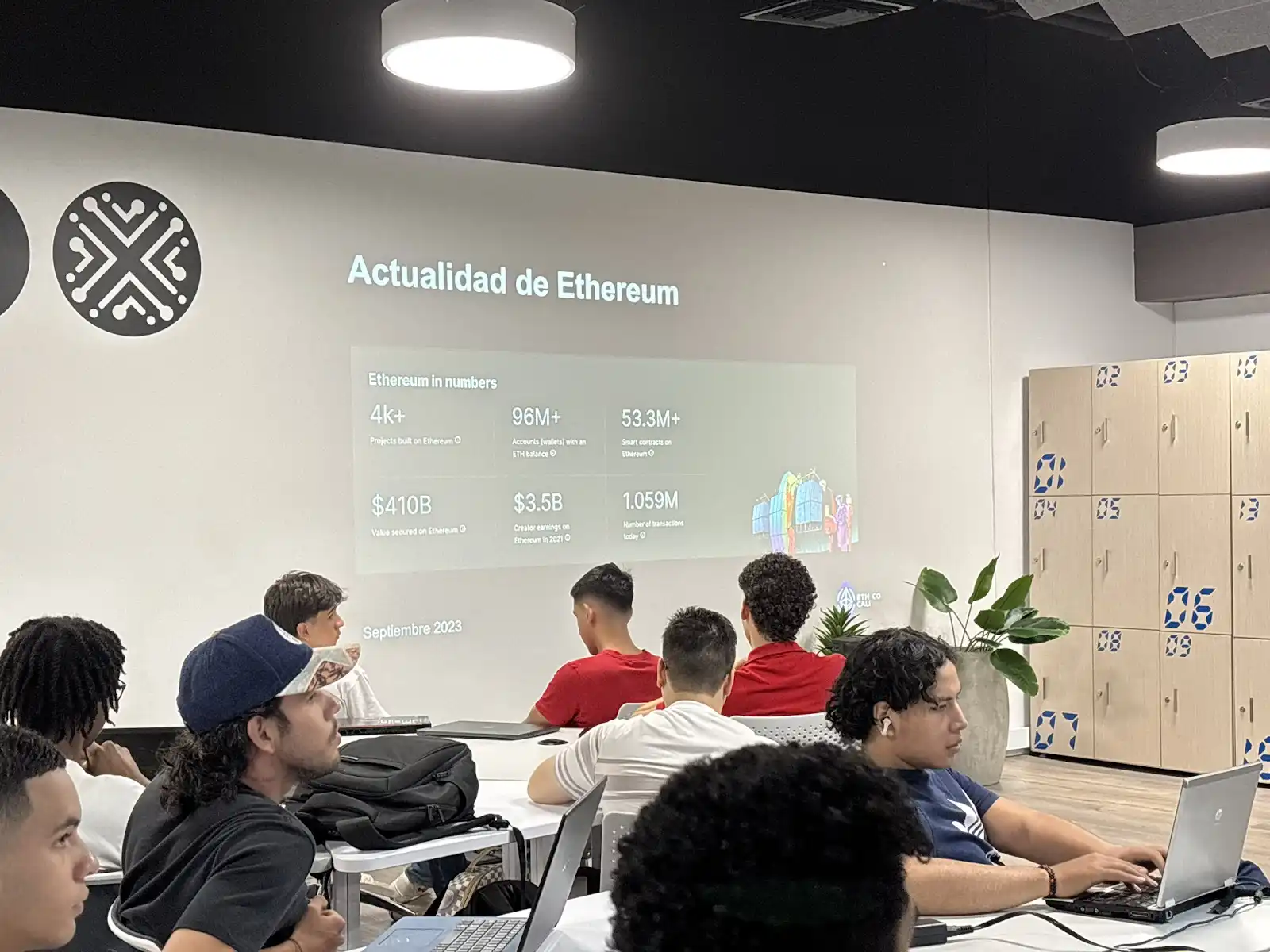
Like other Colombian Ethereum communities, ETH Cali aims to promote Ethereum's adoption within the local community. William stated that Cali has a strong pool of technical talent, but they know very little about Web3. Therefore, ETH Cali focuses on educational promotion, developer meetups, and practical applications of Web3 frameworks and tools in cutting-edge fields like artificial intelligence, attempting to open a window for local tech talent to new technological paradigms.
"Emerson and the story of ETH Arauca are heartbreaking," William said, "but it has also strengthened our determination to continue building the developer community."
ETH Cali Wallet: An Open Source Wallet for Practical Scenarios
Technology-driven development has always been the main thread of ETH Cali's community growth, reflected not only in numerous technical activities but also in the team members who participate in building it. Currently, the community has 9 core members and 6 contributors, almost all of whom have a strong developer background.
At the ETH Latam Hub during Devconnect, we met Cristobal Valencia, a core developer of the community. He is building a new ReFi project: ReFiUP. According to Cristobal, the goal of ReFiUP is to create an on-chain protocol called ReFi Universe Protocol that coordinates global efforts to clean the Earth. Users can earn tokens and verifiable certificates by collecting various types of waste, while companies can reduce their carbon emissions by purchasing these certificates. Throughout the process, AI agents verify users' work and use zero-knowledge proof technology to protect users' privacy data.
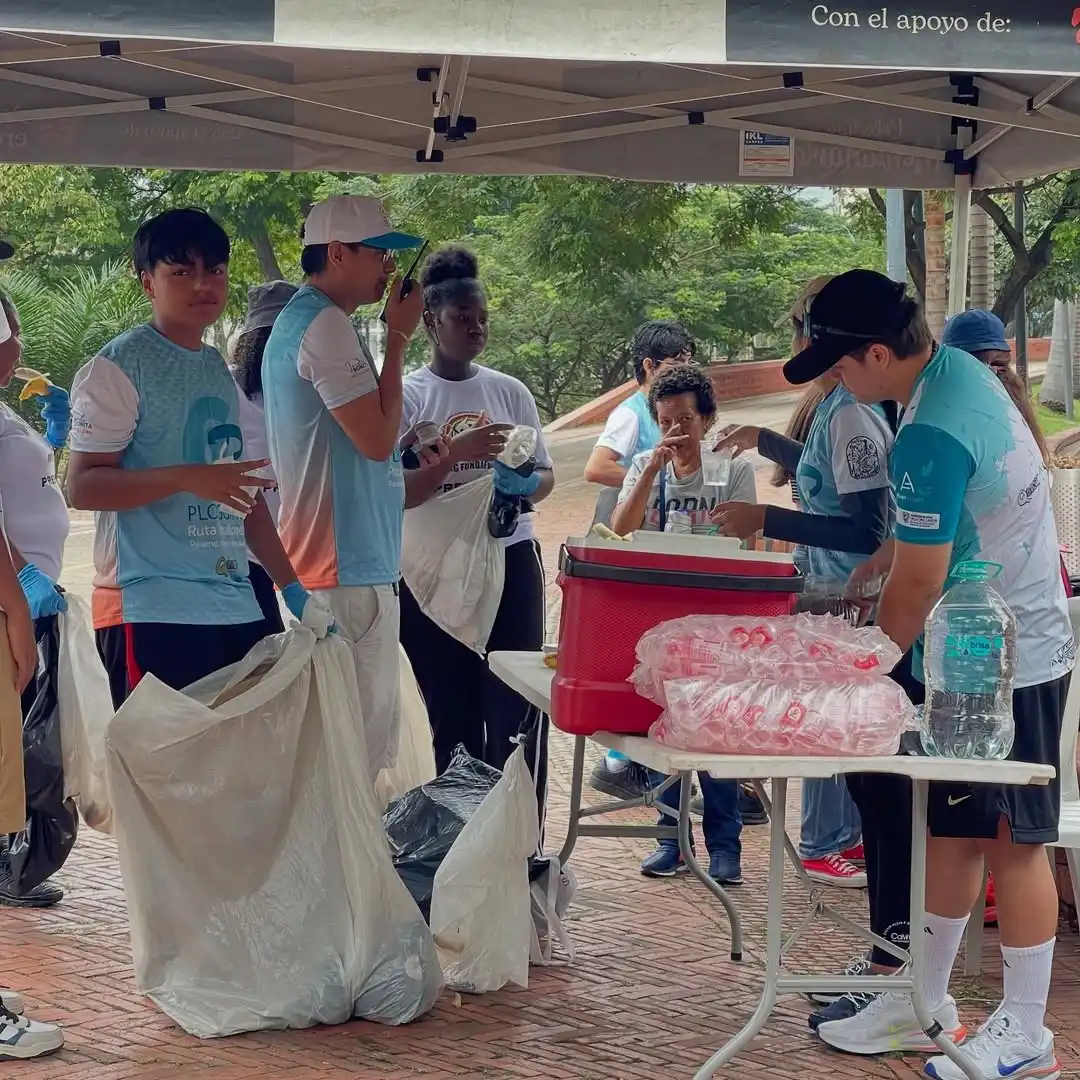
The inspiration for ReFiUP came from an offline event supported by ETH Cali. In June of this year, ETH Cali collaborated with the local environmental organization Lapapaya to provide technical and logistical support for a small marathon event held in Cali. During the race, participants could earn tokens and NFT certificates as rewards based on the amount of waste they collected. The event collected over 150 kilograms of recyclable waste, and more than 60 participants successfully claimed on-chain rewards through the ETH Cali Wallet.
"Our goal is to engage community members and new users, allowing them to explore the possibilities of cryptocurrency through this open-source wallet designed for practical application scenarios," William explained. The ETH Cali Wallet is built on Privy’s account system, supports email registration, and introduces zkPassport.id as an anti-witch-hunt mechanism, while also implementing gas sponsorship transactions through account abstraction. ETH Cali has open-sourced the wallet's codebase, enabling other developers to focus on building application logic without having to duplicate user login or anti-witch-hunt mechanisms.
From Events to Influence: ETH Cali's 2026 Plan
Looking back over the past three years, ETH Cali has hosted more than 40 offline meetups, attracting over 100 Web2 developers to join, while the Web3 membership has grown from 5 to over 250. Meanwhile, the community has supported more than 10 local Web3 projects, established partnerships with 5 universities, and gradually engaged in dialogue with senior leaders, government departments, and important institutions to help them understand this technology through practice.
"We focus on real builders, not hype." Regarding the future, William outlined specific goals for ETH Cali towards 2026:
• Establish an ETH Cali center or hacker house for the local tech community, serving as a long-term space for developer exchange and collaboration.
• Collaborate with universities such as ICESI, USB Cali, and Universidad Santiago de Cali to promote research focused on cryptography, blockchain, and artificial intelligence.
• Train over 100 Web2 developers to transition into Web3 through structured projects like Speed Run Ethereum and Cyfrin Updraft.
• Work with the Ethereum Foundation Secretariat to transform a university DeFi course into a free Web3 learning program for local developers and the community.
• Build and operate its own RPC infrastructure to provide stable and reliable technical support for the local ecosystem.
• Explore new technologies, including robotics, to create a more practical learning and experimental environment.
• Strengthen collaboration with Ethereum communities in Cluj, Prague, Naples, Rome, India, and China, making Cali an active node in the global Ethereum network.
These goals are not merely about numbers or scale expansion, but gradually unfold around the question of "how to make technology truly work." For ETH Cali, the endpoint of community building is not the events themselves, but whether the technology can respond to broader real-world needs.
The Next Leap for Ethereum: Real Products and Services
In William's view, Latin America faces some structural challenges, such as cross-border payments, global currency access, currency devaluation risks, and limited participation in the global tech community, and Ethereum technology can play a practical role.
He believes that the next breakthrough will come from shifting attention from speculation to real products and services aimed at the global market. With improved internet access, mature data infrastructure, and the proliferation of AI tools, Latin America is expected to accelerate its pace of innovation and play a more significant role in open-source technology and global collaboration.
"Late 2026 or early 2027 might be a suitable time window," William said, "we might host a flash city event to bring together local builders, institutions, governments, entrepreneurs, developers, and researchers to collaboratively envision the next stage of development for Cali in an open and collaborative manner."
Conclusion
The development of technology has never been a straight upward line; it resembles a spiral ascent. The Colombian Ethereum community, represented by ETH Cali, is no different: despite experiencing ups and downs, it continues to accumulate strength, conveying the core values of Web3, such as collaboration, permissionless innovation, and open-source culture, to more people.
免责声明:本文章仅代表作者个人观点,不代表本平台的立场和观点。本文章仅供信息分享,不构成对任何人的任何投资建议。用户与作者之间的任何争议,与本平台无关。如网页中刊载的文章或图片涉及侵权,请提供相关的权利证明和身份证明发送邮件到support@aicoin.com,本平台相关工作人员将会进行核查。


