Author: Yuan Biao
The core of RWA (Real World Assets, tokenization of real-world assets) is to transform assets from traditional finance or the real economy into digital tokens (tokenization) through blockchain technology, enabling these assets to be issued, traded, settled, and managed on-chain.
Before discussing the relationship between RWA and stock tokenization, we must first clarify: What is the core mission of RWA? What problems can it solve?
Traditional assets have three major pain points: high thresholds, low efficiency, and poor liquidity. RWA can effectively address these issues through blockchain technology. Among the many types of traditional assets that can be tokenized, stock tokenization is a key entry point and component of RWA practice.
So, why does RWA have a particular affinity for stock tokenization?
For new Web3 practitioners with a traditional finance background, understanding RWA can be likened to understanding ABS (Asset-Backed Securities)—essentially, RWA can be seen as "an upgraded form of asset securitization on blockchain technology." Stocks, being the largest, most mature, and widely recognized financial assets globally, can clearly and directly validate the three core values of RWA—low thresholds, high efficiency, and good liquidity—and are more easily understood and accepted by the market.
The first issue that stock tokenization addresses is the high investment threshold in traditional stock markets. Many entry-level investors in traditional securities markets can only look on longingly at high-priced quality stocks. For example, to buy one share of Nvidia in the traditional market, an ordinary investor would need over 1,000 RMB.

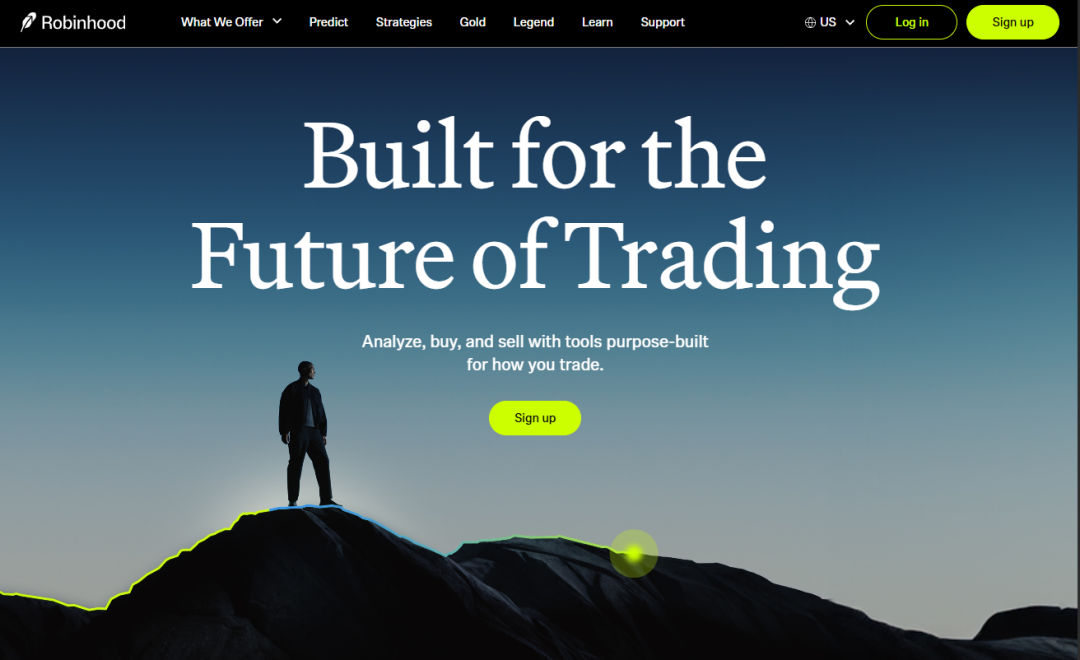
This barrier is being broken by innovative practices in Web3. Taking the well-known Web3 stock tokenization platform Robinhood as an example, it launched stock token services based on the Ethereum Layer 2 network Arbitrum for EU users on June 30 this year. This service initially covered over 200 US stocks and ETFs, including Nvidia, Apple, and Microsoft, and even innovatively included equity tokens of unlisted companies like OpenAI and SpaceX. It plans to expand the tradable assets to thousands by the end of the year and gradually achieve 24/7 trading. Robinhood's core advantage lies in the extreme fragmentation and low threshold of stock investment, allowing users to invest in high-value stocks like Nvidia for as little as 1 Euro.
This fragmented model completely breaks the investment barriers of high-priced stocks and unlisted equity in traditional financial markets, allowing ordinary retail investors to indirectly access previously unattainable private market assets, perfectly illustrating RWA's core value of "lowering investment thresholds."
However, it is important to note that this business model also comes with many controversies and risks. For instance, companies like OpenAI and SpaceX have publicly denied authorizing their equity tokens, stating that the related tokens do not represent actual company equity. Therefore, although Robinhood's stock tokenization business significantly lowers investment thresholds, it has also come under investigation by regulatory bodies such as the Bank of Lithuania due to issues like lack of authorization and token premiums.

In terms of trading efficiency, compared to the T+1/T+2 settlement cycles of traditional finance, RWA, including stock tokenization, can support atomic real-time settlement through blockchain technology (as used by Robinhood on the Arbitrum network), fundamentally eliminating the delay risks, delivery risks, and margin squeeze risks associated with the traditional T+2 settlement mechanism. Just like "atoms are indivisible," a transaction either completes instantly and fully (simultaneously transferring assets and funds) or does not occur at all, with no need to wait for inter-institutional clearing processes and no intermediate states of "payment made, assets not received" or "assets transferred, payment not received."
For a simple comparison: if you purchase 100 shares of stock in the traditional market, you generally have to wait 1-2 days to confirm ownership (T+2), during which time both funds and stocks are in a "frozen pending settlement" state; whereas in RWA tokenized trading, the moment you buy a stock token, the token is directly transferred to your wallet, and the funds are simultaneously transferred to the seller, completing the entire process within seconds and being fully irreversible.
Liquidity is another core advantage of stock tokenization, which is easier to understand. Earlier this year, DigiFT collaborated with Hong Kong-listed company Ocean Group (HKEX:1991) to launch the first Hong Kong stock RWA token "TaYang / TY317," mapping part of its shares to circulate on the blockchain. This move not only achieves on-chain expression of asset ownership but also breaks the limitations of traditional Hong Kong stocks being restricted to trading days and hours, enabling 24/7 global uninterrupted trading, showcasing RWA's potential in enhancing asset liquidity and promoting "global trading."

However, it is important to note that as Web3 compliance practitioners, while affirming the efficiency and liquidity improvements brought by stock tokenization, we must also be vigilant about the hidden risks of stock tokenization:
First, valuation and disclosure risks: Tokenization of unlisted company equity can lead to asset valuation disputes, necessitating the establishment of transparent and credible on-chain information disclosure and auditing mechanisms;
Second, compliance and regulatory risks: Issues related to tax attribution, accounting treatment, and legal applicability in cross-border transactions still await regulatory clarification and international coordination;
Third, rights mapping risks: The consistency of rights between tokens and native securities still relies on the precise definition by smart contracts.
These are all issues that cannot be ignored in the current practice process.
Special reminder, this article does not involve project recommendations.
免责声明:本文章仅代表作者个人观点,不代表本平台的立场和观点。本文章仅供信息分享,不构成对任何人的任何投资建议。用户与作者之间的任何争议,与本平台无关。如网页中刊载的文章或图片涉及侵权,请提供相关的权利证明和身份证明发送邮件到support@aicoin.com,本平台相关工作人员将会进行核查。


