Before flying towards a $1.5 trillion IPO, Musk almost lost everything.

CN
2 hours ago

Written by: Xiaobing | Deep Tide TechFlow

In the winter of 2025, the sea breeze in Boca Chica, Texas, remained salty and fierce, while the air on Wall Street was particularly heated.

On December 13, a piece of news shot up the financial headlines like a Falcon Heavy rocket: SpaceX's latest round of internal stock sales has locked the company's valuation at $800 billion.

Memorandums show that SpaceX is actively preparing for an IPO in 2026, planning to raise over $30 billion. Musk hopes the overall valuation of the company can reach $1.5 trillion. If successful, this would bring SpaceX's market value close to the record levels of Saudi Aramco at its 2019 IPO.

For Musk, this is an incredibly surreal moment.

As the world's richest person, his personal wealth will once again break historical records with the launch of SpaceX's "super rocket," making him the first trillionaire in human history.

Rewind the clock 23 years, and no one would have believed this outcome. At that time, SpaceX was seen by giants Boeing and Lockheed Martin as just a "manufacturing underdog" that could be crushed at any moment.

More accurately, it resembled a disaster that had yet to end.

When a Man Decides to Build Rockets

In 2001, Elon Musk was 30 years old.

He had just cashed out from PayPal, holding over $100 million in cash, standing at the typical "freedom point" of Silicon Valley. He could have followed in the footsteps of a16z founder Marc Andreessen, selling his company to become an investor, a preacher, or even do nothing at all.

But Musk chose the most incredible path.

He wanted to build rockets and go to Mars.

For this dream, he took two friends to Russia, trying to purchase refurbished Dnepr rockets as a means of transport to realize the Mars Oasis project.

The outcome was humiliating.

During talks with the Lavochkin Association, a chief designer spat at Musk, believing this American upstart knew nothing about aerospace technology. In the end, they quoted an astronomical price and hinted that he should "get lost if he had no money," leaving the team empty-handed.

On the return flight, while his companions were downcast, Musk was typing away on his laptop. Moments later, he turned around and displayed a spreadsheet: "Hey, I think we can build it ourselves."

That year, China had just launched Shenzhou 2, and space exploration was seen as a "miracle" powered by the whole nation, a game only major powers could participate in. A private company wanting to build rockets was as laughable as an elementary school student claiming to build a nuclear reactor in their backyard.

This was SpaceX's "from zero to one."

Growth is Constant Failure

In February 2002, at 1310 East Grand Avenue in El Segundo, a 75,000 square foot old warehouse, SpaceX was officially founded.

Musk took $100 million from his PayPal cash-out as startup capital, setting the company's vision as "the Southwest Airlines of the space industry," providing low-cost, high-reliability space transportation services.

But reality quickly dealt this idealist a heavy blow; building rockets was not only difficult but also outrageously expensive.

There’s an old saying in the aerospace industry: "Without a billion dollars, you can't even wake Boeing up."

Musk's $100 million startup capital was a drop in the bucket in this industry. More critically, SpaceX faced a market tightly controlled by century-old giants like Boeing and Lockheed Martin, who not only had strong technical capabilities but also deep government relationship networks.

They were used to monopolies, accustomed to lucrative government contracts, and had only one attitude towards this intruder called SpaceX: they laughed at it.

In 2006, SpaceX's first rocket, Falcon 1, stood on the launch pad.

This was both a tribute to the U.S. Department of Defense's DARPA Falcon project and a nod to the Millennium Falcon from "Star Wars." It was small, even a bit shabby, like a half-finished product.

As expected, 25 seconds after liftoff, the rocket exploded.

In 2007, the second launch. After a brief flight of a few minutes, it lost control and crashed.

Laughter filled the air. Some cruelly commented, "Does he think rockets are like writing code? Can they be patched?"

In August 2008, the third launch failed most spectacularly, with the first and second stages colliding, and the hope of ignition instantly turned into debris over the Pacific Ocean.

The atmosphere changed completely. Engineers began to lose sleep, suppliers started demanding cash, and the media was no longer polite. Most critically, the money was running out.

2008 was the darkest year of Musk's life.

The financial crisis swept the globe, Tesla was on the brink of bankruptcy, and his wife of ten years left him… SpaceX's funds were only enough for one last launch. If the fourth attempt failed, SpaceX would disband, and Musk would have nothing.

At that moment, the sharpest knife struck.

Musk's childhood idols, "the first man on the moon" Armstrong and "the last man on the moon" Cernan, publicly expressed their complete lack of faith in his rocket plans, with Armstrong bluntly stating, "You don't understand what you don't know."

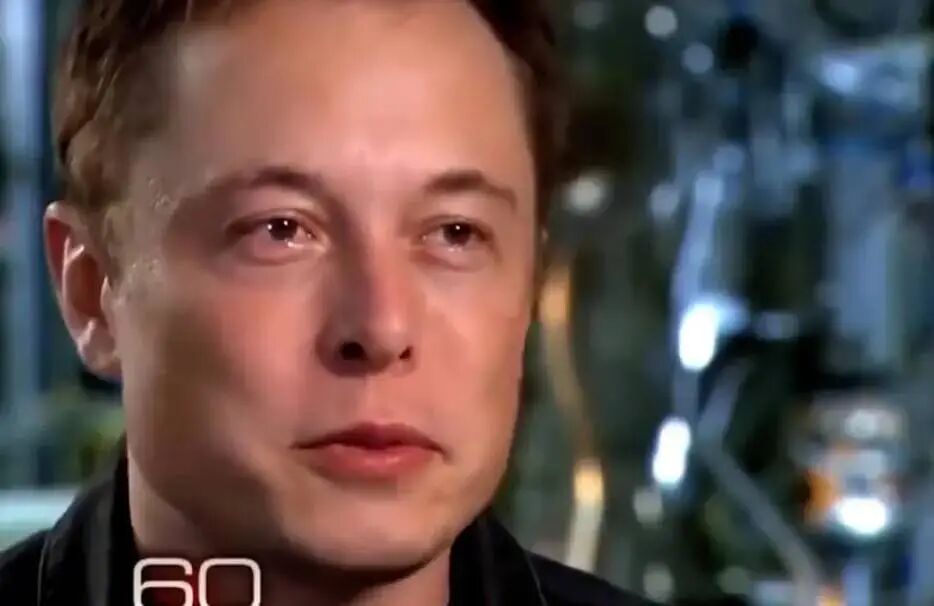
Looking back on those days, Musk's eyes welled up in front of the camera. He didn't cry when the rockets exploded, nor when the company was on the verge of bankruptcy, but he cried when he recalled the ridicule from his idols.

Musk told the host, "These people are my heroes, it was really tough. I really wish they could come see how hard my work is."

At this moment, a line of subtitles appeared: Sometimes, the very people you look up to let you down.

Desperate Survival

Before the fourth launch, no one was talking about the Mars plan anymore.

The entire company was shrouded in a tragic silence. Everyone knew that this Falcon 1 was cobbled together with the last of their funds; if this failed, the company was doomed to disband.

On launch day, there were no grand declarations, no passionate speeches. Just a group of people standing in the control room, silently staring at the screen.

On September 28, 2008, the rocket launched, a fire dragon illuminating the night.

This time, the rocket did not explode, but the control room remained silent until nine minutes later, when the engines shut down as planned, and its payload entered the designated orbit.

"Success!"

Thunderous applause and cheers erupted in the control center, and Musk raised his arms high, while his brother Kimbal began to cry.

Falcon 1 made history, and SpaceX became the world's first privately-funded commercial space company to successfully launch a rocket into orbit.

This success not only saved SpaceX but also earned the company a long-term "lifeline."

On December 22, Musk's phone rang, bringing an end to his disastrous 2008.

NASA's space administrator, William Gerstenmaier, delivered good news: SpaceX had secured a $1.6 billion contract for 12 round trips between the space station and Earth.

"I love NASA," Musk blurted out, and then he changed his computer login password to "ilovenasa."

Having walked on the edge of death, SpaceX survived.

Jim Cantrell, who was among the first to participate in SpaceX's rocket development and had once lent Musk his college rocket textbook, reminisced about the successful launch of Falcon 1:

"Elon Musk's success is not because he is visionary, not because he is exceptionally smart, and not because he works tirelessly, though all of that is true. The most important element of his success is that the word 'failure' does not exist in his dictionary. Failure has never been within his realm of thought."

Making Rockets Come Back

If the story ended here, it would just be an inspirational legend.

But the truly terrifying part of SpaceX began from here.

Musk insisted on a seemingly irrational goal: rockets must be reusable.

Almost all internal experts opposed this. It wasn't that it was technically impossible, but rather that it was too aggressive commercially, just like "no one recycles disposable cups."

But Musk persisted.

He believed that if airplanes were thrown away after one flight, no one could afford to fly, and if rockets couldn't be reused, space travel would forever be a game for a select few.

This is Musk's underlying logic, the first principles.

Returning to the beginning of the story, why did Musk, with a background in programming, dare to personally venture into building rockets?

In 2001, after reviewing countless professional books, Musk detailed the cost data of building rockets in an Excel spreadsheet. The analysis showed that the manufacturing costs of rockets had been artificially inflated by traditional aerospace giants by dozens of times.

These moneyed giants were accustomed to the comfort zone of "cost-plus," where even a screw could cost hundreds of dollars, while Musk would ask, "How much do the raw materials aluminum and titanium sell for at the London Metal Exchange? Why does it cost a thousand times more to make it into parts?"

If costs were artificially inflated, they could certainly be artificially reduced.

Thus, guided by the first principles, SpaceX embarked on a nearly no-turning-back path.

Repeated launches, analyzing failures, and continuing to launch again, repeatedly attempting recovery.

All doubts came to a halt that winter night.

On December 21, 2015, this day was destined to be recorded in the annals of human space history.

The Falcon 9 rocket, carrying 11 satellites, launched from Cape Canaveral Air Force Station. Ten minutes later, a miracle happened: the first stage booster successfully returned to the launch site, landing vertically on the landing pad in Florida like a scene from a sci-fi movie.

At that moment, the old rules of the aerospace industry were completely shattered.

The era of affordable space travel was initiated by this once "underdog" company.

Building Starships with Stainless Steel

If recovering rockets was SpaceX's challenge to physics, then building starships with stainless steel was Musk's "dimensionality reduction attack" on engineering.

In the early development of the "Starship," aimed at colonizing Mars, SpaceX also fell into the myth of "high-tech materials." The industry consensus at the time was that to fly to Mars, rockets had to be light enough, thus requiring expensive and complex carbon fiber composites.

To this end, SpaceX invested heavily in creating massive carbon fiber winding molds. However, slow progress and high costs alerted Musk, prompting him to return to first principles and do the math:

Carbon fiber costs as much as $135 per kilogram and is extremely difficult to process; whereas 304 stainless steel, the material used for kitchen pots and pans, costs only $3 per kilogram.

"But stainless steel is too heavy!"

In response to the engineers' doubts, Musk pointed out the overlooked physical truth: the melting point.

Carbon fiber has poor heat resistance and must be covered with thick and expensive thermal tiles, while stainless steel has a melting point of up to 1400 degrees and actually gains strength at the ultra-low temperatures of liquid oxygen. When factoring in the weight of the thermal protection system, a rocket made of "heavy" stainless steel had a total system weight comparable to that of carbon fiber, but the cost was reduced by 40 times!

This decision completely freed SpaceX from the shackles of precision manufacturing and aerospace materials. They didn't need clean rooms; they could set up a tent in the Texas wilderness and weld rockets like building water towers, not caring if they exploded, just sweeping up the debris and welding again the next day.

This first principles thinking has permeated SpaceX's entire development process. From questioning "Why can't rockets be reused?" to "Why must space materials be expensive?", Musk always starts from the most basic physical laws, challenging the industry's existing assumptions.

"Using cheap materials to create top-tier engineering" is SpaceX's core competitive advantage.

Starlink is the Real Game Changer

Technological breakthroughs have led to a valuation surge.

From $1.3 billion in 2012 to $400 billion in July 2024, and now to $800 billion, SpaceX's valuation has truly "rocketed."

But what truly supports this astronomical valuation is not the rockets, but Starlink.

Before Starlink, SpaceX was just a spectacular sight in the news, occasionally exploding and occasionally landing.

Starlink changed everything.

This low Earth orbit constellation made up of thousands of satellites is becoming the world's largest internet service provider, transforming "space" from a spectacle into an infrastructure akin to water and electricity.

Whether on a cruise ship in the middle of the Pacific or in the ruins of war-torn areas, as long as there is a receiver the size of a pizza box, signals will pour down from low Earth orbit hundreds of kilometers away.

It not only changed the global communication landscape but also became a super cash machine, providing SpaceX with a continuous cash flow.

As of November 2025, Starlink's global active subscriber count has reached 7.65 million, with actual coverage exceeding 24.5 million users. The North American market contributes 43% of the subscriptions, while emerging markets like South Korea and Southeast Asia account for 40% of the new users.

This is also why Wall Street dares to give SpaceX such a high valuation—not because of how frequently rockets are launched, but because of the recurring revenue brought by Starlink.

Financial data shows that SpaceX's expected revenue for 2025 is $15 billion, which is projected to soar to $22-24 billion in 2026, with over 80% of the revenue coming from the Starlink business.

This means SpaceX has completed a stunning transformation; it is no longer just a space contractor reliant on contracts but has evolved into a global telecommunications giant with a monopoly-level moat.

The Night Before the IPO

If SpaceX successfully goes public and raises $30 billion, it will surpass Saudi Aramco's record of $29 billion raised in 2019, becoming the largest IPO in history.

According to some investment banks' predictions, SpaceX's final IPO valuation could even challenge $1.5 trillion, potentially rivaling Saudi Aramco's $1.7 trillion listing record set in 2019, directly placing it among the top 20 publicly traded companies by market value.

Behind this astronomical figure, the first to get excited are the employees at Boca Chica and the Hawthorne factory.

In the recent internal stock sale, the price of $420 per share means that those engineers who once slept on the factory floor with Musk and endured countless "production hells" will see a wave of millionaires and even billionaires emerge.

But for Musk, the IPO is by no means a traditional "cash-out exit"; it is an expensive "refueling."

Previously, Musk had always opposed going public.

At a SpaceX conference in 2022, Musk doused cold water on all employees, warning them not to harbor illusions about the IPO: "Going public is definitely an invitation to pain, and stock prices will only distract you."

Three years have passed; what has changed Musk's attitude?

No matter how grand the ambition, it requires capital support.

According to Musk's timeline, within two years, the first Starship will conduct an uncrewed landing test on Mars; within four years, human footprints will be imprinted on the red soil of Mars. His ultimate vision, to establish a self-sustaining city on Mars through the shuttle of 1,000 Starships within 20 years, still requires an astronomical amount of funding.

He has stated in multiple interviews that the only purpose of accumulating wealth is to make humanity a "multi-planetary species." From this perspective, the hundreds of billions raised through the IPO can be seen as Musk charging Earthlings an "interstellar toll."

We look forward to the largest IPO in human history ultimately not turning into yachts or mansions; they will all transform into fuel, steel, and oxygen, paving the long road to Mars.

免责声明:本文章仅代表作者个人观点,不代表本平台的立场和观点。本文章仅供信息分享,不构成对任何人的任何投资建议。用户与作者之间的任何争议,与本平台无关。如网页中刊载的文章或图片涉及侵权,请提供相关的权利证明和身份证明发送邮件到support@aicoin.com,本平台相关工作人员将会进行核查。

Share To
APP

X

Telegram

Facebook

Reddit

CopyLink