$180 million in experience and lessons: The current entry point for Web3 is not social, but wallets.

CN
1 hour ago

Author: Blockchain Knight

Recently, Dan Romero, the founder of Farcaster, which was once highly anticipated for Web3 social applications, clearly stated in an open letter that after 4.5 years of exploration, the "social-first" approach has been proven unfeasible. In the future, the focus will be entirely on wallet product development, as "every new and retained wallet user is a new user of the protocol."

This star project, which has raised a total of $180 million and is valued at nearly $1 billion, has taken an almost "admission of error" stance, providing important insights into the competition for entry points in the Web3 industry.

This shift reflects the core differences between Web3 and Web2. In the internet era, social connections are undoubtedly a super entry point for traffic aggregation.

Facebook has connected 2.9 billion users globally through social relationship chains, while WeChat has derived payment, office, and other full-scenario services based on social interactions, making social attributes the "traffic cornerstone" of internet products.

However, the core of Web3 is value interaction rather than information transmission. The primary need for users entering the ecosystem is to manage digital assets and complete on-chain activities.

This makes wallets, which carry private key management and asset interaction functions, naturally the entry-level products of Web3. Farcaster's transformation essentially acknowledges this logic, but is this really the endgame for Web3 entry points?

Why Are Wallets Becoming More Important?

The core value of wallets stems from their irreplaceability as entry points for on-chain interactions.

Unlike the account-password system of internet products, in the Web3 world, wallet addresses serve as the user's unique identity, and private keys are the proof of asset ownership.

Whether configuring crypto assets, participating in DeFi, or using on-chain applications, all operations must be initiated through the wallet for signature verification, making wallets the "first door" for users entering the Web3 ecosystem.

Especially in the past two years, the explosive growth of on-chain users has further amplified the strategic value of wallets.

With the maturity of Ethereum L2 technology and the revival of the Solana ecosystem, along with the entry of traditional financial institutions, the scale of active on-chain users continues to expand.

Dune data shows that by the third quarter of 2025, the number of active global crypto wallet addresses reached 830 million, with 82% of addresses initiating on-chain transactions within 30 days, and the number of DApps connected to wallets increased by 117% compared to last year.

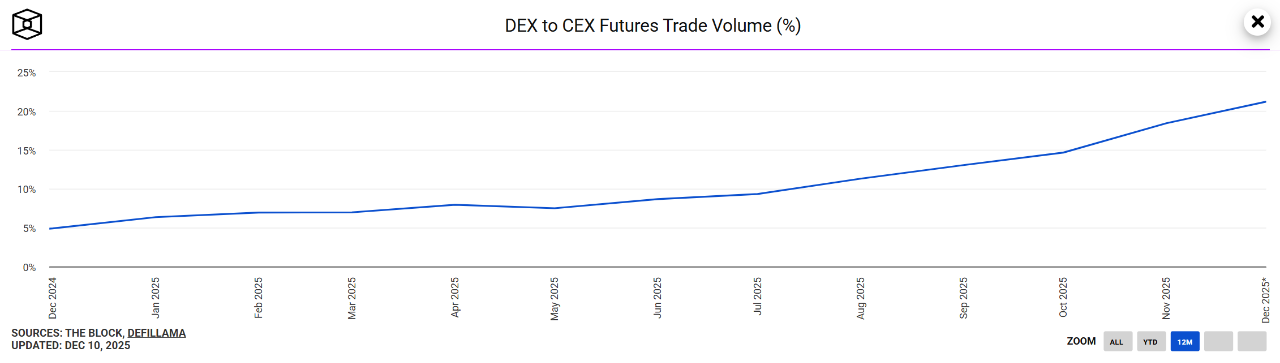
At the same time, the rise of DEX and the erosion of CEX's market share further highlight the irreplaceability of wallets.

Since 2025, the market share of DEX has risen from 10.5% at the beginning of the year to 19% by the end of the third quarter, while the futures market share increased from 4.9% to 13%.

In the third quarter, global DEX spot trading volume reached $1.43 trillion, a 43.6% increase from the previous quarter, setting a new historical high.

The core logic of this transformation is the user's pursuit of asset autonomy. By connecting to DEX through wallets, users no longer need to entrust their assets to exchanges, achieving "I control my assets." This trend is driving wallets to upgrade from mere tools to ecological entry points.

Additionally, the layout of traditional financial institutions further confirms the industry's position of wallets. For example, Bank of New York Mellon has adopted MPC (Multi-Party Computation) to launch custodial wallets, providing secure asset storage services for institutional clients.

BlackRock has explicitly stated that the company's goal is to replicate everything in today's traditional finance into digital wallets.

The entry of these traditional institutions not only brings incremental users to the wallet sector but also promotes wallets to become the core bridge connecting traditional finance and Web3.

Competition Among Giants: Layout and Game in the Wallet Sector

In the face of the strategic value of the wallet sector and the challenges faced by CEX, giants in the crypto industry have begun comprehensive layouts, with the development paths of Coinbase, Binance, and OKX forming a new landscape in the industry.

As a compliance benchmark in the U.S., Coinbase's wallet product is deeply integrated with its exchange ecosystem, allowing users to seamlessly execute a closed-loop operation of "fiat purchase - on-chain interaction - asset transfer back."

With the reform of the Base chain this year, the Coinbase wallet has become the primary interaction entry point on that chain, attracting developers and users through fee subsidies and other means, forming a comprehensive platform that integrates finance, messaging, content creation, and decentralized applications.

Binance, on the other hand, leverages its scale advantage to create a "full-scenario wallet ecosystem," with its wallet product integrating public chain interactions, staking, Launchpad, and other full-link services.

Inspired by OKX's open ecosystem, Binance launched a seamless trading feature between CEX and DEX in August 2025, allowing users to directly access the liquidity of related DEX through their wallets without needing to transfer assets across platforms.

Among the wallet layouts of the three giants, OKX's forward-looking strategy is the most leading. As early as 2023, OKX broke out of the limitations of a single public chain and established a "multi-chain priority" development strategy.

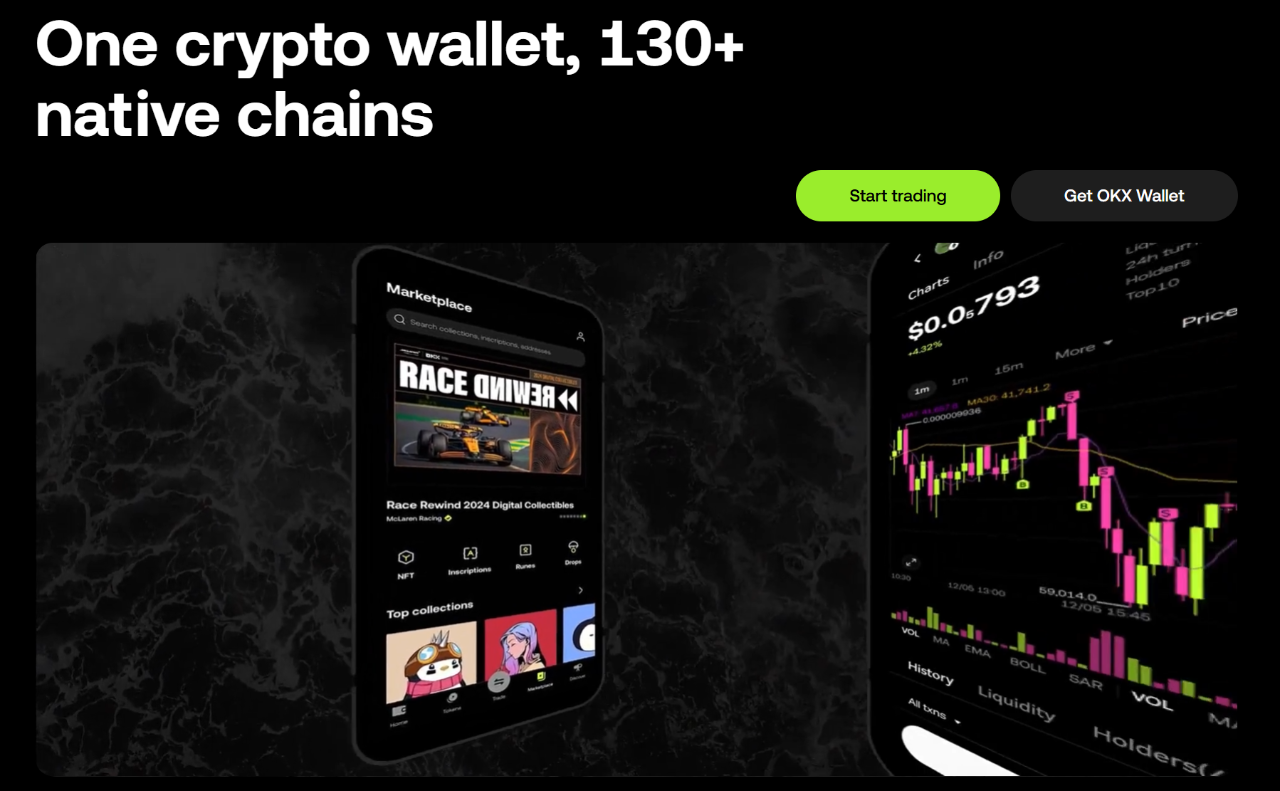
Its wallet has steadily supported asset storage and interaction for 130 public chains, making it one of the wallet products with the most supported public chains in the industry.

At the same time, with the core code of the OKX wallet fully hosted on GitHub, its open-source transparency has won the trust of global developers through standardized API interfaces.

Currently, it has integrated thousands of decentralized applications, forming an ecological matrix covering almost all on-chain activities, and open-source has become a new trend in the industry.

OKX is also the first institution to support direct connection wallets for exchanges, reportedly building a technical team of hundreds of people and spending millions each month to create this wallet, which is quite popular among users.

It has entered the originally crowded wallet sector with a leading position and has become a top product in Web3. Such foresight and willingness to invest are indeed rare.

Thanks to OKX's early layout, Coinbase and Binance have also gradually seen opportunities and chosen to follow suit strategically, which has become a major focus for exchanges this year.

Currently, almost all have formed their own wallet ecosystems to meet the growing demand for on-chain economic activities, further expanding the ecological status of wallets.

Is the Landscape of Web3 Entry Points Already Set? The Answer Is Not Necessarily

Although wallets have currently established a core position as entry points for Web3, it is still too early to assert that "the landscape is set." The current entry point pattern in Web3 still has some variables.

Looking back at the industry's development, the focus of entry points has undergone two key migrations: early user demand concentrated on exchanges, with CEX becoming the absolute entry point due to its advantages in deposits and withdrawals, monopolizing industry traffic for a time.

As Ethereum smart contracts emerged, the DeFi and NFT ecosystems exploded, and the demand for asset autonomy among users drove the focus of entry points to shift towards wallets, which gradually took on core functions such as DApp interaction and asset management.

Today, this pattern is still dynamically evolving.

In the future, with technological iterations, the entry point landscape may further evolve. The combination of AI and wallets has already shown initial signs, with some products enabling natural language interactions and intelligent risk warnings through AI agents, making wallets more aligned with ordinary user needs.

At the same time, the popularization of account abstraction may lower the usage threshold for wallets, further pushing entry points downward.

Just as the browser entry point of the early mobile internet was eventually diverted by social and e-commerce, the Web3 industry is still in its early stages, and technological iterations and demand evolution may still give rise to new entry forms.

However, it is certain that against the backdrop of financial activities moving on-chain becoming a clear trend, the core value of wallets will continue to strengthen.

As OKX CEO Star stated during a recent appearance at the Abu Dhabi Finance Week, the internet era is creating a brand new on-chain economy, and in the coming decades, approximately 50% of global economic activities will operate on blockchain.

Correspondingly, the scale of crypto asset custody by traditional financial institutions has grown by 120% this year.

Behind these figures is the ongoing prosperity of on-chain economic activities, and wallets, as the core tools for asset management and interaction, will directly benefit from this trend.

Of course, looking back at Farcaster's transformation is not the end but the starting point for the Web3 industry to return to the essence of value.

The entry point of the internet connects people to people, while the entry point of Web3 connects people to value (and in the future, it may also connect machines to machines). This core difference determines the irreplaceability of wallets.

For industry participants, whether continuing to delve into wallet technology innovation or exploring the integration of wallets with other scenarios, the focus must be on user asset security and experience optimization.

The competition for entry points in Web3 may not yet be over, but wallets have already become the most certain winners in the current stage due to their unique value.

So, who will be the next winner in this sector?

免责声明:本文章仅代表作者个人观点,不代表本平台的立场和观点。本文章仅供信息分享,不构成对任何人的任何投资建议。用户与作者之间的任何争议,与本平台无关。如网页中刊载的文章或图片涉及侵权,请提供相关的权利证明和身份证明发送邮件到support@aicoin.com,本平台相关工作人员将会进行核查。

Share To
APP

X

Telegram

Facebook

Reddit

CopyLink