Despite being tortured in prison, he has still not surrendered the Bitcoin worth 1 billion dollars.

CN
3 months ago

Author: Unfamiliar with the Classics

Yesterday, the crypto market crashed again without warning, with nearly $20 billion in leveraged positions forcibly liquidated, far exceeding the $1.2 billion and $1.6 billion during the 2020 pandemic and the FTX collapse, marking the largest liquidation event in cryptocurrency history.

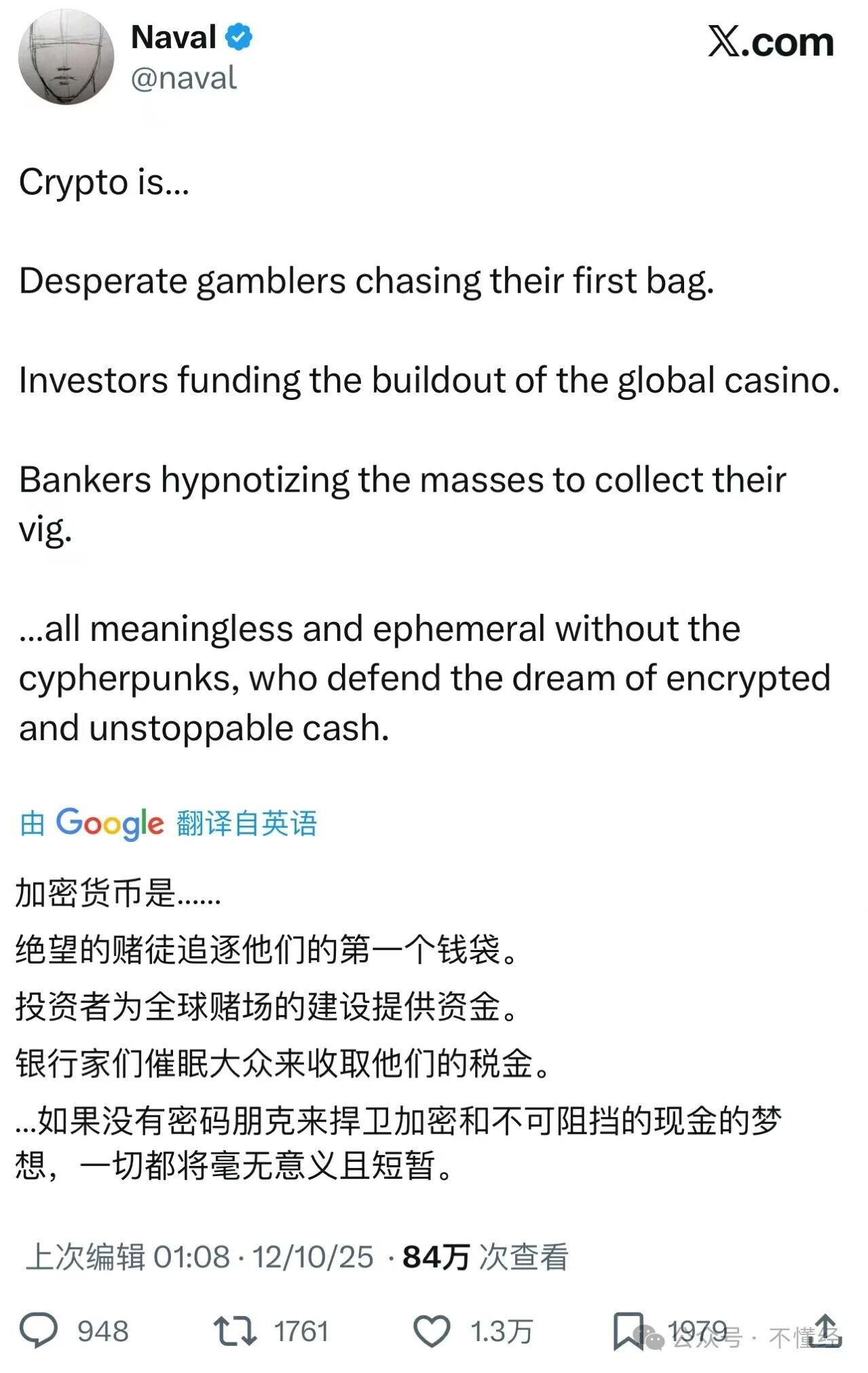
In the midst of bloodshed and despair, Silicon Valley investor Naval tweeted something that stung a bit and also felt like a cold splash of water, but it revealed the cruel essence of this game:

"Crypto is… desperate gamblers chasing the first bag of money; investors paying for the infrastructure of a global casino; bankers hypnotizing the masses to skim profits—without the 'crypto, unstoppable cash' dream guardians, the cypherpunks, all of this is meaningless and fleeting."

If Naval's words depict the emptiness of this game, a deep report from a former senior journalist at The Wall Street Journal reveals, in a nearly brutal way, another world beneath the poker table—what happens when the stakes are $1 billion and the 'rules' of the table are completely torn apart.

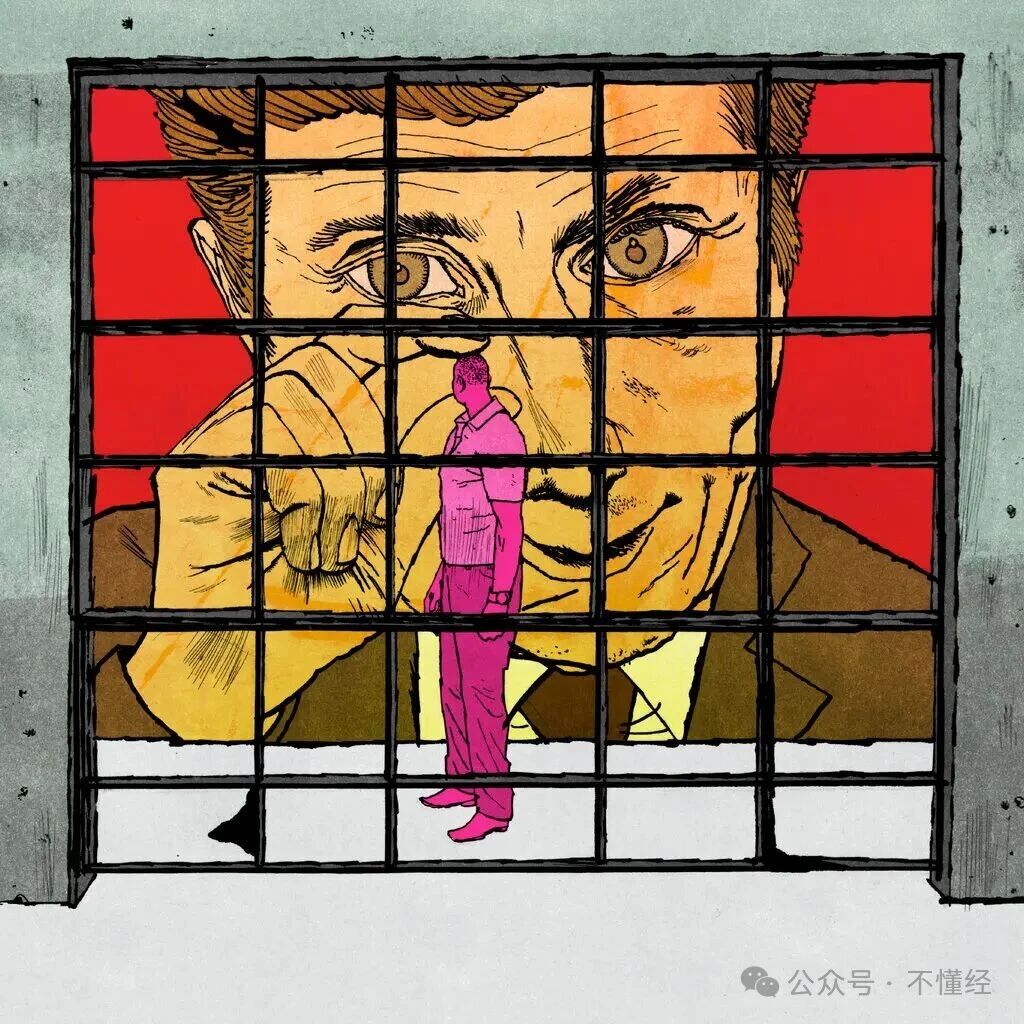
This story has no financial models, only the most primal violence. The protagonist is not a trader, but a fugitive entrepreneur; the opponent is not the market, but a billionaire and head of state who can deploy secret police and private jets to kidnap him directly from Abu Dhabi back to his home country and throw him into a black jail.

From this, it is evident that when the absolute power of the old world sets its sights on the digital wealth of the new world, all ideals of "decentralization" seem utterly fragile.

This is no longer the "meaningless" digital game Naval speaks of, but a physical plunder accompanied by "blood splattering in the cell." While the gamblers lament, "Please cherish the current price fluctuations," this story will chillingly make you realize that more terrifying than prices going to zero is the power that can make you "physically disappear."

However, from another perspective, it also indicates that if you have a strong enough backbone to withstand the beatings in prison, then no one can take your Bitcoin away.

Below is the full article published by this former senior WSJ journalist in Wired magazine.

Someone Tipped Me Off About a Crypto Story. What I Found Was Crazy.

Someone tipped me off about a cryptocurrency story, and my findings were astonishing.

Oct. 5, 2025

By Philip Shishkin

In late May, a fugitive entrepreneur controlling a massive Bitcoin fortune walked into the lobby of a hotel in Abu Dhabi for a routine meeting with a lawyer. Minutes later, he was surrounded by a group of security personnel and whisked away in a convoy of two cars, ultimately blindfolded and stuffed into a secret private jet bound for his home country of Georgia.

There, he was thrown into prison and ordered to transfer his Bitcoin to the capricious billionaire master of this Caucasian nation. To reinforce this message, a thug was sent to his cell to beat him into unconsciousness.

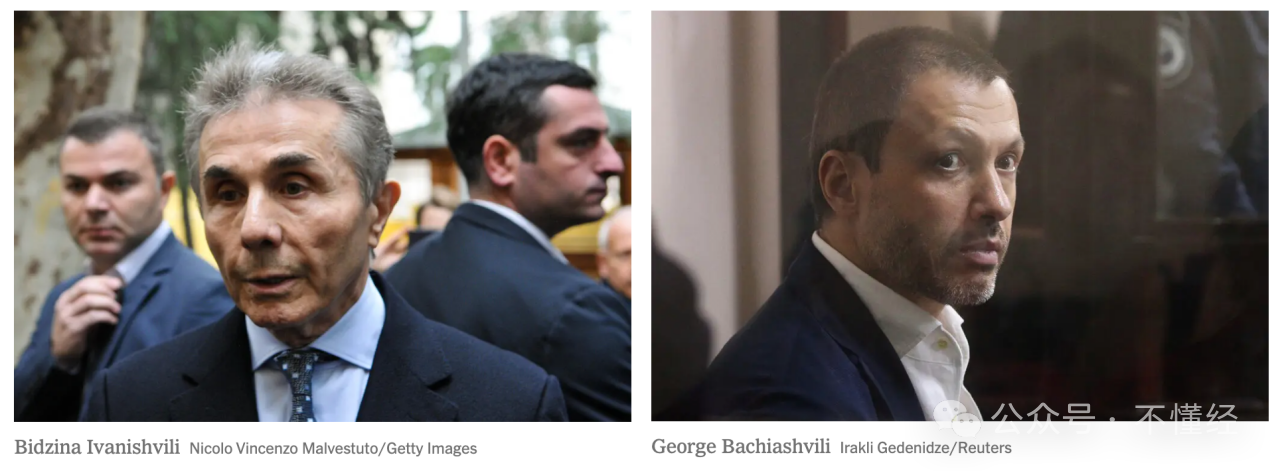
At least, that is the entrepreneur's own account. According to him, this was the dramatic conclusion to his relationship with the Georgian billionaire. More than a decade ago, the two had stood on the same side. The young man named George Bachiashvili had worked for billionaire Bidzina Ivanishvili, helping him manage his business and investments.

Over time, Mr. Ivanishvili almost completely controlled Georgia, while Mr. Bachiashvili delved deeper into the world of cryptocurrency, and their relationship ultimately soured. Now, they are bitter enemies, with one seemingly trying to eliminate the other.

Having reported in the region for many years as a journalist, I have continued to follow developments there. A few months ago, a contact in Tbilisi mentioned this story to me, calling it a politically charged cryptocurrency heist. The deeper I investigated, the more significant it seemed.

In recent weeks, I spoke with Mr. Bachiashvili's lawyer, his mother, and others who know him. On the other hand, I communicated with Mr. Ivanishvili's lawyer—who denied all allegations—and reviewed case descriptions published by Georgian media and oversight agencies.

My findings reveal many facets of today's world. This story is about an individual's control over an entire nation, a process currently unfolding in Hungary and Turkey, and—alarmingly—also happening in the United States.

It dramatically showcases the opportunities and dangers of serving an omnipotent figure, where absolute loyalty is required, and individual initiative is punished. It also highlights how easily individuals can become pawns in geopolitical games.

But the most enlightening aspect of this story is the technology that underpins its core: cryptocurrency.

Bitcoin was created by Satoshi Nakamoto in the aftermath of the 2009 financial crisis, and its true identity remains a mystery. It initially attracted idealists and libertarians, setting a benchmark for the development of cryptocurrency. While supporters emphasize the benefits of decentralized finance and blockchain, the field is also rife with illegal activities, speculation, and obscure tokens.

An increasing number of cryptocurrency billionaires have become targets for robbery and kidnapping, while potential dictators have also entered the fray, notably U.S. President Trump, whose "Trump Coin" has reportedly brought his family $5 billion in profits.

Cryptocurrency is the wild frontier of wealth and power, and it is at the heart of this crazy cautionary tale.

It is no exaggeration to say that Mr. Ivanishvili rules Georgia. He is reclusive, often residing in a mountaintop mansion, somewhat akin to Iran's Supreme Leader, but without the religious overtones or formal title. Since his party, "Georgian Dream," came to power in 2012, he has almost consolidated total control through election manipulation and sidelining opponents.

In the process, Georgia has transformed from a flawed democracy aspiring to the West into a bizarre system essentially driven by a person who holds no public office and is allied with Russia.

However, at the end of the first decade of the 21st century, what Mr. Ivanishvili sought was a more mundane role: that of an ophthalmologist. Mr. Ivanishvili's family fortune is estimated at $2.7 billion, and at that time he had just returned to Tbilisi from France, looking for someone to care for his father and children, two of whom needed specialized eye care.

He chose a respected ophthalmologist, Marina Ramazashvili. She is Mr. Bachiashvili's mother.

During an appointment, while waiting for his pupils to dilate, Mr. Ivanishvili struck up a conversation with his doctor. She recalled mentioning her son and his work at Booz Allen Hamilton's Moscow office, where he was already growing weary of the stereotypical consulting job.

Mr. Ivanishvili asked how much her son earned. According to Dr. Ramazashvili, when he heard the figure of $10,000 a month, Mr. Ivanishvili considered him a "substantial person" and asked her to write down her son's phone number on a piece of paper.

Mr. Bachiashvili, who holds dual citizenship in Georgia and Russia, soon joined Mr. Ivanishvili's vast cross-industry business empire. With an MBA from a top French business school, he quickly rose through the ranks and helped his billionaire boss sell his assets in Russia before Mr. Ivanishvili entered Georgian politics. When Mr. Ivanishvili became Prime Minister in 2012—he resigned from the position a little over a year later, preferring to rule from behind the scenes—Mr. Bachiashvili joined his team as a financial advisor.

Before long, he began helping manage Mr. Ivanishvili's personal wealth. It turned out he was quite adept at this, leading a global legal action against Credit Suisse for negligence after a wealth manager there stole hundreds of millions from Mr. Ivanishvili.

But Mr. Bachiashvili had another important role: operating a flagship private equity fund partially funded by Mr. Ivanishvili, aimed at investing in the Georgian economy and attracting foreign investment.

It was in this position that Bitcoin caught his attention.

Although cryptocurrency was still an emerging niche industry at the time, Georgia was home to one of the world's largest Bitcoin mining companies, BitFury. The company chose to build an innovative data center in Tbilisi, utilizing the country's low electricity prices and open policies toward foreign investment, using computers submerged in cooling liquid to mine Bitcoin.

Georgia's open policies were a political legacy left by Mr. Ivanishvili's predecessor, Mikheil Saakashvili, who is now imprisoned on charges widely regarded as fabricated.

Under Mr. Bachiashvili's leadership, the private equity fund helped finance BitFury's expansion. It was an exciting time. BitFury's co-founder, Val Vavilov, proposed the idea of putting Georgia's land registration information on the blockchain to create an immutable and decentralized record of ownership and transactions.

He had planned to incorporate smart contracts but ultimately failed to do so. Smart contracts are protocols stored on the blockchain that automatically execute when preset conditions are met. The idea was so novel that it was even the subject of a case study written by Harvard Business School.

From then on, Mr. Bachiashvili became a staunch believer in Bitcoin's future and wanted to participate personally.

"What if Bitcoin starts to drop? Even if they give you Bitcoin, what does it matter?"

That was in 2015, when Mr. Ivanishvili was interrogating his young assistant. From a transcript of a recorded conversation I saw, Mr. Ivanishvili seemed dismissive of a personal transaction Mr. Bachiashvili was conducting to rent mining power from BitFury.

But his subordinate indeed seized a good opportunity. Mr. Bachiashvili took out a $5 million loan and added his own $1.3 million in savings, ultimately acquiring over 24,000 Bitcoins. He sold about half of the Bitcoins to repay the principal and interest on a loan from a bank owned by Mr. Ivanishvili at the time. By 2016, the remaining Bitcoins were worth nearly $12 million.

It was a high-risk yet thrilling gamble that set the course for Mr. Bachiashvili's life over the next decade. Through his company, "Mission Gate," he became a global venture capitalist investing in tech startups.

He gradually distanced himself from Mr. Ivanishvili and eventually stopped working for him altogether. He began to have serious doubts about the new direction Georgia was taking under his former boss's leadership. In 2022, he publicly opposed the government's pro-Russian stance and condemned Russia's invasion of Ukraine that same year.

Shortly thereafter, the Georgian prosecutor's office suddenly decided to reopen the investigation into a Bitcoin transaction that took place nearly a decade ago. Mr. Ivanishvili claims that the young entrepreneur stole Bitcoin from him and should return it.

His argument is that the bank loan originally provided to Mr. Bachiashvili entitled him to a proportional share of the profits. Mr. Ivanishvili effectively wants to be compensated twice: once for the interest on the loan and once for the Bitcoin generated from that loan. The disputed Bitcoin is now worth approximately $1 billion.

While Mr. Ivanishvili may have been cautious about Bitcoin a decade ago, he is now very interested in it. His lawyer told me that the 2015 recording suggesting Mr. Ivanishvili was skeptical about Bitcoin "is not authentic" and shows "signs of editing."

However, he stated that even this allegedly tampered version does not negate the fact that Mr. Ivanishvili should be regarded as the true investor in this transaction. His lawyer wrote in a Facebook post that he was merely "demanding the return of cryptocurrency illegally appropriated by Mr. Bachiashvili."

The criminal investigation escalated, and in 2023, Mr. Bachiashvili was formally charged. He found himself in a state of legal uncertainty. Meanwhile, Mr. Ivanishvili and the political leaders he handpicked became increasingly paranoid about domestic and foreign so-called enemies.

After a controversial parliamentary election—where widespread evidence of electoral fraud and manipulation by the Georgian Dream party sparked massive street protests—Mr. Bachiashvili criticized the government's repressive actions and defended the pro-European aspirations of the protesters, undoubtedly worsening his situation.

By March of this year, Mr. Bachiashvili's conviction seemed imminent. He decided it was time to flee.

One morning in Tbilisi, Mr. Bachiashvili shook off government surveillance and squeezed into a small hiding place between the trunk and back seat of a dark blue Toyota Camry that had been specially purchased for this operation. (You can watch a reenactment video of his escape produced by the Georgian security services.)

According to investigators, a smuggler drove him undetected to a checkpoint bordering neighboring Armenia, where he walked into the country using his Russian passport. From there, Mr. Bachiashvili flew to the United Arab Emirates, believing it to be safe due to the country's reputation for a business-friendly environment for cryptocurrency investors.

A week after his escape from Georgia, he was convicted in absentia of theft and money laundering and sentenced to 11 years in prison.

In the UAE, Mr. Bachiashvili rented a luxurious beachfront villa on Saadiyat Island in Abu Dhabi, where his parents also came to join him. He fed the cats in the community and planned his next move. His mother told me he did not intend to stay long in the UAE and wanted to travel to Mexico via France. However, his attempts to leave from Abu Dhabi and Dubai were thwarted twice, as UAE airport officials refused to let him depart without explanation.

At that time, Mr. Bachiashvili was unaware that a meticulously planned operation to kidnap him seemed to be underway. Around spring, a Dubai entrepreneur named Timur Kudratov filed a complaint with UAE authorities, claiming that Mr. Bachiashvili borrowed over $500,000 from him and never repaid it. Under UAE law, an unpaid debt is sufficient to flag a person's name and prevent them from leaving the country.

Mr. Bachiashvili stated that he had never met Kudratov and had never borrowed money from him. Upon learning of the situation, he immediately wrote to a local lawyer to clarify the matter. His lawyer said that UAE authorities quickly dismissed the complaint, allowing Mr. Bachiashvili to regain his freedom to travel internationally. But he was already out of time.

On May 24, Mr. Bachiashvili left his beachfront villa to meet a lawyer at a nearby hotel. After the meeting, as he and his bodyguard prepared to drive back to the villa, six to eight plainclothes officers approached the car and demanded that Mr. Bachiashvili get out.

They identified themselves as members of the Abu Dhabi Criminal Investigation Department. Some were dressed in traditional Emirati attire, while others wore Western-style clothing, looking or sounding nothing like locals. According to Mr. Bachiashvili's later account to his lawyer, some of them appeared to be Russian or Eastern European.

These individuals took him to the local police headquarters in two unmarked cars. This marked the beginning of a two-day police "hunting trip," during which Mr. Bachiashvili was taken to Dubai and then brought back. Ultimately, he was shackled and handcuffed and taken to a place resembling a private airport. He managed to shift his blindfold slightly and saw the iconic red and white colors of a Georgian plane. He told his captors that he was concerned for his safety and life, but they ignored him.

He was escorted onto the plane, and the blindfold and restraints were removed. He told his lawyer that he saw about five or six people and immediately recognized one of them as the head of the Georgian National Security Service and a former bodyguard of Mr. Ivanishvili.

As the plane took off, they warned him not to discuss the kidnapping situation to avoid jeopardizing future negotiations. He was blindfolded again so that when the pilot left the cockpit to use the restroom, he could not see him. He told his lawyer that the remainder of the flight was purely psychological torment.

Part of the mystery has become clear. According to a recent report from the Georgian publication Business Media, the plane that brought Mr. Bachiashvili back to Tbilisi belonged to Georgian Airways and had its transponder turned off for most of the flight.

The airline stated to the publication that it was a private plane that anyone could rent, and the company could not disclose client information; Mr. Ivanishvili's lawyer claimed that the Georgian leader never ordered or requested anyone to forcibly return Mr. Bachiashvili to Georgia. However, it is not difficult to guess who might be the mastermind behind it.

Why did the UAE allow or even seem to assist in this kidnapping?

One theory I heard is that the Gulf nation coveted the top position in the United Nations World Tourism Organization, a position long held by a senior Georgian diplomat. Indeed, ten days before Mr. Bachiashvili's kidnapping, Georgia suddenly withdrew its candidate for re-election and instead supported a competitor from the UAE, who successfully won the position.

The UAE Foreign Ministry did not respond to requests for comment via email, and the UAE embassy in Washington acknowledged receipt of questions regarding the case but did not provide any answers. If this theory is true, it would be one of the most bizarre reasons for assisting in the handover of a fugitive.

When the Georgian plane landed in Tbilisi, Mr. Bachiashvili was taken to prison, where he had a conversation with the prison warden. He was told that unless he handed over his cryptocurrency wallet and bank accounts to Mr. Ivanishvili, he should be prepared to encounter various crazy characters in prison.

He refused.

Within days of the warning, a man entered Mr. Bachiashvili's cell and beat him severely. It was July 11, just days before Mr. Bachiashvili's 40th birthday. "There was a pool of blood in the cell, and the walls were splattered with blood," he wrote in a letter to his lawyer.

Mr. Ivanishvili's lawyer stated that the Georgian leader never ordered or requested anyone to threaten, extort, or beat Mr. Bachiashvili. The Georgian government provided a vague explanation regarding the kidnapping incident.

"Even if we theoretically envision such an operation, it would be entirely within the legal framework," said an ally of Mr. Ivanishvili, the country's Prime Minister. "When a person sentenced to 11 years in prison is captured in such an operation, the law is being enforced from start to finish."

The Georgian security services incredulously claimed that Mr. Bachiashvili was arrested in the border area between Georgia, Armenia, and Azerbaijan.

Meanwhile, the BitFury data center in Tbilisi is now abandoned and idle. It was both the source of Mr. Bachiashvili's wealth and the root of his misfortune. Over the past decade, electricity prices have soared, and the overall business environment in Georgia has deteriorated.

Additionally, the industry itself has become increasingly commoditized, and BitFury has diversified from its origins in mining in Georgia to other blockchain software and hardware businesses. The company has also adapted the liquid cooling data center concept it honed in Georgia to serve the rapidly growing artificial intelligence market worldwide.

Despite the torment he has endured in prison, Mr. Bachiashvili has yet to surrender his Bitcoin.

免责声明:本文章仅代表作者个人观点,不代表本平台的立场和观点。本文章仅供信息分享,不构成对任何人的任何投资建议。用户与作者之间的任何争议,与本平台无关。如网页中刊载的文章或图片涉及侵权,请提供相关的权利证明和身份证明发送邮件到support@aicoin.com,本平台相关工作人员将会进行核查。

Share To
APP

X

Telegram

Facebook

Reddit

CopyLink