Title: Tonstakers
Translation: Plain Language Blockchain

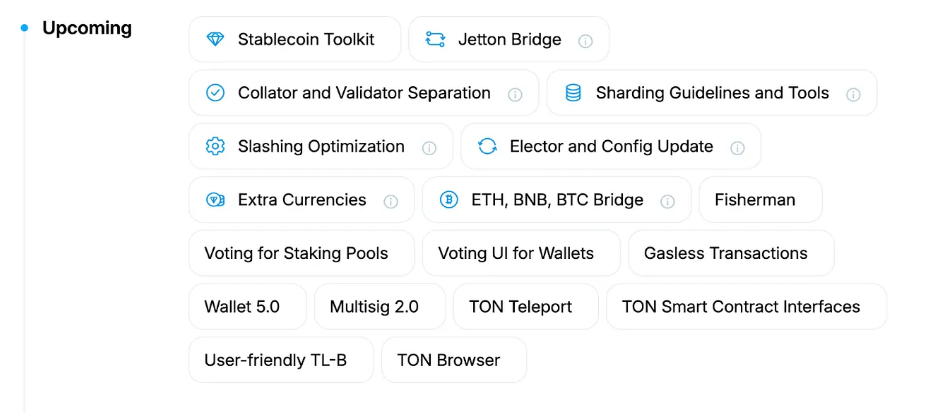
TON's development roadmap has many interesting plans, such as stablecoin toolkits, sharding tools, and native bridges for BTC, ETH, and BNB. Although there are no release dates, we hope they will be launched in 2024. In this article, we will explain the upcoming features, how they will impact the network, and whether they will change TON's staking rewards.

We will categorize the most interesting points into three categories to better understand their overall impact. Let's delve in!
1. Feeless Transactions
This is the most eye-catching milestone in TON's 2024 roadmap. No other major chain offers feeless transactions, so TON has the potential to innovate the blockchain space and attract more users from other ecosystems.
In every blockchain, users have to pay gas fees for their transactions. Blockchain protocols cannot eliminate gas fees because they prevent spammers from sending thousands of transactions per second, causing network congestion.
Perhaps TON will subsidize gas fees in certain cases, such as Telegram wallet or USDT transfers, to attract more users to use TON for their daily needs. Imagine being able to send $5 to your friend on Telegram without needing their credit card number or wallet address, and most importantly, it's free.
2. Changes in Staking Rewards
1) Separation of Validators and Collators
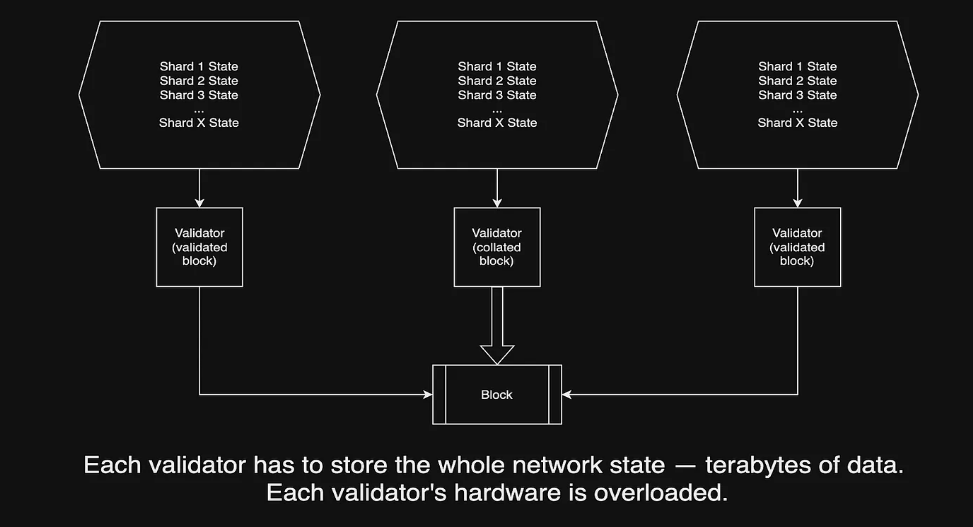
This is a significant upgrade for TON's scalability. Validators are responsible for collecting and validating transactions and combining them into a block. For this, nodes store and continuously monitor the balances of all addresses in the TON blockchain.
TON plans to onboard 500 million Telegram users by 2028 and utilize sharding technology to provide sufficient transaction execution time and low transaction fees. Through sharding, the blockchain is divided into several shard chains. 2 shard chains provide double the throughput, 4 shard chains provide 4 times the throughput, and so on.
Each shard chain will have its own subset of validators to collect and validate blocks. To ensure security, these validators must rotate randomly among the subsets regularly. Here arises a problem: under random rotation, validators will have to store the state of each shard, not just their own shard. Storing the state of 1 million accounts requires powerful servers, and storing the state of 5 million accounts in one place is impossible.
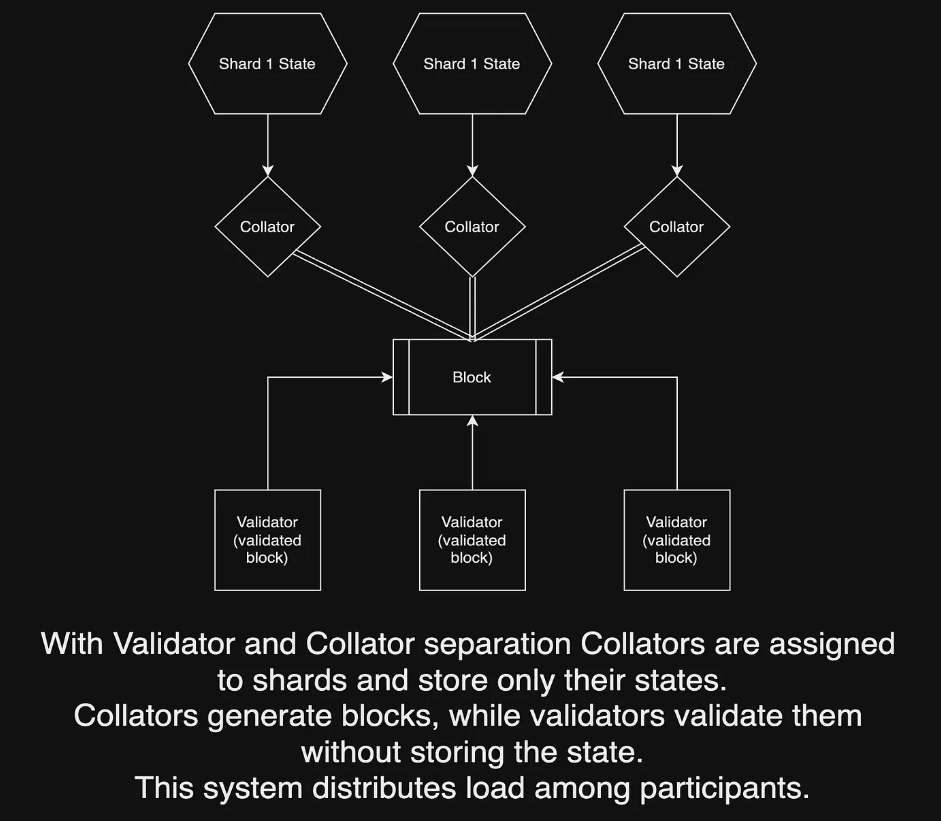
To address this issue, the TON team proposes to separate validation and collection into two roles: Collators may only store the state of their shard chain and collect blocks, while Validators are only assigned to validate and sign blocks for that shard chain for a period of time. The load and risk will be evenly distributed, allowing TON to scale to meet the needs of billions of users.
In the official documentation, there is no mention of staking reward issues. Although only validators bear the risk in block validation, collators should also be rewarded for storing state and generating blocks.
Despite the validation process becoming more complex, TON's staking annualized return will not change, and Tonstakers' liquid staking will remain as profitable as it is now.
2) Sharding Guides and Tools
Thanks to the responsible developers, TON will be one of the first blockchains to effectively utilize sharding. Centralized exchanges, payment systems, and even TON's services and applications will require a special toolkit and documentation to implement sharding support, as it is a technology they are unfamiliar with. This is why TON developers hope to release such tools in the near future.
3) Penalty Optimization
Penalties are a way to punish underperforming validators: missing blocks, frequent offline status, or attempting to include fraudulent transactions in blocks.
Currently, TON uses a complaint mechanism to punish dishonest validators. Any network participant can provide evidence and hold bad validators accountable.
Penalty optimization should bring a better system for detecting and punishing dishonest validators, enhancing TON's robustness. This will be implemented in several steps: first, the liquid staking protocol will not be affected by validator penalties, ensuring users' rewards. Then, penalties will be distributed in TON provided by the liquid staking protocol, slightly reducing the average annualized return.
4) Voter and Configuration Contract Updates
TON's staking, liquid staking, and on-chain governance are all implemented through smart contracts. Tonstakers also use these contracts to stake TON, provide TON to validators, and distribute rewards among our users.
Updates to voter and configuration contracts will allow our users to vote on network proposals, making the network more open and increasing the value of each user.
3. Decentralized Finance
We are grouping these changes together because when combined, they will have a positive impact on the DeFi ecosystem.
1) TON Stablecoin Toolkit
Apart from the name, the documentation does not explain its specific contents. We can speculate that the stablecoin toolkit will allow anyone to issue algorithmic stablecoins pegged to local fiat currencies, such as GBP, EUR, NZD, etc.
Considering the integration of TON with Telegram, built-in wallets, and the recent decision to share TON's ad revenue with channel owners, we can assume that Telegram might add the functionality to pay for in-app services using local stablecoins.
2) Jetton Bridge
TON has already established bridges with the Ethereum and BNB chains for bridging $TON and popular coins such as ETH, BNB, and USDC.
The Jetton Bridge will allow users to send TONToken-like tokens such as tsTON to other chains. Why not add tsTON on Uniswap?
3) Ethereum, BNB, and Bitcoin Bridges
Despite having third-party bridges, it would be logical to introduce official bridges for issuing additional currencies.
4) Additional Currencies
$TON is the native token used for staking and paying gas fees. For example, the functionality to trade $TON is built into the TON protocol, and the balance is stored in the account.
Jettons (such as USDT and tsTON) operate through third-party smart contracts and cannot replace $TON for gas fees and staking. User balances are stored in these contracts.
Additional currencies will allow TON users to create tokens similar to native tokens, which will also be stored in accounts. The most significant difference between additional currencies and Jettons is that the transactions of additional currencies should be 2-3 times cheaper than Jettons, as they will occur without contract calls.
Issuing Bitcoin and Ethereum-like bridged currencies or native USDT as additional currencies will make collaboration with TON more advantageous and attract more new users to use TON. Want to buy Bitcoin, Ethereum, and BNB? TON will offer them on one platform.
4. Conclusion
TON's roadmap looks promising and brings many new tools to make TON more popular among the masses.
We believe the most impactful updates are the native currency, bridges, and stablecoin toolkit, which will collectively expand TON's use cases in daily payments and allow more people to start building their crypto asset portfolios.
At the same time, we Tonstakers are interested in the separation of validators and collators, penalty optimization, and staking contract updates. The separation and sharding will not affect the staking annualized return, and the contract updates will bring more value to liquid staking users as they will have the right to vote on TON updates.
We can't wait to see what the future holds for TON in 2024!
免责声明:本文章仅代表作者个人观点,不代表本平台的立场和观点。本文章仅供信息分享,不构成对任何人的任何投资建议。用户与作者之间的任何争议,与本平台无关。如网页中刊载的文章或图片涉及侵权,请提供相关的权利证明和身份证明发送邮件到support@aicoin.com,本平台相关工作人员将会进行核查。