Author: Peng SUN, Foresight News
I don't know if anyone has noticed that in the past week, the wildly popular political and cultural phenomenon of meme coins has been flying around on Solana, even attracting the attention of zkSync, Phantom, Messari founder Ryan Selkis, and others.
These meme coins originated from political figures and have spread to the entertainment, cultural, business, and religious fields. These memes are always based on the playful homophonic and variant nature of vowel letters (a, e, i, o, u) in English words, much like the "Martian language" from 15 years ago. In terms of artistic expression, they stretch their necks, tilt their heads, and have a slightly exaggerated visual effect, perfectly embodying the spirit of foolish youth.
Meme coins of the same style are emerging almost every day on Solana, with staggering increases, often reaching hundreds or thousands of times. For example, "olen mosk" (Musk), "doland tremp" (Trump), "jeo boden" (Biden), "Killary Clenton" (Hillary), "JFK" (Kennedy), "berik obema" (Obama), "whoren" (Elizabeth Warren), "Puten" (Putin), "keem" (Kim Jong-un), "gery gaysler" (SEC Chairman Gary Gensler), "LEREY" (BlackRock founder Larry Fink), "Benance" (Binance), "Chungpingzao" (Zhao Changpeng), "taylur" and "TelorSwif" (Taylor Swift), "YEEZUS" (Adidas Yeezy shoes), "Kenye East" (Kanye West), "sidny zwine" (American actress Sydney Sweeney), "juses crust" (Jesus), and so on. The author has noticed that this type of themed meme has expanded from Solana to Ethereum.
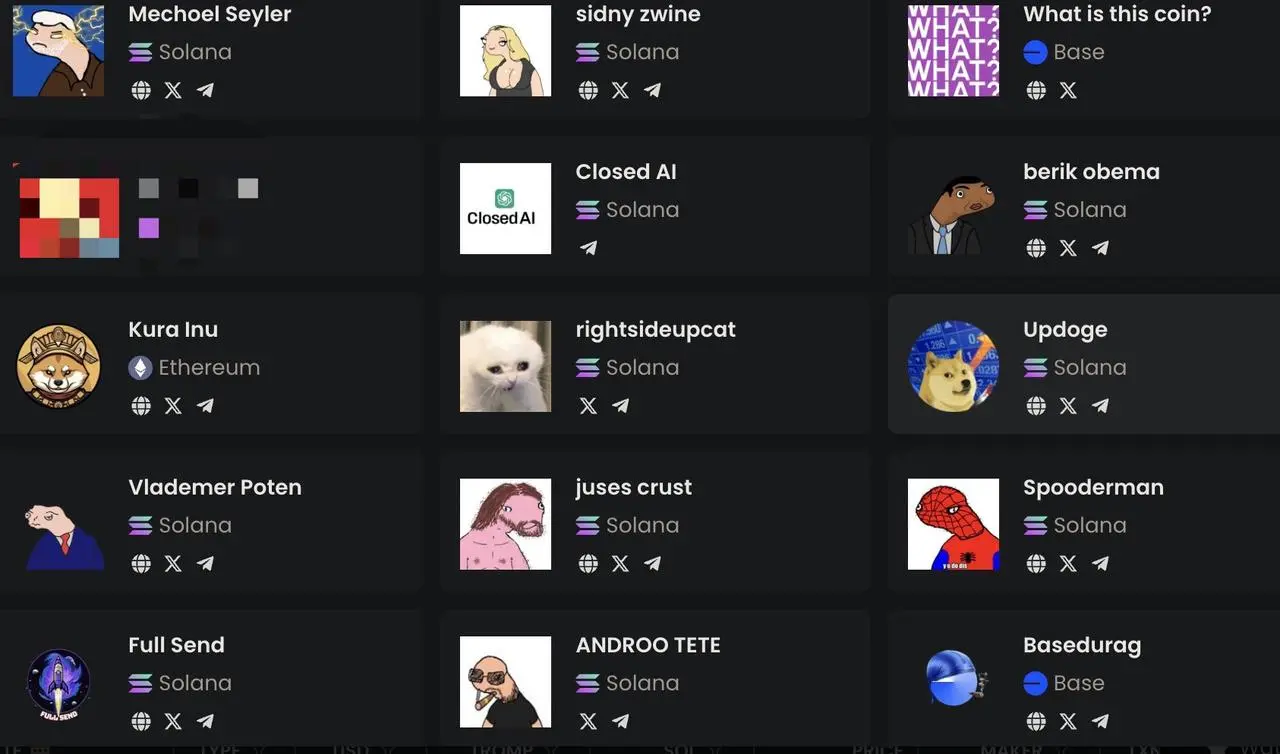
So, where does the cultural and artistic style of these meme coins come from, and why has it become a consensus cultural phenomenon? Today, Foresight News will interpret and analyze this cultural phenomenon from the perspectives of memetics, political science, history, and other disciplines.
Emo and Internet Memes
Emo is a characteristic of a bygone era. In the medieval era of the Chinese internet led by Tencent QQ, Emo, non-mainstream, and Martian language were the identity and social expression of countless young people. It wasn't until many years later that I suddenly realized that this was actually an early "Internet meme."
In the Webster's Dictionary, "meme" has two explanations: one refers to interesting things, especially interesting and fun pictures or videos widely spread on social media; the other refers to ideas, behaviors, styles, or usage spread among people in a culture.
Emo is different from the emoticon packs with accompanying text on current social software or social media, but its language (Martian language) and hairstyle have become a collective identity under the influence of the early internet. American linguist Edward Sapir once said, "There is something behind language, and language cannot exist without culture." The cultural meme behind Emo is probably a self-mockery of poverty in the urbanization process by young people, as well as a rebellion against family and authority.
In fact, "meme" is a concept of cultural evolution, first proposed by Richard Dawkins, an animal scientist at the University of Oxford, in his book "The Selfish Gene." Why is it a cultural evolution theory? Let's first take a look at what "gene" is. Dawkins believes that genes are the basic units of biological evolution, and "replicating genes" are the ancestors of life, and "replicating genes" need "natural selection, survival of the fittest," while organisms are used to complete the inheritance and reproduction of genes.
In the past few years, most people have probably said a sentence, "The essence of human beings is a parrot." This sentence seems to mock the imitation and plagiarism of others, lacking innovation, but upon closer examination, you will find that the essence of human beings is indeed a parrot. Because human knowledge has been passed down from ancient times to the present, mostly through word of mouth, from generation to generation. For example, a story you hear at the dinner table today may become a topic of conversation for you and your friends tomorrow.
The process of knowledge and cultural inheritance is like biological evolution, where only the fittest can survive and then be widely spread. This is what Dawkins defines as "meme," which, like genes, has fidelity (variability), reproductive power, and survival period. You may even observe that the pronunciation of "meme" is very similar to "gene."
If we start from the perspective of evolution theory, then the internet and memes are a natural pair. Because of the strong communicative nature of the internet, it transcends spatial limitations and gives memes an unprecedented power of dissemination and reproduction. The "fittest" will be preserved for a long time, otherwise, they will be short-lived.
Another example is religion, which is a study of memetics. Islam, under the Jewish lineage, emphasizes the spread of doctrine, the expansion of believers, and the reproduction of descendants that have caused fear in Europe. If you understand memetics, then you basically understand what the politically popular meme coins on Solana are all about.
"Start Caring About Politics with a Meme"
"Start caring about politics with a meme" is a reflection of the entertainment of American politics in the visual society over the past 10 years.
Last week, on March 5th, the United States welcomed the once-in-four-years Super Tuesday, the day of the presidential primary elections in the United States, where the most states hold primaries and party caucuses, and the results are a strong indicator of the potential presidential candidates for both parties.
In political meme coins, the earliest to appear were "tremp" and "boden," representing Trump and Biden, who are the most competitive presidential candidates for the Republican and Democratic parties in 2024. As of March 11th, Trump of the Republican Party leads by a wide margin with 1075 votes, but has not yet reached the 1215 vote threshold; Biden of the Democratic Party also leads by a wide margin with 1866 votes, but has similarly not reached the 1969 vote threshold. (Real-time tracking: Politico)
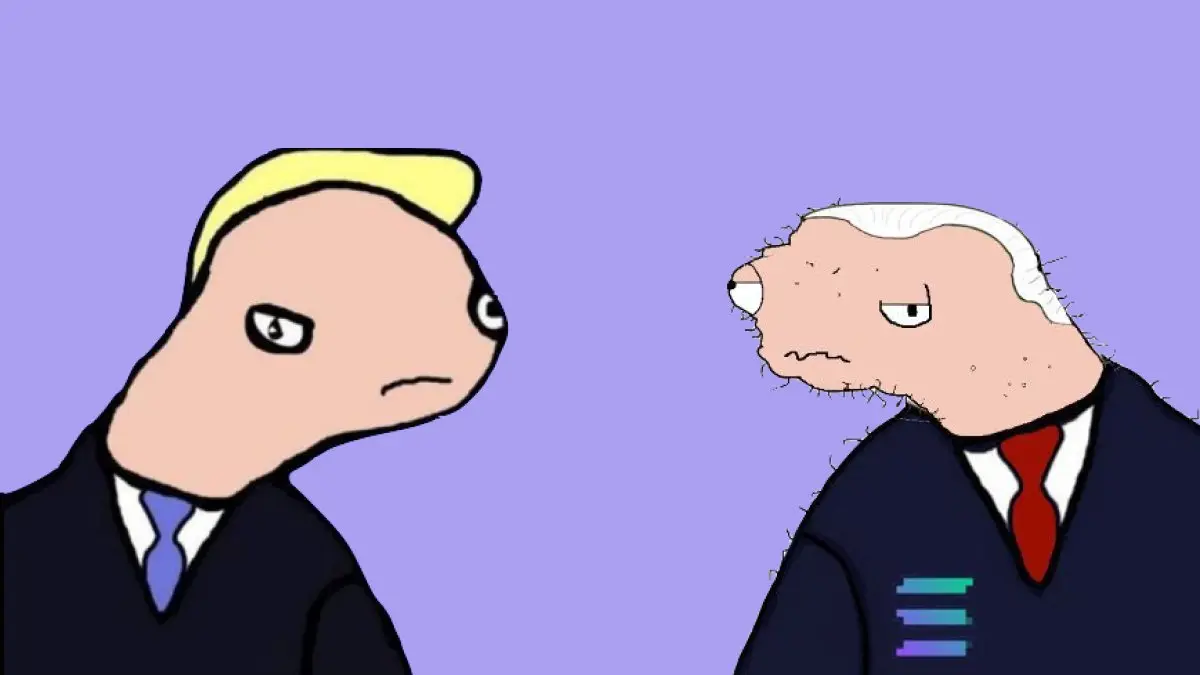
Why have meme coins with political figures' portraits emerged? The author believes that the root cause is the "memefication of American politics" (The Meme-Ification of American Politics, The New Yorker).
This matter probably dates back to 2015-2016 and the emergence of Pepe the Frog, before the existence of the dog-themed PEPE in the crypto world.
Pepe the Frog was created by Matt Furie in the comic "Boy's Club" in 2005 and became an internet meme in 2008, and began to be used as various emoticons in 2014. However, in 2015, Pepe began to be seen as a symbol of the alt-right. Alternative right-wing groups such as Nazi Germany, the Ku Klux Klan, and white power skinheads began to use Pepe. During the 2016 U.S. presidential election, the Pepe emoticon became associated with the election. The alternative right is a conservative mainstream in American society that advocates white supremacy, supports Trump, and opposes immigration and a multicultural society.
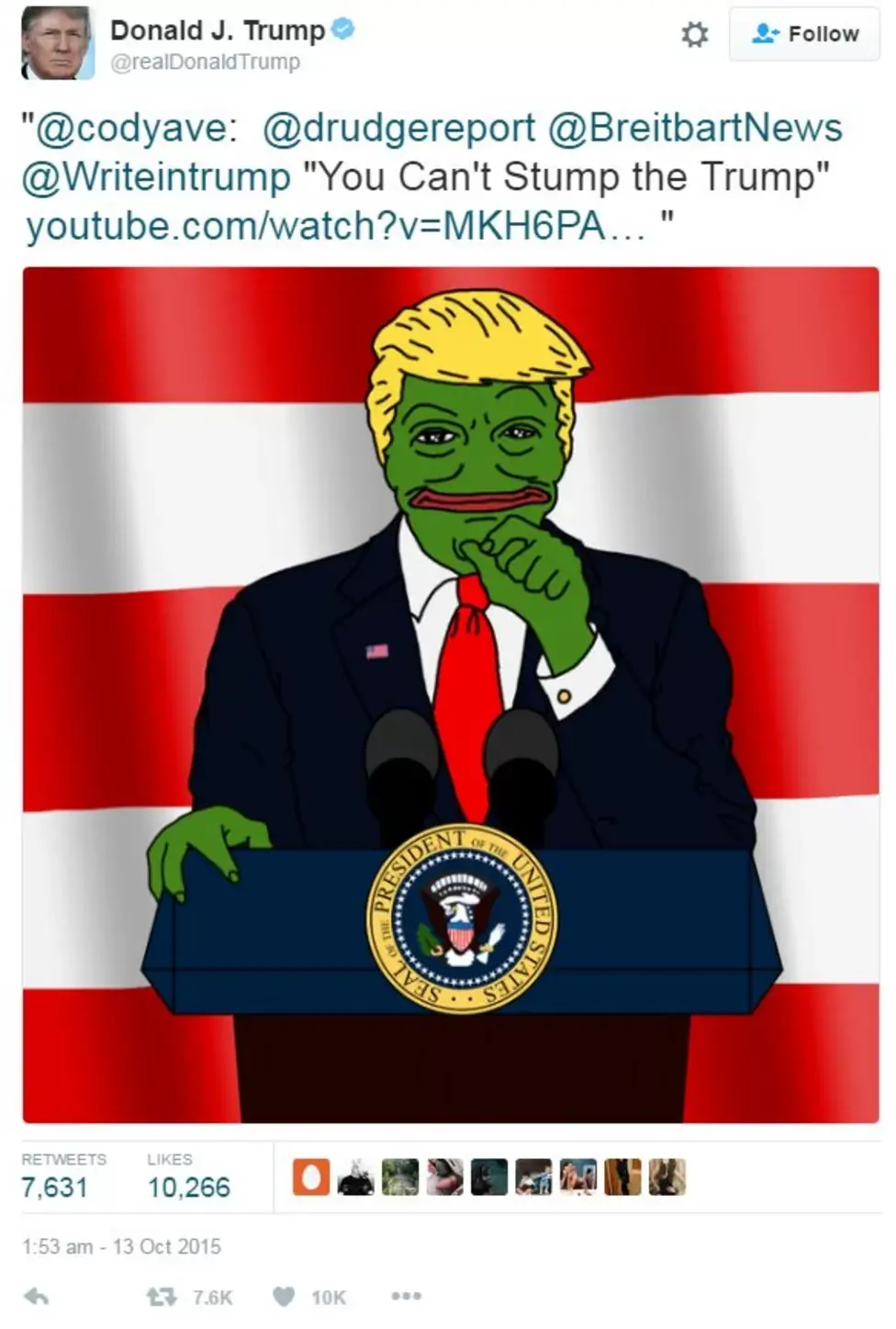
In October 2015, Trump retweeted a Pepe image from the alt-right, with the caption "You can't Stump the Trump," to express his political views.
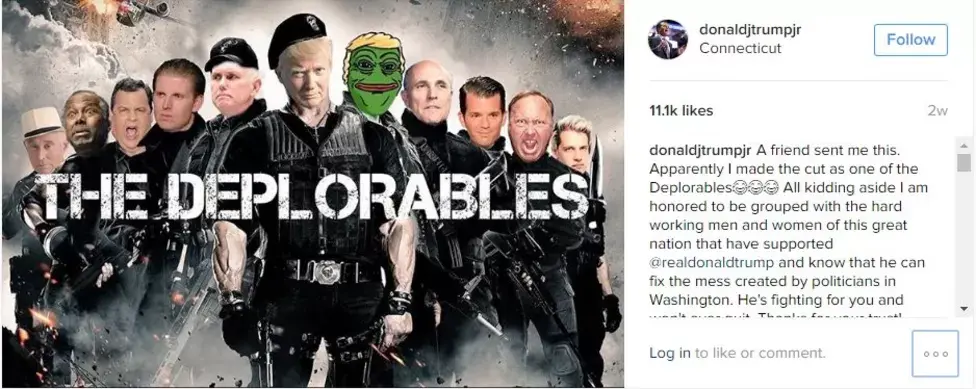
In mid-September, when Pepe became a headline, Hillary stated that most of Trump's supporters were "a basket of deplorables," implying negative traits such as racism and sexism. Trump's son then shared a "The Expendables" movie poster on Instagram, with Pepe, Trump, and other conservatives labeled as "deplorables."
Shortly after, Hillary's team released an article titled "Trump, Pepe, and White Supremacists: An Explanation" (now deleted), claiming that "Pepe is more sinister than you think." Thus, Pepe became a symbol of white supremacy in American society.
In 2020, during the Biden and Trump campaigns, the 78-year-old Biden's meme emoticons were portrayed by conservatives as "aging," "senile," "slow," and even "weak," creating an impression that "Biden is too old to be president." However, Trump is only 4 years younger than Biden. The key is that Biden belongs to the moderate white camp, advocating for "calm politics," while the alternative right-wing worldview is filled with binary opposition, either black or white, male or female, and racial conflict.
In "The Crowd: A Study of the Popular Mind," the fundamental reason why a group produces unconsciousness is that individuals within the group are very prone to fall into metaphysical binary oppositions emotionally and intellectually, simplifying the world into binary oppositions and simplifying things. This is also why binary computers have defeated ternary computers, because the world is best understood through binary oppositions. Moreover, binary opposition is indeed a part of the world and can explain some things.
Furthermore, in the internet age, the more extreme and extreme content is, the more influential it is on social media. The choice of which one is not important; what is important is that the internet provides individuals with a space to release emotions, which easily creates a widely circulated internet meme.
The story of Pepe and other memes in the U.S. presidential election was born in this way. However, memes themselves are a form of comic expression, and political comics in the United States appeared in the late 19th century. The father of American comics, Thomas Nast, had a significant impact on five presidential elections, including supporting Lincoln, Grant, Hayes, and Cleveland, and ridiculing the failed candidates with sharp comics. The "Donkey and Elephant" dispute in American two-party politics was created by Thomas Nast's comics published in Harper's Weekly in 1874 and 1877.

Image source: Helen Kampion, The Donkey and Elephant, The White House.
In the internet age, political comics have been replaced by memes. However, in any form, it simplifies complex politics into a symbol that satisfies people's curiosity, ugliness, and uses provocative political comments such as sharpness, ridicule, satire, defamation, and humor to entertainize the obscure and serious national politics and the image of leaders. This is the characteristic of American democracy, which allows the entire population to participate in democratic politics, even though it is increasingly tearing American society apart.
Returning to the discussion of memes on Solana, let's take a look at "tremp," which has surged nearly a thousand times since February 28, with a current market value of around $29 million.

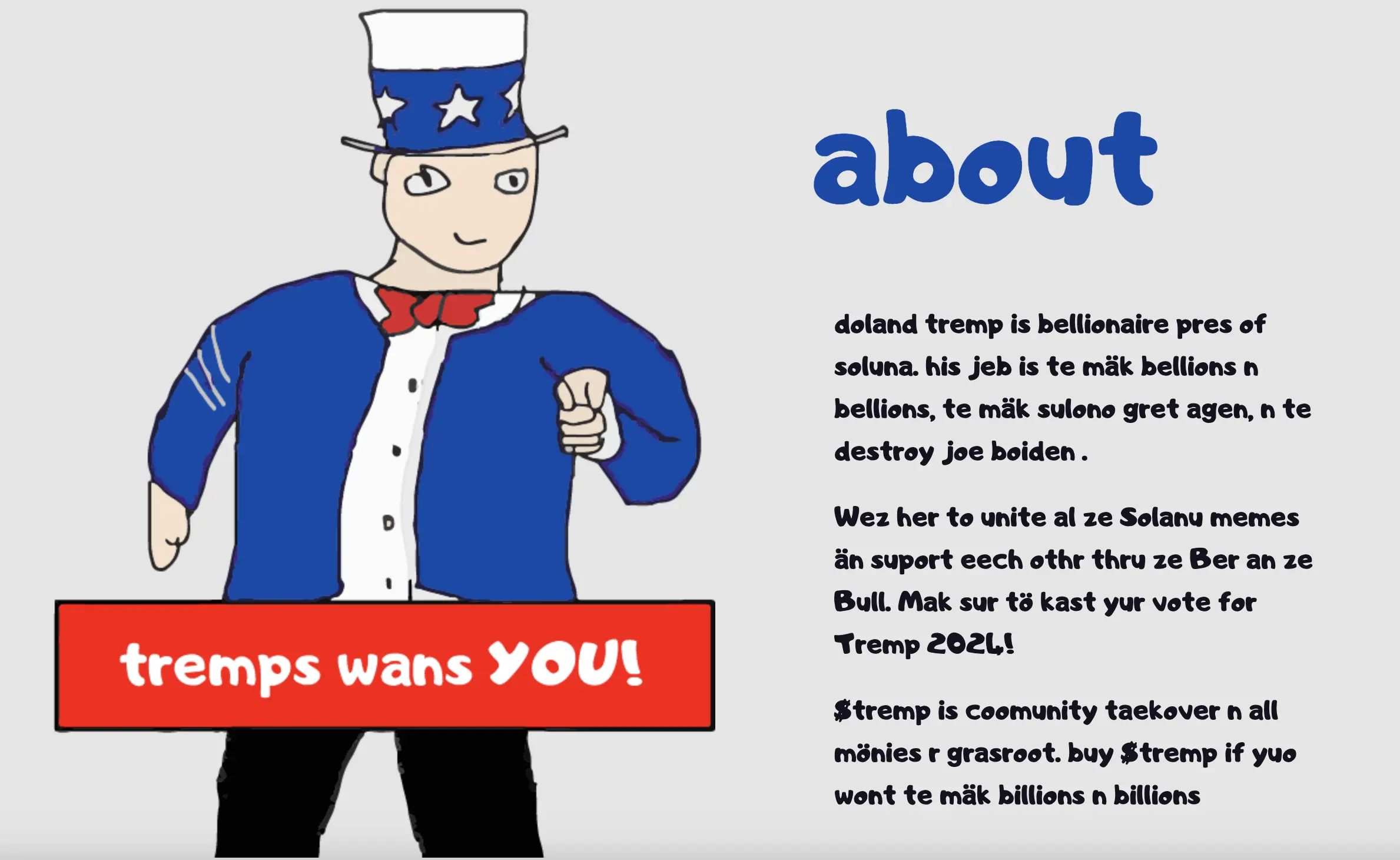
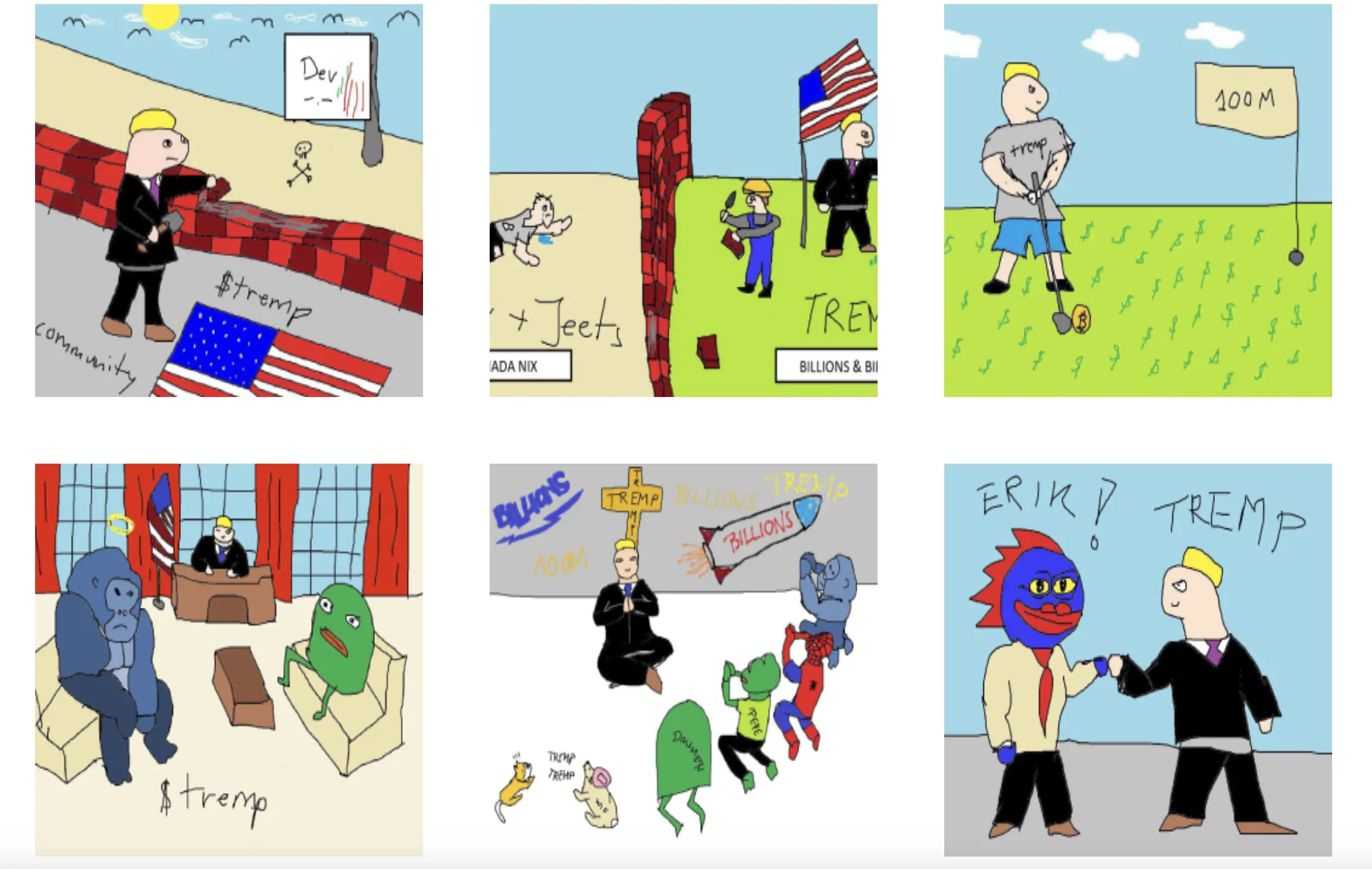
The meme of "tremp" is a middle-aged man with blond hair, full of energy, and its slogan is "mek memes gret agen."

"Tremp" memes Trump's presidential campaign political appeals:
- He is the billionaire president on Solana
- His job is to make more and more money
- He wants to destroy joe boiden
- He wants to unify memes on Solana
- Finally, give your vote to Trump in 2024!
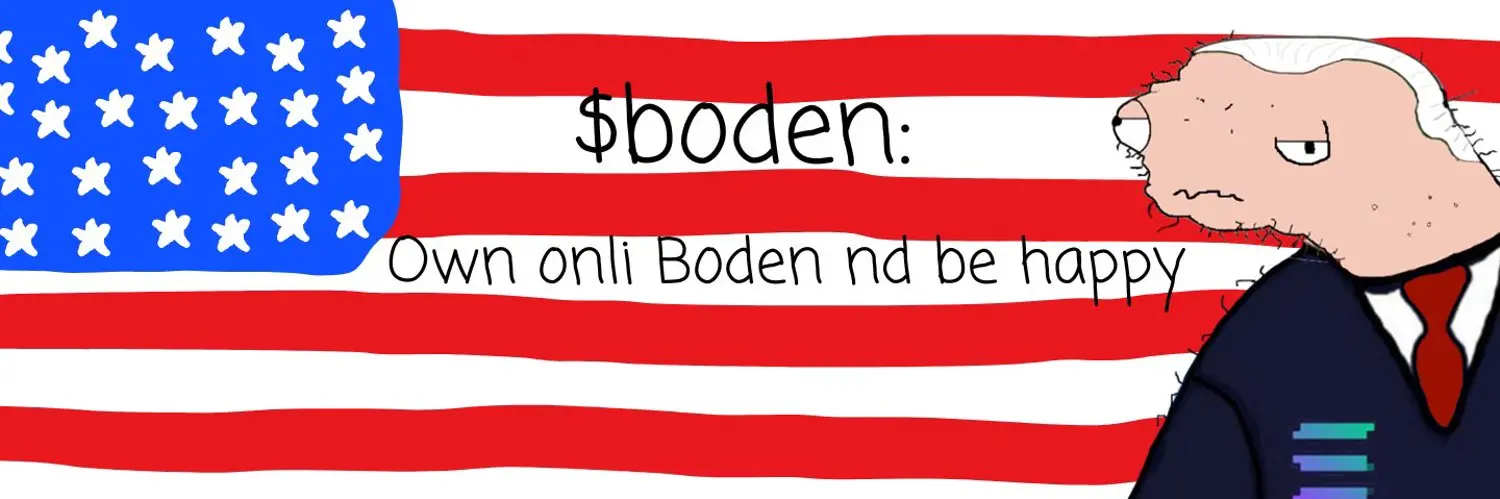
On the other hand, Biden's "boden" is portrayed as old, but perhaps it is self-deprecating for Biden supporters, expressing support for Biden through memecoins.
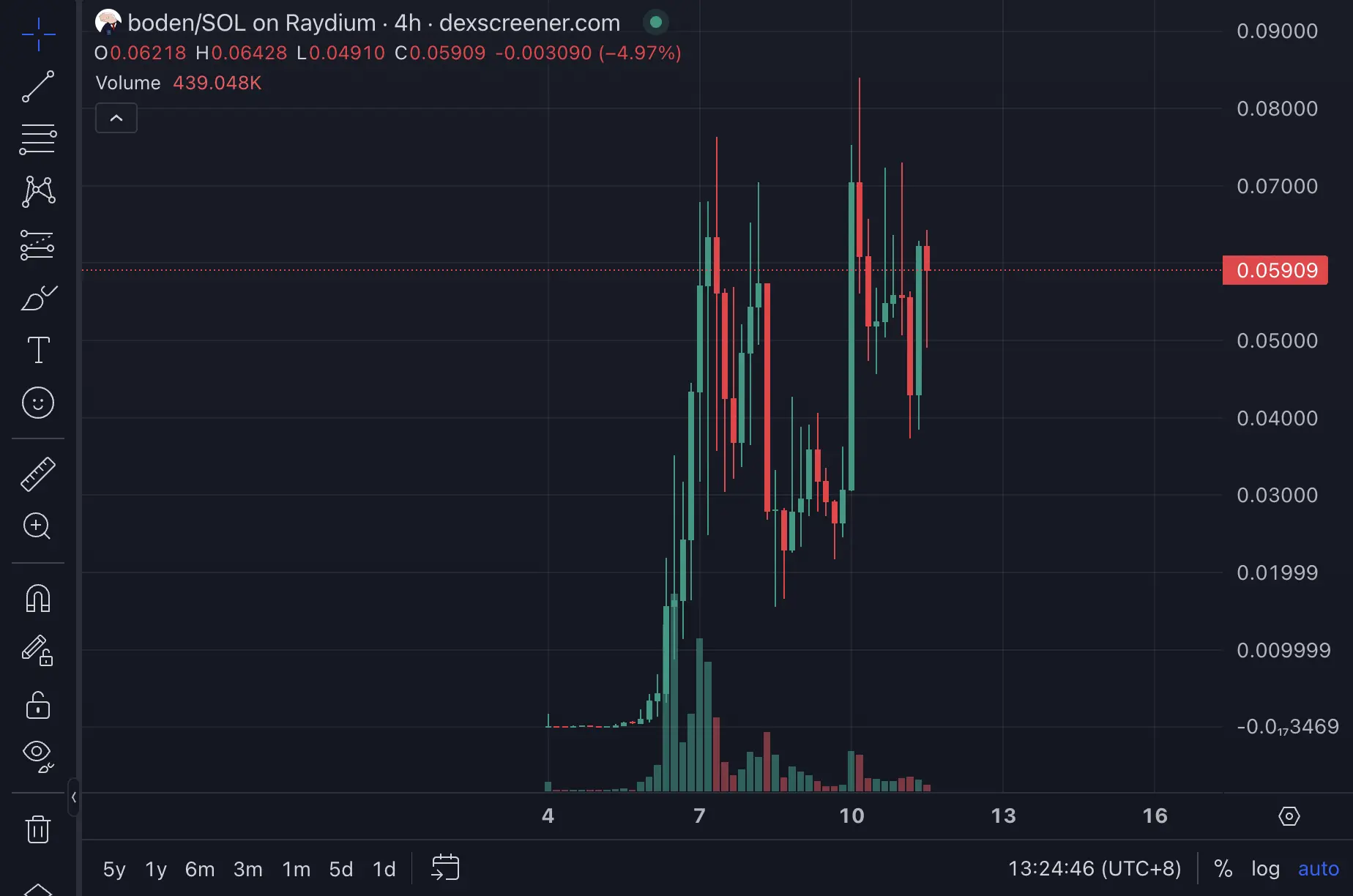
"Boden" went online on March 4 and has surged over 1000 times in the past week, with a current market value of about $40 million.
In fact, "tremp" and "boden" are both political symbols of this period, the result of the memefication of American politics. For example, yesterday, Messari founder and CEO Ryan Selkis tweeted that the market value of "tremp" has surpassed that of "boden," but then the crypto wallet Phantom asked in the comments if Ryan had voted for "boden."
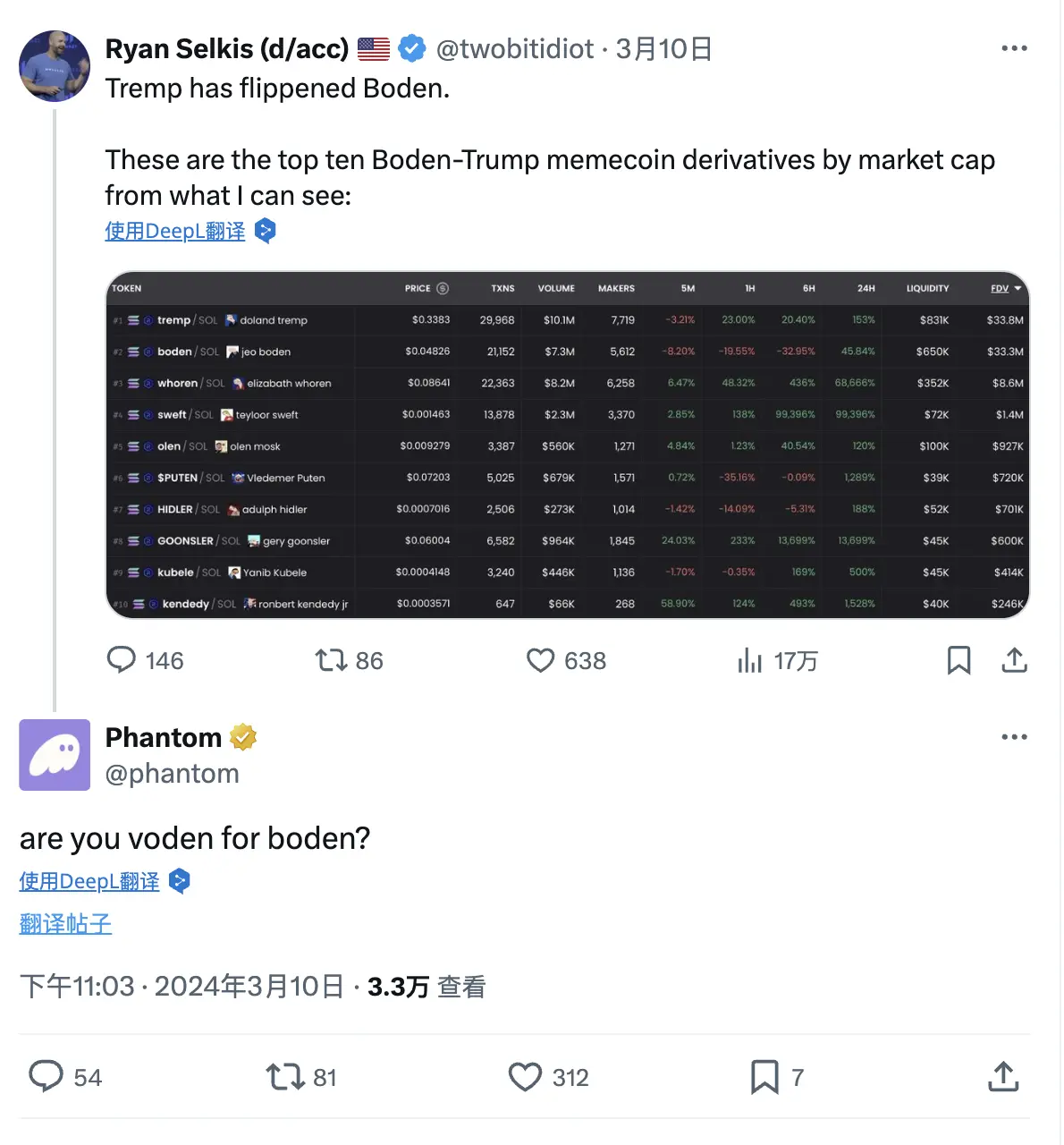
Under the push of the U.S. presidential primaries, meme coins featuring world political figures with the same theme have also appeared on the Solana stage, such as Hillary, Obama, Kim Jong-un, Kennedy, Warren, Putin, Hitler, and more. At the same time, such memes have spread from political figures to business, entertainment, culture, religion, and criminals.
Overall, the Trump and Biden-themed memes on Solana inherently have an entertaining nature, but the memes derived from "tremp" and "boden" have removed political factors and are more about "entertainment to death." They mostly lack strong fundamental support and often experience extreme fluctuations. However, as memes, they have been successful.
The origin of the misspelled Trump and Biden-themed memecoins has been a question for many people.
It seems that the distorted anime prototype is Spoderman. According to the Know Your Meme website, Spoderman is a misspelling of Spider-Man, which first appeared on FunnyJunk on March 29, 2012, as a Microsoft Paint image. It is one of the very ugly versions of Spider-Man artwork, and the user vilfederation posted the image, which received over 770 likes and 64,000 views over a period of 5 years.
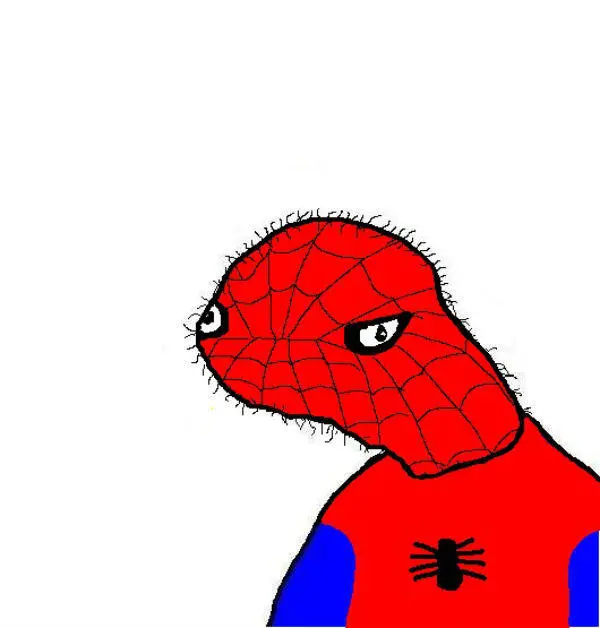
Initially, people reposted the Spoderman image and made comments, intentionally misspelling the letters of Spider-Man, as well as changing Mary Jane and Green Goblin to "mari jene" and "grn gublyn."

On March 30, Spoderman appeared in a Dolan comic, which was also posted on FunnyJunk:

On April 12, a YouTuber named Dolan Duk uploaded "The Uncle Dolan Show Episode 1" in which Dolan and Gooby encountered Spoderman.
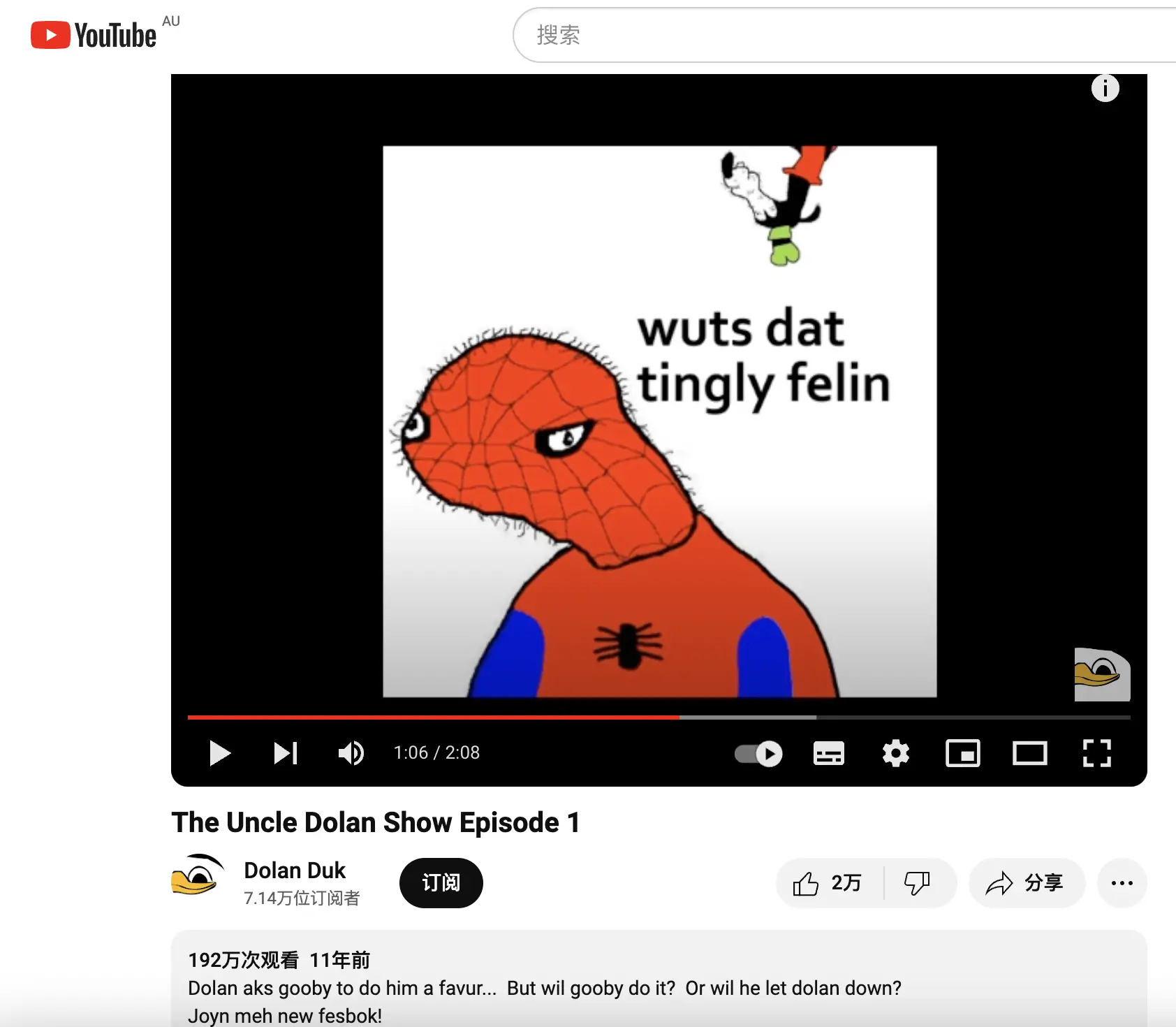
On July 23, the Spodermen channel was launched on YouTube, with 317,000 subscribers, and the last video was in 2018. The first video, "Spoderman Theme Song," received over 680,000 views in 5 years.

On September 10, 2016, Behind The Meme shared "What is spoderman? Explaining the history of the Spider-Man meme" on YouTube, with over 1.25 million views.
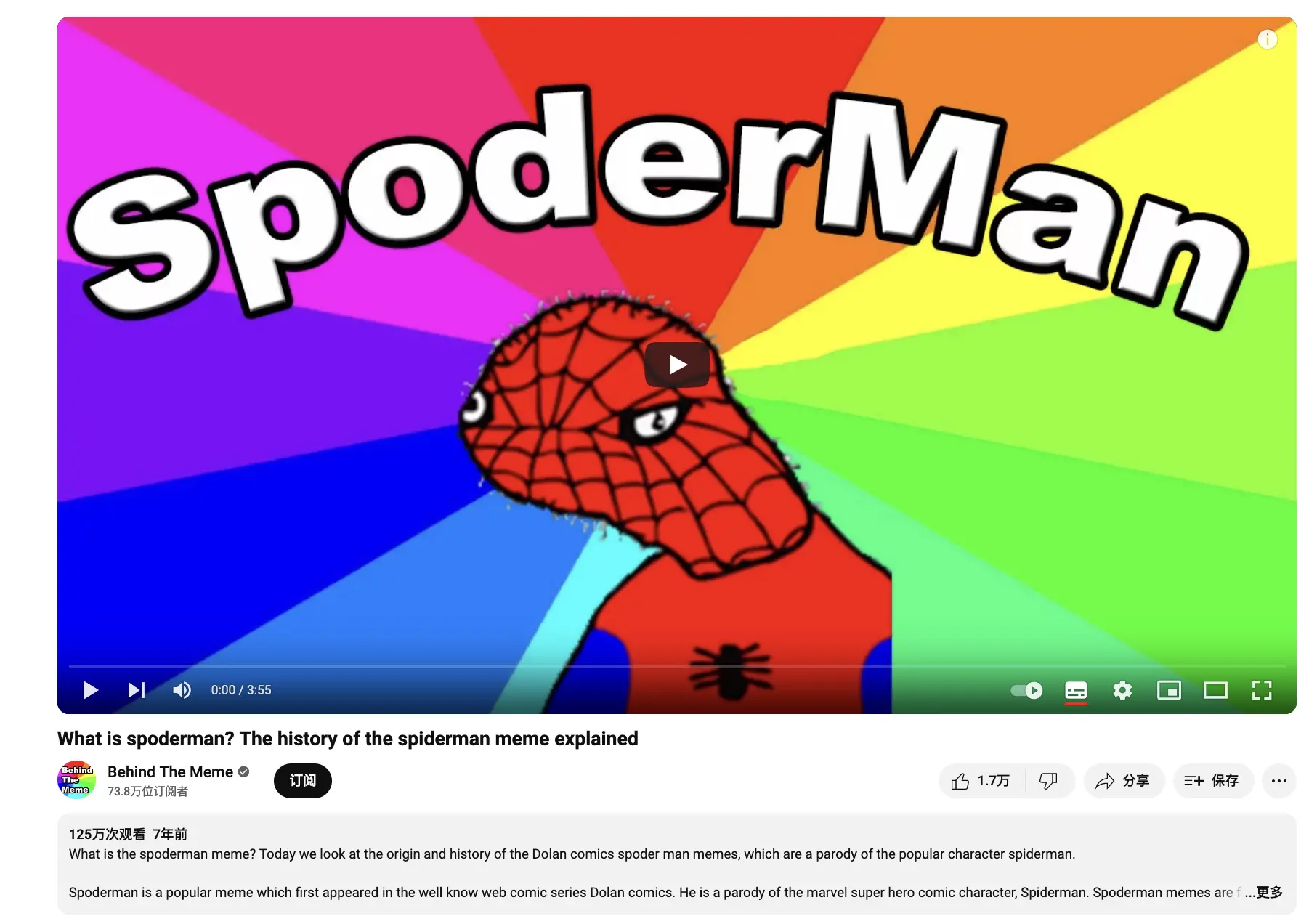
Clearly, Spoderman's meme became widely recognized on the internet a long time ago. If you look at Spoderman's YouTube channel, you will find that this meme has been associated with American politics and presidential elections around 14 years ago.
Now that we've covered the history of Spoderman, let's return to the theme memecoins tremp and boden. If there is no mistake in the research, then their origin is Spoderman. Because over the past decade, Spoderman's internet influence has been astonishing.
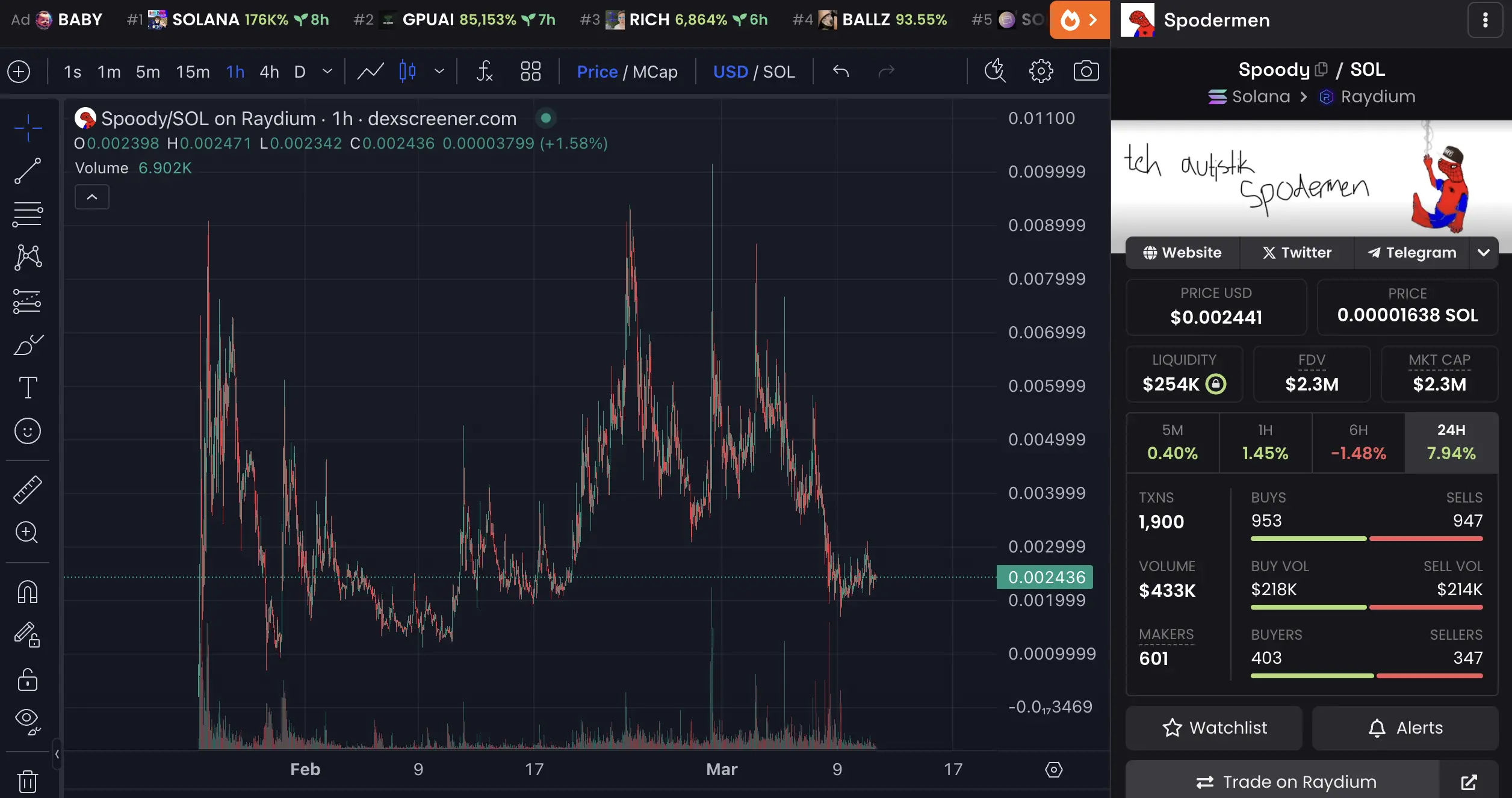
On January 24, 2024, the Spodermen-themed meme coin Spoody officially went online on Solana, with a maximum increase of nearly 100 times and a current market value of $2.3 million. It is worth noting that on March 5, Spoody announced that it had obtained the copyright of Spodermen from the original creator's estate.

References:
Shang Xinxin: "Characteristics of the Spread of Internet Slang from the Perspective of Language Memes," Modern Chinese Language, October 2022;
The Paper: "The Birth of Trump's Emoticons: When Political Figures Become Entertainment Stars," September 2016;
BBC: "Pepe the Frog meme branded a 'hate symbol'", September 28, 2016.
NFT Now: Political Memecoin Mania Sweeps Solana With Biden and Trump-Themed Coins, March 7, 2024.
免责声明:本文章仅代表作者个人观点,不代表本平台的立场和观点。本文章仅供信息分享,不构成对任何人的任何投资建议。用户与作者之间的任何争议,与本平台无关。如网页中刊载的文章或图片涉及侵权,请提供相关的权利证明和身份证明发送邮件到support@aicoin.com,本平台相关工作人员将会进行核查。


