Original | Odaily Planet Daily
Author | Golem

What is RBF
RBF stands for Replace By Fee, which is a way to accelerate Bitcoin transactions. It allows users to replace an unconfirmed transaction with a new transaction with a higher fee in order to accelerate the transaction. As long as the new replacement transaction includes a sufficiently high fee, miners are motivated to include the replacement transaction in a block.
However, the requirement for using RBF is that the created replacement transaction must use the same or multiple identical UTXOs as the original transaction's inputs.
Why can RBF be used to snipe Bitcoin transactions
According to the aforementioned requirement for using RBF, generally speaking, we cannot replace other people's transactions because we cannot obtain their signature authorization and cannot use the UTXOs in other people's transactions.
However, because currently, the signatures used in almost all Bitcoin transaction markets are PSBT (partially signed Bitcoin transactions), it allows us to snipe other Bitcoin transactions. Simply put, when a seller lists an asset, they will privately authorize the market with a signature, which can be understood as "agreeing to sell the asset when receiving xxx BTC." When a buyer is willing to trade, the market combines the signatures of both the buyer and the seller into a complete signed transaction and broadcasts it to the mempool.
Once in the mempool, due to the transparency of the Bitcoin network, the seller's signature is no longer only known to the market, but is exposed to everyone. Therefore, we can obtain the seller's signature authorization, use the RBF function to reconstruct a replacement transaction with a higher fee, and complete the snipe, rendering the original buyer's transaction invalid and resulting in a futile effort.
How to use RBF to snipe Bitcoin transactions
RBF itself has a certain level of technical complexity, and there is a certain threshold for ordinary traders to proficiently use it. Fortunately, there are already tools developed in the market for sniping, which even novices can use. Below, we will use the sniping tool provided by Magisat for a tutorial.
1. Copy the transaction ID to be sniped
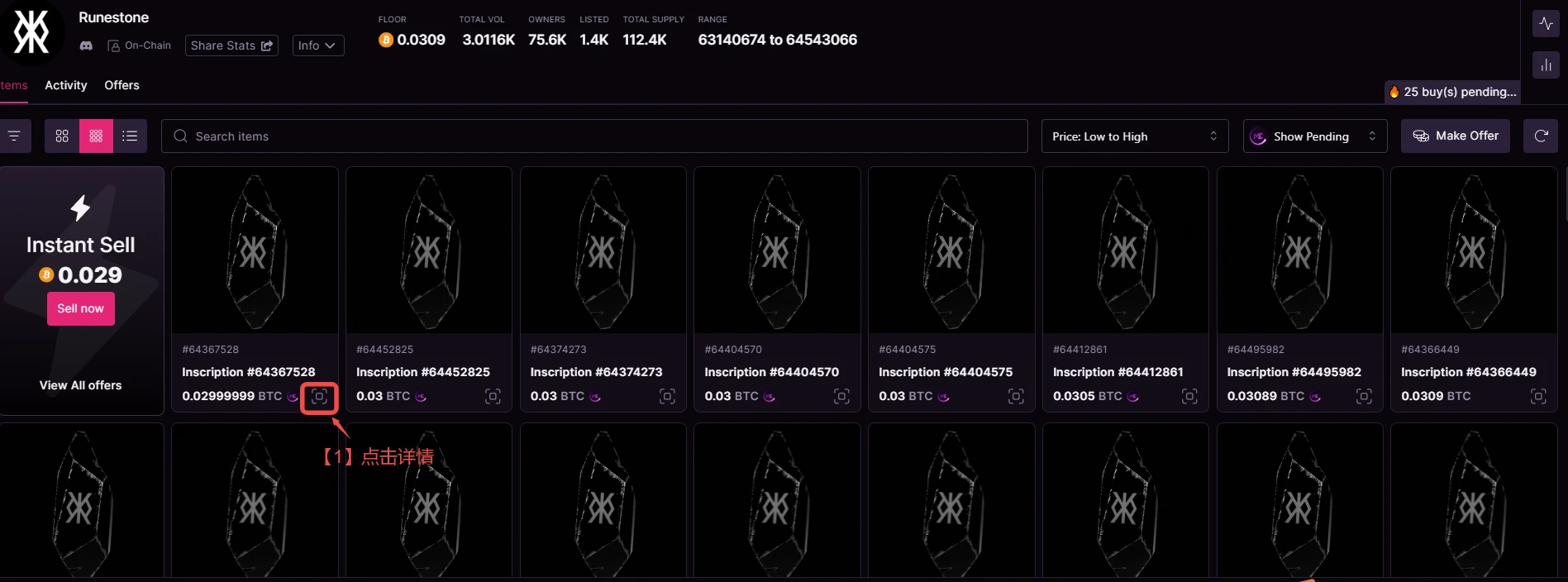
Taking Magic Eden as an example, if we want to snipe a transaction for Runestone, first open the transaction interface for Runestone and click on "Details."

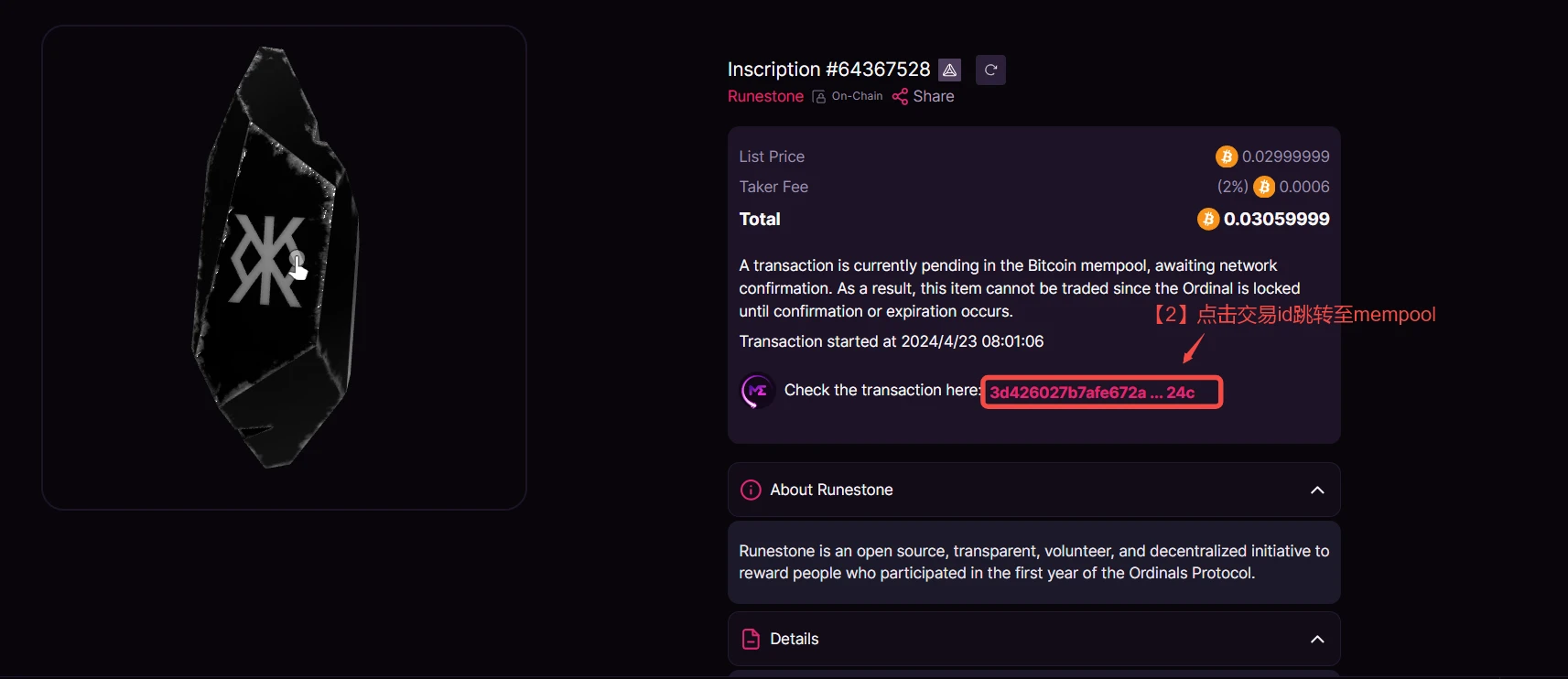
Then, on the transaction details page, click on the transaction ID to jump to the mempool.

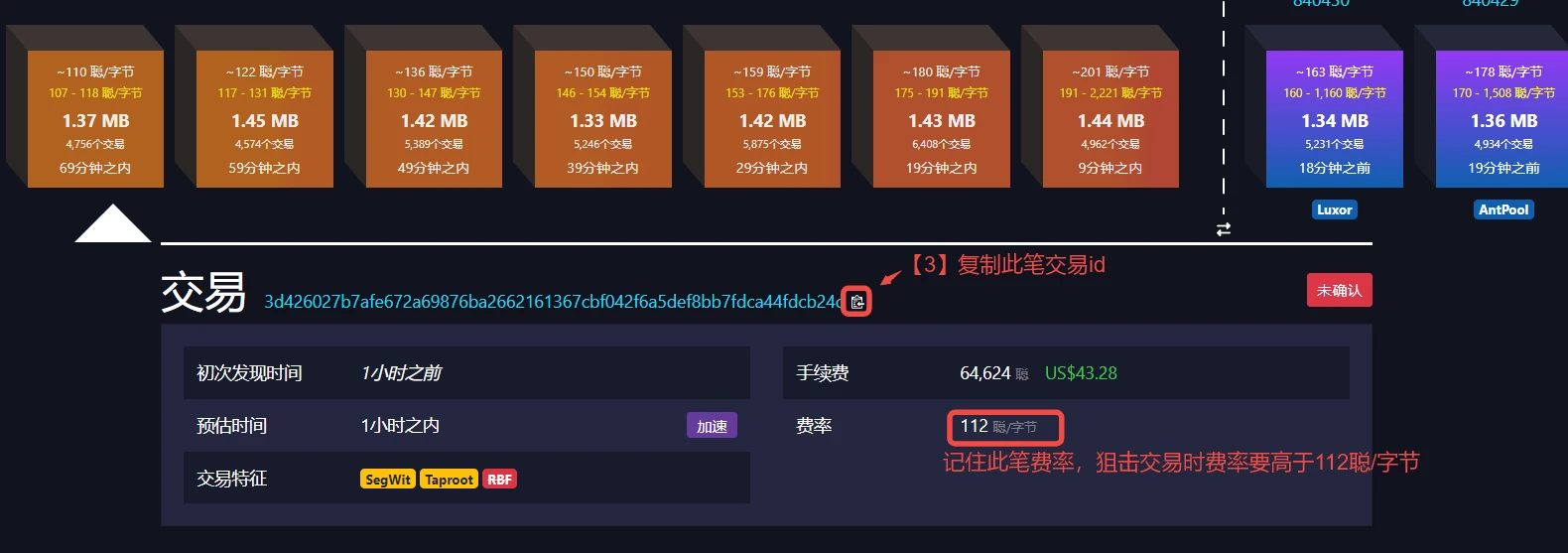
Finally, in the mempool, copy the transaction ID and also remember the fee rate for this transaction, because the fee rate for the snipe must be higher than the original transaction's fee rate.

2. Use the Magisat platform tool to complete the transaction snipe
Magisat is a Bitcoin NFT trading platform that has also launched an instant sniping tool. Click the link below to access the tool:
https://magisat.io/instant-snipe
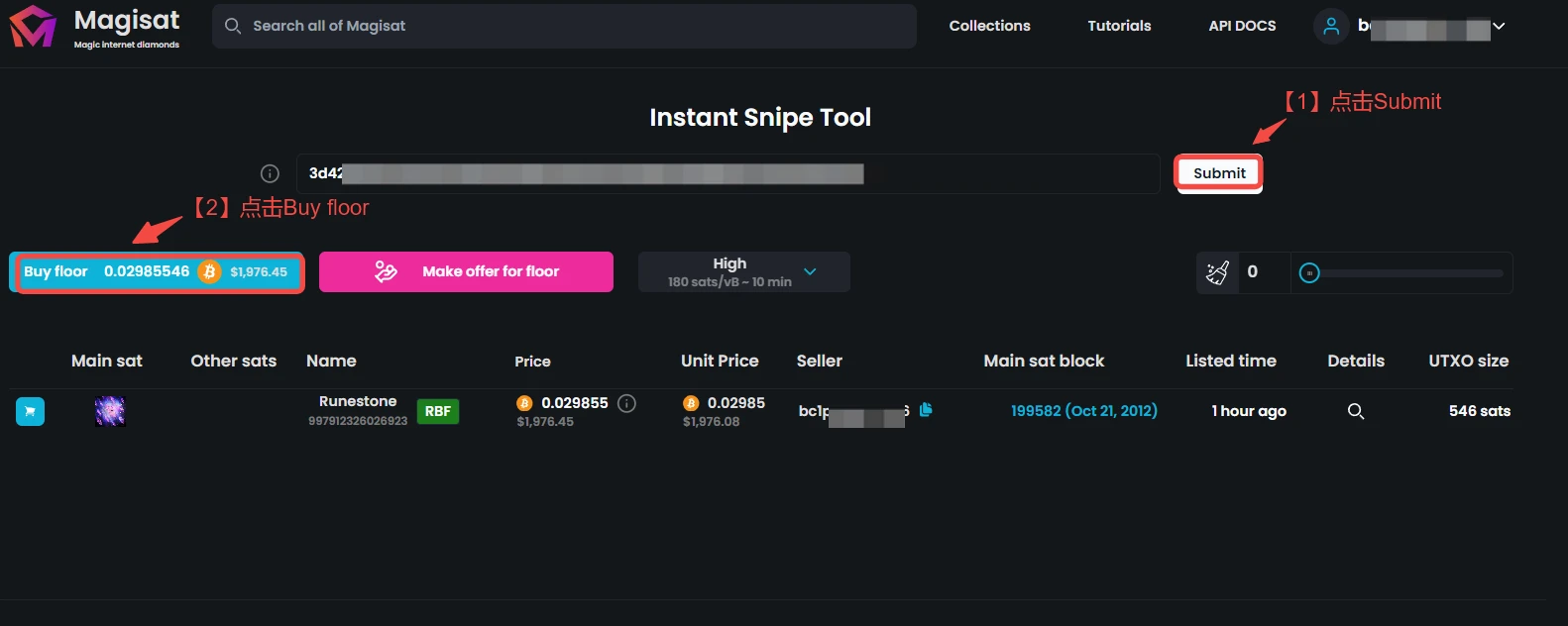
Then paste the copied transaction ID into the search box, click "Submit," and you will see the detailed information for this transaction below. Next, click "Buy floor."

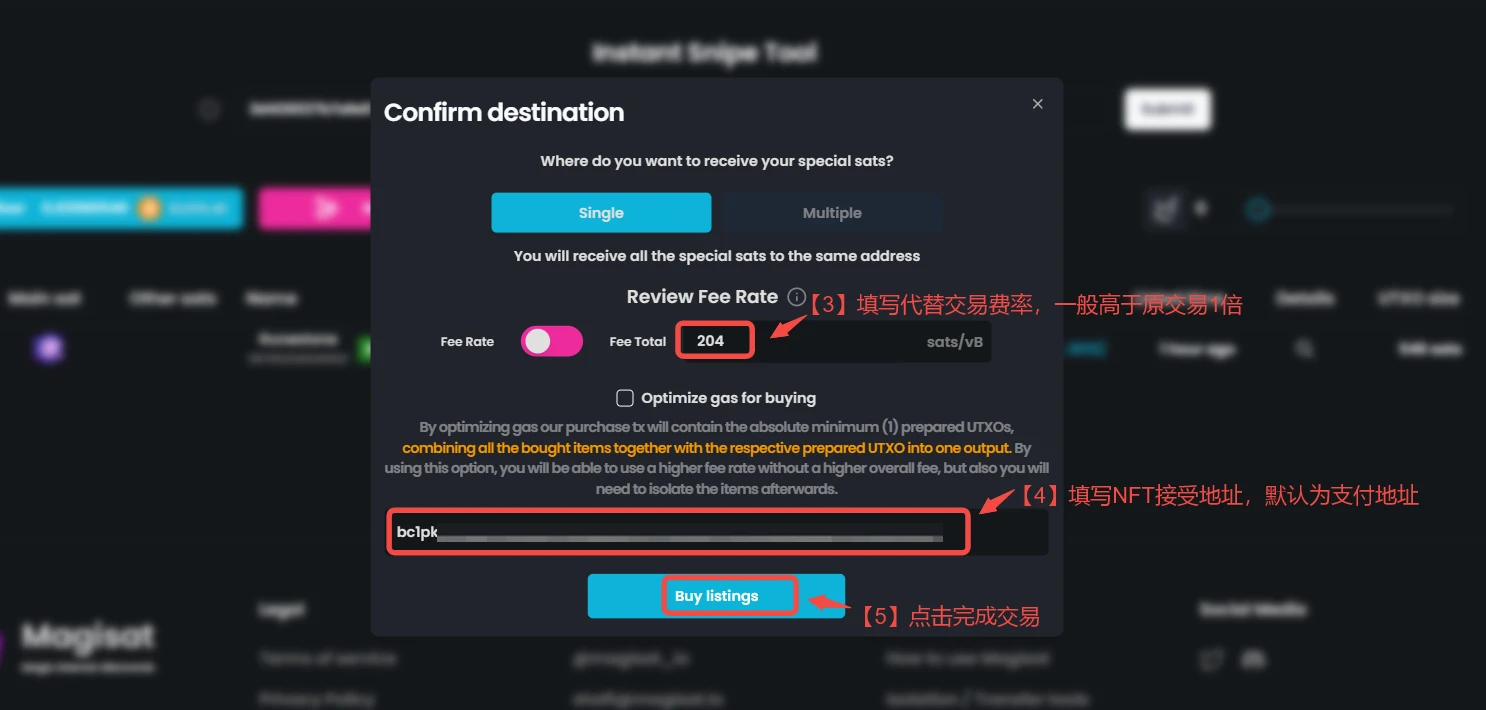
On the transaction creation page, as shown in the image below, first set the fee rate, which generally needs to be double the original transaction's fee rate for a successful snipe. Then, enter the Runestone receiving address, and finally click "Buy listings" to prompt the wallet to confirm the transaction.

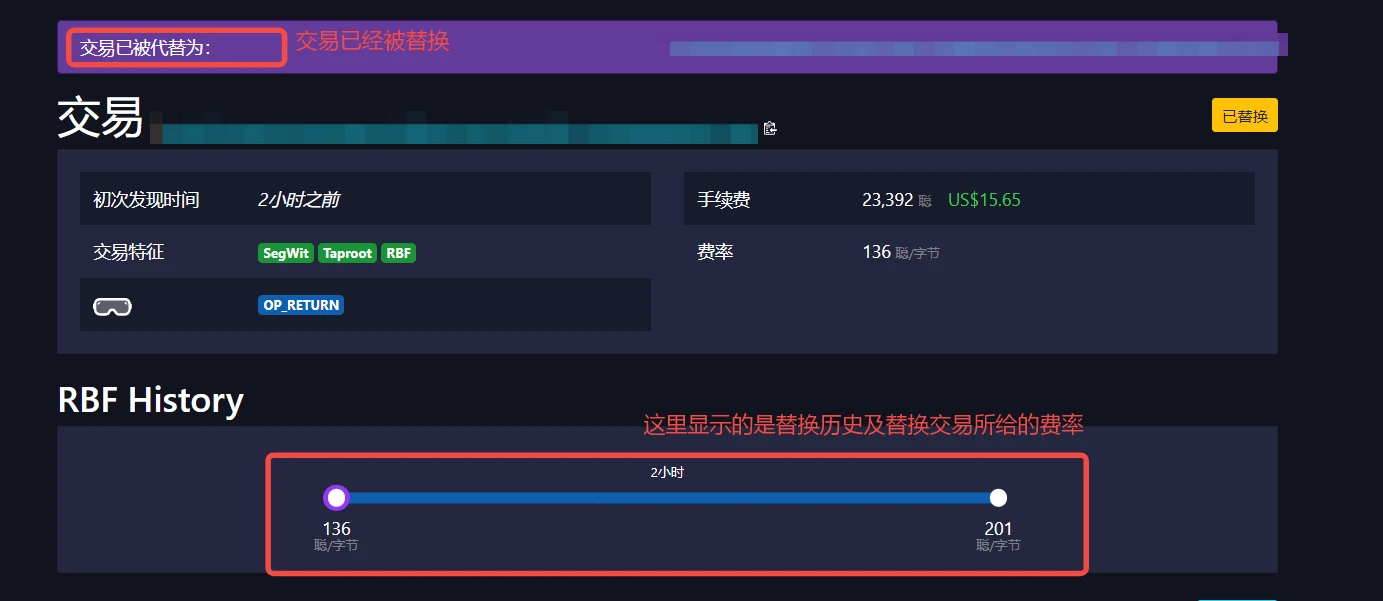
At this point, if you return to the mempool to view the original transaction, as shown in the image below, it will display that the transaction has been replaced by a new transaction, and it also shows the history of the replacement transaction below.

Note: The example selected in the tutorial is only for demonstration and does not involve an actual snipe.
Currently, this method can be used to snipe Bitcoin NFT and BRC20 transactions, and it is expected that Runes assets will also be supported in the near future. It is important to note that not all snipes will be successful, as this depends largely on the miners/pools. If the miners/pools that mine the next block do not support RBF, even if you have replaced the transaction, they may still include the original transaction in the block. However, from a profit perspective, it seems inevitable that miners will support RBF in order to receive higher fee income.
How to prevent being sniped by others
From a different perspective, if we ourselves are buyers, of course, we do not want our transactions to be sniped by others. So, what methods can be used to prevent our transactions from being sniped?
Some readers may think that since sniping transactions essentially uses the RBF function, then simply disabling RBF during signing can prevent it. However, this does not completely prevent it, as this disabling at most only prevents oneself from using the RBF function, and miners can still include the replacement transaction with a higher fee in a block.
So, the only reliable method now is to increase the gas when purchasing assets to quickly get through the block, avoiding giving snipers enough time to operate. Of course, if you are unlucky and encounter a situation where a block is not mined for half an hour and you are sniped, you can also counter-snipe according to the tutorial above.
Summary
The blockchain is truly a dark forest, where everyone is a hunter hiding in the dark, worrying about exposing themselves while waiting for the opportunity to hunt others. Using RBF to snipe transactions on Bitcoin is similar in practice to the "sandwich bot" in Ethereum. However, with the reduction of information asymmetry and the emergence of tools, the threshold for sniping Bitcoin transactions has become lower, reaching a point where everyone can use it.
Even if you do not want to be a hunter sniping others' transactions, you should still master the method to counter-snipe at critical moments. After all, the best defense is a good offense.
免责声明:本文章仅代表作者个人观点,不代表本平台的立场和观点。本文章仅供信息分享,不构成对任何人的任何投资建议。用户与作者之间的任何争议,与本平台无关。如网页中刊载的文章或图片涉及侵权,请提供相关的权利证明和身份证明发送邮件到support@aicoin.com,本平台相关工作人员将会进行核查。