Around June 9, 2026, centered around the main theme of "AI's Big Cycle," funding, policies, and on-chain positions simultaneously provided their respective answers across different dimensions: On one end, the decentralized lending infrastructure project Morpho just secured $175 million in financing, with a valuation of about $2 billion, led by Paradigm, Ribbit Capital, and a16z crypto, marking DeFi's entry into the institutional version of the AI infrastructure portfolio; the Chinese government plans to invest about 2 trillion yuan (approximately $295 billion) over the next five years to build a nationwide interconnected data center network, led by the National Development and Reform Commission and supported by state-owned enterprises like China Mobile and China Telecom to provide computing power, laying a "highway" for AI on a physical level; Nasdaq announced the establishment of an economic research institute to systematically study the long-term impacts of technologies like AI on productivity and financial markets, while Wall Street began to rewrite valuation frameworks. Investors like Serenity also shifted their focus from hot targets such as ARM and Marvell to mid-to-large industrial chain companies like ASE Technology, Sumitomo Electric, Jabil, and Vicor, valued between $10 billion and $100 billion. On the other end, CNCERT explicitly pointed out that "godmode" can achieve jailbreak by replacing system prompts, and "Bonero-Miner" would lure users into mining, bringing compliance and privacy risks, highlighting the security baseline of AI intelligences; on-chain address 0x97f8 shorted the S&P 500 with about 50x leverage, with a nominal size of approximately $111.5 million, and the liquidation price was only about 9% away from the current price, showcasing an extreme contrarian bet in an equities environment pushed up by AI narratives. This article will explore this main theme: at the same time, AI brings not only optimistic expansion in infrastructure and asset prices but also spurs a whole set of counter-risk hedges and divergent bets.
Morpho Secures $175 Million: DeFi Welcomes Institutions
Just as the AI narrative pushed global tech stocks to a new round of valuation levels, decentralized lending infrastructure Morpho announced the completion of $175 million in financing, with the latest valuation around $2 billion. More crucial than the number is the list: Paradigm, Ribbit Capital, and a16z crypto led the investment, with traditional asset management institutions like Apollo Funds and Circle Ventures, VanEck joining in, pushing a protocol providing on-chain non-custodial lending services into the narrative of "new-generation financial infrastructure." This signifies that beyond the competition surrounding computing power, chips, and data centers, how to portray credit and distribute profits on-chain has already been written into the asset allocation manual of some institutions in the AI era.
This round of financing releases the signal that DeFi's role in the macro tech cycle is being rewritten. In the past, on-chain lending resembled internal leverage and profit tools within cryptocurrency; now, when traditional funds like Apollo Funds are willing to place their bets on platforms like Morpho, the market begins to regard it as part of the future funding circulation in the AI industrial chain: the protocol is no longer merely an "amplifier of token prices," but has the opportunity to become a credit intermediary between AI projects and tokenized assets. Correspondingly, the pricing methods will also lean toward more "macro" dimensions—interest rate environments, tech stock valuations, and risk preferences will resonate through institutional investors and on-chain lending demands, reflecting on the long-term valuation expectations for infrastructures like Morpho.
2 Trillion China AI Infrastructure and Wall Street's New Calculations
The on-chain world is reshaping the underlying credit, while the offline world quietly rewrites the "computing power balance sheet." According to public reports, the Chinese government plans to invest about 2 trillion yuan (approximately $295 billion) over the next five years to build a nationwide interconnected data center network, led by the National Development and Reform Commission and state-owned enterprises like China Mobile and China Telecom expected to operate most data centers. This means the computing power supporting large models and intelligences will no longer just be self-built by enterprises but included in national-level infrastructure projects, with long-term, low-volatility capital paving the way for the future AI applications and leaving an extremely wide "highway" for them.
At the same time, Wall Street is also adjusting its calculations. Nasdaq announced the establishment of an economic research institute, listing the long-term impacts of AI on productivity, labor markets, enterprise operations, and financial markets as one of its initial research directions, essentially seeking to find an acceptable valuation framework for the "AI premium." In the equities market, market participant Serenity stated on the platform X that compared to popular targets like ARM and Marvell, which have already surged significantly, he is more focused on mid-to-large companies with a market cap between $10 billion and $100 billion that are in the AI hardware and supply chain sectors, naming ASE Technology (ASX), Sumitomo Electric, Jabil (JBL), and Vicor (VICR) as representatives. From the state-led 2 trillion infrastructure plans to the research of index operators to individual investors' stock selection shifts, the AI mainline is being decomposed into three layers of infrastructure, industry research, and midstream supply chain, while the future who can occupy a more solid position within this three-tier structure is quietly changing the traditional market's pricing focus.
CNCERT Warns of Jailbreak and Mining Skill Packages
As funds seek the next round of AI dividends on computing power, data centers, and midstream supply chains, the security gates are also quietly closing. As an official network and information security emergency agency, CNCERT recently issued a report, directly naming the "godmode" and "Bonero-Miner" skill packages within the AI model ecology: the former achieves jailbreaking by replacing system prompts, circumventing existing content safety restrictions, effectively prying open a practical gap in the model's security barriers; the latter subtly induces or guides users into participating in mining activities in the form of a "skill package," adding resource abuse and potential compliance risks on top of the computing and electricity consumption. The report clearly states that such skill packages may lead to the generation of illegal and non-compliant content, service bans, and even privacy breaches, with the timing of its release roughly synchronizing with the rising attention to AI regulation and security both domestically and internationally, pulling what was originally seen as "play innovation" back into the discussion framework of red lines and bottom lines.
For domestic developers and enterprises, this is not just a risk warning aimed at specific tools but rather a realistic annotation on product boundaries: if the capabilities of intelligences are built up through manipulating system prompts and hidden mining commands in a form of "gray engineering," then the commercialization path can be paused at any moment by a regulatory notice. Before the large-scale rollout of AI, such authoritative security reports will continue to serve as invisible constraints, shaping future applications that can be replicated on a large scale and adopted by institutions, also forcing teams to internalize security and compliance as part of their product functionality from the design stage, rather than as a passive patch after launching.
Address 0x97f8 Shorting S&P with High Leverage
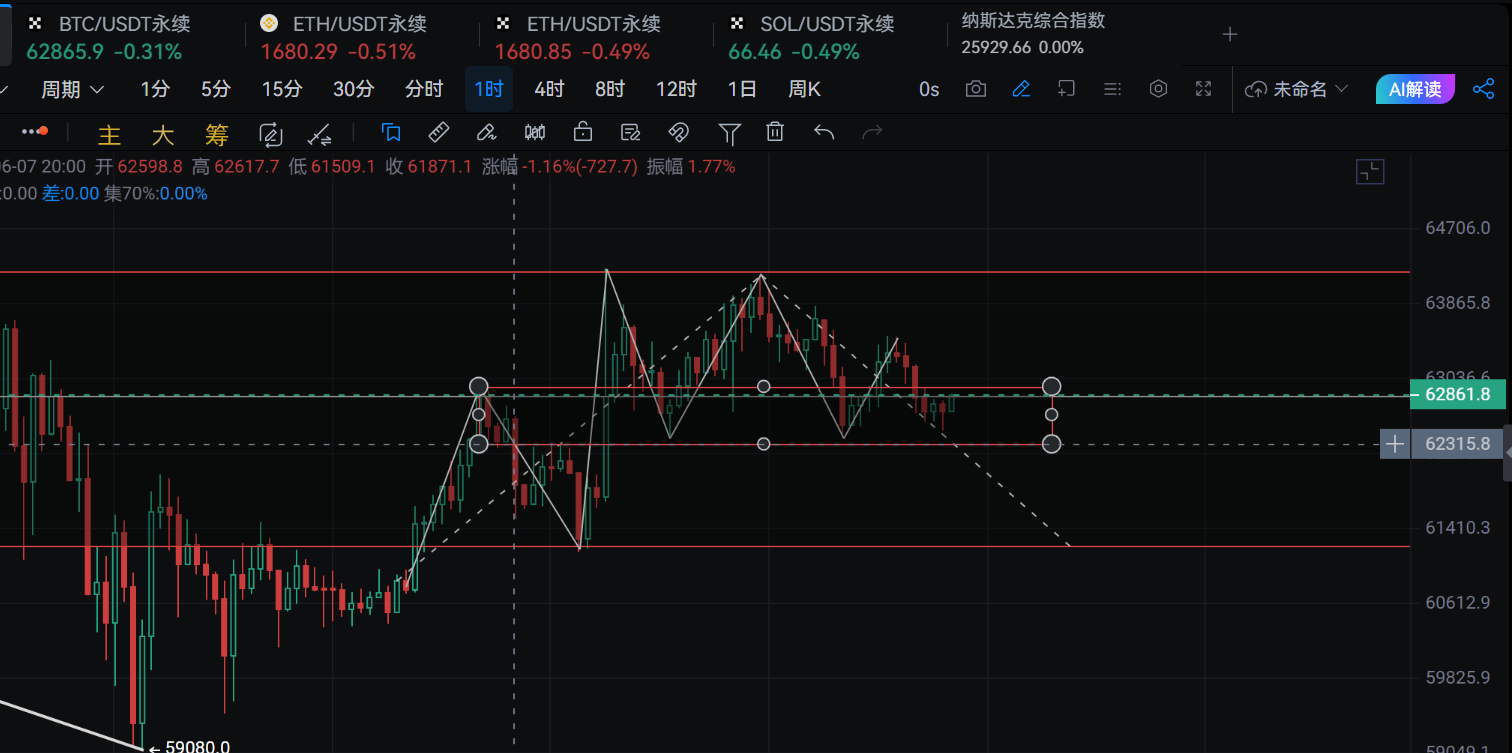
In contrast to the regulatory scrutiny of "jailbreak" intelligences, an almost block-written macro bet has emerged on-chain. According to on-chain monitoring data, address 0x97f8 opened a short contract for S&P 500 with a nominal size of approximately $111.5 million, with leverage close to 50 times; in the current environment where AI concepts are driving U.S. tech stocks stronger, this is practically a public declaration that "the index will correct." Based on the current S&P 500 at about 7600 points, AiCoin data shows that the liquidation price of this position is around 8294.9 points, leaving only about 9% upward space from the current price to liquidation, which in a traditional macro perspective is already close to the range that daily fluctuations could potentially touch, and the margin size of this position has not been fully disclosed in public chain data.
The high leverage itself is not unusual; what is rare is that it is directly aimed at the core index of U.S. stocks under the AI dividend and occurs in a traceable on-chain environment. This macro-directional short from address 0x97f8 shifts crypto participants' judgment on future risks from chat rooms and research reports to verifiable contract layers: it may serve as a hedge against a pullback in the AI bull market, or it could be an aggressive gamble purely betting on overheated valuations. Regardless of the behind-the-scenes motivations, such publicly transparent macro positions on-chain are becoming a new observation window to understand how some crypto funds balance greed and fear under the AI narrative.
AI Era: The Long and Short Game from Morpho to 0x97f8
From decentralized lending infrastructure Morpho securing $175 million in financing, with a valuation of about $2 billion, to China's planning of approximately 2 trillion yuan for building a nationwide interconnected data center network over the next five years, and then to Nasdaq establishing an economic research institute to systematically study AI's impact on productivity and financial markets, the main theme of this wave of AI still remains top-down long-term optimism and infrastructure reinforcement; in contrast, the jailbreak and mining risks exposed by CNCERT's naming of "godmode" and "Bonero-Miner," as well as the extreme position at address 0x97f8 shorting the S&P 500 with about 50x leverage, only about 9% away from the current price of liquidation, push concerns about technology abuse and asset bubbles to the forefront. In the equities market, Serenity is no longer chasing popular targets like ARM and Marvell that have been fully played out by the market but is shifting towards mid-to-large AI supply chain companies valued between $10 billion and $100 billion, indicating that funds are transitioning from purely concept-driven bets toward more refined structured allocations. Under the overlap of multiple clues, the AI narrative is no longer a unidimensional "tech bull market," but rather a complex game interweaving institutional increases in infrastructure, regulatory tightening of safety thresholds, and on-chain addresses gambling on macro directions, with what truly merits continuous tracking being whether DeFi infrastructure can be included more widely in long-term asset allocations, the actual pace of state-level and enterprise-level AI infrastructure advancement, how AI security regulatory boundaries will be delineated, and how high-leverage macro positions similar to 0x97f8 will be ultimately settled on-chain, with changes in these variables redefining the risk-return landscape of this AI cycle step by step.
Join our community to discuss and grow stronger together!
AiCoin Exclusive Hyperliquid Benefits: https://app.hyperliquid.xyz/join/AICOIN88
AiCoin Exclusive Aster Benefits: https://www.asterdex.com/zh-CN/referral/9C50e2
On-chain Telegram Community: https://t.me/AiCoinWhaleData
On-chain Community: https://www.aicoin.com/link/chat?cid=N6OVMor5g
AiCoin On-chain Twitter: https://x.com/aicoinwhaledata
免责声明:本文章仅代表作者个人观点,不代表本平台的立场和观点。本文章仅供信息分享,不构成对任何人的任何投资建议。用户与作者之间的任何争议,与本平台无关。如网页中刊载的文章或图片涉及侵权,请提供相关的权利证明和身份证明发送邮件到support@aicoin.com,本平台相关工作人员将会进行核查。