On May 27, 2026, Trump posted on Truth Social, reiterating that the United States must safeguard its global leading position in the cryptocurrency industry. He clearly pointed out that other countries are "trying to replace" the United States as the "world capital" in the field of Bitcoin and cryptocurrencies, but "we won't let that happen." "This is a significant industry, and we must protect it." This statement quickly spread within the crypto community, briefly injecting emotional support into the weak market.
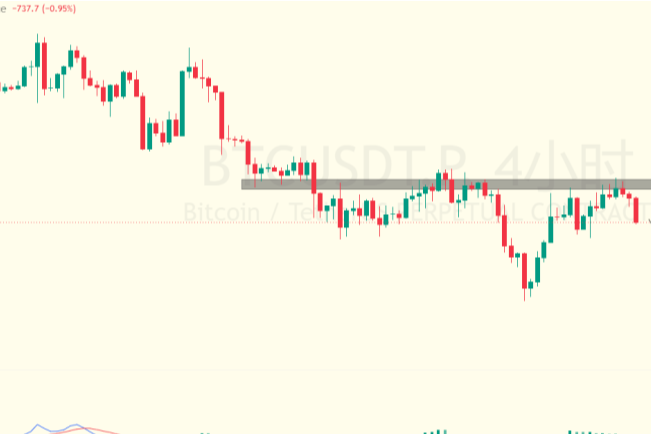
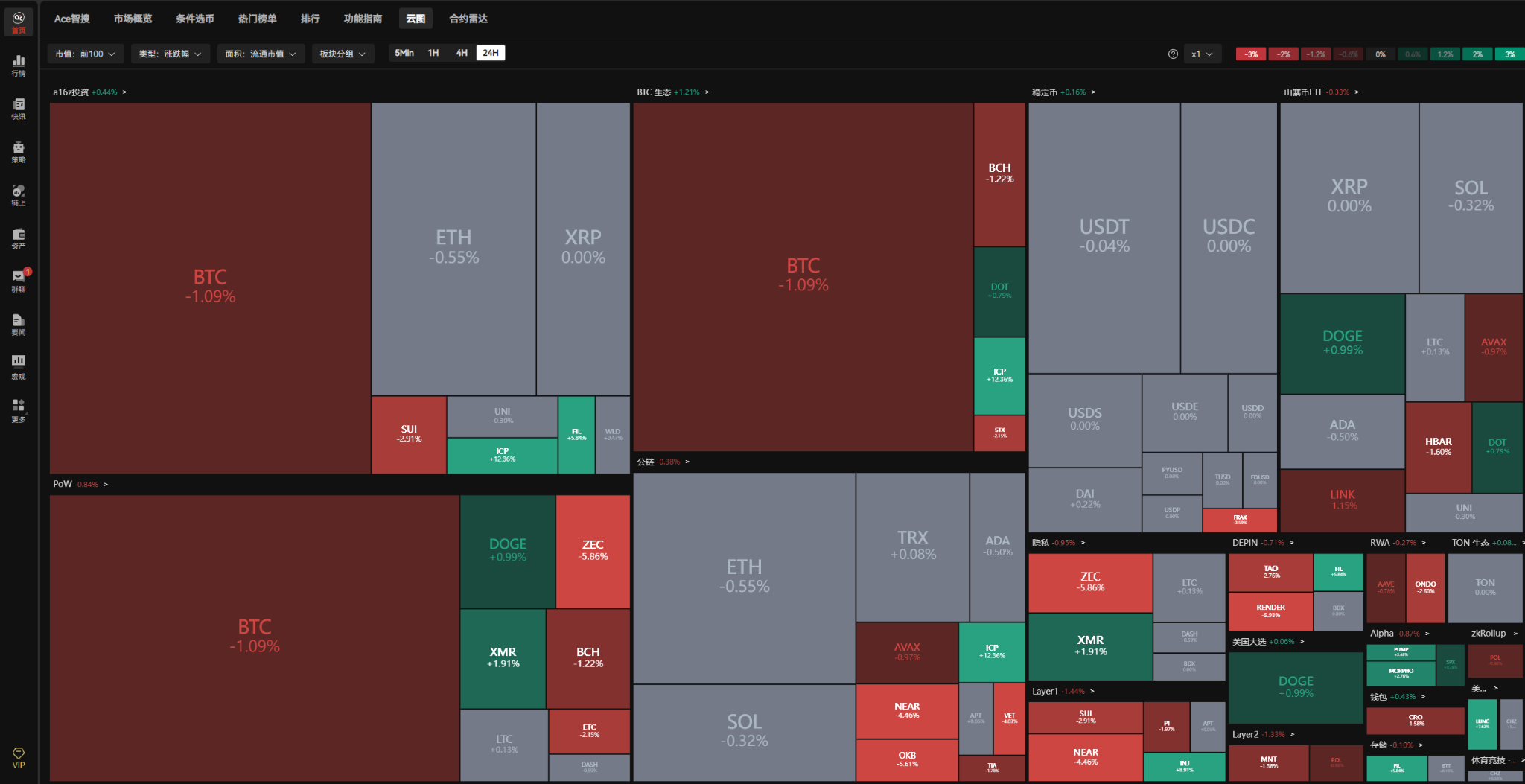
However, while the price of Bitcoin saw a slight rebound after the statement, it failed to reverse the overall downward trend of the day. Mainstream cryptocurrencies experienced a pullback across the board, with BTC dipping below the crucial support level of $76,000, briefly touching around $75,979. Market sentiment shifted rapidly from caution to clear panic, as investors continued to worry about institutional selling pressure.
Continuous Outflows from ETFs Become the Biggest Suppressing Factor
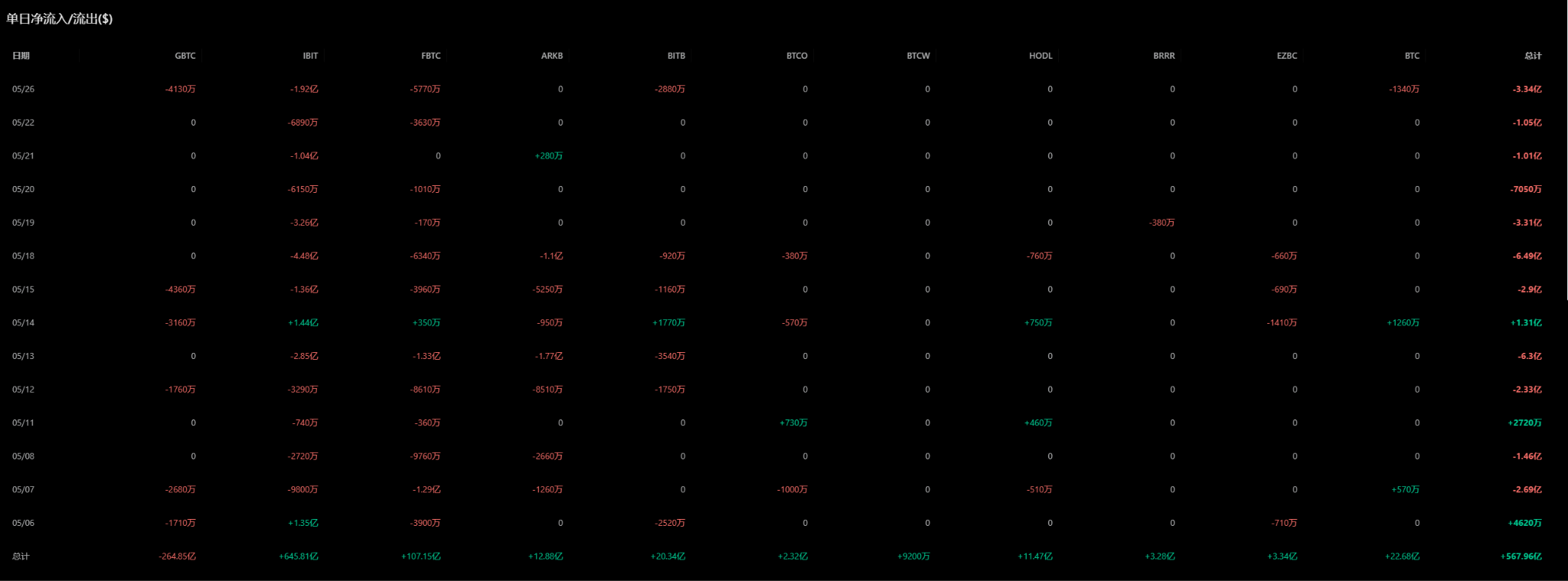
Despite the Trump administration paving the way for the crypto industry through policies like strategic Bitcoin reserves and the GENIUS Act, the spot Bitcoin ETF is still facing ongoing pressure on its funding side. Recent data shows a general net outflow trend in U.S. Bitcoin ETFs, with leading products such as the BlackRock iShares Bitcoin Trust (IBIT) recording significant redemptions multiple times. On May 26, IBIT even saw a block trade in the dark pool of about 29 million shares, with a value reaching about $1.3 billion, making it one of the largest trades since its listing. Although this transaction was effectively absorbed by market makers and liquidity mechanisms, preventing a "flash crash" in the Bitcoin spot market, it also highlighted signs of institutional funds rebalancing or taking profits. The continuous outflows from ETFs directly suppressed buying interest, making it difficult for Bitcoin to hold critical technical levels.
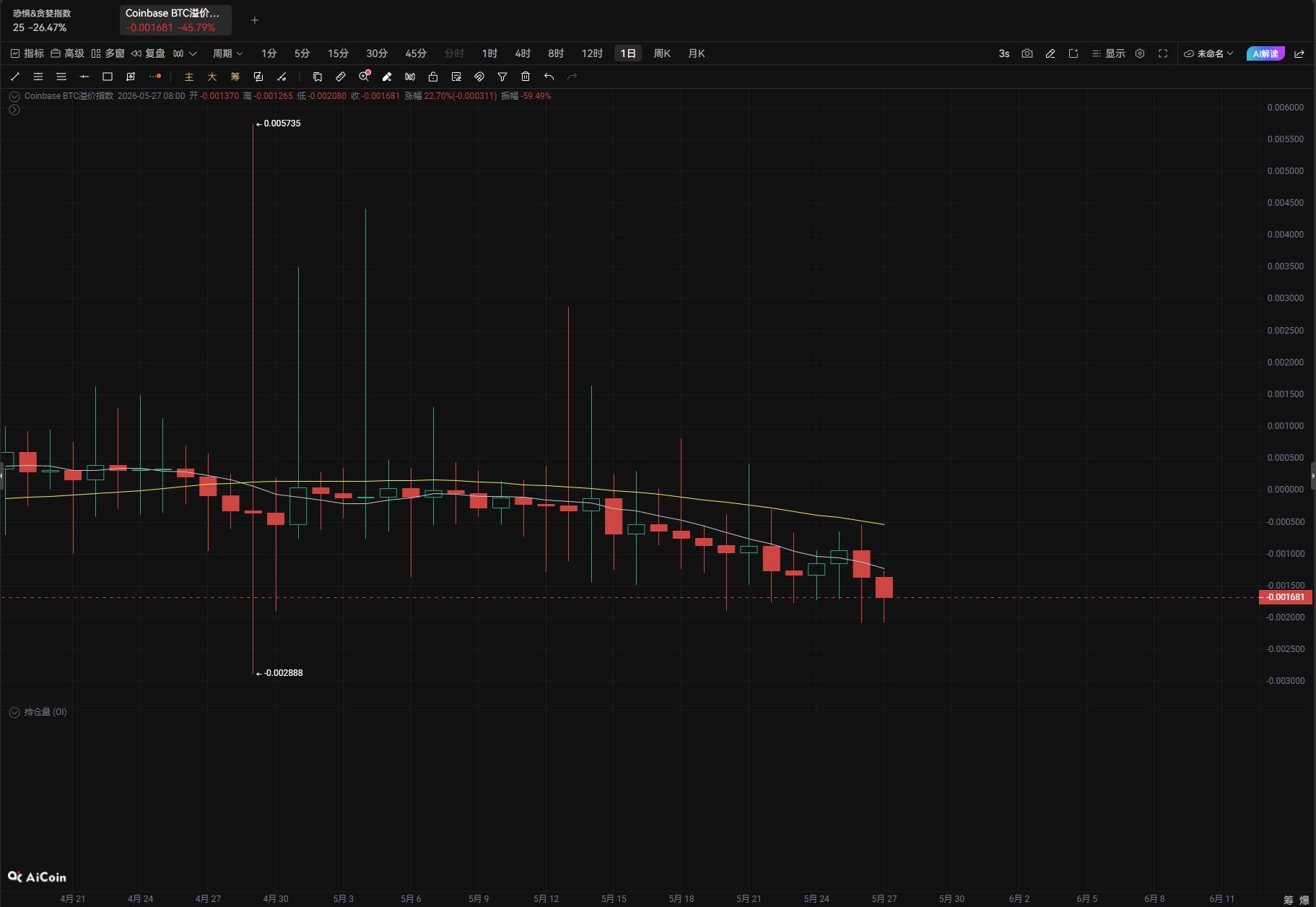
More importantly, the Coinbase premium index has fallen to recent lows, even approaching negative values. This typically reflects that the relative selling pressure from U.S. institutional investors on the Coinbase platform is stronger than that on globally retail-dominated exchanges, indicating that "smart money" remains cautious or seeks safe havens in the short term. In contrast, while global Bitcoin mining and spot liquidity are still dominated by the U.S., the short-term outflow of funds is amplifying market volatility.
Fear and Greed Index Lingers at Low Levels
The current crypto fear and greed index is in the "fear" range of 25-38, close to the 33 low mentioned by users, even briefly touching the edge of extreme fear. This indicator clearly reflects the rapid shift from caution to panic in the market. Despite the potential for a rebound from oversold conditions at low levels, in this round of pullback, the combination of macro uncertainty, institutional redemptions, and geopolitical factors has made it difficult for "policy benefits" to translate into substantial buying interest.
In such a volatile market, the stability of the platform and the ability to exit safely are more important than anything else; the premise of "asset allocation" is reliability. Gate.io, as one of the world's leading cryptocurrency exchanges, addresses the biggest anxieties of retail investors:
- Liquidity Anxiety: Excellent depth, large transactions do not stall, and can close positions even in extreme market conditions.
- Operational Anxiety: Simple interface, comprehensive features, all-in-one solution from spot to asset management.
- Cost Anxiety: Benefits offered to new users that directly lower trial and error costs.
If you want to live a little longer in this cycle, starting with registering at Gate to lower your trading costs might be a good idea.
One-click Registration:
https://jump.do/zh-Hans/xlink-proxy?id=5
Disconnection Between Policy Signals and Market Realities
Trump's statement is a continuation of his pro-crypto stance—from establishing strategic Bitcoin reserves and promoting exclusive jurisdiction of the CFTC over prediction markets, to emphasizing that the U.S. must defeat foreign competitors in the crypto space, the core logic remains to "protect U.S. financial innovation leadership."
Against the backdrop of increasing global crypto regulatory competition, the U.S. has firmly occupied the position of Bitcoin's "global center" by leveraging its mature ETF mechanisms, strong mining capacity, and channels for institutional entry. However, in the short term, demand for institutional fund rebalancing, profit-taking pressure, and broader macro tightening signals are still dominating price movements.
Institutions are not always the "carriers." Their initial intention to allocate Bitcoin is to diversify risk and ensure compliance exposure, rather than to solely drive up prices. When rebalancing, arbitrage, or macro hedging demands arise, significant outflows can also become a reality. Although Bitcoin ETFs have seen significant net inflows over the past few months, the recent continuous net outflows have totaled billions of dollars, directly suppressing the price upward space. Meanwhile, with the U.S. mining share leading globally and strategic reserves gradually taking shape, these long-term benefits are building a floor for the industry, but under the dominance of short-term sentiment, retail investors still need to be cautious of the reality gap where "policy benefits take time to materialize while funds flow out quickly."
Whether the Policy Bottom and Capital Bottom Can Resonance Remains Key
Currently, after BTC dropped below $76,000, potential support is at recent low points, and the low levels of the fear and greed index have released certain oversold signals. If the outflow trend of ETFs slows down in the future, or if Trump takes more concrete actions at the legislative level (such as advancing clear legislation on the digital asset market), the market may welcome emotional repair. However, against the backdrop of institutional selling pressure not yet fully dissipated and persistent global macro uncertainty, any rebound must be cautiously verified against trading volume and capital inflows.
Trump's rhetoric of "protecting significant industries" has delineated a clear red line for the U.S. crypto dominance, but it cannot instantly change the reality of the funding battle. Bitcoin is strategically recognized as a "pillar" industry at the highest levels of the U.S. government, but small retail investors need to prioritize risk management when participating—institutions have scale, information, and exit mechanisms, while once market sentiment shifts to panic, it often first harms the most vulnerable segments.
The goal of the U.S. to maintain its global crypto center is likely to be achieved through a dual drive of policy and capital; in the short term, continuously monitoring daily ETF outflow data, Coinbase premium, and changes in the fear and greed index is the pragmatic way to grasp the rhythm.
免责声明:本文章仅代表作者个人观点,不代表本平台的立场和观点。本文章仅供信息分享,不构成对任何人的任何投资建议。用户与作者之间的任何争议,与本平台无关。如网页中刊载的文章或图片涉及侵权,请提供相关的权利证明和身份证明发送邮件到support@aicoin.com,本平台相关工作人员将会进行核查。