This article comes from: SoSoValue Research
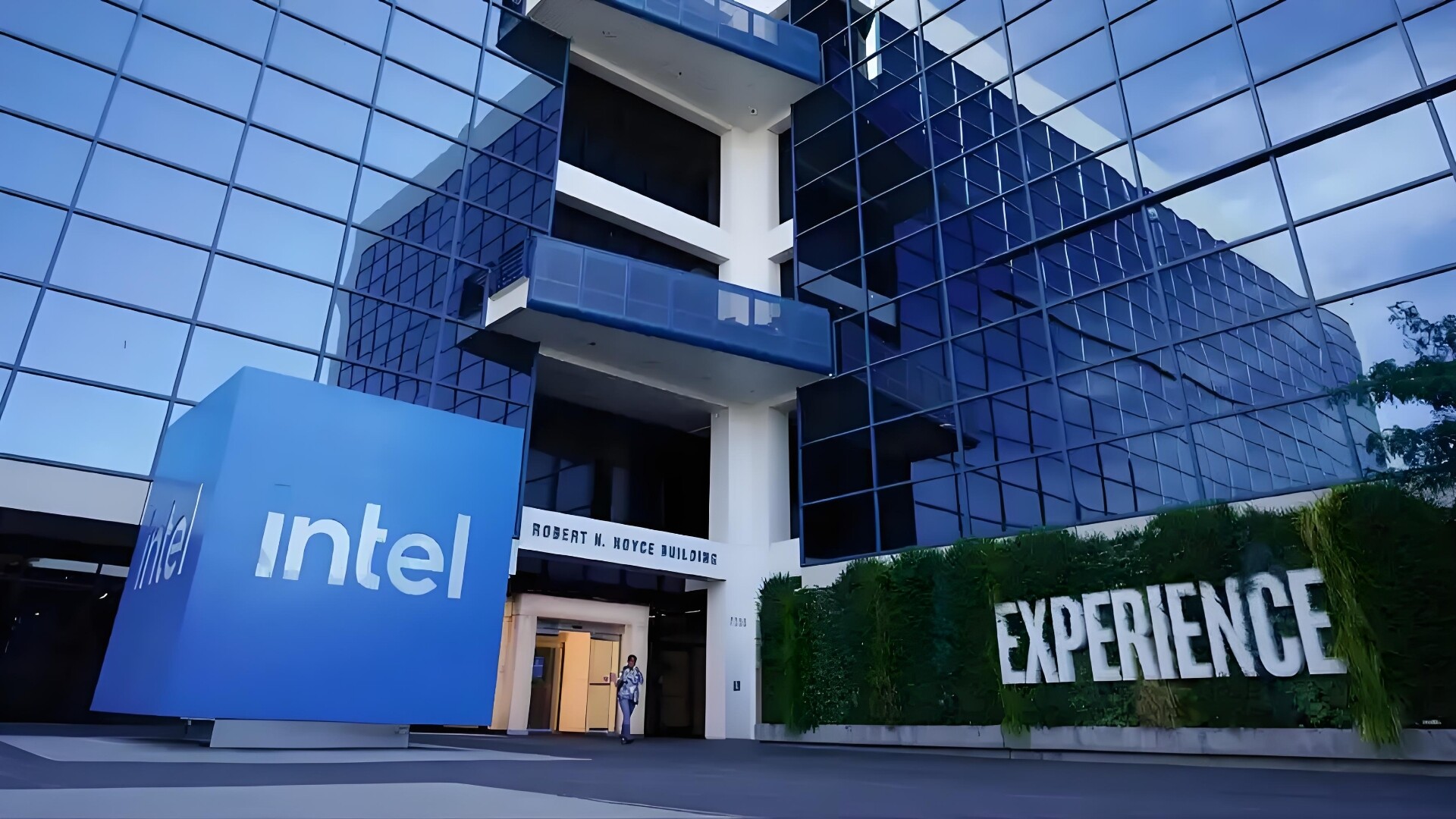
Intel released its Q2 2026 results: Revenue, adjusted EPS, and gross margin all significantly exceeded market expectations. The data center and AI business achieved the fastest growth in history, and the client business also performed better than expected. The company's Q3 revenue guidance continues to significantly exceed consensus expectations, indicating that AI infrastructure development is driving renewed demand for server CPUs, custom chips, and wafer manufacturing.
The company simultaneously raised its capital expenditure guidance for 2026 from $18 billion to over $20 billion and expects a significant increase in investments in 2027, supporting the semiconductor equipment, cleanroom, advanced packaging, substrate, and storage industry chain.
However, Intel Foundry still recorded an operating loss of over $2 billion, with external foundry revenue remaining low; the rapid expansion of capital expenditures will also continue to test cash flow. Intel's stock price rose about 13% in after-hours trading, before narrowing to about 4%.
Q2 Results: Revenue and Margins Exceeded Expectations, Cash Flow Still Dragged by Special Projects
Q2 revenue was $16.13 billion, an increase of 25.4% year-on-year, marking the fastest growth in 15 years, surpassing the consensus expectation of about $14.4 billion and exceeding the midpoint of the company's previous guidance by $1.8 billion.
Adjusted EPS was $0.42, nearly double the market expectation of $0.22; adjusted gross margin reached 41.8%, up 12.1 percentage points year-on-year, and 2.8 percentage points higher than the company's guidance. Revenue growth, higher average selling prices, improved product mix, and enhanced yield rates collectively drove adjusted operating profit to $2.8 billion, compared to a loss of $500 million in the same period last year.
GAAP net loss was $11 billion, with EPS at -$2.16, primarily impacted by a $12.5 billion non-cash fair value loss related to shares held by the U.S. Department of Commerce. Excluding related adjustments, the company achieved a net profit of $2.2 billion.
Q2 operating cash flow reached $7 billion, with cash and short-term investments around $30 billion. However, affected by a net outflow of $12.2 billion in partner funds, adjusted free cash flow was -$8.4 billion. Given that Q2 capital expenditures were $2.7 billion, negative free cash flow reflects more on partner funding arrangements; cash flow improvements may still be delayed as investment in manufacturing and backend capacity increases further in 2027.
Data Center Growth 59%, Client Business Better than Expected but PC Demand Under Pressure
Revenue from the data center and AI business was $6.26 billion, a year-on-year increase of 59% and a quarter-on-quarter increase of 24%, significantly exceeding the market expectation of about $5.4 billion; operating profit rose to $2.47 billion, and the operating margin increased from 16.1% in the same period last year to 39.5%.
The growth primarily stemmed from strong demand for server CPUs from hyperscale cloud providers and enterprise clients. Revenue from custom chip business nearly doubled year-on-year, with current annualized revenue nearing $2 billion. Intel expects server CPU industry shipments to maintain strong double-digit growth in 2026 and 2027, with growth momentum likely to continue into 2028.
Revenue from the client and physical AI business was $8.88 billion, a year-on-year increase of 13%, above the market expectation of about $8 billion. AI PC revenue grew 26% quarter-on-quarter and now accounts for about two-thirds of client business revenue; edge computing contributes about 10%.
The growth of the client business primarily comes from an increased proportion of high-end products, rising average selling prices, and cost pass-throughs. Due to rising storage prices and supply constraints, the company expects global PC consumption to decline in low double-digit percentages in 2026, with the second half performing weaker than normal seasonal levels. Intel plans to shift more limited capacity to the data center CPU, where demand is stronger.
Foundry Losses Continue to Narrow, External Customers Still Need Fulfillment
Intel Foundry revenue was $5.77 billion, a year-on-year increase of 31%; operating losses shrank from $3.17 billion in the same period last year to $2.09 billion, with the loss rate decreasing from 71.7% to 36.2%.
18A production increased over 50% quarter-on-quarter, approximately 25% higher than the company's target. Improvements in yield rates, production cycles, and capacity utilization have driven down manufacturing costs for key products of Panther Lake by about 50% this year, with further reductions of about 20% expected within the year.
18A-P has entered risk production; the PDK 0.9 for 14A will be delivered in October, with risk production anticipated to start in the second half of 2027 and enter mass production in 2028.
However, external revenues for Foundry this quarter were only $293 million, accounting for about 5% of the business's revenue, with growth still primarily coming from Intel's internal products. Management stated that external customer feedback is positive but has not disclosed any large-scale mass production orders that could validate the commercial appeal of 18A-P or 14A.
Conference Call: Supply Gap Continues, Capital Investment Still Needs Order Validation
Management indicated that advanced process logic chips, silicon wafers, memory, substrates, and advanced packaging are facing severe supply constraints, which are expected to continue. Some bottlenecks may ease from the end of Q3 to Q4, providing further growth space for Q4 revenue, but the company expects that it will still not be able to fully meet server CPU demand before the end of the year.
The increase in capital expenditures is based on long-term customer agreements and demand signals; however, the company did not disclose how much of the new investment corresponds to external Foundry customers and did not confirm whether 14A or 18A-P has secured formal mass production orders from large customers.
Intel currently has approximately $40 billion in liquidity and holds around $10 billion in non-core assets available for disposal. Management also stated that if future expansion demand exceeds the internal cash flow and customer advance payment support, the company may enter the capital markets for financing. Whether capital investment in 2027 can generate effective returns will depend on the duration of server demand, the speed of cost reductions in 18A, and the fulfillment of external foundry orders.
Q3 Guidance Exceeds Expectations, Capital Expenditures Continue to Increase in 2027
Intel expects Q3 revenue to be between $15.8 billion and $16.8 billion, with a midpoint of $16.3 billion, a year-on-year increase of about 19%, surpassing the consensus expectation of about $15.1 billion; adjusted EPS is expected to be $0.38, with an adjusted gross margin of 42%.
Q3 gross margin is anticipated to be approximately flat compared to Q2. New products, such as Panther Lake and Granite Rapids, are still in the early stages of ramp-up, with unit costs above the company's average; as 18A yield rates and production volumes continue to improve, the cost of new products is expected to gradually translate into gross margin support in 2027.
The company has raised its capital expenditure guidance for 2026 from $18 billion to over $20 billion and expects capital expenditures in 2027 to be significantly higher than in 2026. New investments will cover Intel 3, 18A, 18A-P, and 14A processes, advanced packaging, EMIB-T, cleanroom construction, as well as substrate and storage supply assurance.
This financial report shows that Intel is regaining growth opportunities brought by the AI infrastructure cycle. The rapid improvement in revenue and profit driven by server CPUs, custom chips, and 18A capacity ramp-up, along with the Q3 guidance proving that current demand remains strong.
The after-hours gain narrowed from about 13% to about 4%, reflecting that the market has begun to adopt a higher valuation standard: short-term performance exceeding expectations supports the recovery logic, while Foundry external revenue, advanced process customers, capital returns, and free cash flow will determine whether this round of recovery can further translate into sustainable valuation improvement.
免责声明:本文章仅代表作者个人观点,不代表本平台的立场和观点。本文章仅供信息分享,不构成对任何人的任何投资建议。用户与作者之间的任何争议,与本平台无关。如网页中刊载的文章或图片涉及侵权,请提供相关的权利证明和身份证明发送邮件到support@aicoin.com,本平台相关工作人员将会进行核查。


