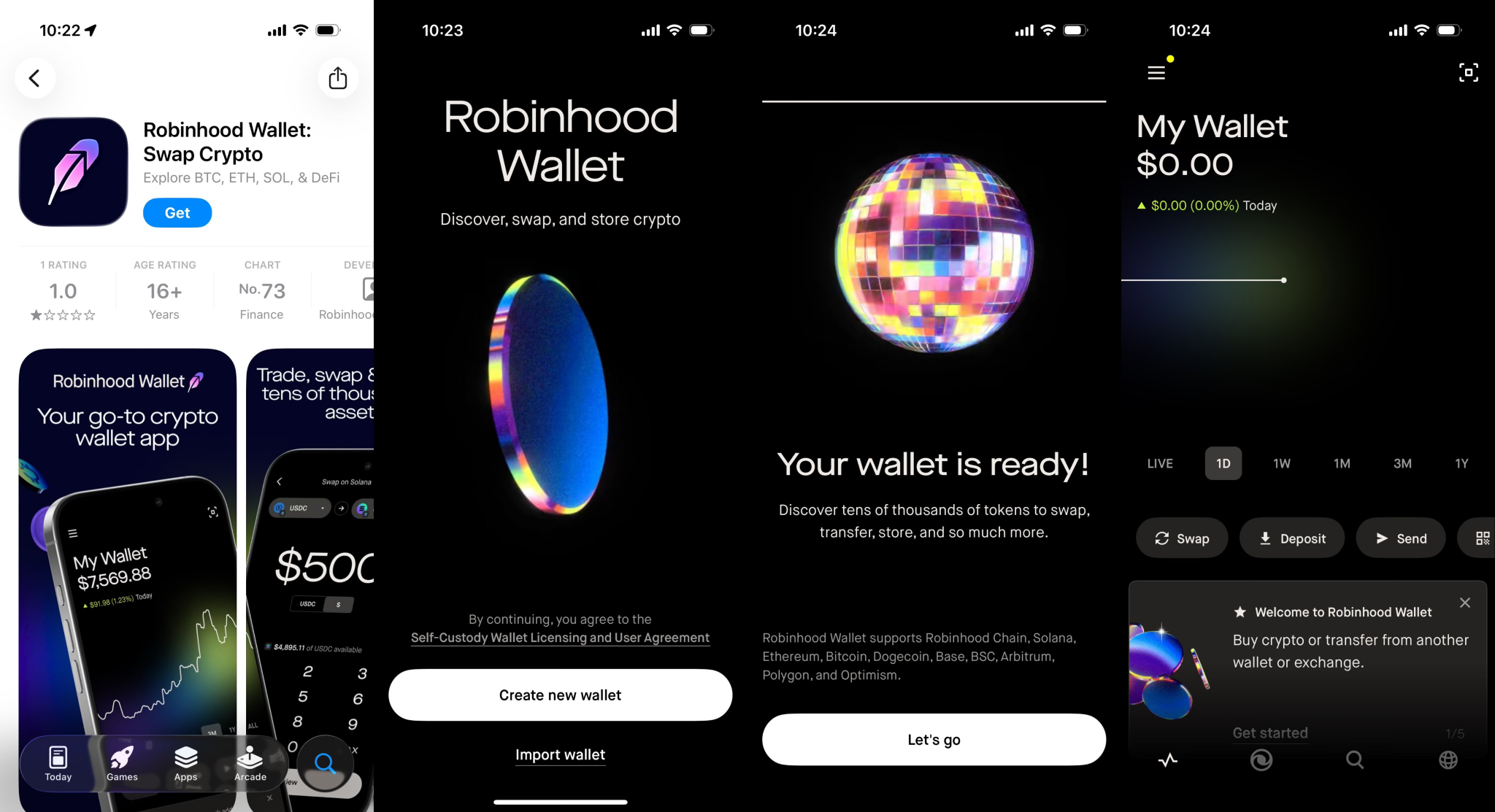
In recent days, one of the hottest topics in the crypto space is undoubtedly Robinhood Chain.
Many people's first reaction is: "Traditional finance has finally begun to fully embrace blockchain."
But if you take a closer look at what Robinhood has released this time, you will find that its significance goes far beyond just launching a chain.
What Robinhood wants to do is actually to move the traditional financial world onto the chain.
Stocks, ETFs, bonds, funds, and even more financial products in the future could potentially be issued and traded in a blockchain format.
This is also why many people believe that:
Robinhood Chain could very likely become one of the most important infrastructures for RWA (Real World Assets) in the coming years.
As more and more traditional assets move onto the chain, a new question arises:
Assets are available, but where will the transactions be completed?
At this time, the value of Hyperliquid begins to become increasingly clear.
The True Goal of Robinhood Chain: To Bring Finance Onto the Chain
Many people understand Robinhood Chain as a new Layer 2. But in reality, this is just a superficial phenomenon.
What Robinhood really wants to do is: to make on-chain finance a part of mainstream finance. Over the past few years, the crypto industry has been working hard to solve a problem: how to bring off-chain assets into the blockchain world. This direction has later been summarized into one word: RWA. From U.S. Treasury bonds to stocks, and various financial products, more and more assets are being tokenized. The biggest advantage of Robinhood is:
It already has a massive number of traditional financial users.
For these users, the biggest barrier to the on-chain world has never been the trading itself, but rather the entry. What Robinhood is doing is essentially lowering this threshold. In the future, users might not even need to understand concepts like wallets, public keys, or Gas Fees. They just need to click a few buttons like they do today when buying stocks to access on-chain assets.
This is undoubtedly a huge increment for the entire industry.
Robinhood and Hyperliquid are not competitors
After seeing Robinhood enter the space, many started to worry:
Will Hyperliquid be impacted?
I believe just the opposite.
Because the two are addressing completely different issues.
The core mission of Robinhood is: to bring assets onto the chain.
The core mission of Hyperliquid is: to optimize the trading experience.
One addresses asset supply issues. The other addresses trading efficiency issues. This is akin to exchanges and brokers in the securities market. They are not zero-sum games, but rather work together to promote market development. As more stocks, ETFs, and RWA assets move onto the chain, demand for efficient trading infrastructure will only grow stronger.
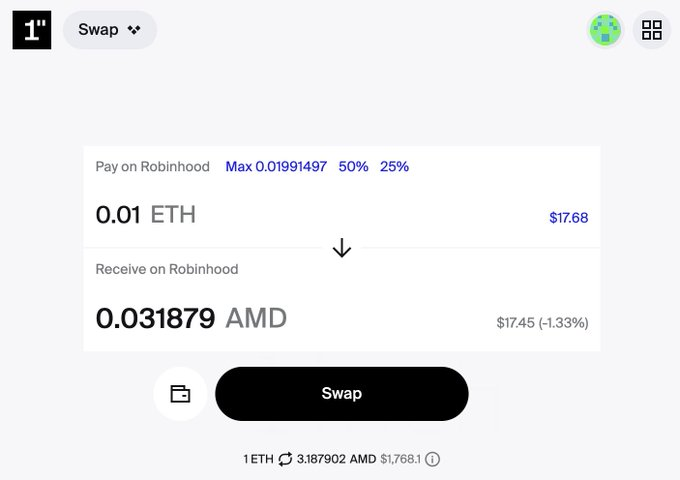
This is precisely the area where Hyperliquid excels.
Why More and More People Are Starting to Pay Attention to Hyperliquid
Over the past few years, DEX has faced one major problem: the experience is too poor. High slippage, slow speeds, complex operations.
As a result, many professional traders eventually returned to centralized exchanges. But Hyperliquid has changed this.
It has not simply replicated the traditional DEX model, but rather redesigned a trading system on the chain that is more suitable for high-frequency trading.
From perpetual contracts to spot trading, from depth to matching efficiency, and overall user experience, Hyperliquid is much closer to a professional trading platform.
This is also why more and more traders are starting to migrate their main positions to Hyperliquid. For those who truly rely on trading for profit, they are not concerned with whether the assets have been moved onto the chain.
But rather:
Where can they achieve better liquidity.
Where can they obtain faster transaction speeds.
Where can they have lower trading costs.
In these dimensions, Hyperliquid has already established a significant advantage.
Robinhood Chain may actually become a booster for Hyperliquid
Many people overlook one point. The greatest value of Robinhood is not in taking away existing crypto users. But rather in bringing more traditional finance users into the on-chain world.
This is a massive incremental market.
Once users are exposed to on-chain assets for the first time, they will gradually engage with more on-chain applications. From tokenized stocks to stablecoins. From stablecoins to DeFi. From DeFi to perpetual contracts. From simple holding to active trading. This is a very natural migration process. And during this process, truly competitive trading platforms will reap the largest rewards.
Robinhood is responsible for bringing people in. Hyperliquid then has the opportunity to take on these users' subsequent trading needs.
From this perspective, the two are not competitors but rather different segments in the same industrial chain.
Opportunities Have Arisen, but More Importantly, Discovering Opportunities
Every time there is an upgrade in industry narrative, the first thing to change is often not the price, but the flow of funds. Recently, discussions around Robinhood Chain, RWA, the ETH ecosystem, and Hyperliquid have been heating up. Many opportunities actually appear before the market reaches a consensus. For traders, the competition is no longer who sees the news faster, but who can notice changes in fund flow earlier.
This is also why there is an increasing reliance on AiCoin.
Whether it is on-chain hot topic tracking, market anomaly monitoring, large holder position changes, or real-time alerts, AiCoin helps users quickly discover what is happening in the market. Especially during fast-moving hot spots, relying solely on social media is often not enough.
Truly valuable information is often hidden within fund flows and trading data.
If you have also been paying attention to opportunities in Robinhood Chain, the RWA track, or Hyperliquid recently, it might be worthwhile to utilize these data tools in advance.
Many times, what determines profits is not what you know, but how much earlier you knew it compared to others.
Robinhood Chain is bringing traditional finance into the on-chain era. Hyperliquid is redefining the on-chain trading experience.
And AiCoin is helping you discover the next wave of fund flow earlier.
When these three trends begin to converge, new opportunities may just be beginning.
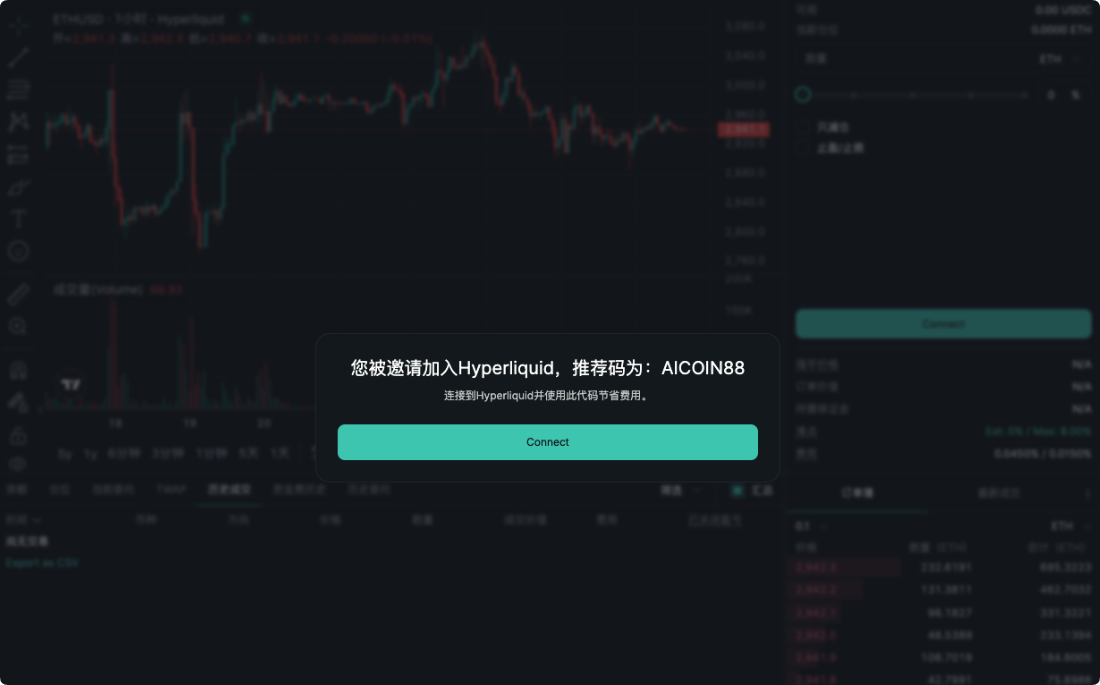
👉 Log in to AiCoin now to experience Hyperliquid's exclusive data panel and "smart money one-click K-line" feature. (Input the invitation code AICOIN88 when binding a Hyperliquid account to enjoy a 4% permanent trading fee rebate)
🔗 Exclusive registration link:
https://app.hyperliquid.xyz/join/AICOIN88
📖 Beginner's Guide:
"AiCoin PC Hyperliquid Authorization Trading Tutorial":
https://www.aicoin.com/zh-Hans/article/514197
"AiCoin Mobile Hyperliquid Authorization Trading Tutorial":
https://www.aicoin.com/zh-Hans/article/541383
"Zero Basics Start! Hyperliquid First Trading Detailed Illustrated Tutorial":
https://www.aicoin.com/zh-Hans/article/510225
The content of this article represents the author's personal views and does not reflect the stance of this platform. The views, conclusions, and suggestions in this article are for investor reference only and do not constitute any investment advice related to this platform. Investing in U.S. stocks still requires individuals to bear market risk, regulatory risk, and compliance risk regarding local laws and regulations (especially foreign exchange controls, overseas investment declaration, etc.).
免责声明:本文章仅代表作者个人观点,不代表本平台的立场和观点。本文章仅供信息分享,不构成对任何人的任何投资建议。用户与作者之间的任何争议,与本平台无关。如网页中刊载的文章或图片涉及侵权,请提供相关的权利证明和身份证明发送邮件到support@aicoin.com,本平台相关工作人员将会进行核查。