The original text comes from ARK Invest's Director of Digital Assets ResearchLorenzo Valente
Translated by|Odaily Planet Daily Qin Xiaofeng(@QinXiaofeng888)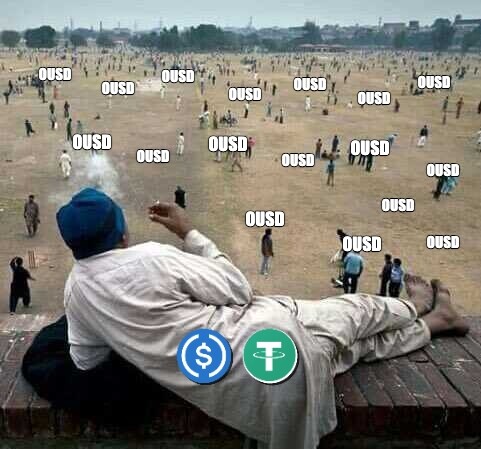
Editor's note: In the past week, more "negative news" about the stablecoin alliance project Open USD has emerged, including participating members denying their collaborative relationship, which has cast a shadow over the project's prospects. Today, ARK Invest's Director of Digital Assets ResearchLorenzo Valente published an analysis of the disadvantages of OpenUSD and emphasized the first-mover advantage of USDT/USDC.
He believes stablecoins excel in deep liquidity, user habits, and integrated ecosystems, rather than relying on alliances or profit-sharing. Giants like Binance will not jeopardize their core trading businesses, which depend on USDT liquidity, for the interest margin from exchanging for OUSD; alliance members have differing incentives, and OUSD overestimates the disruptive potential of shared economies against existing network effects.
It is important to emphasize that Lorenzo Valente's institution ARK Invest increased its holdings of Coinbase stock worth 44 million dollars and Circle stock worth 25.25 million dollars in June. Below is the original text from Lorenzo Valente, translated by Odaily Planet Daily.
——————————
The release of OUSD caused a sensation on social media. Many people are now convinced that Circle is finished, as an alliance consisting of 150 companies—covering payment, fintech, banking, crypto infrastructure, and consumer technology—will crush competitors and launch a stablecoin that could rival USDC and potentially even USDT.
I previously tweeted to explain why people are seriously overestimating this initiative and why alliances are a poor organizational structure for conquering anything, let alone a market that already has a duopoly. In this short article, I want to focus on one thing: the true network effects of stablecoins. I don't want to repeat every argument but want to elaborate through a specific example that everyone has overlooked, as I believe USDT and USDC possess liquidity moats that are severely misunderstood and undervalued.
The network effects of stablecoins are not created by a long list of logos. They are generated by liquidity, user habits, collateral acceptance, integrated consolidation, brand recognition, market depth, settlement processes, and the fear of disrupting existing operational systems.
That's why I believe Tether and Circle are two severely misunderstood companies.
Firstly, an obvious point: OUSD will comply with GENIUS compliance requirements, meaning it cannot directly share profits with users. This is not news, but people are still shouting at Circle, demanding it pay returns to stablecoin holders as if OUSD could do that. The reality is quite the opposite: Circle is likely the issuer passing the most returns to the platform in the market, subsequently passing it to end users.
This point is important because many are saying OUSD will create a fundamentally different yield product for end users. But that is not its model. The model is not "paying returns to stablecoin holders", but "sharing the economic returns of reserve assets with the platforms and businesses distributing and using stablecoins".
This is an important distinction.
The strongest argument I see supporting OUSD is that alliance members will have strong incentives to embed OUSD deeply in their businesses, as they can gain revenue sharing from this structure. Without knowing the specific details, let’s assume its economic model is similar to alliances we’ve seen before: the operating company Open Standard retains a 25 basis point (bps) management fee, while each participant retains 100% of the net interest margin (NIM) generated by any OUSD on their platform, network, or protocol.
On paper, this is a deal anyone would immediately sign. But it completely overlooks one fact: these companies derive value in other ways, and in many cases, their core businesses depend on the existing liquidity and network effects of USDT, USDC, other stablecoins, or merely other fiat currencies.
It is only attractive when pursuing the net interest margin from stablecoin reserves does not jeopardize larger revenue streams, and that is the key point.
The best case study in the industry, which may also be the strongest counterexample to OUSD, is Binance.
Binance is the largest exchange in the industry by far. It originally had its brand stablecoin BUSD, which peaked at about 23 billion dollars in supply before the New York Department of Financial Services (NYDFS) ordered the issuer Paxos to shut down the product in February 2023.
Looking at the three major exchanges in Asia, you get three clear case studies. Today, Binance holds about 45 billion dollars worth of USDT, Bybit holds about 4 billion dollars, and OKX holds about 9 billion dollars. Binance has been and remains the bastion and crown jewel of Tether, with USDT consistently being the most liquid trading pair on the largest exchange in the world.
Today, if you want to buy BTC, ETH, SOL, or open large perpetual contract positions, USDT still dominates as the quote currency in the offshore exchange ecosystem, a reality Binance helps facilitate. USDT is embedded in the deepest order books, the most liquid trading pairs, the most active derivatives markets, and the workflows of the most important market makers and traders.
This is the real network effect.
Now many of you must be wondering: Why is CZ so naive? Why hasn’t he called Paolo and Giancarlo, asking to at least receive a portion of USDT's yields, even most of it? Binance knows it holds tremendous negotiation leverage here.
The reason this has never happened is extremely simple: From a revenue and enterprise value perspective, Binance's crown jewel is its trading business, which is solidified by the liquidity of USDT.
Let's do the math and see why it is completely rational for CZ not to chase net interest margins (NIM) or try to replace USDT with a more "aligned" stablecoin. The rough estimates below are based on on-chain data and assumptions, none of which are confirmed information.
Build from the bottom up:
- Derivatives (core engine). Binance accounts for about 40% of the global crypto derivatives trading volume. Over the entire cycle, the daily trading volume is approximately 40-50 billion dollars, annualizing to about 10-15 trillion dollars. Considering VIP discounts and BNB rebates, the mixed maker/taker fee rate is roughly around 5 basis points (bps). Just from perpetual contracts and futures alone, this amounts to about 5 billion dollars annually.
- Spot. The daily trading volume is about 8-10 billion dollars, annualizing to about 3 trillion dollars, with a mixed fee rate of approximately 15 basis points (well below Coinbase's retail rate, as Binance’s user base is heavily skewed towards VIP clients and offers zero-fee promotional campaigns). This adds approximately 5 billion dollars.
- Other businesses. Wealth management and lending spreads, margin interest, Launchpool and token listing economics, Binance Pay, staking commissions, together with float deposits: they hold about 46 billion dollars in customer stablecoins, and while they do not pool these as broker-dealers do, corporate treasury and the income-generating products surrounding these funds are significant at these interest rate levels. Adding in Binance's ecosystem, conservatively there is an estimated additional 5-7 billion dollars.
Keep in mind, these are bear market numbers. Very conservatively speaking, Binance in a bear market is a business generating near 17-20 billion dollars in revenue, which could approach 25 billion dollars in a bull market. A company of this scale and quality is likely valued at over 200 billion dollars.
So, why isn’t CZ eager to replace USDT or demand better economic terms from the Tether team?
Because the entire reason Binance has become what it is today, with over 300 million customers continually returning to the platform, is that it is the most liquid venue on Earth. Let's effectively price the deal Binance would be making.
Binance's platform has 45 billion dollars of USDT. Suppose it reaches an agreement with OUSD to share 90% of the returns with Binance. At an average treasury yield of 3.8%, that’s about 1.55 billion dollars annually. This looks enticing until you correctly measure it: to risk a 25 billion dollar revenue engine for 1.5 billion dollars of upside, only a madman would do that.
The very glue that supports Binance's trading fortress is USDT. No incentive on earth would make CZ reconsider which stablecoin to deepen.
And we don’t need to speculate, because someone has already tried. Over a year ago, it was reported that Circle made a one-time payment of 60 million dollars to Binance, plus ongoing monthly incentives linked to USDC balances on the platform. Nevertheless, the supply of USDC on Binance remained virtually flat at 5 billion dollars.
People severely underestimate the network effects these stablecoins create for the businesses they serve. In most cases, this upside is simply not worth risking your core revenue engine.
For an exchange, stablecoins are not just cash. They are quote assets, collateral assets, risk management assets, working capital assets, and the pricing units for millions of traders. Changing this underlying foundation does not come for free.
Not all alliance members have the same incentives
The final point is that the OUSD alliance includes very different types of businesses, and they do not monetize stablecoins in the same way.
There are broadly two models.
The first model is asset under management (AUM) monetization. This type of company and protocol benefits from idle balances, deposits, or float deposits. For them, the economic yield of the reserve assets is directly related. A lending protocol, wallet, digital bank, or exchange with a large customer balance may be very concerned about the net interest margin (NIM) from the stablecoin supply.
The second model is transaction turnover monetization. These are payment networks, processors, remittance companies, and commercial platforms that monetize through transaction flow rather than idle balances. For them, stablecoins are more like a payment rail rather than an asset on the balance sheet. They may prioritize reliability, cost, compliance, speed, coverage, and customer experience over reserve yield.
An Aave and a Western Union bring different things to OUSD. A DeFi protocol can help create supply by making OUSD useful collateral or as a liquidity venue for generating yield. A payment company, on the other hand, may move OUSD through its system and quickly consume it at the edges. This is valuable for transaction volume but completely different from creating lasting supply.
This is why the alliance structure doesn’t seem as powerful as it appears. Members may all like the idea of sharing economic returns, but their incentives are not the same. Some will create supply, some will create turnover, some will integrate deeply, some will experiment, and some may do nothing after the news cycle.
In equilibrium, it is hard to believe all members will have the same motivation to promote OUSD; some will do the hard work of adoption, while others will go with the flow. This is the classic coalition problem.
Conclusion: OUSD is not inconsequential. It is one of the more interesting stablecoin experiments we've seen, and its economic model is clearly designed to capture reserve income advantages for existing players. But the market has overestimated how quickly a shared economy model could overcome existing liquidity barriers. Stablecoins do not win by press releases; they win through deep, repetitive, and highly trustworthy usage in places where funds actually flow.
That’s why USDT remains so strong. That’s why USDC has proven resilient and grown so rapidly. That’s why OUSD, despite significant alliance support, faces a more challenging road than the market currently assumes.
The core issue is not whether OUSD can offer partners better economic terms. The core issue is whether these economic terms are valuable enough to make partners risk disrupting businesses that have already been built around other currencies or stablecoins.
In many cases, the answer will be no.
免责声明:本文章仅代表作者个人观点,不代表本平台的立场和观点。本文章仅供信息分享,不构成对任何人的任何投资建议。用户与作者之间的任何争议,与本平台无关。如网页中刊载的文章或图片涉及侵权,请提供相关的权利证明和身份证明发送邮件到support@aicoin.com,本平台相关工作人员将会进行核查。


